Malaysia targets Smart Highway technology on half of expressways in the country, says works minister马来西亚工程部长表示,马来西亚计划在该国一半的高速公路上采用智能高速公路技术。
KUALA LUMPUR, Oct 20 — Malaysia aims to equip at least 50 per cent of its 34 expressways with Smart Highway technology to enhance road safety, improve traffic flow and boost...
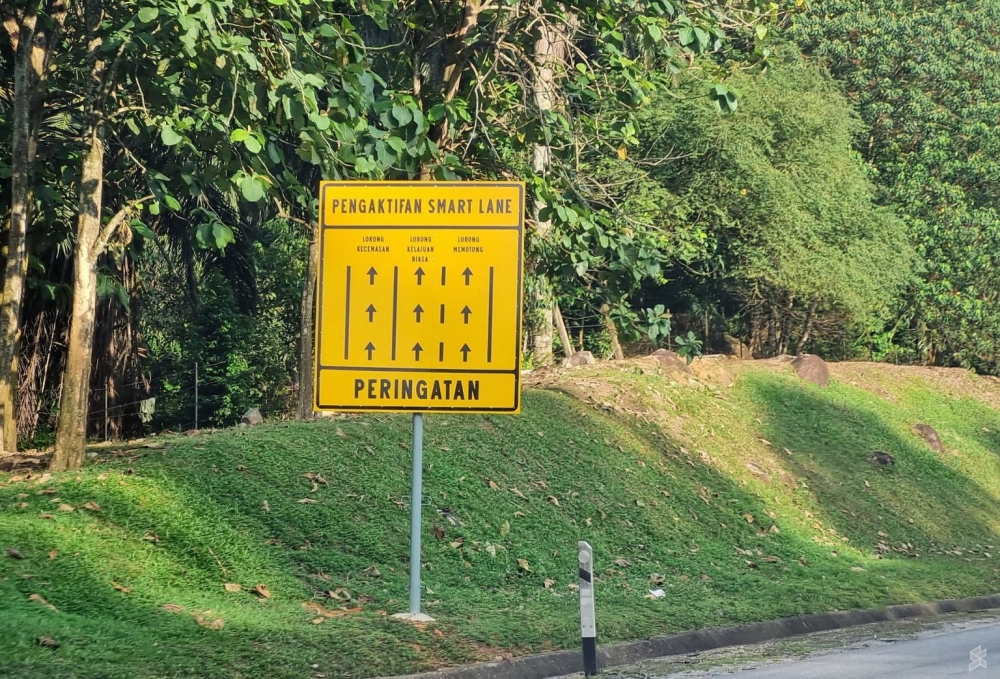
Malaysia plans to implement Smart Highway technology on 50% of its expressways to improve safety and efficiency using AI, smart CCTV, and early-warning systems.
A National Intelligent Traffic Management Centre and a Multi-Lane Free Flow toll system are being developed to enhance traffic management and reduce congestion.
Malaysia is collaborating with the Republic of Korea to advance road infrastructure and intelligent transport systems, building on an existing memorandum of understanding between both nations.
KUALA LUMPUR, Oct 20 — Malaysia aims to equip at least 50 per cent of its 34 expressways with Smart Highway technology to enhance road safety, improve traffic flow and boost transport system efficiency.
Works Minister Datuk Seri Alexander Nanta Linggi said the initiative would incorporate artificial intelligence (AI), smart closed-circuit television (CCTV) systems, and detection and early-warning systems for high-risk incidents, including accidents.
Other features include solar-powered lighting, digital mobility applications and electric vehicle (EV) charging infrastructure.
“Malaysia is also prioritising the development of a National Intelligent Traffic Management Centre (NITMC) to strengthen real-time monitoring, integrated data analysis and traffic management coordination.
“Another key component is the Multi-Lane Free Flow (MLFF) toll collection system, which allows vehicles to pass through toll plazas without stopping at barriers, thereby reducing congestion and saving travel time,” he said in a statement issued by the Ministry of Works (KKR) yesterday.
Nanta highlighted the initiative during his address at a high-level roundtable session held in conjunction with the 2026 Intelligent Transport Systems (ITS) World Congress in Gangneung, South Korea, from October 19 to 23.
Themed “Beyond Mobility, Connected World”, the congress brings together about 60,000 participants from around 90 countries to discuss innovations and future developments in intelligent transport systems.
On the implementation of the initiatives, Nanta said the government was allowing highway concessionaires and industry partners to refine a business-to-business (B2B) model under the regulatory oversight of the Malaysian Highway Authority (MHA).
He said the approach took into account technological and commercial viability, system interoperability, payment integration, data security and consumer protection.
“The current focus is on finalising the technical, operational and legal preparations before the proposal is submitted to the government for consideration and final approval,” the statement said.
Meanwhile, Nanta held a bilateral meeting with the Republic of Korea’s Second Vice-Minister of Land, Infrastructure and Transport, Jeong Eui-kyung, to strengthen cooperation in infrastructure development, construction technology and intelligent transport systems.
Speaking to the Malaysian media after the meeting, Nanta said both countries discussed ways to enhance cooperation in road and highway infrastructure development, including the adoption of new technologies and more efficient management methods.
He said the meeting also reviewed progress in implementing cooperation under a memorandum of understanding (MoU) previously signed between the MHA and the Korea Expressway Corporation (KEC).
“During the bilateral meeting, we reviewed what has been achieved and discussed how cooperation between the two countries could be further strengthened, particularly in the road and highway development industry and the application of the latest technologies and methods,” he said.
Nanta added that the collaboration would continue, with the MHA and KEC scheduled to hold a follow-up session today to further strengthen their partnership in highway infrastructure development. — Bernama
Hamzah expects Anwar to call GE16 by August next year amid Pakatan-Umno tensions
Temerloh police bust four gangs linked to ECRL, TM cable thefts in Pahang
Babysitter detained after 10-month-old baby boy dies in her care in Tasek Gelugor
马来西亚计划在其 50% 的高速公路上实施智能高速公路技术,利用人工智能、智能闭路电视和预警系统来提高安全性和效率。
为加强交通管理、减少拥堵,正在开发国家智能交通管理中心和多车道自由流收费系统。
马来西亚正与韩国合作,推进道路基础设施和智能交通系统建设,这是在两国现有谅解备忘录的基础上进行的。
吉隆坡,10 月 20 日讯——马来西亚计划为其 34 条高速公路中的至少 50% 配备智能高速公路技术,以提高道路安全、改善交通流量并提升运输系统效率。
工程部长拿督斯里亚历山大·南塔·林吉表示,该计划将融合人工智能(AI)、智能闭路电视(CCTV)系统以及高风险事件(包括事故)的检测和预警系统。
其他特色包括太阳能照明、数字出行应用和电动汽车 (EV) 充电基础设施。
“马来西亚也优先发展国家智能交通管理中心(NITMC),以加强实时监控、综合数据分析和交通管理协调。
“另一个关键组成部分是多车道自由流(MLFF)收费系统,该系统允许车辆无需在障碍物前停车即可通过收费站,从而减少拥堵并节省出行时间,”他在昨天由工程部(KKR)发布的一份声明中表示。
南塔在 2026 年 10 月 19 日至 23 日于韩国江陵举行的与 2026 年智能交通系统 (ITS) 世界大会同期举行的高级别圆桌会议上重点介绍了该倡议。
本次大会以“超越移动性,互联世界”为主题,汇聚了来自约 90 个国家的约 6 万名参与者,共同探讨智能交通系统的创新和未来发展。
关于这些举措的实施,南塔表示,政府允许高速公路特许经营商和行业合作伙伴在马来西亚高速公路管理局 (MHA) 的监管下完善企业对企业 (B2B) 模式。
他表示,该方案考虑了技术和商业可行性、系统互操作性、支付集成、数据安全和消费者保护。
声明称:“目前的重点是完成技术、操作和法律方面的准备工作,之后将提案提交政府审议和最终批准。”
与此同时,南塔与韩国国土交通部第二副部长郑义京举行双边会晤,旨在加强在基础设施建设、建筑技术和智能交通系统方面的合作。
会后,南塔在接受马来西亚媒体采访时表示,两国讨论了加强公路基础设施发展合作的方式,包括采用新技术和更高效的管理方法。
他表示,会议还审查了此前韩国内政部与韩国高速公路公司(KEC)签署的谅解备忘录(MoU)框架下合作的实施进展情况。
他说:“在双边会晤期间,我们回顾了已取得的成就,并讨论了如何进一步加强两国之间的合作,尤其是在公路和高速公路发展行业以及最新技术和方法的应用方面。”
南塔补充说,双方的合作将会继续,内政部和KEC计划于今天举行后续会议,以进一步加强在高速公路基础设施发展方面的伙伴关系。——马新社
哈姆扎预计,鉴于希望联盟和巫统之间的紧张关系,安华将在明年8月之前宣布举行第16届全国大选。
淡马鲁警方捣毁四个与彭亨州东海岸铁路(ECRL)和马来西亚电信(TM)电缆盗窃案有关的团伙。
在塔塞克格鲁戈尔,一名10个月大的男婴在保姆照看下死亡后,保姆被拘留。