NATO navigates fine line between transparency, information security北约在透明度和信息安全之间寻求微妙的平衡
A core theme of the speeches presented by NATO representatives revolved around transparency. Yet many were wary of answering questions related to Russia.
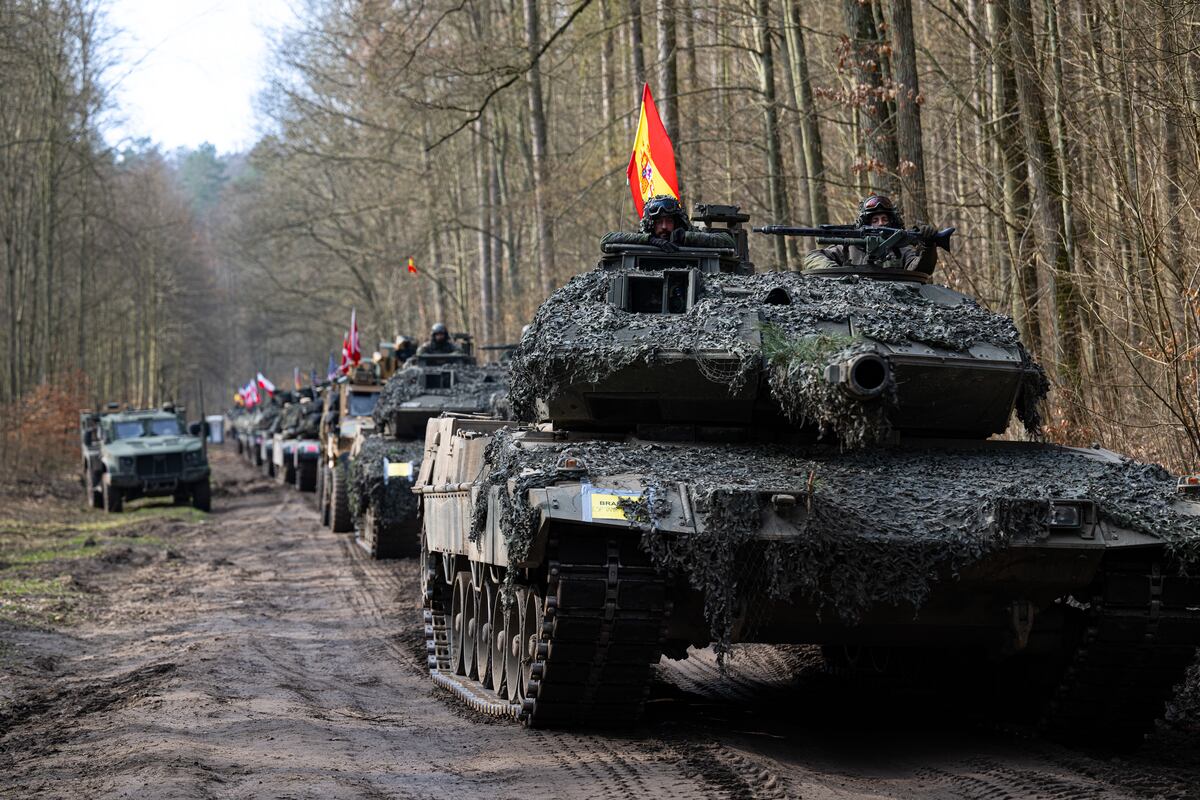
Korzeniewo, POLAND – “We are ready.”
The three-word statement was highlighted in bold letters at the opening of NATO’s March 4 briefing, on the occasion of the Polish-leg of the alliance’s largest military exercise since 1988.
But even amid the resolute and calm tone of officials in the room, there was a palpable sense of apprehension among reporters.
A core theme of the speeches presented by NATO representatives revolved around transparency, specifically in showcasing what the Steadfast Defender exercise — and its subsidiary drill Dragon , led by Poland — would involve. Yet many were wary of answering questions related to Russia or lessons learned from the war in Ukraine .
On several occasions, officials were pressed about whether they had concerns over revealing their plans to Russia through events such as these, or even the possibility the Kremlin could intercept operational details.
“Of course we are concerned, everyone is concerned,” Brig. Gen. Gunnar Bruegner, assistant chief of staff at NATO’s Supreme Headquarters Allied Powers Europe, told Defense News. “[We need] to make sure we are safeguarding the critical information, but it does not relieve us from the requirement of making these exercises happen .”
“It is quite a balance you need to keep; you cannot showcase everything,” he said.
During a March 4 news conference, Maj. Gen. Randolph Staudenraus, director of strategy and policy at NATO’s Allied Joint Force Command Brunssum, told reporters that while the alliance does protect its communications, “we are also really trying to be transparent.”
The fine line between accountability and information security is one that some NATO members have recently grappled with. A notable example is the leak of a German discussion about potentially providing Ukraine iwth Taurus missiles. Russia intercepted audio from the web conference between German Air Force officials.
Through this, Moscow was able to get its hands on information regarding the potential supply of cruise missiles to Ukraine as well as operational scenarios of how the war could play out.
Russian officials said last month that the country views Steadfast Defender as a threat.
When it comes to that training event, Bruegner said, details provided to the media during briefings are meant to illustrate the bigger picture, but only in broad terms.
“The plans themselves and the details in there will not be made available to everyone. What you’re seeing here are slides NATO has unclassified,” he explained.
He also noted that an objective of the exercises is to showcase the integration of capabilities, and not necessarily what NATO would do in a contested setting.
“We for sure would not fly banners on the amphibious devices in a contested exercise, which would have involved having an opponent on the other side of the eastern benches of the river and would’ve looked different [than what we saw in the Dragon drill],” Bruegner said.
Elisabeth Gosselin-Malo was a Europe correspondent for Defense News. She covers a wide range of topics related to military procurement and international security, and specializes in reporting on the aviation sector. She is based in Milan, Italy.
波兰科尔泽涅沃——“我们准备好了。”
在北约 3 月 4 日的新闻发布会上,这三个字的声明以粗体字突出显示。此次新闻发布会正值北约自 1988 年以来规模最大的军事演习在波兰举行之际。
但即便在场官员们语气坚定而冷静,记者们心中仍然弥漫着一种明显的忧虑。
北约代表发言的核心主题是透明度,特别是要详细介绍“坚定捍卫者”演习及其由波兰主导的附属演习“龙”的具体内容。然而,许多人对回答与俄罗斯或乌克兰战争经验教训相关的问题持谨慎态度。
在多个场合,官员们被追问是否担心通过此类活动向俄罗斯泄露计划,甚至担心克里姆林宫可能会截获行动细节。
“我们当然很担心,每个人都很担心,”北约欧洲盟军最高司令部助理参谋长贡纳尔·布鲁格纳准将告诉《防务新闻》。“我们需要确保关键信息的安全,但这并不能免除我们举行这些演习的义务。”
“你需要保持一种平衡;你不可能把所有东西都展示出来,”他说。
3 月 4 日的新闻发布会上,北约盟军联合部队司令部布伦瑟姆分部战略与政策主任兰道夫·斯陶登劳斯少将告诉记者,虽然北约确实保护了其通信,“但我们也确实在努力做到透明”。
问责制与信息安全之间的微妙界限,是近期一些北约成员国一直在努力应对的问题。一个显著的例子是,德国方面关于可能向乌克兰提供金牛座导弹的讨论录音泄露事件。俄罗斯截获了德国空军官员之间网络会议的音频。
通过这种方式,莫斯科得以获得有关向乌克兰供应巡航导弹的潜在信息,以及战争可能如何进行的作战方案。
俄罗斯官员上个月表示,该国将“坚定捍卫者”视为一种威胁。
布鲁格纳表示,就那次训练活动而言,在简报会上向媒体提供的细节旨在说明大局,但只是概括性的。
“计划本身及其细节不会向所有人公开。你们现在看到的是北约解密的幻灯片,”他解释道。
他还指出,演习的目标之一是展示能力的整合,而不是北约在对抗环境中会采取的行动。
布鲁格纳说:“我们肯定不会在对抗演习中在两栖装置上悬挂横幅,因为对抗演习意味着在河东岸的另一边有一个对手,这看起来会与我们在‘龙’演习中看到的情况不同。”
伊丽莎白·戈斯林-马洛曾任《防务新闻》欧洲通讯员。她的报道涵盖军事采购和国际安全等广泛领域,尤其擅长航空领域的报道。她常驻意大利米兰。