NATO sees Russian naval presence wane in the Mediterranean北约认为俄罗斯在地中海的海军存在正在减弱
Alliance officials believe Moscow's sea service is strained, having to focus on the Baltic and High North regions instead.
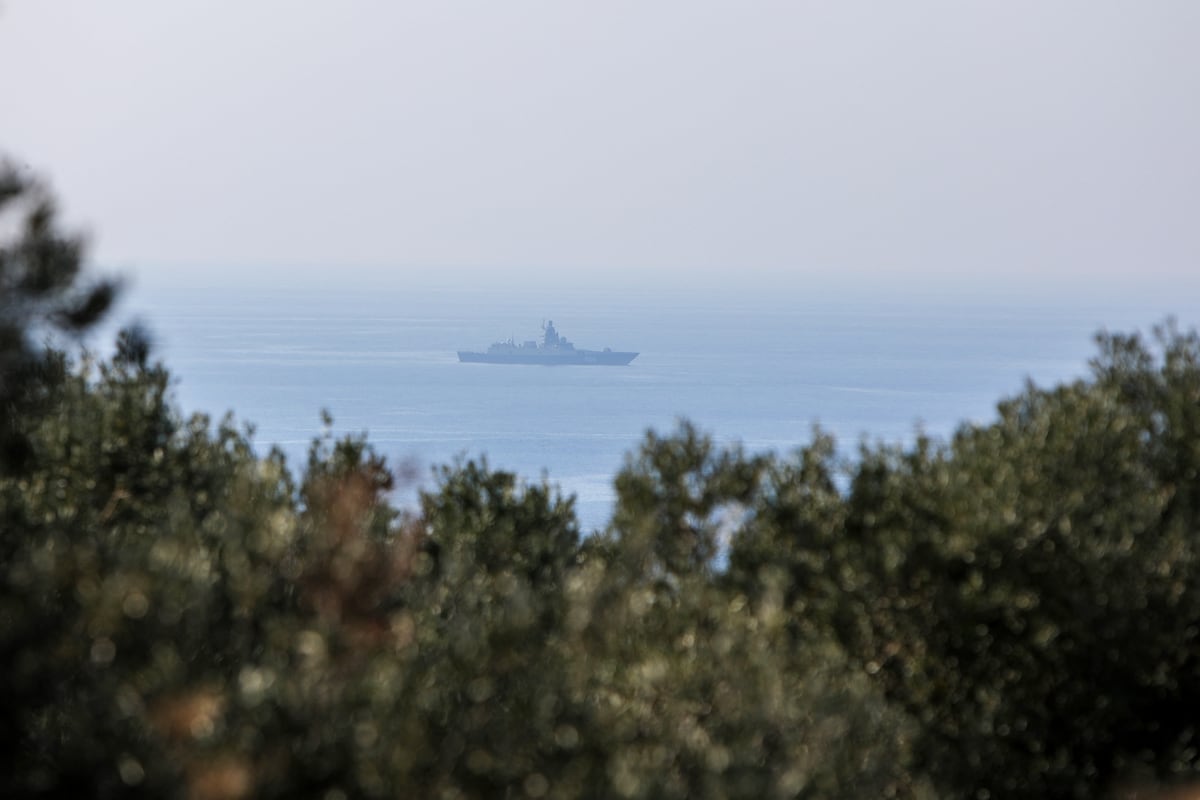
MILAN — NATO officials have been tracking a decrease in Russia’s naval presence in the Mediterranean, which officials have attributed to readiness problems and the Baltic Sea and High North regions demanding greater attention in Moscow’s eyes.
Gone are the days when Russia positioned one of its largest naval task forces in the Mediterranean, following escalating tensions in 2018 in Syria, deploying at least two submarines and ten surface ships.
According to a NATO official who spoke on the condition of anonymity, these numbers have dropped in recent months, with the Russian Navy averaging only a few maritime assets in the region.
“It is our assessment that the Russian Navy, which is already resource-constraint regarding where to place its assets, is experiencing force-generation challenges and dilemmas currently affecting their posture in the Mediterranean sea,” the representative told Defense News.
The official noted two key factors that have exacerbated these difficulties: the loss of Russia’s strategic port in Tartus, Syria, and NATO’s bolstered presence in the Baltic and High North regions.
In January, the new Syrian government terminated a long-standing agreement that enabled Russian presence into the country. Established in 1971 under a Soviet-Syrian lease agreement, the Tartus port served for decades as Russia’s main refuel naval facility in the Mediterranean.
Being deprived of that naval base has affected the Russian Navy’s operational capability as it no longer has access to a close-by replenishment and repair center.
“With the loss of that port, now, for example, if they bring a Kilo-class submarine in the area, they have to bring it all the way down there from one of their northern or baltic ports – being able to sustain operations is definitely more challenging,” the NATO official said.
At the end of September, the Russian Kilo-class submarine Novorossiysk was spotted surfacing off the Strait of Gibraltar due to several reported technical issues related to a leak. The submarine subsequently appeared to be making its way to the Baltic Sea for repairs the following week.
The city of Novorossiysk is currently the closest major Russian Black Sea port to Mediterranean waters – but to access it, forces must transit long-distances through Turkish-controlled straits.
The Kremlin also possesses the Baltiysk port, located within the Russian exclave of Kaliningrad Oblast, situated on the Baltic Sea coast, but reaching it from the Mediterranean would require even more travel and crossings.
With the decline of its regional influence and the launch of NATO’s large-scale deployment to the Baltic Sea, Moscow has shifted a good chunk of its focus to this location.
The military alliance kicked off its Baltic Sentry mission in January to provide enhanced protection of critical underwater infrastructure and bolster its sea surveillance with the support of frigates, maritime patrol aircraft, drones, and national surveillance assets.
The NATO official said that Russia has tried to match this increased presence by sending more resources to protect its own interests and shipping in these waters.
While the Russian Navy does not provide exact numbers of how many ships make up its Baltic Fleet, an open-source report published this year by the International Institute for Strategic Studies assessed that it includes roughly 69 vessels, including older, smaller boats.
However, some naval experts state that in the Baltic Sea, “the Russian Baltic Fleet is severely outnumbered compared to the available NATO naval forces of Baltic Sea nations,” writes Frederik Van Lokeren, a former officer of the Belgian Navy, in the online news service Naval News.
He goes on to argue that adding unmanned surface vessels to the fleet would be a force booster for Russian forces – but NATO seems to have taken an early lead on this matter.
“I do think allies have a technological advantage over Russia when it comes to readied and effective naval drones, but we can’t let off the gas and they [allied nations] must maintain a sense of urgency as we seek to maintain and increase our edge with innovation,” the NATO official said.
Elisabeth Gosselin-Malo was a Europe correspondent for Defense News. She covers a wide range of topics related to military procurement and international security, and specializes in reporting on the aviation sector. She is based in Milan, Italy.
米兰——北约官员一直在关注俄罗斯在地中海的海军存在减少的情况,官员们将此归因于战备问题,以及莫斯科认为波罗的海和高北地区需要更多关注。
2018 年叙利亚局势升级后,俄罗斯曾在地中海部署了规模最大的海军特遣部队之一,至少部署了两艘潜艇和十艘水面舰艇。但这样的日子已经一去不复返了。
一位不愿透露姓名的北约官员表示,近几个月来,这些数字有所下降,俄罗斯海军在该地区平均只有少数海上资产。
“我们评估认为,俄罗斯海军在部署资产方面已经面临资源限制,目前正面临兵力生成方面的挑战和困境,这影响了其在地中海的态势,”该代表告诉《防务新闻》。
这位官员指出,加剧这些困难的两个关键因素是:俄罗斯在叙利亚塔尔图斯的战略港口的丧失,以及北约在波罗的海和高北地区的加强存在。
今年1月,叙利亚新政府终止了一项允许俄罗斯在该国驻军的长期协议。塔尔图斯港于1971年根据苏叙租借协议建立,几十年来一直是俄罗斯在地中海的主要海军补给设施。
失去该海军基地影响了俄罗斯海军的作战能力,因为它不再能获得附近的补给和维修中心。
“例如,随着那个港口的丧失,现在如果他们要将一艘基洛级潜艇派往该地区,他们就必须从他们北部或波罗的海的某个港口一路开到那里——维持行动的能力无疑更具挑战性,”这位北约官员说。
9月底,俄罗斯基洛级潜艇“新罗西斯克”号因据称存在与漏水相关的多项技术问题,被发现浮出直布罗陀海峡附近海域。随后,该潜艇似乎于下周前往波罗的海进行维修。
新罗西斯克市是目前距离地中海最近的俄罗斯黑海主要港口——但要进入该港口,部队必须长途跋涉穿过土耳其控制的海峡。
克里姆林宫还拥有波罗的海沿岸的俄罗斯飞地加里宁格勒州境内的波罗的斯克港,但从地中海到达那里需要更多的旅行和航行。
随着莫斯科地区影响力的下降以及北约在波罗的海的大规模部署,莫斯科已将其相当一部分注意力转移到了该地区。
该军事联盟于 1 月份启动了“波罗的海哨兵”任务,旨在加强对关键水下基础设施的保护,并在护卫舰、海上巡逻机、无人机和国家监视资产的支持下加强其海上监视。
北约官员表示,俄罗斯试图通过派遣更多资源来保护自身在这些水域的利益和航运,从而对冲这种日益增强的存在。
虽然俄罗斯海军没有提供其波罗的海舰队的确切舰艇数量,但国际战略研究所今年发布的一份开源报告评估认为,该舰队大约有 69 艘舰艇,其中包括较老、较小的舰艇。
然而,一些海军专家指出,在波罗的海,“与波罗的海沿岸国家的北约海军力量相比,俄罗斯波罗的海舰队的数量严重不足,”比利时海军前军官弗雷德里克·范·洛克伦在海军新闻在线服务网站上写道。
他接着认为,向舰队增加无人水面舰艇将增强俄罗斯军队的实力——但北约似乎在这方面已经抢占了先机。
这位北约官员表示:“我认为,在准备充分且有效的海军无人机方面,盟国确实比俄罗斯拥有技术优势,但我们不能放松警惕,盟国必须保持紧迫感,因为我们需要通过创新来保持和增强我们的优势。”
伊丽莎白·戈斯林-马洛曾任《防务新闻》欧洲通讯员。她的报道涵盖军事采购和国际安全等广泛领域,尤其擅长航空领域的报道。她常驻意大利米兰。