Any Decision To Buy New-Build F-16s Not An “Urgent” Priority: USAF美国空军:购买全新F-16战斗机的决定并非“紧急”优先事项
A top USAF general said new F-16s are "maybe the lazy" route, but are an option as the service strives for 1,509 combat-coded fighters by 2035.
By Joseph Trevithick
Published Oct 21, 2026 1:55 PM EDT
The U.S. Air Force says any decision on whether or not to acquire new production F-16 Viper fighters is likely a year or more away. The service’s top officer in charge of force structure planning has also now raised the prospect of using a “spectrum of capability” to eventually supplant aging older-model F-16s. All of this comes as the Air Force has laid out a new vision to have 1,509 combat-coded fighters in inventory, hundreds more than it has now, by 2035, amid questions about whether industry and budgets can keep up.
Inside Defense and Air & Space Forces Magazine were among the first to report on the Air Force’s latest long-term fighter force structure plan late yesterday. This followed a roundtable with Lt. Gen. David Tabor, the service’s Deputy Chief of Staff for Plans and Programs. At the time of writing, an unclassified copy of the report, which was submitted to Congress last week, has not been released publicly. TWZ has reached out for more information.
Air Force Lt. Gen. David Tabor, seen here testifying before the Senate Armed Services Committee in 2024. USAF
Tabor said yesterday that the target fleet of 1,509 combat-coded fighters by 2035 would be approximately 40 percent F-35s , 40 percent F-15s (inclusive of F-15E Strike Eagles and F-15EX Eagle IIs ) and F-16s, and 20 percent F-22 Raptors and F-47s , according to Air & Space Forces Magazine . As an aside, the final expected F-47 fleet size remains unclear, though the Air Force continues to say it plans to acquire at least enough of those jets to replace its 185 F-22s on a one-for-one basis.
The current breakdown of the service’s fighter force structure is 45 percent F-16s, 30 percent F-35s, 15 percent F-15s, and 10 percent F-22s. Last year’s long-term fighter force structure report said the service was aiming for an eventual inventory of 1,558 combat-coded fighters and hoped to hit a milestone of 1,369 aircraft by Fiscal Year 2030. As of the start of Fiscal Year 2026, the Air Force had 1,168 combat-coded fighters, not including 103 A-10 Warthog ground attack jets , which have been part of this force structure planning in the past. The plan now is for the last of the A-10s to be retired by 2030 . The new 2035 figure also does not include the hundreds of Collaborative Combat Aircraft (CCA) drones the service wants to have acquired by that time, something we will come back to later on.
The US Air Force included these graphs showing projected fluctuations in fighter inventories in its annual force structure report last year. Not that the combat-coded tally for Fiscal Year 2030 shown here is lower (1,304) than the one the service said it was aiming for (1,369) at the time. The reason for that discrepancy is unclear. USAF
Currently, the Air Force expects fighter fleet expansion to be driven by the acquisition of new F-35As, F-15EXs, and F-47s. This was also the case when last year’s fighter force structure report was released. The possibility of the Air Force also acquiring new-production F-16s has come up several times in recent years. Most recently, there were several reports last month that prime contractor Lockheed Martin had made a new pitch to the service for a version of the latest Block 70 version of the fighter, tentatively dubbed the F-16G . New Block 70 and Block 72 F-16s , which differ in what engine they use, are being actively produced at Lockheed Matins’ plant in Greenville, South Carolina . At that time, TWZ did a deep dive into the benefits that this could offer the Air Force.
The new-production F-16D seen here, destined for Morocco, became the first Block 72 version to fly just earlier this month. Lockheed Martin
“There is a spectrum of capability that we might want to replace the F-16s with,” Lt. Gen. David Tabor said amid a discussion about the prospect of acquiring new Vipers at the roundtable yesterday, per Air & Space Forces Magazine . “It’s not urgent, frankly. What we don’t want to get to is a point where it is urgent, and we haven’t done the homework and decided ‘hey, this is really the right place to be.’ We do have time to churn through that and make sure that we have a good option going forward.”
“We’re not in a position where that decision has to be made immediately,” Tabor added, while acknowledging that “we are very conscious” that older-model F-16s are set to begin reaching the end of their lifespans in the 2030s. He also said any such planning was unlikely to be part of the process of developing the service’s Fiscal Year 2028 budget proposal, which will be released sometime early next year.
The Air Force is “in the initial phases of analyzing options for the next Future Years Defense Program ,” a spokesperson for the service had told us last month without specifically mentioning any particular type of aircraft. “At this stage, we have neither defined the precise mission requirements nor the spectrum of options that could fill it.”
When it comes to the current F-16 fleet, the Air Force had 774 Vipers in inventory at the start of Fiscal Year 2026 and expected that number to drop to 768, according to past budget documents. This includes a mixture of subvariants, and not all of them are assigned combat-coded units. The Air Force has been substantially upgrading at least a portion of its existing F-16s, including with the addition of new active electronically scanned array (AESA) radars and electronic warfare suites , to ensure their operational relevance for years to come.
A new AN/APG-83 Scalable Agile Beam Radar (SABR), an active electronically scanned array type, seen being integrated onto a US Air Force F-16. USAF
The Air Force has also already been taking newer F-16s from squadrons transitioning to the F-35 and using them to replace older Vipers in other units. Last year’s fighter force structure report explicitly highlighted plans to supplant Block 30 F-16s in five Air National Guard formations – three combat-coded squadrons and two training units – with Block 40 and 50 types in this way.
As we’ve previously written :
“A new F-16 offers a fresh and highly mature airframe — one with a full service-life ahead of it, on the order of 12,000 flight hours without the need for structural upgrades — double that of the original F-16. This is compared to existing F-16s in the inventory with the decades of wear and fatigue already accumulated on them, with structural upgrades keeping them in the air. That difference in remaining structural life is arguably the single biggest advantage a new-build aircraft has compared with extending an existing one.”
“Dumping more money into existing F-16s is becoming questionable. Service life extensions and technical upgrades can only go so far and supporting these jets is becoming harder as parts dry up and suppliers who made them are long gone. A new airframe would give the Guard many decades of highly efficient service and the piece of mind for future force planning that goes with it.”
“The new [F-16G] proposal would let some Guard and Reserve units swap their F-16s for vastly improved F-16s — the same logic that drove the F-15EX buy — while also keeping the Greenville line hot, which is a significant benefit in its own right. And it accomplishes both in the most efficient way possible: not just in acquisition cost, but in sustainment cost, which is really the more problematic burden of the two. In the end, this points to another glaring reality check for the all-stealth-force concept, a vision the Air Force has effectively already abandoned.”
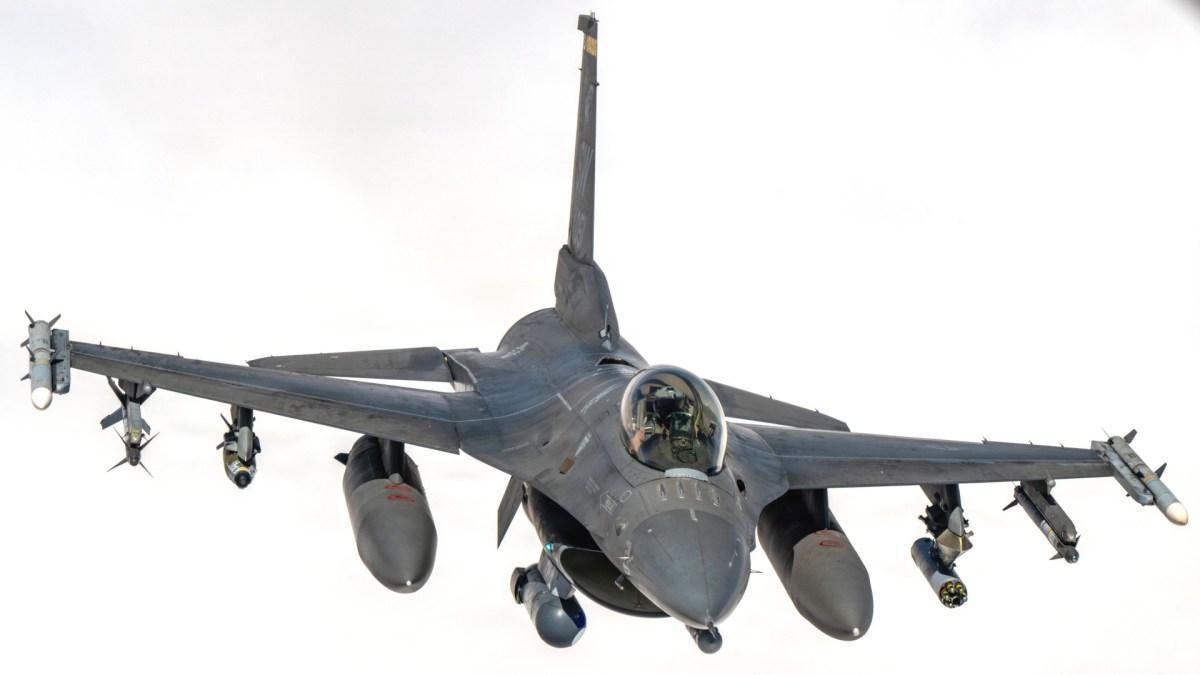
A row of Texas Air National Guard F-16s. USAF
“The Air Force has spent years describing the F-35 as the replacement for its F-16 fleet, yet it now has to contend with aging F-16s, delayed or constrained fighter production, a larger stated requirement for total fighter capacity, and the lengthy transition toward the F-47 and uncrewed combat aircraft. In that environment, a new-build F-16 provides an option that sits between extending legacy aircraft and buying the most sophisticated — and expensive — fighters available.”
You can read our full prior deep analysis on this topic here .
Lt. Gen. Tabor acknowledged many of these exact same points at the roundtable yesterday. He notably described acquiring new F-16s as “maybe the lazy” option, but also one that would benefit from “practically a ready-made aircraft” that is in production now, according to Air & Space Forces Magazine .
“The question is, can industry produce at those levels?” he also said, speaking more generally. “They’ve assured us that they can, and we believe them, but we also actually need to see it manifest.”
In the context of acquiring new F-16s, especially, it is important to note here that Lockheed Martin order books are very full already as a result of demand for these fighters from U.S. allies and partners. The company’s capacity, at least at present, to add a substantial new Air Force acquisition program on top of that is a real question. This, in some ways, mirrors questions that surround Boeing efforts to meet surging Air Force demand for F-15EXs .
A new F-16 being built at Lockheed Martin’s Greenville plant. Lockheed Martin
On top of all this, the Air Force’s still-evolving CCA plans remain something of a wildcard in these discussions. The Air Force has ordered General Atomics FQ-42 Vengeance and Anduril’s FQ-44 Fury CCAs into production , and is now aiming to have a combined fleet of at least 500 of these drones in inventory by 2032. The service is also still expecting to acquire additional CCAs, which could be of entirely different types, through a second iterative development cycle, or Increment 2, under this program. This is influencing the service’s crewed fighter force structure plans, but the full scale and scope of those impacts remain to be seen.
An F-35A flies in formation with a pre-production YFQ-42A CCA drone. USAF
“CCA is very much a reality,” Tabor said yesterday, per Air & Space Forces Magazine . “It is going to be a part of our future, and there is absolutely a world in which the incorporation of CCAs into the force will mitigate the requirement for the number of fighters. That’s not the CCA that we have right now, but it is advancing very, very rapidly. We’re confident that it will play a major role in future versions of the fighter force structure report.”
The Air Force’s F-22s are currently set to be its first ‘aerial quarterbacks’ for CCAs , with F-35s and F-47s expected to follow. At the same time, TWZ has highlighted previously how CCA could offer particular value when paired with fourth-generation fighters like the F-16. This, in turn, could actually bolster the case for new Viper acquisitions as a more affordable force multiplier.
A pre-production YFQ-44A Fury drone flies in formation with an F-35. USAF
The Air Force’s ability to secure necessary funding and other factors will play in all this, too. 2035 is a long way off from a budgetary perspective. It also stretches across multiple election cycles, including the one that will decide the next presidential administration, all of which could lead to major changes in defense spending priorities. Congress can and routinely does demand that the U.S. military alter major procurement plans. Just in the past two years or so, legislators have intervened to force the Air Force to move ahead with the acquisition of new E-7A Wedgetail airborne early warning and control planes and to save the U.S. Navy F/A-XX sixth-generation fighter program .
In the meantime, the Air Force clearly faces many continued questions about how to balance the need to modernize its fighter fleets while ensuring it retains enough tactical airpower to meet current and future operational demands. Even so, the service says it sees no need to rush to make a decision about whether to choose the “lazy” route of just buying new F-16s.
Contact the author: joe@twz.com
Comments couldn’t be loaded. Please refresh the page.
作者:约瑟夫·特雷维西克
发布于美国东部时间2026年10月21日下午1:55
美国空军表示,是否采购新生产的F-16“蝰蛇”战斗机的决定可能至少还要一年或更久才能做出。负责部队结构规划的空军最高官员也提出了利用“多种能力”最终取代老旧F-16战斗机的设想。与此同时,美国空军制定了一项新愿景,计划到2035年拥有1509架具备作战能力的战斗机,比目前的数量增加数百架。然而,人们不禁质疑工业界和预算能否跟上这一步伐。
《国防内幕》和《空军与太空部队》杂志是首批报道空军最新长期战斗机部队结构计划的媒体之一,该计划于昨日晚些时候发布。此前,空军负责计划和项目的副参谋长戴维·塔博尔中将出席了圆桌会议。截至发稿时,上周提交给国会的这份报告的非机密版本尚未公开。TWZ已联系相关部门以获取更多信息。
图中为美国空军中将戴维·塔博尔于2024年在参议院军事委员会作证时的照片。
据《空军与太空部队》杂志报道,塔博尔昨日表示,到2035年,美国空军计划拥有1509架具备作战能力的战斗机,其中约40%为F-35,40%为F-15(包括F-15E“攻击鹰”和F-15EX“鹰II”)和F-16,20%为F-22“猛禽”和F-47。另外,F-47的最终预计机队规模仍不明确,但空军方面表示,计划采购至少足够数量的F-47战机,以一对一的方式替换其现有的185架F-22。
目前空军战斗机部队的构成比例为:F-16占45%,F-35占30%,F-15占15%,F-22占10%。去年的长期战斗机部队结构报告指出,空军的目标是最终拥有1558架具备作战能力的战斗机,并希望在2030财年达到1369架的里程碑。截至2026财年初,空军拥有1168架具备作战能力的战斗机,这还不包括103架A-10“疣猪”攻击机,这些攻击机此前也曾纳入部队结构规划。目前的计划是,所有A-10攻击机将于2030年前全部退役。新的 2035 年数字还不包括该军种希望届时获得的数百架协同作战飞机 (CCA) 无人机,我们稍后会再讨论这个问题。
美国空军去年在其年度兵力结构报告中包含了这些图表,显示了战斗机库存的预计波动情况。图中显示的2030财年作战型战斗机数量(1304架)低于空军当时设定的目标数量(1369架)。造成这一差异的原因尚不清楚。美国空军
目前,美国空军预计战斗机机队扩充将主要依靠采购新型F-35A、F-15EX和F-47战斗机。去年的战斗机部队结构报告也证实了这一点。近年来,空军采购新生产的F-16战斗机的可能性也多次被提及。最近,上个月有报道称,主承包商洛克希德·马丁公司向空军再次推介了最新Block 70型F-16战斗机的改进型,暂定名为F-16G。新型Block 70和Block 72型F-16战斗机(区别在于发动机型号)正在洛克希德·马丁公司位于南卡罗来纳州格林维尔的工厂积极生产。当时,TWZ曾深入分析了这可能为空军带来的益处。
图中这架新生产的F-16D战斗机将交付摩洛哥,它于本月初成为首架首飞的Block 72型F-16D。洛克希德·马丁公司
据《空军与太空部队杂志》报道,大卫·塔博尔中将在昨天的圆桌会议上讨论采购新型F-16战斗机的可能性时表示:“我们有很多种战机可以替代F-16。坦白说,这并不紧急。我们不希望等到形势紧急,而我们却没有做好充分的准备工作,没有确定‘嘿,这真的是正确的选择’。我们有时间仔细研究,确保我们有一个好的方案。”
塔博尔补充道:“我们目前无需立即做出决定。”但他同时承认,“我们非常清楚”老款F-16战机将在2030年代开始陆续达到使用寿命终点。他还表示,任何此类规划都不太可能纳入空军2028财年预算提案的制定过程,该提案将于明年初公布。
空军发言人上个月告诉我们,空军“正处于分析下一阶段未来国防计划方案的初期阶段”,但并未具体提及任何特定类型的飞机。“现阶段,我们既没有明确具体的任务需求,也没有列出所有可能的方案。”
就目前的F-16机队而言,根据以往的预算文件,空军在2026财年初拥有774架F-16“蝰蛇”战斗机,预计这一数字将降至768架。这其中包括多种子型号,而且并非所有F-16都已分配到作战部队。空军一直在对其部分现有F-16进行大幅升级,包括加装新型有源相控阵雷达(AESA)和电子战系统,以确保其在未来数年内仍能保持作战效能。
图中可见,新型AN/APG-83可扩展敏捷波束雷达(SABR)——一种有源电子扫描阵列雷达——正在集成到美国空军的F-16战斗机上。
空军也已经开始从换装F-35的飞行中队中调拨较新的F-16战机,用于替换其他部队中较老的F-16战机。去年的战斗机部队结构报告明确指出,计划以这种方式用Block 40和Block 50型F-16战机替换五个空中国民警卫队部队(三个作战中队和两个训练单位)中的Block 30型F-16战机。
正如我们之前所写:
“新型F-16战机拥有全新且高度成熟的机身——其剩余使用寿命可达12000飞行小时左右,无需进行结构升级——是原F-16的两倍。相比之下,现役的F-16战机已经历了数十年的磨损和疲劳,需要通过结构升级才能继续飞行。可以说,剩余结构寿命的差异是新造飞机相对于现有飞机延期服役的最大优势。”
“继续向现有的F-16战机投入更多资金的做法越来越值得商榷。延长服役寿命和技术升级的作用终究有限,而且随着零部件短缺和供应商早已不复存在,维护这些战机也变得越来越困难。新型机身将为国民警卫队提供数十年的高效服役,并为未来的部队规划带来安心保障。”
“新的[F-16G]方案将允许部分国民警卫队和预备役部队用性能大幅提升的F-16战机替换现有的F-16战机——这与当初采购F-15EX的逻辑相同——同时还能维持格林维尔生产线的正常运转,这本身就是一项显著的优势。而且,该方案以最高效的方式实现了这两点:不仅在采购成本方面,而且在维护成本方面也同样高效,而维护成本才是两者中更为棘手的问题。最终,这再次给全隐形部队的概念敲响了警钟,而空军实际上已经放弃了这一愿景。”
一排德克萨斯州空中国民警卫队的F-16战斗机。美国空军
“空军多年来一直将F-35描述为F-16机队的替代者,但如今它不得不应对F-16机队老化、战斗机生产延迟或受限、战斗机总产能需求增加以及向F-47和无人作战飞机过渡的漫长过程。在这种情况下,全新制造的F-16提供了一种介于延长老旧飞机服役期和购买最先进——也是最昂贵——的战斗机之间的选择。”
您可以点击此处阅读我们之前对此主题的完整深度分析。
塔博尔中将在昨天的圆桌会议上也承认了其中的许多观点。据《空军与太空部队杂志》报道,他特别指出,采购新的F-16战机“或许是偷懒之举”,但同时也指出,由于F-16战机“几乎是现成的”,而且目前正在生产,因此采购新战机将大有裨益。
“问题是,工业界能否达到这样的生产水平?”他更笼统地说道,“他们向我们保证可以,我们也相信他们,但我们还需要看到实际成果。”
尤其是在采购新型F-16战斗机的背景下,值得注意的是,由于美国盟友和伙伴国对这些战斗机的需求,洛克希德·马丁公司的订单已经非常紧张。该公司目前是否有能力在此基础上再增加一项规模庞大的空军采购项目,这确实是一个疑问。在某种程度上,这与波音公司为满足空军对F-15EX战斗机日益增长的需求而面临的质疑如出一辙。
一架新型F-16战斗机正在洛克希德·马丁公司位于格林维尔的工厂建造。洛克希德·马丁公司
除此之外,空军仍在不断完善的CCA计划在这些讨论中仍然是一个不确定因素。空军已订购通用原子公司的FQ-42“复仇”和安杜里尔公司的FQ-44“狂怒”CCA投入生产,并计划到2032年拥有至少500架此类无人机。空军还计划通过该计划的第二个迭代开发周期(即第二阶段)采购更多CCA,这些无人机可能完全是不同类型的。这正在影响空军有人驾驶战斗机部队的结构规划,但这些影响的规模和范围还有待观察。
一架F-35A战斗机与一架YFQ-42A CCA无人机(预生产型)编队飞行。美国空军
据《空军与太空部队杂志》报道,塔博尔昨天表示:“协同作战能力(CCA)已成为现实。它将成为我们未来发展的一部分,而且在某个未来,将协同作战能力纳入部队建设将有效降低对战斗机数量的需求。虽然我们目前的协同作战能力还达不到这种程度,但它的发展速度非常快。我们相信,它将在未来版本的战斗机部队结构报告中发挥重要作用。”
目前,空军的F-22战机预计将成为CCA(协同作战能力)的首批“空中指挥官”,F-35和F-47战机预计也将随后加入。与此同时,TWZ此前曾强调,CCA与F-16等第四代战斗机配合使用时,能够发挥独特的价值。反过来,这或许会进一步增强采购新型“蝰蛇”(Viper)战机的必要性,因为后者是一种更经济实惠的战力倍增器。
一架YFQ-44A“狂怒”无人机(预生产型)与一架F-35战斗机编队飞行。美国空军
空军能否获得必要的资金以及其他因素也将影响这一切。从预算角度来看,2035年还很遥远。而且,它跨越了多个选举周期,包括决定下一届总统任期的选举,所有这些都可能导致国防开支优先事项的重大变化。国会可以而且经常要求美国军方修改重大采购计划。就在过去两年左右的时间里,立法者就曾介入,迫使空军推进新型E-7A“楔尾”预警机的采购,并挽救了美国海军的F/A-XX第六代战斗机项目。
与此同时,空军显然仍面临诸多问题,例如如何在更新战斗机机队的同时,确保保留足够的战术空中力量以满足当前和未来的作战需求。即便如此,空军表示,他们认为没有必要急于决定是否选择直接购买新的F-16战斗机这种“捷径”。
联系作者:joe@twz.com
评论加载失败,请刷新页面。