Malaysia is ageing fast, but who’s in charge? Advocates call for an ‘anchor ministry’马来西亚人口老龄化速度很快,但谁来负责?倡导者呼吁设立“核心部门”。
KUALA LUMPUR, Oct 22 — As Malaysia rapidly ages, it needs a targeted approach, with a ministry dedicated to older persons and one agency to coordinate all aged care...
In response to Malaysia's rapidly aging population, experts have advocated for the establishment of a dedicated Ministry for Older Persons and a central agency to coordinate aged care policies and efforts.
Highlighting the current fragmented approach, stakeholders like Ezzati Nasir and Dr. Jacob Thomas emphasized the necessity for an integrated and holistic framework, akin to successful models in countries like Japan and Australia.
Concurrently, the Ministry of Women, Family and Community Development, alongside the Ministry of Health, has been appointed to spearhead long-term care initiatives, as outlined in the Malaysia Care Strategic Framework and Action Plan for 2026-2030.
KUALA LUMPUR, Oct 22 — As Malaysia rapidly ages, it needs a targeted approach, with a ministry dedicated to older persons and one agency to coordinate all aged care policies.
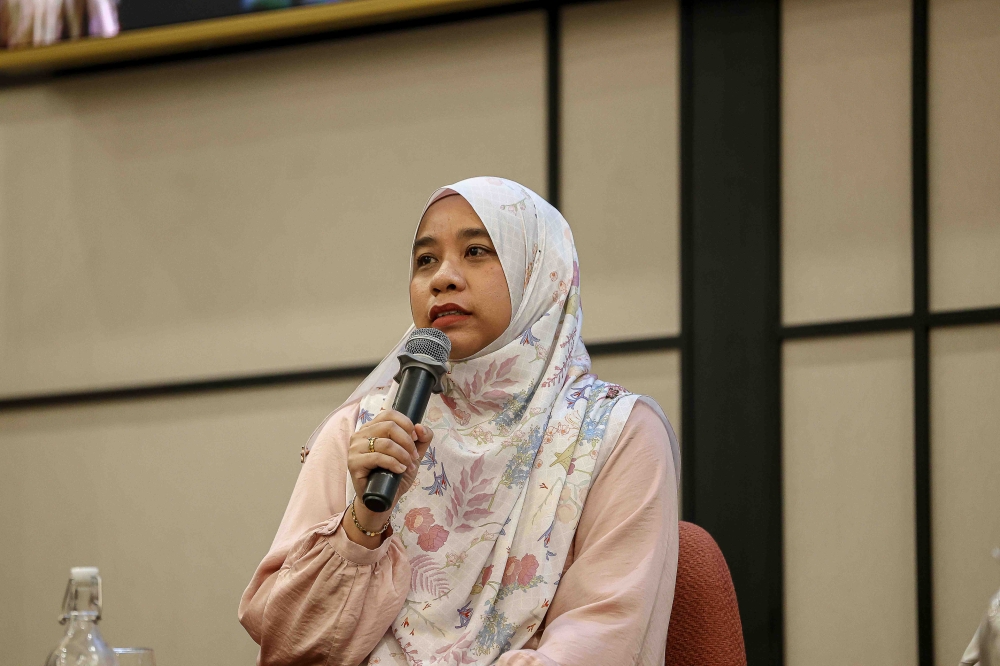
Ezzati Nasir, CEO and founder of Teman Malaysia, which provides care companion services for older persons, said the country’s approach to aged care is currently fragmented across different ministries.
“I do hope that when I am an aged person, there will be a Ministry for Older Persons,” she said as a panellist at the National Long-Term Care Financing Dialogue yesterday.
Instead of “wasting time” by having different ministries decide which areas of aged care or matters relating to older persons fall within their scope or responsibilities, she said it is better to have a dedicated ministry.
“So I feel we have to come together and work on elderly care as one holistic approach and one ministry,” she said.
Malaysia Productivity Corporation Private Healthcare Productivity Nexus champion Datuk Dr Jacob Thomas said the Malaysian government should set up an agency to set policy and coordinate efforts on care for older persons.
“What I’m hoping for and I think we are getting there is for one agency – a Cabinet-directed body – to manage aged care, just like what you have in Japan, in Australia,” he said in a separate panel at the same dialogue.
He added that this agency would not leave out any ministries: “The Ministry of Health will have to play a critical role. The Ministry of Women, Family and Community Development will have to play a role and I hear that they are going to take the lead in this, supported by the Ministry of Health and the others. Ministry of Finance has to come in.
“So, all of them have to come in, but there has to be someone to drive it.”
Dr Jacob based his proposal on Malaysia’s experience with medical tourism, which was handled by different departments until the government set up the Malaysia Healthcare Travel Council under the Ministry of Health.
“After that things took off in a big way because everybody was listening to that one agency who was coordinating the activities around the whole continuum of medical tourism.
“So, similarly for aged care, there are many players. Social welfare, there’s finance, there’s a Ministry of Health, all of them have to be coordinated,” he said.
In another panel discussion, Malaysian Caregivers Association (Kendana) chairman Rashidi Yahaya also said Malaysia needs an “anchor ministry” to take charge of long-term care, and that a ministry has to step forward to play this role.
Datuk Tengku Aizan Tengku Abdul Hamid, Academy of Sciences Malaysia council member and Private Pension Administrator Malaysia board chairman, also said Malaysia urgently needs to create an agency for ageing, instead of continuing with a fragmented approach to such policies.
“The most critical one from my observation is for us to look at the coordination across sectors of and levels of government. I think that is very critical because we have been doing silo work.
“We have limited resources, so we don’t want to be redundant and wasteful, but we want to achieve the same output. So the end goal is the same,” she said.
She added that there is a need for different agencies to work together and reduce the mentality of “pacak bendera” or staking claim over different initiatives.
Nurdiyanah Kamsan, who lectures on gerontology at Singapore’s Temasek Polytechnic, said it would be helpful to have a one-stop integrated agency that could provide resources on caregiving and ageing services to first-time caregivers, such as those whose parents have just been diagnosed with dementia.
“Would it be helpful if you have one integrated agency that you can sort of, you know, put your foot in there and ‘Okay, these are the services that I need to go, or these are the community places that can help me’. So, a consolidated agency like that would be very helpful,” she said at another panel discussion.
“On top of that, this particular agency must work with the community on the ground to understand the services that are needed within communities,” she said.
The dialogue was organised by Kendana together with Universiti Putra Malaysia’s Malaysian Research Institute on Ageing.
In November 2025, the Ministry of Women, Family and Community Development launched the Malaysia Care Strategic Framework and Action Plan (2026–2030) .
That document stated that both the ministry and the Ministry of Health have been appointed co-leads for long-term care.
Long-term care refers to care and support, typically for older persons who cannot meet their basic needs independently.
Among other things, the action plan includes the planned coordination of the different standard operating procedures across ministries and regulatory agencies for the registration and licensing of care centres.
Also included in the action plan is the planned setting up of a National Care Regulatory Body to oversee the registration, licensing, accreditation and quality assurance of care providers.
The Health Ministry’s 2023 Health White Paper also recognised the need to strengthen inter-agency and inter-sectoral collaboration to improve health outcomes for Malaysians, and proposed formalising an inter-ministerial taskforce on healthy ageing and aged care.
Recommended reading:
Experts call for ‘Ministry of Longevity’ to prepare Malaysia for aged nation status
High Court rejects bid for closed-door trial in civil suit over Bandar Utama school murder
DAP lawmaker condemns police action against lawyers over sharing of Noorizwan’s custodial death photos
Last phone pings of 54 missing Malaysians traced to Nepal glacial flood site, foreign minister tells Parliament
针对马来西亚人口迅速老龄化的问题,专家们呼吁设立专门的老年人事务部和中央机构来协调老年护理政策和工作。
利益相关者如埃扎蒂·纳西尔和雅各布·托马斯博士强调了当前分散做法的必要性,并指出需要建立一个类似于日本和澳大利亚等国家成功模式的综合整体框架。
与此同时,妇女、家庭及社区发展部与卫生部一起被指定牵头开展长期护理计划,这些计划在《2026-2030 年马来西亚护理战略框架和行动计划》中有所概述。
吉隆坡,10 月 22 日讯——随着马来西亚人口迅速老龄化,需要采取有针对性的方法,设立专门负责老年人事务的部门和一个协调所有老年护理政策的机构。
为老年人提供护理陪伴服务的Teman Malaysia首席执行官兼创始人Ezzati Nasir表示,该国目前的养老护理方式分散在不同的部门之间。
“我真心希望,当我年老的时候,会有一个老年人事务部,”她昨天在全国长期护理融资对话会上作为小组成员说道。
她表示,与其让不同的部门“浪费时间”来决定哪些老年护理领域或与老年人相关的事项属于他们的职责范围,不如设立一个专门的部门。
“所以我认为我们必须团结起来,以一个整体的方法和一个部门的名义来处理老年护理问题,”她说。
马来西亚生产力机构私营医疗保健生产力关系倡导者拿督雅各布·托马斯博士表示,马来西亚政府应该成立一个机构,制定政策并协调老年人护理方面的工作。
“我希望,而且我认为我们正在朝着这个方向努力,是由一个机构——一个内阁指导的机构——来管理老年护理,就像日本和澳大利亚那样,”他在同一对话的另一个小组讨论中说道。
他补充说,该机构不会遗漏任何部委:“卫生部将发挥关键作用。妇女、家庭和社区发展部也必须发挥作用,我听说他们将牵头这项工作,并得到卫生部和其他部门的支持。财政部也必须参与进来。”
“所以,他们都得进来,但总得有人来开车。”
Jacob 博士的提议是基于马来西亚在医疗旅游方面的经验,在政府于卫生部下设立马来西亚医疗旅游理事会之前,医疗旅游一直由不同的部门负责管理。
“在那之后,事情就迅速发展起来了,因为每个人都在听从那个协调整个医疗旅游产业链活动的机构的意见。
“同样,在老年护理领域,也有许多参与者。社会福利部门、财政部门、卫生部,所有这些部门都需要协调配合,”他说。
在另一场小组讨论中,马来西亚护理人员协会(Kendana)主席拉希迪·亚哈亚也表示,马来西亚需要一个“牵头部门”来负责长期护理,并且必须有一个部门站出来扮演这个角色。
马来西亚科学院理事会成员兼马来西亚私人养老金管理机构主席拿督东姑艾赞东姑阿卜杜勒·哈米德也表示,马来西亚迫切需要成立一个老龄化机构,而不是继续采取零散的政策方式。
“依我观察,最关键的一点是我们需要审视各部门和各级政府之间的协调。我认为这非常重要,因为我们一直以来都是各自为政。”
“我们的资源有限,所以我们不想重复劳动和浪费资源,但我们又想达到同样的产出。因此,最终目标是一样的,”她说。
她补充说,不同机构需要共同努力,减少“各执己见”或对不同项目争夺控制权的心态。
新加坡淡马锡理工学院老年学讲师努尔迪亚娜·卡姆桑表示,如果能有一个一站式综合机构,为首次担任照护者的人(例如父母刚刚被诊断出患有痴呆症的人)提供照护和老年服务方面的资源,将会很有帮助。
她在另一次小组讨论中说:“如果有个综合机构,你可以直接联系它,然后说‘好的,这些是我需要的服务,或者这些社区场所可以帮助我’,那该多好啊。所以,像这样的综合机构会非常有帮助。”
“除此之外,该机构还必须与当地社区合作,了解社区内需要哪些服务,”她说。
该对话由肯达纳与马来西亚博特拉大学的马来西亚老龄化研究所共同组织。
2025 年 11 月,妇女、家庭及社区发展部启动了《马来西亚关爱战略框架和行动计划(2026-2030)》。
该文件指出,该部委和卫生部已被任命为长期护理的共同牵头单位。
长期护理是指为无法独立满足基本需求的年长者提供的护理和支持。
该行动计划除其他事项外,还包括协调各部委和监管机构在护理中心注册和许可方面的不同标准操作程序。
该行动计划还包括设立国家护理监管机构,以监督护理机构的注册、许可、认证和质量保证。
卫生部 2023 年卫生白皮书也认识到需要加强机构间和部门间的合作,以改善马来西亚人的健康状况,并提议正式成立一个关于健康老龄化和老年护理的跨部门工作组。
推荐阅读:
专家呼吁设立“长寿部”,为马来西亚步入老龄化国家做好准备
高等法院驳回了关于万达镇小学谋杀案民事诉讼中要求闭门审理的请求。
民主行动党议员谴责警方因律师分享诺里兹万羁押期间死亡照片而对其采取行动。
外交部长向国会表示,54名失踪马来西亚人的最后手机信号追踪到尼泊尔冰川洪水灾区。