Why your air quality app and the official API don’t match, environment minister explains in Parliament环境部长在议会解释为何空气质量应用程序与官方API不匹配
KUALA LUMPUR, Oct 22 — The Air Pollutant Index (API) readings issued by the Department of Environment (DOE) remain the government’s official reference for determining air...
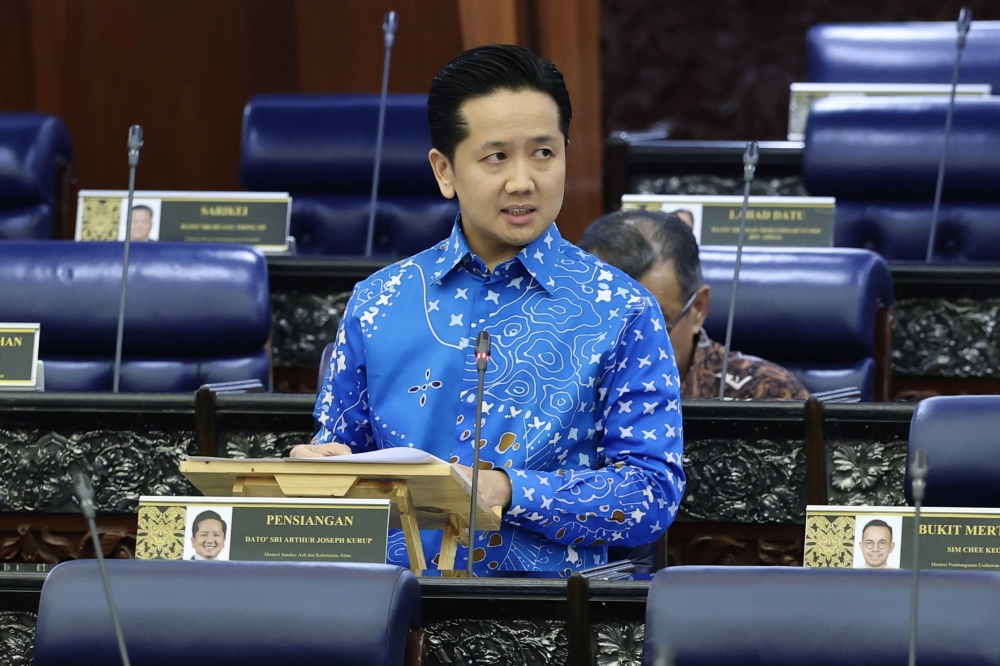
In response to concerns about air quality monitoring, Malaysia's Natural Resources and Environmental Sustainability Minister Datuk Seri Arthur Joseph Kurup affirmed that the Air Pollutant Index (API) readings issued by the Department of Environment (DOE) are the authoritative source for air quality assessment and haze management.
Utilizing methodologies recognized by the US Environmental Protection Agency, data from 68 nationwide monitoring stations are continuously updated and maintained under rigorous quality assurance protocols.
Differences with other platforms' readings are attributed to varying methodologies and not inaccuracies.
The government remains committed to enhancing the National Haze Action Plan and has implemented strict actions against open burning to safeguard public health.
KUALA LUMPUR, Oct 22 — The Air Pollutant Index (API) readings issued by the Department of Environment (DOE) remain the government’s official reference for determining air quality and managing haze.
Natural Resources and Environmental Sustainability Minister Datuk Seri Arthur Joseph Kurup said the official API was calculated based on the concentrations of six major pollutants monitored around the clock through 68 automatic air quality monitoring stations nationwide.
He said the stations used measurement equipment and technical methods recognised by the United States Environmental Protection Agency, with procedures in place to ensure the accuracy and reliability of the data.
“Station operations include equipment maintenance, calibration, instrument performance checks and quality assurance procedures to ensure that the data used to calculate the official API are accurate and reliable,” he said during the Minister’s Question Time in the Dewan Rakyat today.
Arthur was answering a question from Manndzri Nasib (BN-Tenggara), who wanted to know how the government ensured that Malaysia’s official API readings were accurate, transparent and trusted by the public.
He said the stations operated under a Quality Assurance Project Plan (QAPP), which included daily automated zero and span checks, periodic calibration using standard gases traceable to international metrology standards under the National Institute of Standards and Technology, and regular performance audits.
Data collected were also monitored continuously through the Environmental Data Centre to detect changes in readings, assess equipment performance and enable corrective action in the event of disruptions or irregularities.
Arthur said the official API was updated hourly, while the calculations for PM2.5 and PM10 were based on their 24-hour moving average concentrations, in line with World Health Organisation standards and practices adopted by international environmental agencies.
On differences between official API readings and those displayed on platforms such as the Air Quality Index (AQI) and other independent applications, he said these did not necessarily mean that the official readings were inaccurate.
“Differences may arise because these platforms use different scales, thresholds, categories, averaging periods, update times and data sources,” he said, adding that some also relied on low-cost sensors or estimates derived from models and satellite data.
He explained that satellite data measured particle concentrations in the atmosphere rather than actual air quality at ground level, where people breathe.
Such readings could also be affected by cloud cover and atmospheric humidity.
Meanwhile, Arthur said the ministry was open to improving the National Haze Action Plan to ensure that coordination mechanisms and protective measures remained relevant as haze conditions changed.
“This is important to ensure that the actions of the various agencies are better coordinated, particularly when API readings reach unhealthy or very unhealthy levels, to protect public health and well-being,” he said.
On measures to address haze and open burning, Arthur said the government maintained a zero-tolerance approach towards open burning.
The DOE had taken 3,433 enforcement actions related to open-burning incidents between August and October this year, he added. — Bernama
Kuching school attack: Sarawak police ask media to refrain calling commissioner, press conference on Oct 27
Two in three Perakians say their income is enough, but they want more jobs, Institut Darul Ridzuan study shows
Heading to Kelantan? JKR warns motorists to take care on cracked stretch of Gua Musang road near Yayasan Albarakah
针对有关空气质量监测的担忧,马来西亚自然资源和环境可持续发展部长拿督斯里亚瑟·约瑟夫·库鲁普确认,环境部发布的空气污染指数(API)读数是空气质量评估和雾霾管理的权威来源。
利用美国环境保护署认可的方法,来自全国 68 个监测站的数据在严格的质量保证协议下不断更新和维护。
与其他平台读数的差异是由于方法不同造成的,而不是由于读数不准确造成的。
政府仍致力于加强国家雾霾治理行动计划,并已采取严格措施打击露天焚烧,以保障公众健康。
吉隆坡,10 月 22 日讯——环境部发布的空气污染指数 (API) 读数仍然是政府确定空气质量和控制雾霾的官方参考标准。
自然资源及环境可持续发展部长拿督斯里亚瑟·约瑟夫·库鲁普表示,官方空气污染指数是根据全国68个自动空气质量监测站全天候监测的六种主要污染物的浓度计算得出的。
他表示,这些监测站使用的测量设备和技术方法均获得美国环境保护署的认可,并制定了相应的程序来确保数据的准确性和可靠性。
“站点运行包括设备维护、校准、仪器性能检查和质量保证程序,以确保用于计算官方API的数据准确可靠,”他今天在国会下议院部长质询时间表示。
Arthur 回答了 Manndzri Nasib(国阵-登加拉)提出的问题,Manndzri Nasib 想知道政府如何确保马来西亚官方 API 读数准确、透明并受到公众信任。
他表示,这些站点按照质量保证项目计划 (QAPP) 运行,其中包括每日自动零点和量程检查、使用可追溯至美国国家标准与技术研究院国际计量标准的标准气体进行定期校准,以及定期进行性能审核。
收集到的数据还通过环境数据中心进行持续监控,以检测读数的变化,评估设备性能,并在出现中断或异常情况时采取纠正措施。
Arthur表示,官方API每小时更新一次,而PM2.5和PM10的计算则基于其24小时移动平均浓度,这符合世界卫生组织的标准和国际环境机构采用的做法。
对于官方空气质量指数 (API) 读数与空气质量指数 (AQI) 等平台和其他独立应用程序上显示的读数之间的差异,他表示,这并不一定意味着官方读数不准确。
“由于这些平台使用不同的尺度、阈值、类别、平均周期、更新时间和数据来源,可能会出现差异,”他说道,并补充说,有些平台还依赖于低成本传感器或从模型和卫星数据中得出的估计值。
他解释说,卫星数据测量的是大气中的颗粒物浓度,而不是人们呼吸的地面上的实际空气质量。
此类读数也可能受到云量和大气湿度的影响。
与此同时,亚瑟表示,该部愿意改进《国家雾霾行动计划》,以确保协调机制和保护措施能够随着雾霾情况的变化而保持有效性。
他说:“这对于确保各机构的行动更好地协调一致至关重要,尤其是在API读数达到不健康或非常不健康水平时,以保护公众健康和福祉。”
关于应对雾霾和露天焚烧的措施,亚瑟表示,政府对露天焚烧采取零容忍态度。
他补充说,今年8月至10月期间,环境部已针对露天焚烧事件采取了3433次执法行动。——马新社
古晋学校袭击事件:砂拉越警方要求媒体不要致电警务专员,将于10月27日召开新闻发布会
霹雳州达鲁里兹安研究所的一项研究显示,三分之二的霹雳州居民表示他们的收入足够,但他们希望有更多的工作机会。
计划前往吉兰丹? JKR 警告驾驶者要小心阿尔巴卡基金附近话望生路的裂缝路段