Need help getting out of a chair? It could be an early sign of frailty需要人搀扶才能从椅子上站起来吗?这可能是身体虚弱的早期征兆。
Need help getting out of a chair? It could be an early sign of frailty, experts say in Singapore. Read more at straitstimes.com.
新闻视频
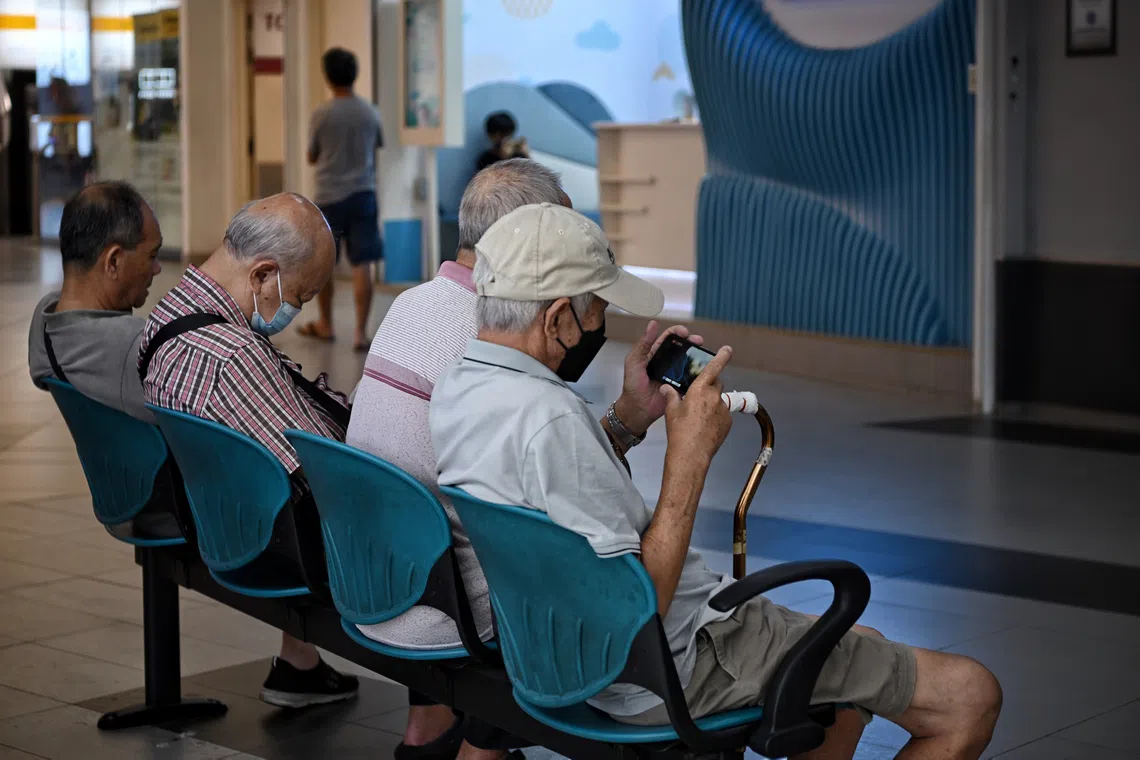
Frailty is when the body cannot get through and recover from illnesses and injuries on its own, making it more vulnerable.
ST PHOTO: KUA CHEE SIONG
Published Oct 23, 2026, 05:00 AM
Updated Oct 23, 2026, 05:00 AM
Difficulty standing up from a chair or car can be an early sign of frailty and muscle loss, even in people in their 30s or 40s, said Changi General Hospital’s Samuel Chew.
Experts said frailty can be reversed if found early. Seniors should do muscle-strengthening exercise twice weekly, but only 36.8% aged 60 to 74 do so, according to the National Population Health Survey.
Poor muscle health, low protein intake and social isolation can worsen decline. Singapore is expanding active ageing centres and age-friendly neighbourhoods to help seniors stay independent.
SINGAPORE – Needing additional effort to get up from a chair or out of a car could be an early sign of frailty, even if someone is still in their 30s or 40s.
“It is a very important sign that, actually, you are losing your muscles and muscle strength,” said Samuel Chew, senior consultant with Changi General Hospital’s (CGH) geriatric medicine department.
Tan Tock Seng Hospital (TTSH) geriatric medicine senior consultant Lim Jun Pei said in older people, this could manifest as difficulty in carrying out normal daily activities, such as climbing stairs or carrying a bag of rice, or the need for assistance to walk across a room.
Frailty is when the body cannot get through and recover from illnesses and injuries on its own , making it more vulnerable . As it worsens, frailty can be disabling. But it can be reversed, particularly if caught early.
Rachel Ngo – director at the Health Promotion Board’s (HPB) physical activity and healthy ageing division – said that while many might view such physical decline as an inevitable part of ageing, steps can be taken to slow or reverse it.
One way to do so is by doing more muscle-strengthening exercises, she said, with Chew noting that consistency is key.
Frailty is a key concern in Singapore, which attained super-aged status in 2026 as more than one in five citizens is aged 65 or older. Other issues include sarcopenia, or age-related muscle loss, which affects a third of all Singaporeans aged 60 or older.
Four experts came together to talk about how to help Singaporeans age well during an In Perspective roundtable discussion hosted by The Straits Times on Oct 6.
Joining CGH’s Chew, Lim from TTSH and Ngo from HPB was Soh Swee Ping, chief of the active ageing division at the Agency for Integrated Care (AIC).
The theme was “Ageing Well: Designing a Good Life in Super-Aged Singapore”. Moderated by ST senior correspondent Joyce Teo, the hour-long session was held at SPH Media’s in-house multimedia facility Studio+65.
To help the Republic better handle the transition to a super-aged society, $3.5 billion has been set aside for initiatives under the Age Well S G national programme, which aims to help seniors stay active and live more independently.
This includes expanding the network of Active Ageing Centres (AACs), which keep seniors active with programmes ranging from physical exercises to volunteering opportunities.
Ngo said beyond just cardiovascular activities such as walking, seniors should also do muscle-strengthening exercises at least twice weekly, according to the Singapore Physical Activity Guidelines developed by HPB and Sport Singapore.
However, many do not, she noted, pointing to findings from the latest National Population Health Survey .
It found that while 83.5% of those aged between 60 and 74 had sufficient physical activity, only 36.8% had sufficient muscle-strengthening activity. “It is about closing this gap, and the barriers for seniors can be quite real,” said Ngo.
For example, some may not have the confidence to perform the exercises correctly or may stop exercising entirely after experiencing muscle soreness, she said.
(From left) ST senior correspondent Joyce Teo, CGH senior consultant in geriatric medicine Samuel Chew, AIC chief of the active ageing division Soh Swee Ping, HPB director of the physical activity and healthy ageing division Rachel Ngo and TTSH senior consultant in geriatric medicine Lim Jun Pei at the discussion on Oct 6. ST PHOTO: DESMOND WEE
(From left) ST senior correspondent Joyce Teo, CGH senior consultant in geriatric medicine Samuel Chew, AIC chief of the active ageing division Soh Swee Ping, HPB director of the physical activity and healthy ageing division Rachel Ngo and TTSH senior consultant in geriatric medicine Lim Jun Pei at the discussion on Oct 6.
ST PHOTO: DESMOND WEE
Seniors should be doing the right type of exercises at the right intensity, and doing them consistently, she added.
Being hospitalised and then having to rest after being discharge d can set off a vicious circle, said Chew, who is also an adjunct associate professor of medicine at the NUS Yong Loo Lin School of Medicine.
This prolonged period of physical inactivity can lead to a loss of muscle mass, which can in turn lead to a decrease in appetite and undernutrition, he added, noting that this in turn leads to further muscle loss and then frailty. “To prevent and break this vicious circle, there’s a need for us to identify individuals at risk of undernutrition, as well as with poor muscle health, and to institute targeted nutritional and muscle health interventions during hospital admissions, as well as after discharge,” he said.
TTSH’s Lim noted that the social isolation some seniors face can lead to cognitive decline.
Making social interaction easier for seniors
AIC’s Soh pointed to the role that AACs – currently numbering more than 260 islandwide – can play in making social interaction more convenient.
To make such centres even more accessible, small adjustments to neighbourhoods can make them more age-friendly, such as providing seats along the pathways to the AACs where seniors can rest temporarily under shade, as well as railings for them to hold on to while walking, she said.
Such senior-friendly infrastructure is being incorporated as part of Singapore’s Age Well Neighbourhoods, where towns with more seniors are being enhanced to help the elderly age live independently in their communities.
Soh acknowledged that for those facing social isolation, encouraging them to visit such centres may not be simple. “The first step is to befriend them, give them the confidence that they can come out, then take them to the AACs, where they have activities that they can enjoy,” she said.
She noted that these centres also provide other services supporting the health of seniors. These include hosting community health posts, where seniors can get basic health services and chronic disease support without needing to go to a hospital or polyclinic.
“It’s really not just about the AACs, but the whole ecosystem,” said Soh, noting that such an ecosystem can help seniors stay active and get their healthcare needs met in the community.
Ultimately, ageing well is not a matter of luck, said ST’s Teo, wrapping up the discussion.
“It’s about the daily choices we make starting today. Because, let’s be honest, nobody wants to reach 75 only to find out their knee is the boss of their daily schedule.”
In Perspective is a research-led content programme by SPH Media that combines insight-driven storytelling with expert perspectives on key issues shaping society.
Zhaki Abdullah is a correspondent at The Straits Times. He is on the health beat, in addition to occasionally covering science, environmental, tech and Muslim affairs issues.
AIC/Agency for Integrated Care
虚弱是指身体无法自行克服和从疾病和损伤中恢复,从而使身体更加脆弱。
《海峡时报》摄影:郭志雄
发布于 2026 年 10 月 23 日上午 5:00
更新于2026年10月23日上午5:00
樟宜综合医院的 Samuel Chew 表示,即使是 30 多岁或 40 多岁的人,从椅子或汽车上站起来也很困难,这可能是身体虚弱和肌肉萎缩的早期迹象。
专家表示,如果及早发现,体弱是可以逆转的。老年人应该每周进行两次肌肉强化锻炼,但根据全国人口健康调查,60至74岁的老年人中只有36.8%的人这样做。
肌肉健康状况不佳、蛋白质摄入不足和社会孤立都会加剧衰老。新加坡正在扩建活跃老龄化中心和老年友好型社区,以帮助老年人保持独立生活能力。
新加坡——即使某人只有三四十岁,从椅子上站起来或从车里出来也可能需要付出额外的努力,这可能是身体虚弱的早期迹象。
“这实际上是一个非常重要的迹象,表明你正在失去肌肉和肌肉力量,”樟宜综合医院(CGH)老年医学科高级顾问 Samuel Chew 说。
陈笃生医院(TTSH)老年医学高级顾问林俊培表示,老年人可能会出现难以进行正常日常活动的情况,例如爬楼梯或提一袋米,或者需要帮助才能穿过房间。
虚弱是指身体无法自行抵御和恢复疾病和损伤,从而变得更加脆弱。随着病情加重,虚弱可能导致残疾。但如果及早发现,虚弱是可以逆转的。
新加坡健康促进局 (HPB) 体育活动和健康老龄化部门主任 Rachel Ngo 表示,虽然许多人可能认为这种身体机能的下降是衰老过程中不可避免的一部分,但可以采取措施来减缓或逆转这种下降。
她表示,其中一种方法是多进行肌肉强化锻炼,而丘则指出,坚持是关键。
在新加坡,老年人的虚弱症是一个主要问题。到2026年,新加坡将进入超老龄化时期,届时超过五分之一的公民年龄在65岁或以上。其他问题还包括肌肉减少症,即与年龄相关的肌肉流失,这影响着三分之一的60岁及以上新加坡人。
10 月 6 日,《海峡时报》举办了一场名为“展望未来”的圆桌讨论会,四位专家齐聚一堂,探讨如何帮助新加坡人健康老龄化。
与 CGH 的 Chew、TTSH 的 Lim 和 HPB 的 Ngo 一同出席的还有综合护理机构 (AIC) 的积极老龄化部门主管 Soh Swee Ping。
本次研讨会的主题是“优雅老去:在超老龄化的新加坡设计美好生活”。研讨会由《海峡时报》资深记者张慧玲主持,时长一小时,在新加坡报业控股媒体集团的内部多媒体设施Studio+65举行。
为了帮助新加坡更好地应对向超老龄化社会的过渡,政府已拨出 35 亿新元用于“乐龄新加坡”国家计划下的各项举措,旨在帮助老年人保持活力,过上更加独立的生活。
这包括扩大“积极老龄化中心”(AAC)的网络,这些中心通过各种项目,从体育锻炼到志愿服务机会,让老年人保持活跃。
Ngo表示,除了步行等有氧运动外,根据新加坡保健促进局和新加坡体育理事会制定的《新加坡体育活动指南》,老年人还应该每周至少进行两次肌肉强化锻炼。
然而,她指出,许多人并没有意识到这一点,并援引了最新的全国人口健康调查的结果。
研究发现,60至74岁人群中,83.5%的人拥有足够的体育锻炼,但只有36.8%的人拥有足够的肌肉强化锻炼。“关键在于缩小这一差距,而老年人面临的障碍确实非常现实,”吴教授说道。
她说,例如,有些人可能没有信心正确地进行锻炼,或者在经历肌肉酸痛后完全停止锻炼。
(从左至右)《海峡时报》资深记者张慧玲、樟宜综合医院老年医学高级顾问周思敏、亚洲免疫理事会积极老龄化部门主管苏瑞平、卫生促进局体育活动及健康老龄化部门主任吴瑞玲以及陈笃生医院老年医学高级顾问林俊培于10月6日出席讨论会。《海峡时报》摄影:魏德蒙
(从左至右)海峡时报高级记者张爱玲、中华总医院老年医学高级顾问周胜、亚洲免疫理事会积极老龄化部门主管苏瑞平、卫生促进局体育活动和健康老龄化部门主任吴瑞玲和陈笃生医院老年医学高级顾问林俊培于 10 月 6 日参加讨论。
圣街照片:德斯蒙德·魏
她补充说,老年人应该进行正确类型、正确强度的运动,并且要坚持下去。
周教授表示,住院治疗后出院休息可能会引发恶性循环。他同时也是新加坡国立大学杨潞琳医学院的兼职副教授。
他补充说,长期缺乏运动会导致肌肉量减少,进而导致食欲下降和营养不良,而这反过来又会导致肌肉进一步流失,最终导致身体虚弱。“为了预防和打破这种恶性循环,我们需要识别出有营养不良风险以及肌肉健康状况不佳的人群,并在他们住院期间以及出院后实施有针对性的营养和肌肉健康干预措施。”他说道。
陈笃生医院的林医生指出,一些老年人面临的社会孤立会导致认知能力下降。
让老年人的社交互动更轻松
AIC 的 Soh 指出,目前全岛有超过 260 个 AAC,它们在使社交互动更加便捷方面可以发挥重要作用。
她表示,为了让这些中心更加方便老年人使用,对社区进行一些小的调整,就能使它们更加适合老年人居住,例如在通往辅助行动中心的道路上设置座椅,让老年人可以在阴凉处暂时休息,以及安装扶手供他们在行走时扶着。
新加坡正在将这种对老年人友好的基础设施纳入“乐龄社区”计划,该计划旨在改善老年人较多的城镇,帮助老年人在社区中独立生活。
苏女士承认,对于那些面临社会孤立的人来说,鼓励他们去这些中心可能并不容易。“第一步是和他们交朋友,让他们有信心走出去,然后带他们去成人活动中心,那里有他们可以参加的活动,”她说。
她指出,这些中心还提供其他服务,以支持老年人的健康。这些服务包括设立社区卫生站,老年人可以在那里获得基本医疗服务和慢性病支持,而无需前往医院或综合诊所。
Soh表示:“这不仅仅关乎辅助沟通设备,而是整个生态系统。”他指出,这样的生态系统可以帮助老年人保持活跃,并在社区中获得医疗保健需求。
《海峡时报》的张先生在总结讨论时表示,归根结底,优雅老去并非运气使然。
“关键在于我们从今天开始每天做出的选择。因为说实话,谁也不想到了75岁才发现自己的日常生活完全被膝盖掌控。”
《视角》是由新加坡报业控股媒体推出的以研究为主导的内容节目,它将以洞察力驱动的故事讲述与专家对塑造社会的关键问题的观点相结合。
扎基·阿卜杜拉是《海峡时报》的记者。他主要负责健康新闻报道,偶尔也报道科学、环境、科技和穆斯林事务等议题。
AIC/综合护理机构