Simple diet and exercise changes can help seniors stay strong as they age简单的饮食和运动调整就能帮助老年人保持健康强壮。
Simple diet and exercise tips can help seniors build muscle, prevent frailty and stay independent, experts say in Singapore. Read more at straitstimes.com.
新闻视频
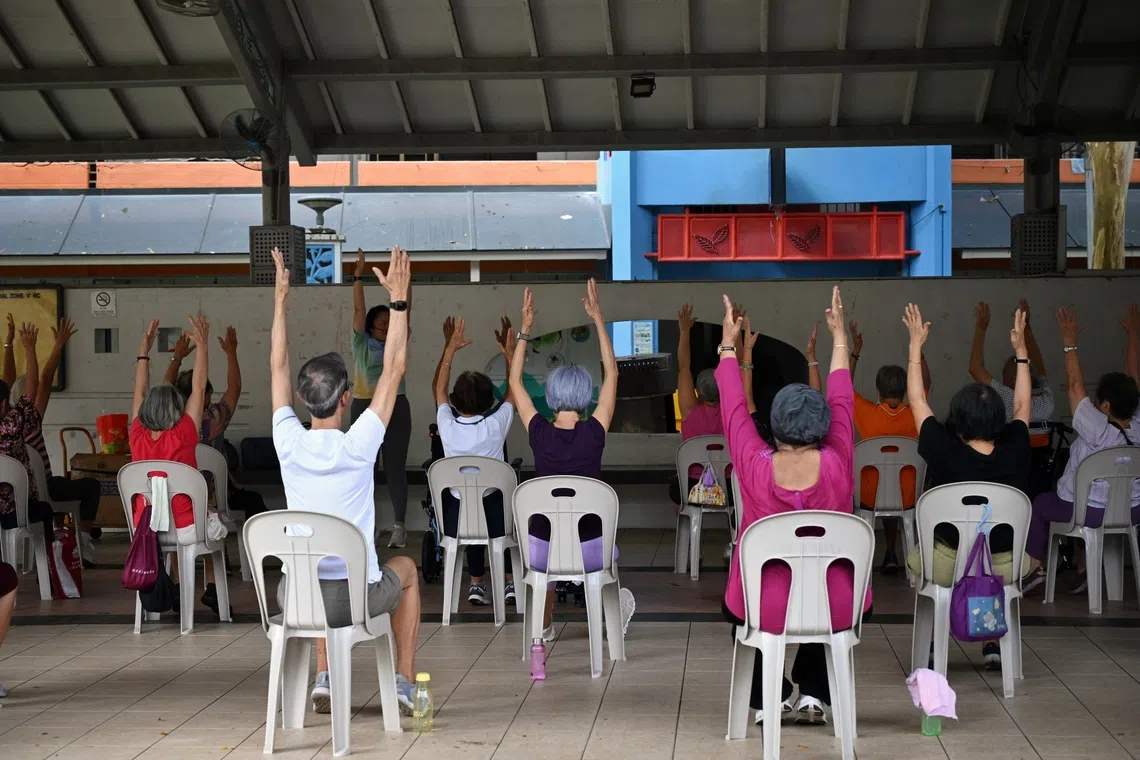
To build and protect muscle, nutrition needs to go hand in hand with physical activity, said associate professor Samuel Chew, senior consultant in geriatric medicine at CGH.
Published Oct 23, 2026, 05:00 AM
Updated Oct 23, 2026, 05:00 AM
Seniors can fight frailty with simple habits. Experts said enough protein, regular meals, and foods like eggs, fish, tofu and beans help protect muscle.
Exercise must go with nutrition. Panellists said resistance activity, even chair squats at home, helps build stronger muscles and supports independent living.
Families should watch for warning signs like trouble standing, weak legs, falls and unsteady walking. Early action, less bed rest and community support can prevent decline.
SINGAPORE – Seniors often consume less protein than they require, but adding more protein can be as simple as incorporating eggs into regular noodle dishes or choosing lean meats, fish, tofu and beans.
During an In Perspective roundtable discussion on ageing well hosted by The Straits Times on Oct 6, panellists shared practical advice on how nutrition and exercise can help seniors maintain muscle strength and independence. The discussion was held in partnership with the Agency for Integrated Care (AIC).
Rachel Ngo, director of the physical activity and healthy ageing division at the Health Promotion Board (HPB) , noted that seniors require about 1.2g of protein per kilogram of body weight daily.
For a person who weighs 60kg, this means eating around 72g of protein daily.
According to HealthHub’s dietary guidelines , younger adults aged 18 to 49 need only about 0.8g per kilogram – or roughly 48g for the same 60kg body weight. Older adults aged 50 and above are advised to consume extra protein to slow down age-related muscle loss.
“People have this misconception, especially seniors, about protein. As they age, they think they need less, or that protein in the form of meat is bad for them,” Ngo said.
“But actually the converse is true.”
She suggested building about 25g of protein into each meal, choosing lean meats over processed options, and including fish, tofu and beans.
Based on nutritional data from HealthHub , adding just one egg contributes 6g to 7g of protein, covering nearly 10% of a 60kg senior’s daily target.
Similarly, incorporating a serving of tofu adds 7g to 20g of protein, fulfilling up to 27% of the daily 72g requirement.
To build and protect muscle, nutrition needs to go hand in hand with physical activity, said Samuel Chew, senior consultant in geriatric medicine at Changi General Hospital.
He highlighted that protein stimulates muscle protein synthesis, but combining it with resistance exercise creates an even better synergy for stronger muscles.
“If we can put it in a way that we are doing this so that you can live independently, get up, go out, and meet your friends – it changes their whole perspective,” he noted.
For people who are unfamiliar with the gym, Chew advised starting small with familiar movements at home, such as doing 20 sit-to-stand chair squats a day.
Over time, working up to exercises that use at least 40 per cent of your one-repetition maximum weight can give you measurable and lasting improvements, he said.
A one-repetition maximum refers to the heaviest weight a person can lift just once. For example, if a senior’s maximum lift is 10kg, training at the recommended intensity of 40% means exercising with at least 4kg of weight or resistance.
Physical health and brain health closely linked
Lim Jun Pei, senior consultant in geriatric medicine at Tan Tock Seng Hospital, noted that families should watch out for early physical and cognitive warning signs.
She pointed out that physical limits and brain health are closely linked, explaining that “we find patients who have unsteady gait and frequent falls actually do have some cognitive concerns as well”.
She advised challenging themselves to use the stairs and keep moving rather than letting physical limitations lead to social isolation and a decline in thinking skills.
Chew stressed the importance of getting older patients moving as soon as possible during hospital stays, saying: “The key principle of our care in geriatric medicine is to move our patients as soon as we can.”
(From left) ST senior correspondent Joyce Teo, CGH senior consultant in geriatric medicine Samuel Chew, AIC chief of active ageing division Soh Swee Ping, HPB director of the physical activity and healthy ageing division Rachel Ngo, and TTSH senior consultant in geriatric medicine Lim Jun Pei on Oct 6. ST PHOTO: DESMOND WEE
(From left) ST senior correspondent Joyce Teo, CGH senior consultant in geriatric medicine Samuel Chew, AIC chief of active ageing division Soh Swee Ping, HPB director of the physical activity and healthy ageing division Rachel Ngo, and TTSH senior consultant in geriatric medicine Lim Jun Pei on Oct 6.
ST PHOTO: DESMOND WEE
Soh Swee Ping, chief of the active ageing division at AIC, said seniors can benefit greatly from staying connected through community facilities.
“For active ageing centres, they are built in different parts of Singapore to provide accessibility and convenience for older persons who are relatively well,” she said.
“Once you feel stronger, you will naturally want to do more and improve further.”
Emphasising the importance of daily habits, Soh noted that “if we are able to do all these things consistently over time, I think these ordinary things will become extraordinary to better our life”.
Whether through simple body-weight squats at home, eating enough protein or staying active in the community, the experts agreed that maintaining muscle strength is essential to ageing well and remaining independent.
In Perspective is a research-led content programme by SPH Media that combines insight-driven storytelling with expert perspectives on key issues shaping society.
Health and well-being
中华总医院老年医学高级顾问、副教授 Samuel Chew 表示,要构建和保护肌肉,营养需要与体育锻炼齐头并进。
发布于 2026 年 10 月 23 日上午 5:00
更新于2026年10月23日上午5:00
老年人可以通过一些简单的习惯来对抗体弱。专家表示,摄入足够的蛋白质、规律进餐以及食用鸡蛋、鱼、豆腐和豆类等食物有助于保护肌肉。
运动必须与营养相辅相成。专家组成员表示,阻力训练,即使是在家做椅子深蹲,也有助于增强肌肉力量,并支持独立生活。
家人应注意观察婴儿的预警信号,例如站立困难、腿部无力、跌倒和行走不稳。及早采取行动、减少卧床休息和社区支持可以预防病情恶化。
新加坡——老年人通常摄入的蛋白质少于所需量,但增加蛋白质摄入量可以很简单,例如在普通面条中加入鸡蛋,或者选择瘦肉、鱼、豆腐和豆类。
10月6日,《海峡时报》主办了一场名为“展望未来”的圆桌讨论会,主题为“健康老龄化”。会上,与会专家分享了营养和运动如何帮助老年人保持肌肉力量和独立生活能力的实用建议。此次讨论会由《海峡时报》与新加坡综合护理机构(AIC)合作举办。
新加坡健康促进局 (HPB) 体育活动和健康老龄化部门主任 Rachel Ngo 指出,老年人每天每公斤体重需要约 1.2 克蛋白质。
对于体重60公斤的人来说,这意味着每天要摄入大约72克蛋白质。
根据HealthHub的膳食指南,18至49岁的年轻人每公斤体重只需要约0.8克蛋白质——也就是说,体重60公斤的人大约需要48克蛋白质。而50岁及以上的老年人则建议摄入更多蛋白质,以减缓与年龄相关的肌肉流失。
“人们,尤其是老年人,对蛋白质存在误解。随着年龄增长,他们认为自己需要的蛋白质会减少,或者认为肉类形式的蛋白质对他们有害,”吴说。
“但实际上,情况恰恰相反。”
她建议每餐摄入约 25 克蛋白质,选择瘦肉而不是加工肉类,并加入鱼、豆腐和豆类。
根据 HealthHub 的营养数据,添加一个鸡蛋即可提供 6 至 7 克蛋白质,几乎可以满足 60 公斤老年人每日所需蛋白质的 10%。
同样,加入一份豆腐可以增加 7 克至 20 克蛋白质,满足每日 72 克蛋白质需求的 27%。
樟宜综合医院老年医学高级顾问 Samuel Chew 表示,要增强和保护肌肉,营养需要与体育锻炼齐头并进。
他强调,蛋白质可以刺激肌肉蛋白质合成,但将其与阻力训练相结合,可以产生更好的协同作用,从而增强肌肉力量。
“如果我们能这样解释,那就是我们这样做是为了让你们能够独立生活,起床,出门,见见朋友——这会彻底改变你们的看法,”他指出。
对于不熟悉健身房的人,周建议从在家进行一些简单的、熟悉的动作开始,例如每天做 20 次坐立椅子深蹲。
他说,随着时间的推移,逐渐增加训练强度,达到使用至少 40% 的最大单次重复重量,可以带来可衡量的、持久的进步。
单次最大重量是指一个人一次能够举起的最大重量。例如,如果一位老年人的最大举重重量是10公斤,那么按照推荐的40%强度进行训练,就意味着至少要使用4公斤的重量或阻力进行锻炼。
身体健康和大脑健康密切相关
陈笃生医院老年医学高级顾问林俊培指出,家属应该注意早期的身体和认知预警信号。
她指出,身体极限与大脑健康密切相关,并解释说:“我们发现,步态不稳、经常跌倒的患者实际上也存在一些认知问题”。
她建议人们挑战自己,多走楼梯,保持运动,而不是让身体上的限制导致社交孤立和思维能力下降。
周医生强调,让老年患者在住院期间尽快活动非常重要,他说:“老年医学护理的关键原则是尽早让我们的患者活动。”
(从左至右)《海峡时报》资深记者张慧玲、樟宜综合医院老年医学高级顾问周思敏、亚洲免疫理事会积极老龄化部门主任苏瑞平、卫生促进局体育活动与健康老龄化部门主任吴瑞玲,以及陈笃生医院老年医学高级顾问林俊培于10月6日合影。《海峡时报》摄影:魏德蒙
(从左至右)海峡时报高级记者张爱玲、中华总医院老年医学高级顾问周胜、亚洲免疫理事会积极老龄化部门主管苏瑞平、卫生促进局体育活动和健康老龄化部门主任吴瑞玲、陈笃生医院老年医学高级顾问林俊培于 10 月 6 日合影。
圣街照片:德斯蒙德·魏
AIC 积极老龄化部门主管 Soh Swee Ping 表示,老年人可以通过社区设施与外界保持联系而受益匪浅。
“为了方便身体相对健康的老年人,新加坡在不同的地区建造了活跃老龄化中心,”她说。
“一旦你感觉自己更强壮了,你自然会想要做得更多,进步更快。”
Soh强调日常习惯的重要性,并指出“如果我们能够长期坚持做这些事情,我认为这些普通的事情将会变得非凡,从而改善我们的生活”。
专家们一致认为,无论是通过在家进行简单的自重深蹲、摄入足够的蛋白质还是在社区保持活跃,保持肌肉力量对于健康老龄化和保持独立生活能力都至关重要。
《视角》是由新加坡报业控股媒体推出的以研究为主导的内容节目,它将以洞察力驱动的故事讲述与专家对塑造社会的关键问题的观点相结合。
健康与福祉