US Congress approves money for Taiwan defense. Does it mean Trump is done hesitating?美国国会批准了对台防务拨款。这是否意味着特朗普不再犹豫了?
Lawmakers in Washington designated some money for arms sales to Taiwan, as U.S. President Donald Trump continues to hold up a major weapons package.
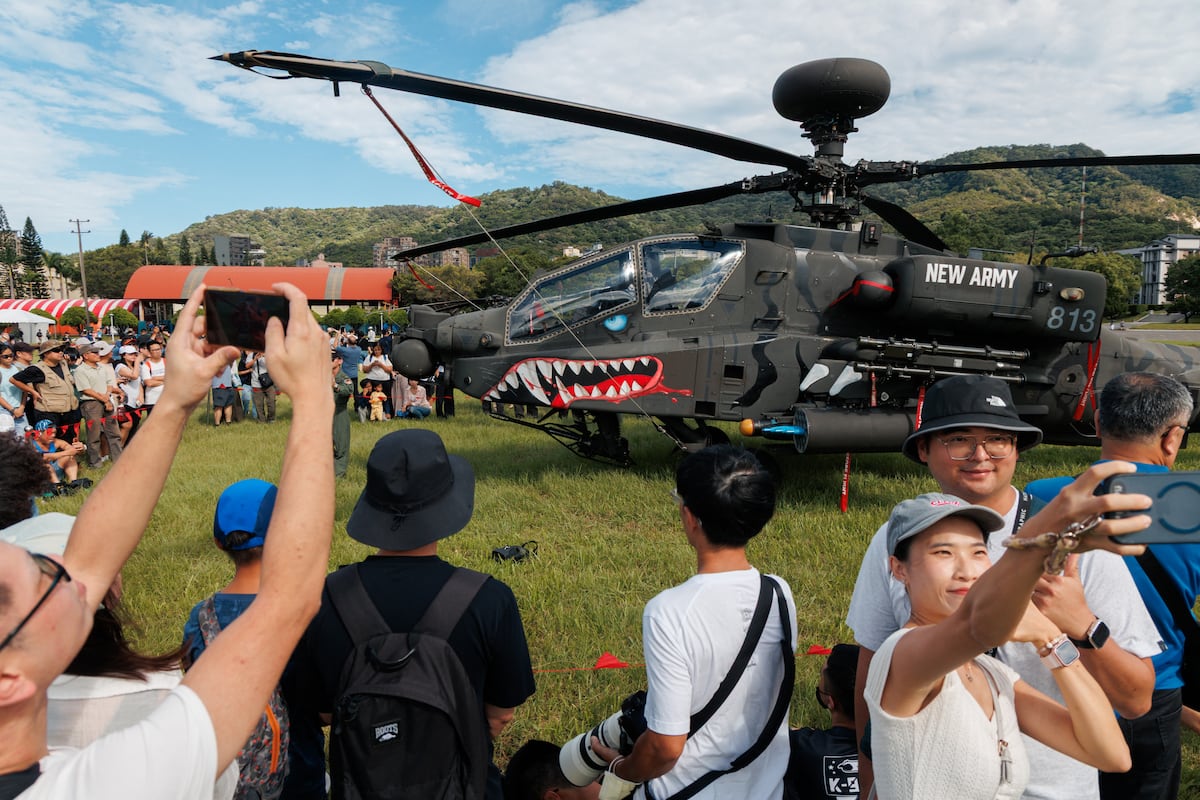
NEW TAIPEI CITY, Taiwan — U.S. President Donald Trump is still holding off approval of a $14 billion weapons package for Taiwan, a potential military rival to Beijing. He pulled back in May after meeting his Chinese counterpart Xi Jinping, who opposes U.S. military aid to Taiwan.
But on July 15, the U.S. House of Representatives passed a bill that includes $500 million in Foreign Military Financing for Taiwan, one in a chain of Pacific Rim allies that U.S. officials have long seen as a buffer against Chinese military expansion.
While the half-billion-dollar allocation in the 2027 fiscal year appropriations bill does not commit money to a particular arms package, analysts say it’s a sign that the Republican Party-dominated Congress values the defense of Taiwan in case China ever attacks with its larger armed forces, and that Washington intends to fulfill at least older arms purchase deals.
“This $500 million Foreign Military Funding demonstrates that Congress has not reduced its security support for Taiwan following the Trump-Xi meeting and reflects Congress’s desire to avoid long-term constraints on military aid to Taiwan due to White House negotiations with China through appropriations and delivery requirements,” said Huang Chung-ting, associate research fellow with the Institute for National Defense and Security Research in Taipei.
Trump’s signature, needed to pass the appropriations bill, would imply continued weapons sales of some kind despite the unknown fate of the $14 billion package, analysts said.
Foreign Military Financing – usually grants or loans – for U.S. allies abroad may technically go toward acquiring weapons, military training or other related services.
Chinese President Xi Jinping and U.S. President Donald Trump have a private meeting at Zhongnanhai in Beijing on May 15, 2026. (Yan Yan/Xinhua via Getty Images)
“Foreign military financing concerns how weapons are ultimately paid for but not whether the weapons are actually sold or transferred in the first place,” said Sean King, vice president of New York-based political consultancy Park Strategies.
Trump has not ostensibly withdrawn any previous but unfulfilled U.S. arms sales for Taiwan, meaning that the proposed congressional funding could go toward one of those, experts say. U.S. arms sales to Taiwan date back more than four decades and can take years before payments and delivery dates are settled. As of April, sales of 30 individual weapon types were partly unfulfilled, according to the Taiwan Security Monitor research initiative of the George Mason University’s Schar School of Policy and Government.
The most recent items appear in a $11.1 billion batch of weaponry fully approved by Washington in December. It includes M109A7 self-propelled howitzers, the high mobility artillery rocket system HIMARS, Javelin anti-tank missiles and unmanned attack aircraft systems. Taiwan’s Cabinet approved its own special budget in May to help pay for the purchases.
“My assessment is that while there was indeed a political pause after the Trump-Xi meeting, it was not a complete halt to arms sales to Taiwan, but rather (it) targeted new cases that had not yet received approval,” Huang said.
“This delay likely involved Trump’s negotiations with China, a review of weapons stockpiles and internal White House scrutiny, and cannot be explained by a single reason,” he said.
The appropriations bill still requires U.S. Senate review before it would go to Trump’s office.
China claims sovereignty over self-ruled Taiwan and has threatened to take the island by force, if needed. Over the past four years the People’s Liberation Army has increased the frequency of military exercises near Taiwan, often in the 160km (100 miles) strait separating them.
Trump said after his meeting with the Chinese president that withholding the arms deal was a “good negotiating chip.” But in June, the U.S. State Department reiterated long-standing policy that arms sales to Taiwan were not dependent on Beijing’s consent.
Experts anticipate a White House announcement on the $14 billion arms package only after Trump and Xi meet in September in the United States, as announced by Washington.
“It may be that Trump is delaying a public announcement until after Xi’s visit to avoid being the skunk who came to the garden party,” said Doug Barry, a professor at The George Washington University and a former communications director with the U.S.-China Business Council.
“It’s odd there has been no public announcement,” he said.
台湾新台北市——美国总统特朗普仍未批准一项价值140亿美元的对台军售计划。台湾是北京潜在的军事对手。今年5月,在与中国国家主席习近平会晤后,特朗普撤回了该计划。习近平反对美国对台军事援助。
但7月15日,美国众议院通过了一项法案,其中包括向台湾提供5亿美元的对外军事融资。台湾是美国官员长期以来视为抵御中国军事扩张的环太平洋盟友之一。
虽然 2027 财年拨款法案中的 5 亿美元拨款并未承诺用于特定的武器采购,但分析人士表示,这表明共和党控制的国会重视台湾的防御,以防中国动用其更强大的武装力量发动攻击,并且华盛顿打算至少履行一些较早的武器采购协议。
“这5亿美元的对外军事援助表明,在特朗普与习近平会晤后,国会并没有减少对台湾的安全支持,也反映出国会希望通过拨款和交付要求,避免因白宫与中国的谈判而对台湾的军事援助造成长期限制,”台北国防安全研究院副研究员黄仲廷表示。
分析人士表示,特朗普的签字是拨款法案获得通过的必要条件,这意味着尽管140亿美元的武器销售计划命运未卜,但某种形式的武器销售仍将继续。
美国向海外盟友提供的对外军事融资(通常是赠款或贷款)在技术上可能用于获取武器、军事训练或其他相关服务。
2026年5月15日,中国国家主席习近平与美国总统唐纳德·特朗普在北京中南海举行私人会晤。(图片来源:颜岩/新华社,经由Getty Images)
“外国军事融资关注的是武器最终是如何获得资金的,而不是武器是否真的被出售或转让,”总部位于纽约的政治咨询公司 Park Strategies 的副总裁肖恩·金表示。
专家表示,特朗普表面上并未撤回任何此前尚未完成的对台军售,这意味着国会拟议的拨款可能用于其中一项军售。美国对台军售历史可追溯至四十多年前,付款和交付日期的确定往往需要数年时间。根据乔治·梅森大学沙尔政策与政府学院的“台湾安全监测”研究项目,截至今年4月,已有30种武器类型的军售部分尚未完成。
最新一批军火包括华盛顿去年12月全面批准的价值111亿美元的武器装备。这些装备包括M109A7自行榴弹炮、高机动性火箭炮系统HIMARS、标枪反坦克导弹和无人攻击机系统。台湾行政院于今年5月批准了专项预算,用于支付部分采购费用。
黄表示:“我的评估是,虽然特朗普与习近平会晤后确实出现了政治上的停顿,但这并非完全停止对台军售,而是针对尚未获得批准的新案例。”
他说:“这一延误可能与特朗普与中国的谈判、武器库存审查以及白宫内部审查有关,无法用单一原因来解释。”
该拨款法案仍需经美国参议院审查,之后才能提交给特朗普办公室。
中国声称对自治的台湾拥有主权,并威胁称如有必要将以武力收复该岛。过去四年,中国人民解放军增加了在台湾附近海域的军事演习频率,演习地点通常位于两岛之间160公里(100英里)的海峡。
特朗普在与中国国家主席会晤后表示,扣留对台军售是“一个很好的谈判筹码”。但今年6月,美国国务院重申了其长期以来的政策,即对台军售无需北京同意。
专家预计,白宫只有在特朗普和习近平9月在美国会晤之后才会宣布这项价值140亿美元的军售计划,华盛顿方面已经宣布了这一消息。
“特朗普可能是为了避免成为花园派对上的‘臭鼬’,才推迟在习近平访问之后才公开宣布这一消息,”乔治·华盛顿大学教授、美中贸易全国委员会前通讯主任道格·巴里说。
“奇怪的是,至今没有任何公开声明,”他说。