Abolish AUKU for reals, then brace for the screams彻底废除AUKU,然后做好迎接民众哀嚎的准备吧。
OCTOBER 22 — For 55 years, the Universities and University Colleges Act or AUKU has silenced our campuses. Most of the time with its sheer presence. Like the most vicious...
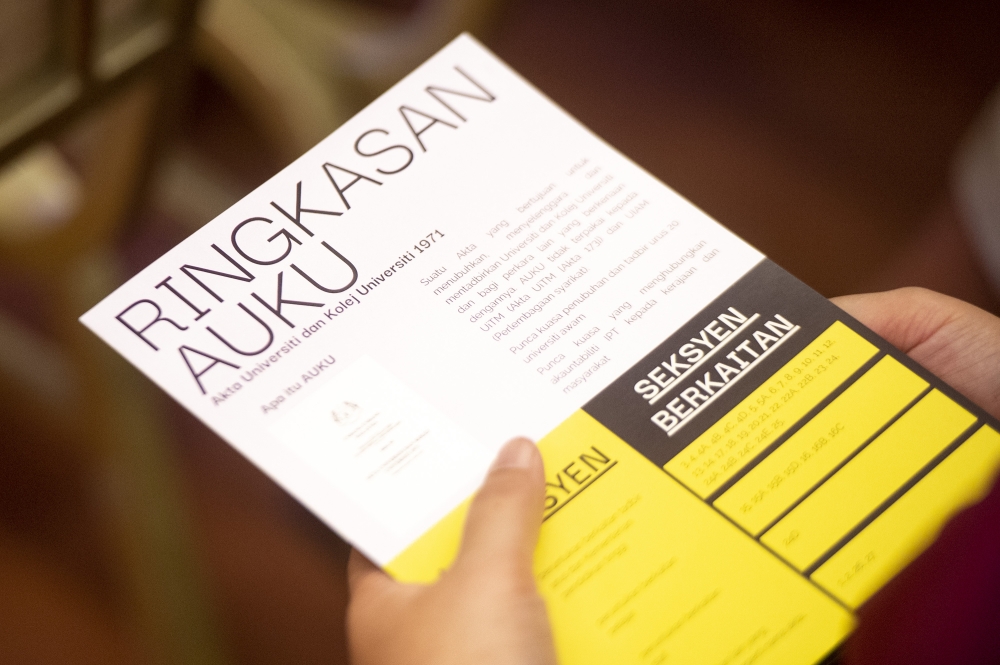
Prime Minister Anwar Ibrahim announced the repeal of the Universities and University Colleges Act (AUKU), with no replacement law to suppress student movements, but the details are pending.
The Higher Education Ministry plans to introduce a comprehensive legal framework under the "One Higher Education Act" as part of Malaysia's Higher Education Plan 2026-2035.
Recent amendments aimed at student autonomy have been ineffective due to restrictive regulations, and ongoing student activism highlights the need for genuine reform beyond AUKU's repeal.
OCTOBER 22 — For 55 years, the Universities and University Colleges Act or AUKU has silenced our campuses. Most of the time with its sheer presence. Like the most vicious gangster, the trick is to stoke fear in the masses, the student masses, and let time tick on.
The irony of its demise, or at least the announcement of it, remains. For AUKU was shaped by the 1974 Baling demonstrations and the detention of a fiery student leader called Anwar Ibrahim.
A year later, the then education minister Mahathir Mohamad tightened the legislation to gag three generations of student leaders.
Half a century later, that same student leader, now prime minister, tells the PKR National Congress in Ayer Keroh on August 15 that it must go. A day later he went further, promising that AUKU would be fully repealed without any new law that restricts or suppresses student movements.
So, he’s not being misunderstood, he wants AUKU chucked into the ash heap of history.
However, this is still Malaysia. Wait for the fine print before ordering a round of celebratory teh tarik.
The ruse before the misdirection
Within hours of the announcement, the Higher Education Ministry was talking about what comes next.
Minister Zambry Kadir said a more comprehensive legal framework to replace AUKU was already in the Malaysian Higher Education Plan 2026-2035, under a “One Higher Education Act” agenda.
His argument being AUKU covers more than student autonomy as it is the parent act for how universities are established and governed.
Fair enough. Universities need a legal spine. But by mid-September, Zambry was saying the new act was still being drafted, and that some student matters were being handled through executive measures and existing procedures.
Executive measures. Existing procedures. Any former student activist will recognise those words.
They are how the old order survives legislative threats. By delaying the law, then diluting it before stripping it of any efficacy.
Madani reforms AUKU 1.0
My scepticism comes from recent experience. In March 2024, Parliament passed amendments meant to give student bodies more autonomy over their activities and finances.
The amended Section 15A let student councils raise funds and accept contributions, subject to prevailing regulations and written laws.
The qualifiers killed the measure. Rights organisation Aliran warned back then, if the university board’s power to make regulations was left unchecked, they’d stymie the students and their financial independence. One step forward, two steps back.
True enough, the amendment has moved slowly or not at all. It has been met with delays, or with conditions no student union could reasonably meet, as if administrators were buying time until the next minister arrived.
A year after the amendment, the Universiti Malaya Students’ Union was fighting a new policy forcing every club to appoint an adviser from the student affairs department and get its approval before booking venues.
This April, UM told student groups to get prior approval for campus forums, after organisers were exasperated that their anti-corruption event was jettisoned.
The law is no match for policemen with weapons blocking off access, following university administrator instructions.
A year without freedom, just like the year before
Look at how 2026 has gone for young Malaysians who speak up.
In April, three activists were arrested after waving “Tangkap Azam Baki” placards while the ex-MACC chief Azam Baki spoke at the World Trade Centre Kuala Lumpur.
They were Mandiri coordinators Hamdin Nordin and Fakrurrazzi Khairur Rijal, and Liga Mahasiswa activist Ahsanul Akmal Sulam. Amnesty International Malaysia called it part of an alarming pattern of penalising non-violent expression.
In Johor, UTM student leaders were investigated by police in August for asking the university to review its campus curfew. They didn’t burn anything down. They asked for a review.
Then there is Ummi Umairah Bakhit. At a Higher Education Ministry-backed youth summit, the UM student questioned public donations to Najib Razak in front of a panel with Khairy Jamaluddin, Amirudin Shari and Onn Hafiz Ghazi, calling the crowdfunding “the stupidest thing I’ve seen in my entire life”.
Online, some threatened her with expulsion and harassed her. To its credit, UM’s vice-chancellor confirmed that no disciplinary action had been taken against her.
But that isn’t the point. The worrying part is not that the university punished her. It didn’t.
The worrying part is that the country spent a week debating whether it should. A student said something sharp about a convicted former prime minister, and the first public reflex was to ask what her university would do to her.
That reflex is what AUKU built, and repealing the Act is only the first step. It takes more to purge it from our system, our thinking process.
Prepare, it will be relentless
As I write, French students are blockading schools and marching in their hundreds of thousands.
More than 6,000 protesters have been arrested, most of them under 18. I can already hear the response in Putrajaya and in some newsrooms: see what freedom gets you.
I won’t water this down. Freer students will be more outspoken. They will criticise their vice-chancellors, the ministry, the government, the opposition, Bersama, and probably columnists like me.
Some of it will be rude, unfair, or wrong. That is what freedom looks like, and it is the reason to grant it.
The real problem is a strange national philosophy that says change can happen without upsetting anything or anyone.
On this view, reform should arrive sanitised, pre-approved and wrapped in a press statement. That belief has quietly defeated every AUKU reform so far, and it will defeat this one too unless we name it.
So here is the test for whatever replaces AUKU. Three things, none of them radical anywhere else in the democratic world.
First, students run their own elections. The administration has no role in vetting candidates, setting rules or counting votes.
Second, student unions own assets. Look at the Oxford Union, with its own building, rooms and hall, bought and run by students.
At a minimum, our unions need a bank account the university cannot freeze, control or close. Without money of its own, a union is just a eunuch.
Third, student activities need no university approval, as long as they break no law of the land.
None of these place students above the law. They are still bound by it. Anwar said so himself: existing criminal laws are enough to deal with any misconduct by student groups.
If they defame someone, the defamation laws apply. If they misuse union funds, they can be charged with criminal breach of trust. If they break the law at a protest, they can be arrested.
The only change is that they face these laws as ordinary citizens, not under a special statute designed to keep them quiet.
Here’s to being stronger
The present is not about calmer campuses; the present is about soulless campuses. Taking the doggedness of youth out of our youths in these facilities has largely neutered them.
It is horrifying to contemplate the students’ abilities to revolutionise Malaysia’s economy, society and politics when they leave these universities.
The repeal is 55 years too late. Much has been lost, time to take the manacles off.
* This is the personal opinion of the columnist.
How do you stop crime when the money is too good?
I went into ‘Digger’ expecting Oscar bait, I walked out thoroughly impressed
Anwar Ibrahim’s incumbency advantage
MOF: 2pc EPF contribution rate for foreign workers relatively low
Malaysian banks offer repayment relief to Nepal landslide victims
Abang Johari expected to dissolve Sarawak assembly at 3.30pm today
总理安瓦尔·易卜拉欣宣布废除《大学和大学学院法》(AUKU),但没有制定替代法律来压制学生运动,具体细节尚待确定。
作为马来西亚2026-2035年高等教育计划的一部分,高等教育部计划在“高等教育统一法”下引入一个全面的法律框架。
最近旨在赋予学生自主权的修正案由于限制性规定而未能奏效,持续不断的学生维权活动凸显了在废除 AUKU 之外进行真正改革的必要性。
10月22日——55年来,《大学及学院法》(简称AUKU)让我们的校园噤声。大多数时候,它的存在本身就足以震慑人心。就像最凶残的黑帮分子一样,它的伎俩是煽动民众,尤其是学生群体的恐惧,然后让时间悄然流逝。
它的消亡,或者至少是其消亡消息的宣布,至今仍充满讽刺意味。因为AUKU的形成与1974年的巴林示威活动以及一位名叫安瓦尔·易卜拉欣的激进学生领袖的被捕密切相关。
一年后,时任教育部长马哈蒂尔·穆罕默德收紧了相关立法,以压制三代学生领袖的言论。
半个世纪后,这位学生领袖,如今的总理,于8月15日在亚依极乐举行的人民公正党全国代表大会上表示,该党必须废除。一天后,他更进一步承诺,将彻底废除《大学学生联盟法案》,且不会出台任何限制或压制学生运动的新法律。
所以,他并没有被误解,他希望AUKU被扫进历史的垃圾堆。
然而,这里毕竟是马来西亚。在点一杯庆祝用的拉茶之前,请先仔细阅读条款细则。
误导之前的诡计
公告发布后几个小时内,高等教育部就开始讨论下一步的计划。
赞布里·卡迪尔部长表示,更全面的法律框架来取代AUKU,已经纳入了《2026-2035年马来西亚高等教育计划》,该计划以“高等教育统一法案”为纲领。
他的论点是,《大学法》涵盖的范围不仅仅是学生自主权,它还是大学设立和管理的母法。
这无可厚非。大学需要法律约束。但到了九月中旬,赞布里却说新法案仍在起草中,一些学生事务仍通过行政措施和现有程序处理。
行政措施。现有程序。任何一位曾经的学生运动人士都会对这些词语感到熟悉。
这就是旧秩序如何抵御立法威胁的手段:先拖延法律的通过,然后削弱其效力,最终使其丧失所有效力。
Madani改革AUKU 1.0
我的怀疑源于近期的经历。2024年3月,议会通过了旨在赋予学生团体更多自主权,使其能够管理自身活动和财务的修正案。
修订后的第 15A 条允许学生会筹集资金和接受捐款,但须遵守现行法规和成文法。
这些附加条件扼杀了这项措施。人权组织Aliran当时就警告说,如果大学董事会的规章制度制定权不受制约,将会阻碍学生及其经济独立。一步前进,两步后退。
的确,这项修正案进展缓慢,甚至毫无进展。它屡遭拖延,或者被附加了学生会根本无法合理满足的条件,仿佛校方是在拖延时间,直到下一位部长上任。
修正案通过一年后,马来亚大学学生会正在反对一项新政策,该政策强制每个社团必须任命一名学生事务部门的顾问,并在预订场地前获得该部门的批准。
今年四月,马来亚大学要求学生团体在举办校园论坛前必须事先获得批准,此前,组织者对他们的反腐败活动被取消感到非常不满。
法律在持械封锁通道的警察面前毫无作用,这些警察是按照大学管理人员的指示行事的。
和前一年一样,又一年没有自由。
看看2026年那些敢于发声的马来西亚年轻人过得怎么样。
今年四月,前反贪污委员会主席阿扎姆·巴基在吉隆坡世界贸易中心发表讲话时,三名活动人士挥舞着“逮捕阿扎姆·巴基”的标语牌,随后被捕。
他们是 Mandiri 协调员 Hamdin Nordin 和 Fakrurrazzi Khairur Rijal,以及 Liga Mahasiswa 活动家 Ahsanul Akmal Sulam。国际特赦组织马来西亚分会称其为惩罚非暴力表达的令人震惊的模式的一部分。
8月份,柔佛州马来西亚理工大学(UTM)的学生领袖因要求学校重新审视校园宵禁规定而受到警方调查。他们没有纵火,只是要求重新审视宵禁规定而已。
还有乌米·乌迈拉·巴基特。在高等教育部支持的一次青年峰会上,这位马来亚大学的学生在与凯里·贾马鲁丁、阿米鲁丁·沙里和翁·哈菲兹·加齐的小组讨论会上,质疑公众向纳吉布·拉扎克捐款的做法,称这种众筹是“我一生中见过的最愚蠢的事情”。
在网上,一些人威胁要开除她,并对她进行骚扰。值得称赞的是,马来亚大学副校长证实,校方并未对她采取任何纪律处分。
但这并非重点。令人担忧的并非大学是否惩罚了她。事实上,大学并没有惩罚她。
令人担忧的是,全国竟然花了一周时间辩论是否应该这样做。一名学生对一位被定罪的前首相发表了尖锐的评论,公众的第一反应竟然是问她的大学会如何处置她。
这种思维模式正是AUKU一手造成的,废除该法案仅仅是第一步。要将其从我们的体系和思维方式中彻底清除,还需要付出更多努力。
做好准备,这将是一场残酷的考验。
在我写这篇文章的时候,成千上万的法国学生正在封锁学校并举行游行示威。
已有超过6000名抗议者被捕,其中大部分未满18岁。我仿佛已经听到布城和一些新闻编辑室的反应了:看看这就是自由的下场。
我不会淡化此事。弗里尔学院的学生会更加直言不讳。他们会批评他们的副校长、教育部、政府、反对党、土著团结党,甚至可能还会批评像我这样的专栏作家。
有些言论或许粗鲁无礼、不公不堪,甚至错误百出。但这正是自由的真谛,也是我们赋予自由的理由。
真正的问题在于一种奇怪的民族哲学,即变革可以在不引起任何人和事的不安的情况下发生。
在这种观点看来,改革应该经过粉饰、预先批准,并以新闻稿的形式包装出来。这种想法已经悄然扼杀了迄今为止AUKU的每一项改革,除非我们明确指出这一点,否则它也会扼杀这项改革。
所以,检验AUKU替代方案的标准如下:三点,这三点在民主世界的其他任何地方都不算激进。
首先,学生自行组织选举。校方不参与候选人资格审查、规则制定或计票工作。
其次,学生会拥有自己的资产。以牛津辩论社为例,它拥有自己的大楼、房间和礼堂,这些都是由学生购买和运营的。
至少,我们的工会需要一个大学无法冻结、控制或关闭的银行账户。没有自己的资金,工会就如同阉人一般。
第三,只要不违反国家法律,学生社团活动无需获得大学批准。
这些措施都不能凌驾于法律之上。学生仍然要遵守法律。安华本人也说过:现行的刑法足以应对学生团体的任何不当行为。
如果他们诽谤他人,将适用诽谤法。如果他们滥用工会资金,可能被控以刑事失信罪。如果他们在抗议活动中违法,可能被逮捕。
唯一的区别在于,他们作为普通公民要面对这些法律,而不是受到旨在让他们保持沉默的特殊法令的约束。
愿我们变得更强大
如今的校园并非平静祥和,而是死气沉沉。在这些设施中,年轻人的那种不屈不挠的精神被剥夺,这在很大程度上麻痹了他们。
想到这些学生离开大学后可能会彻底改变马来西亚的经济、社会和政治,就令人感到恐惧。
废除该法案为时已晚,已经过去了55年。我们已经失去了很多,是时候解除束缚了。
* 这是专栏作家的个人观点。
当犯罪的诱惑力太大时,如何才能阻止犯罪?
我去看《挖掘机》的时候,以为它是部冲奥片,结果看完之后,我彻底被它征服了。
安瓦尔·易卜拉欣的现任优势
财政部:外籍劳工公积金缴费比例为2%,相对较低
马来西亚银行向尼泊尔山体滑坡受害者提供还款援助
阿邦佐哈里预计将于今天下午3点30分解散砂拉越州议会。