Transport minister: Compulsory carbon tax on aviation centre still in discussion交通部长:对航空中心征收强制性碳税仍在讨论中
KUALA LUMPUR, Sept 7 — Malaysia has yet to decide whether to implement a compulsory carbon tax for the aviation sector, although the country remains committed to the...
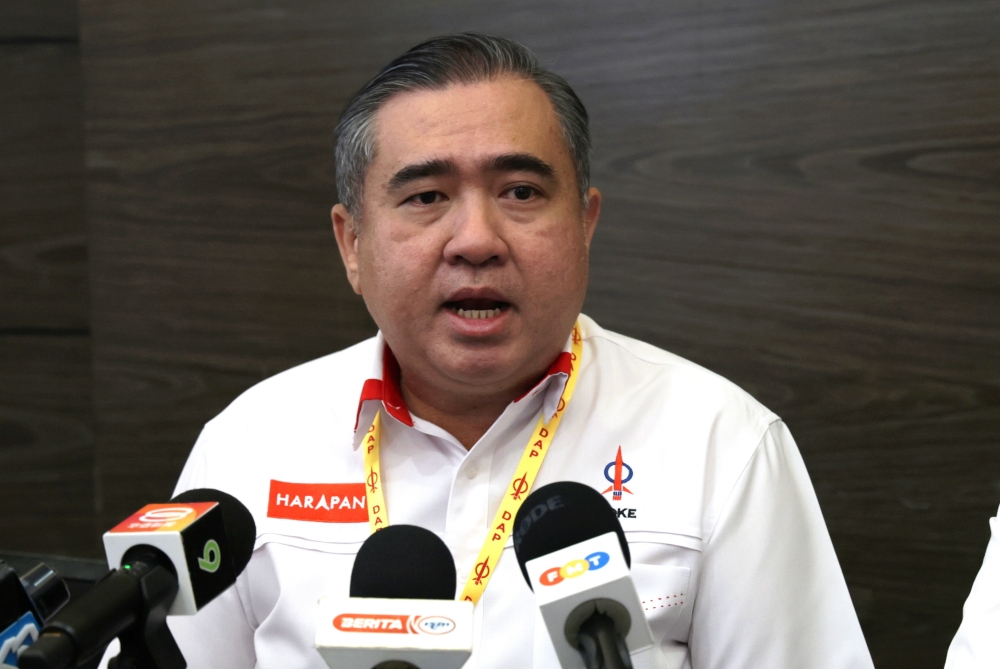
Malaysia has not yet decided on implementing a compulsory carbon tax in aviation but remains dedicated to achieving net-zero emissions by 2050.
The country is adopting a phased approach to reduce aviation emissions with details to be announced periodically.
The conference in Kuala Lumpur highlights the significance of emerging aviation technologies for safety, sustainability, and efficiency.
KUALA LUMPUR, Sept 7 — Malaysia has yet to decide whether to implement a compulsory carbon tax for the aviation sector, although the country remains committed to the International Civil Aviation Organisation’s (ICAO) goal of achieving net-zero carbon emissions by 2050, said Transport Minister Anthony Loke Siew Fook.
He said Malaysia would adopt a phased approach in implementing measures to reduce aviation emissions, with details to be announced from time to time.
“But in terms of our strategy and implementation, it differs from country to country. As far as Malaysia is concerned, we have yet to determine whether to implement a carbon tax.
“Of course, implementation will take place in stages, an d a more more detailed implementation will be announced from time to time. But at this point, we have yet to make any decision. CAAM (Civil Aviation Authority of Malaysia) has not made any decision regarding compulsory carbon taxation,” he told a press conference in conjunction with the 61st Directors General of Civil Aviation Conference for the Asia-Pacific Region (DGCA/61) here today.
Loke said reducing emissions was part of Malaysia’s national obligation as well as an international obligation under ICAO, with all member states requiring to work towards the 2050 net-zero target.
Meanwhile, the conference, hosted by Malaysia for the first time, brings together civil aviation leaders from across the Asia-Pacific region to discuss issues including aviation safety, emerging technologies and sustainability.
Loke said the conference, themed “Smart Skies: Emerging Technologies for Safe, Secure, Sustainable, and Efficient Aviation”, was significant as aviation demand continued to grow while new technologies developed rapidly.
“Technology is already transforming the way aircraft are operated, airspace is managed, and aviation risks are identified. AI (artificial intelligence), unmanned aircraft systems, and advanced air mobility will create further possibilities for connectivity, logistics, and public services,” he said.
He said innovation must be supported by clear policies, credible regulations and strong public confidence to ensure that technological advancement would enhance aviation safety and efficiency rather than create new risks.
Earlier, in his opening remarks, Loke said aviation remained a strategic pillar of national development for Malaysia as an open and trading nation.
“Malaysia aims to strengthen its position as a resilient and competitive regional aviation hub through modern infrastructure, more efficient airspace, strong regulatory institutions and a highly skilled workforce.”
He said Malaysia had established a pathway towards net-zero carbon emissions for international aviation by 2050 through the Malaysia Aviation Decarbonisation Blueprint, aligned with ICAO’s Long-Term Aspirational Goal. — Bernama
Education minister: Parents have discretion in having kids stay home from school if haze worsens
KLIA becomes fallback for some Jakarta flights after Anak Krakatau eruption
Johor to shut schools statewide if API hits 200, as four districts already above 100
马来西亚尚未决定是否在航空业实施强制性碳税,但仍致力于在 2050 年前实现净零排放。
该国正采取分阶段的方式来减少航空排放,具体细节将定期公布。
吉隆坡会议强调了新兴航空技术对安全、可持续性和效率的重要性。
吉隆坡,9月7日讯——马来西亚交通部长陆兆福表示,尽管马来西亚仍然致力于实现国际民用航空组织(ICAO)到2050年实现净零碳排放的目标,但马来西亚尚未决定是否对航空业实施强制性碳税。
他表示,马来西亚将采取分阶段的方式来实施减少航空排放的措施,具体细节将不时公布。
“但在战略和实施方面,各国情况不尽相同。就马来西亚而言,我们尚未决定是否征收碳税。”
“当然,实施过程将分阶段进行,更详细的实施方案也会不时公布。但目前,我们尚未做出任何决定。马来西亚民航局(CAAM)尚未就强制征收碳税做出任何决定。”他今天在与亚太地区第61届民航局局长会议(DGCA/61)同期举行的新闻发布会上表示。
陆兆福表示,减少排放是马来西亚的国家义务,也是国际民航组织规定的国际义务,所有成员国都必须努力实现 2050 年净零排放目标。
与此同时,此次会议由马来西亚首次主办,汇聚了亚太地区各地的民航领导人,共同探讨航空安全、新兴技术和可持续发展等问题。
陆兆福表示,此次以“智慧天空:安全、可靠、可持续和高效的航空新兴技术”为主题的会议意义重大,因为航空需求持续增长,而新技术也在快速发展。
“科技已经改变了飞机的运行方式、空域管理方式和航空风险识别方式。人工智能、无人机系统和先进的空中交通技术将为互联互通、物流和公共服务创造更多可能性,”他说道。
他表示,创新必须得到明确的政策、可信的法规和强大的公众信心的支持,以确保技术进步能够提高航空安全和效率,而不是带来新的风险。
早些时候,陆兆福在开幕致辞中表示,航空业对于马来西亚这个开放的贸易国家而言,仍然是国家发展的战略支柱。
“马来西亚的目标是通过现代化的基础设施、更高效的空域、强大的监管机构和高技能的劳动力,巩固其作为具有韧性和竞争力的区域航空枢纽的地位。”
他表示,马来西亚已通过《马来西亚航空脱碳蓝图》制定了到2050年实现国际航空净零碳排放的路径,该蓝图与国际民航组织(ICAO)的长期愿景目标相一致。——马新社
教育部长:如果雾霾加剧,家长有权决定是否让孩子待在家中不上学
喀拉喀托火山喷发后,吉隆坡国际机场成为部分雅加达航班的后备航班
如果柔佛州API(学术表现指数)达到200,该州将关闭全州学校,目前已有四个地区的API超过100。