US to send Tomahawks, hypersonics, other long-range fires to Germany美国将向德国派遣战斧巡航导弹、高超音速导弹和其他远程火力武器。
The move is in-line with the Army's plan to provide such capability to its Multidomain Task Force there.
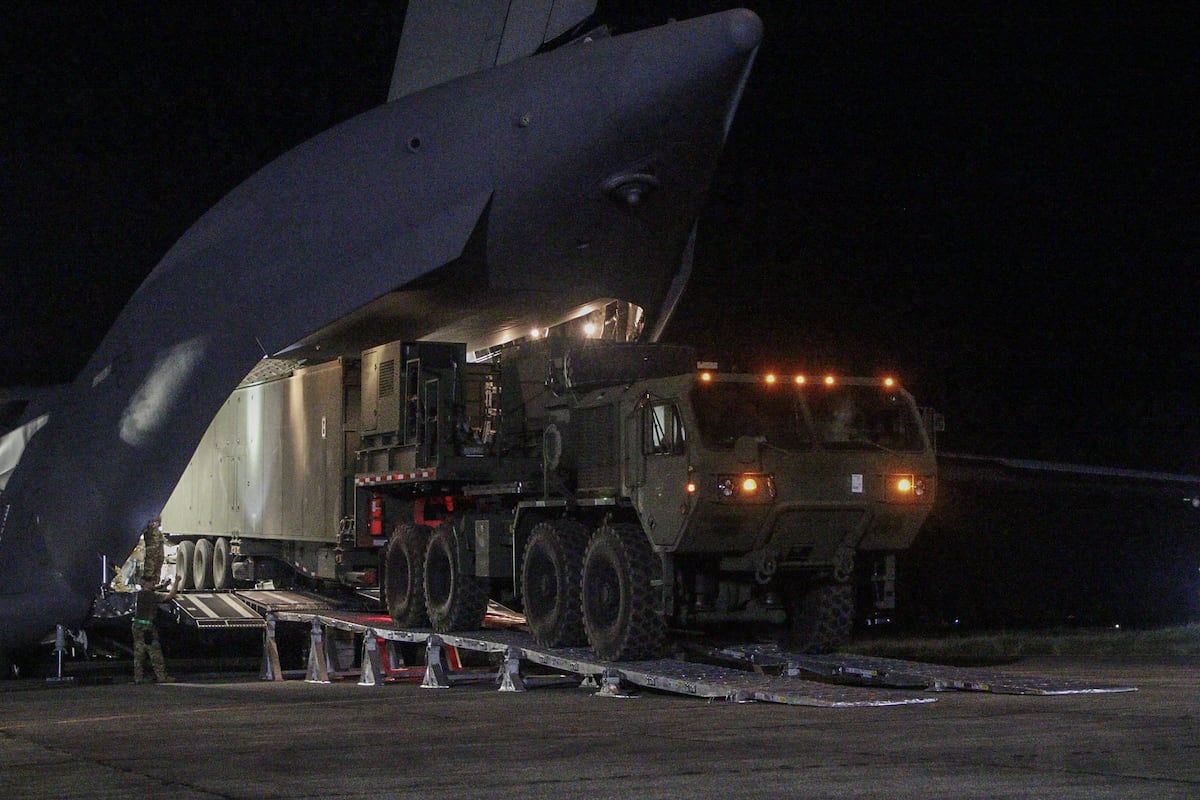
The U.S. will start deploying long-range fires units to Germany in 2026, according to a joint statement from both the U.S. and German governments released today amid the NATO Summit in Washington, D.C.
The new capabilities will “have significantly longer range than current land-based fires in Europe. Exercising these advanced capabilities will demonstrate the United States’ commitment to NATO and its contributions to European integrated deterrence,” the joint statement reads.
The long-range fires capabilities will include the SM-6 and Tomahawk missiles and “developmental hypersonic weapons,” the statement details.
The capabilities will be resident in the U.S. Army’s Multidomain Task Force already headquartered in Germany.
The announcement lines up with the Army’s plans to fill out its five MDTF units worldwide. Defense News first reported in April that the MDTF in Europe would be fully established in fiscal 2026 with the addition of a Long-Range Fires Battalion, or LRFB, in support of the European theater.
The Army stood up the 2nd MDTF in Europe in 2021. It has two other established MDTF units in the Indo-Pacific theater with plans to build out two more for a total of five MDTFs. Three will be focused on Pacific operations, one in Europe and one will be based in the U.S. at Fort Liberty, North Carolina, and will be capable of rapid deployment where it is needed.
The units are designed to operate across all domains — land, air, sea, space and cyberspace — and are equipped with the Army’s growing capabilities, including long-range precision fires.
The Army’s plan is to complete all MDTF units by FY28, according to a document detailing the Army’s most recent round of force structure analysis obtained by Defense News earlier this year.
Long-Range Hypersonic batteries
The service will consolidate Mid-Range Capability and Long-Range Hypersonic batteries under a LRFB headquarters over the next five years. Long-Range Precision Fires units will also include the service’s Precision Strike Missile, or PrSM, the Army Tactical Missile System replacement, which can be fired from a High Mobility Artillery Rocket System launcher.
The 1st MDTF, based out of Joint Base Lewis McChord in Washington State, has already deployed its Mid-Range Capability launcher to the Philippines earlier this year as part of a bilateral military exercise with the country, marking the first time the newly fielded system has been exercised outside of the U.S.
The MRC fits in the Army’s fires portfolio between its PrSM, designed to hit targets over 499 kilometers away, and its ground-launched hypersonic missiles. The Army’s 3rd MDTF recently fired the newly fielded PrSM from the Pacific island of Palau during a recent ship-sinking exercise.
The service chose Lockheed Martin in November 2020 to build the MRC prototype, landing a nearly $340 million contract to take elements from naval missiles - the SM-6 and Tomahawk – to forge the new weapon. The full MRC system has a battery operations center, four vertical launch systems, prime movers and modified trailers.
The Army’s hypersonic weapon capability has been delayed significantly due to testing troubles .
The service completed its delivery of the first hypersonic weapon capability, minus the all-up rounds, to I Corps’ 5th Battalion, 3rd Field Artillery Regiment, 17th Field Artillery Brigade unit at Joint Base Lewis-McChord in Washington state two days ahead of its end-of-FY21 fielding deadline.
The original plan was to train on the equipment and receive those rounds in the fall of 2023, but based on a series of failed or aborted tests, that timeline has slid further down the road.
The Army and Navy, which are jointly developing the common glide body for the weapon had to abort flight tests in March, October and November last year to due “challenges at the range,” according to Lt. Gen. Robert Rasch, the Army’s Rapid Capabilities and Critical Technologies Office director.
The Army is gearing up for another flight test this summer. If the test is successful, the Army is aiming to field the first rounds to the first battalion at JBLM in FY25.
Jen Judson is an award-winning journalist covering land warfare for Defense News. She has also worked for Politico and Inside Defense. She holds a Master of Science degree in journalism from Boston University and a Bachelor of Arts degree from Kenyon College.
根据美德两国政府今天在华盛顿特区举行的北约峰会期间发表的联合声明,美国将于2026年开始向德国部署远程火力部队。
联合声明指出,这些新能力“射程将比目前欧洲陆基火力射程远得多。演练这些先进能力将展现美国对北约的承诺及其对欧洲一体化威慑的贡献。”
声明详细说明,远程火力能力将包括SM-6和战斧导弹以及“正在研发的高超音速武器”。
这些能力将驻扎在美国陆军多域特遣部队,该部队的总部已经设在德国。
这项公告与陆军在全球范围内扩充其五个多学科特遣部队(MDTF)的计划相符。《防务新闻》早在四月份就报道称,驻欧洲的多学科特遣部队将于2026财年全面建成,届时将增设一个远程火力营(LRFB),以支援欧洲战区。
美国陆军于2021年在欧洲组建了第二支多域特遣部队(MDTF)。目前,陆军在印太地区已拥有两支成熟的MDTF部队,并计划再组建两支,使MDTF总数达到五支。其中三支将专注于太平洋地区的作战行动,一支驻扎在欧洲,另一支将驻扎在美国北卡罗来纳州自由堡,并具备快速部署能力,可根据需要随时出动。
这些部队的设计目标是在所有领域——陆地、空中、海洋、太空和网络空间——开展作战行动,并配备了陆军不断增强的能力,包括远程精确火力。
根据《防务新闻》今年早些时候获得的一份详细介绍陆军最新一轮部队结构分析的文件显示,陆军计划在 2028 财年完成所有 MDTF 部队的组建。
远程高超音速电池
未来五年内,该军种将把中程能力和远程高超音速导弹连整合到远程精确火力作战司令部(LRFB)下属。远程精确火力部队还将包括该军种的精确打击导弹(PrSM),它是陆军战术导弹系统的替代产品,可从高机动性火箭炮系统(HMARS)发射器发射。
驻扎在华盛顿州刘易斯-麦科德联合基地的第一多管齐下特遣部队(1st MDTF)已于今年早些时候向菲律宾部署了其中程能力发射器,作为与菲律宾双边军事演习的一部分。这是该新型系统首次在美国境外进行演习。
MRC导弹在陆军的火力组合中定位介于射程超过499公里的PrSM导弹和陆基高超音速导弹之间。陆军第3多域特遣部队最近在太平洋岛国帕劳进行的一次击沉舰艇演习中,试射了新近部署的PrSM导弹。
2020年11月,美国海军选择洛克希德·马丁公司建造多用途火箭炮(MRC)原型机,并签订了一份价值近3.4亿美元的合同。该合同将借鉴SM-6和战斧巡航导弹等海军导弹的部件,打造这种新型武器。完整的MRC系统包括一个作战中心、四套垂直发射系统、牵引车和改装拖车。
由于测试问题,陆军的高超音速武器能力发展被严重延误。
该军种已完成向华盛顿州刘易斯-麦科德联合基地的第17野战炮兵旅第3野战炮兵团第5营交付第一套高超音速武器能力(不包括全部弹药),比2021财年末的部署期限提前了两天。
原计划是在 2023 年秋季进行设备训练并接收弹药,但由于一系列测试失败或中止,该时间表已进一步推迟。
据陆军快速能力和关键技术办公室主任罗伯特·拉施中将称,陆军和海军正在联合开发该武器的通用滑翔体,由于“靶场上的挑战”,不得不在去年 3 月、10 月和 11 月中止飞行测试。
陆军正准备在今年夏天进行另一次飞行测试。如果测试成功,陆军计划在2025财年向刘易斯-麦科德联合基地(JBLM)的第一营交付首批装备。
珍·贾德森是一位屡获殊荣的记者,为《防务新闻》报道陆地战争。她也曾为《政治报》和《内幕防务》工作。她拥有波士顿大学新闻学硕士学位和凯尼恩学院文学学士学位。