Baltic state ministers urge fellow NATO members to boost defense spend波罗的海三国部长敦促北约其他成员国增加国防开支
In a roundtable discussion Tuesday, defense ministers discussed the implications of Russia's expansionist mindset and the future of NATO.
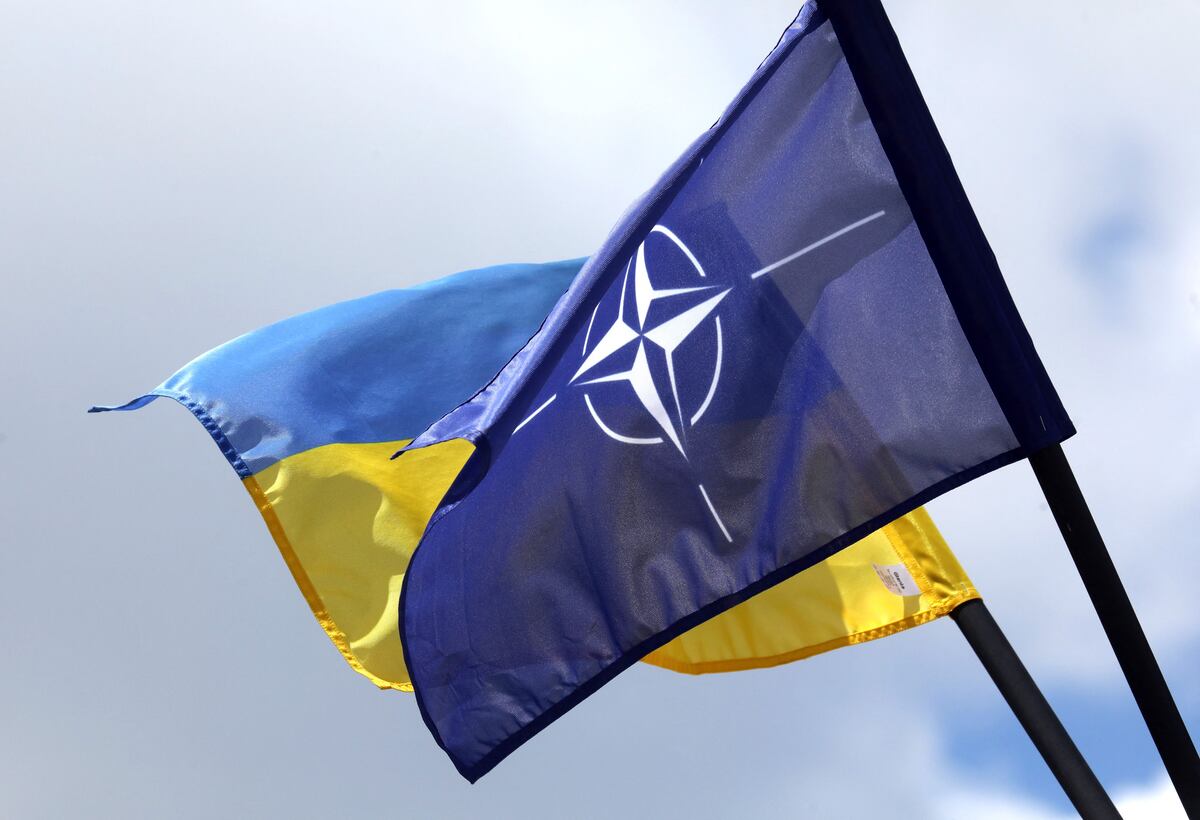
A trio of NATO defense ministers whose countries share a border with Russia urged their NATO counterparts to live up to their defense spending commitments.
Countries in NATO are supposed to be committed to spending at least 2% of their GDP on defense to fund the organization. But not all member nations are meeting the target, they said. This lack of burden sharing placed NATO on the ballot of the upcoming U.S. presidential election as former President Donald Trump has stated he may reduce the U.S.’ involvement in NATO if European countries don’t step up their game.
Lithuania’s Minister of National Defense Laurynas Kasčiūnas, Latvia’s Minister of Defense Andris Sprūds and Estonia’s Minister of Defense Hanno Pevkur attended the roundtable discussion July 9, moderated by POLITICO’s Global Editor-in-Chief John Harris and Welt TV’s Editor-in-Chief Jan Philipp Burgard, on the sidelines of the NATO summit in Washington.
Kasčiūnas said the upcoming U.S. presidential election is of importance to Europeans because to feel safe and secure in Europe, they need a U.S. presence. He said the country must be prepared to work with whoever is elected and whichever political party is in power.
“So it’s a dogma, I would say, for Baltic states, we know our geopolitical history, we know who played a key role in our independence,” Kasčiūnas said. “So, it’s a crucial one, and we hear debates. But I think we should be prepared to work with America.”
Sprūds said he believes Trump was right in advocating for fair burden sharing among NATO countries and in raising the 2% of GDP defense requirement .
Nineteen of 31 NATO countries failed to meet the requirement in 2023, including France at 1.9% and Canada at 1.38%. NATO now has 32 members with the addition of Sweden in 2024. NATO member Iceland has no armed forces and is omitted from the defense spending goal.
NATO countries are aware they do not meet the requirement, but are striving to improve their spending. Compared to 2014, when only three countries met the 2% target, 18 countries are predicted to spend at least 2% in 2024.
Some NATO countries are even breaking personal records. Germany spent 1.57% last year, but now are spending more than they ever have on defense since the 1990s, announcing in February they were able to meet the 2% mark.
“That is urgently needed,” German Chancellor Olaf Scholz said in February after Trump remarked the U.S. would not protect countries who don’t meet the spending requirement. “Because as harsh as this reality is, we do not live in times of peace.”
Pevkur said NATO countries are aware that the 2% defense requirement is not enough because of shortages in defense capabilities, but production capabilities must rise alongside the increase in defense investment.
Estonia is spending 3.4% this year of their GDP on defense , making the country the second-highest spender in NATO.
“We pay more by share of our economy,” Pevkur said. “We are paying more than U.S. is paying at the moment.”
The U.S. is paying 3.38% on defense, according to Pevkur, making the U.S. the third-largest contributor to NATO this year with respect to their GDP.
Tensions have always been high between Russia and its neighboring Baltic states, where Russia often blames them for the severed relationship .
The defense ministers said the Russian expansionist mindset is nothing new and may continue even when Vladimir Putin is no longer Russia’s president, as their countries have delt with Russian attacks for years against cyber or critical infrastructure.
“This is exactly what Russia wants to have, that all the European countries will deal with internal problems and not with Ukraine,” Pevkur said. “In reality, we see that hundreds of people are dying in Ukraine, and this should be our main focus.”
Kasčiūnas said countries should have credible defense and deterrence measures in place to discourage Russia from attacking them.
Cristina Stassis is a reporter covering stories surrounding the defense industry, national security, military/veteran affairs and more. She previously worked as an editorial fellow for Defense News in 2024 where she assisted the newsroom in breaking news across Sightline Media Group.
三个与俄罗斯接壤的北约国家国防部长敦促北约其他国家的国防部长履行其国防开支承诺。
北约成员国应承诺将至少2%的GDP用于国防开支,以维持北约的正常运转。但据称,并非所有成员国都达到了这一目标。这种责任分担不力的现象,使得北约问题成为即将到来的美国总统大选的焦点。前总统唐纳德·特朗普曾表示,如果欧洲国家不加大国防投入,他可能会减少美国在北约的参与。
立陶宛国防部长劳里纳斯·卡修纳斯、拉脱维亚国防部长安德里斯·斯普鲁兹和爱沙尼亚国防部长汉诺·佩夫库尔于 7 月 9 日在华盛顿北约峰会期间出席了圆桌讨论会,该讨论会由 POLITICO 全球总编辑约翰·哈里斯和 Welt TV 总编辑扬·菲利普·布尔加德主持。
卡斯丘纳斯表示,即将到来的美国总统大选对欧洲人至关重要,因为欧洲人需要美国的存在才能感到安全。他指出,无论谁当选,无论哪个政党执政,美国都必须做好准备与之合作。
“所以,我认为这对波罗的海国家来说是一种信条。我们了解我们的地缘政治历史,我们知道谁在我们的独立进程中发挥了关键作用,”卡斯丘纳斯说。“因此,这是一个至关重要的问题,我们也听到了各种争论。但我认为我们应该做好与美国合作的准备。”
斯普鲁兹表示,他认为特朗普主张北约国家之间公平分担责任以及提高国防开支占GDP 2%的要求是正确的。
2023年,31个北约成员国中有19个未能达到国防开支目标,其中包括法国(1.9%)和加拿大(1.38%)。随着瑞典于2024年加入,北约目前共有32个成员国。北约成员国冰岛没有武装力量,因此不计入国防开支目标。
北约国家意识到自身尚未达到要求,但正努力提高国防开支。与2014年仅有三个国家达到2%的目标相比,预计到2024年将有18个国家达到至少2%的国防开支水平。
一些北约国家甚至打破了各自的纪录。德国去年的国防开支占国民总收入的1.57%,但现在的国防开支已经超过了上世纪90年代以来的任何时期,并在今年2月宣布其国防开支已达到国民总收入的2%。
“这迫切需要,”德国总理奥拉夫·朔尔茨在2月份特朗普发表美国不会保护不符合支出要求的国家的言论后表示,“因为尽管现实残酷,但我们并非生活在和平时代。”
佩夫库尔表示,北约国家意识到,由于国防能力不足,2%的国防需求是不够的,但生产能力必须随着国防投资的增加而提高。
爱沙尼亚今年将国内生产总值的 3.4% 用于国防开支,使其成为北约国防开支第二高的国家。
“按经济占比计算,我们缴纳的税款更多,”佩夫库尔说。“目前我们缴纳的税款比美国还多。”
据佩夫库尔称,美国国防开支占GDP的3.38%,使美国成为今年北约第三大出资国(按GDP计算)。
俄罗斯与其邻近的波罗的海国家之间一直关系紧张,俄罗斯经常将两国关系破裂归咎于这些国家。
国防部长们表示,俄罗斯的扩张主义心态并非新鲜事,即使弗拉基米尔·普京不再担任俄罗斯总统,这种心态也可能会继续下去,因为他们的国家多年来一直在应对俄罗斯针对网络或关键基础设施的攻击。
佩夫库尔说:“这正是俄罗斯所希望的,所有欧洲国家都去处理内部问题,而不是乌克兰问题。但实际上,我们看到乌克兰有数百人丧生,这才是我们应该关注的重点。”
卡斯丘纳斯表示,各国应该采取可信的防御和威慑措施,以阻止俄罗斯对其发动攻击。
克里斯蒂娜·斯塔西斯是一位记者,主要报道国防工业、国家安全、军事/退伍军人事务等领域的新闻。她曾于2024年在《防务新闻》担任编辑助理,协助Sightline媒体集团旗下新闻编辑室处理突发新闻。