German brigade entering Lithuania is a welcome change for NATO德国旅进入立陶宛对北约来说是一个可喜的变化。
Opinion: Lithuania, Latvia and Estonia are the NATO member states with the most pressing need for additional assets capable of deterring Russia.
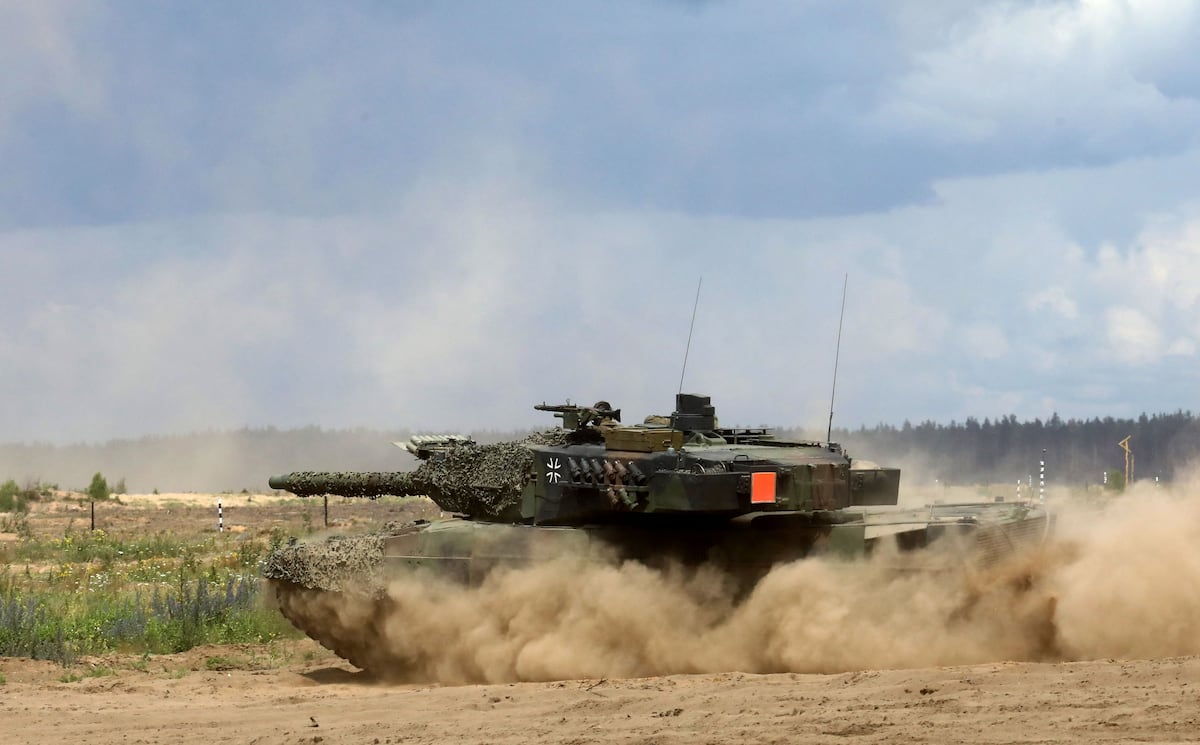
For years, Germany has come under heavy fire for neglecting its defense spending — a situation that dates to the end of the Cold War. This criticism is warranted, but Germany has taken some very significant steps since Russia’s full-scale invasion of Ukraine in 2022, building up its military capabilities and beefing up deterrence on NATO’s eastern flank.
Germany first announced a special fund of €100 billion (U.S. $108 billion) to provide its armed forces, the Bundeswehr, with additional procurement and training funding through 2027, along with a promise to maintain defense spending above the 2% minimum that NATO encourages its members to reach. It’s the second-largest national contributor of military aid to Ukraine after the United States.
Now Germany is establishing a permanent military presence in Lithuania, which is along NATO’s eastern flank. In April, about two dozen German soldiers arrived in Lithuania, marking the first time since World War II that German forces will be based outside the country for a long-term basis. The deployment is expected to be at full strength by 2027, totaling 4,800 soldiers.
Germany also plans by 2027 to order 105 Leopard 2 A8 tanks, some of which will be delivered to augment the German brigade in Lithuania, which will be designated as Panzerbrigade 45 . This German base in Lithuania will resemble American overseas bases in Germany, with families being stationed alongside service members, and housing and amenities available on base.
Additional NATO forces are especially necessary in Lithuania, which sits between Russian-allied Belarus and the Russian exclave of Kaliningrad . Formed in 1945 from Germany’s East Prussia, Kaliningrad was ceded to the Soviet Union as part of the Potsdam Agreement. Following the collapse of the Soviet Union, Kaliningrad remained part of the Russian Federation, but now finds itself separated from the rest of Russia by the three Baltic states and by Belarus. Kaliningrad hosts Russia’s Baltic Fleet, along with thousands of Russian troops, fighter jets and nuclear-capable Iskander missiles .
The small corridor between Lithuania and Belarus is known as the Suwalki Gap — widely identified as the weakest point in NATO. If Russian forces were ever to attempt an attack on the three Baltic states, they could both link Belarus and Kaliningrad to cut off supplies from Poland to the Baltic states via an attack on the Suwalki Gap.
This means that Lithuania, Latvia and Estonia are the NATO member states with the most pressing need for additional assets capable of deterring Russia.
Estonia and Latvia deserve similar assurances. Both host rotational forces, but a permanent base from other NATO members in each would offer a far firmer and more permanent security guarantee from the rest of the alliance.
The United States needs to focus its scarce resources on the Indo-Pacific region , where it faces the daunting challenge posed by China . The need for permanent basing in Estonia and Latvia — approved and coordinated with the host nations, of course — should be filled by European NATO members willing to step up and follow the example Germany has set in Lithuania.
Americans should applaud, encourage and assist European NATO states in taking steps to increase their contributions to conventional deterrence in Europe, enabling as it does the pivot of U.S. resources to the Indo-Pacific.
Wilson Beaver is a policy advisor for defense budgeting in The Heritage Foundation’s Allison Center for National Security. Elizabeth Lapporte is a member of the think tank’s Young Leaders Program.
多年来,德国因忽视国防开支而饱受诟病——这种情况可以追溯到冷战结束时期。这种批评不无道理,但自2022年俄罗斯全面入侵乌克兰以来,德国已采取了一些非常重要的措施,增强了军事能力,并加强了北约东翼的威慑力量。
德国首先宣布设立一项1000亿欧元(约合1080亿美元)的专项基金,用于向其联邦国防军提供额外的采购和训练资金,直至2027年。同时,德国承诺将国防开支维持在北约鼓励成员国达到的2%最低水平之上。德国是继美国之后对乌克兰提供军事援助的第二大国家。
如今,德国正在北约东翼的立陶宛建立永久军事存在。今年4月,约20名德国士兵抵达立陶宛,这是二战以来德国军队首次在国外长期驻扎。预计到2027年,驻德部队将达到满员规模,总计4800人。
德国还计划在2027年前订购105辆豹2 A8坦克,其中一部分将交付给驻立陶宛的德国装甲旅,该旅将被命名为第45装甲旅。这个位于立陶宛的德国基地将类似于驻德美军海外基地,军人家属将与军人一同驻扎,基地内将提供住房和各种便利设施。
在立陶宛,北约增派兵力尤为必要。立陶宛位于俄罗斯的盟友白俄罗斯和俄罗斯飞地加里宁格勒之间。加里宁格勒于1945年由德国东普鲁士的领土组成,根据《波茨坦协定》割让给苏联。苏联解体后,加里宁格勒仍是俄罗斯联邦的一部分,但如今却被波罗的海三国和白俄罗斯与俄罗斯其他地区隔开。加里宁格勒驻扎着俄罗斯波罗的海舰队,以及数千名俄罗斯士兵、战斗机和可携带核弹头的“伊斯坎德尔”导弹。
立陶宛和白俄罗斯之间的狭窄通道被称为苏瓦乌基走廊,被广泛认为是北约最薄弱的环节。如果俄罗斯军队试图攻击波罗的海三国,他们可以通过攻击苏瓦乌基走廊,将白俄罗斯和加里宁格勒连接起来,切断波兰向波罗的海三国的补给线。
这意味着立陶宛、拉脱维亚和爱沙尼亚是北约成员国中最迫切需要更多能够威慑俄罗斯的资产的国家。
爱沙尼亚和拉脱维亚理应获得类似的保障。两国都驻扎着轮换部队,但如果其他北约成员国在两国设立永久基地,就能为两国提供来自联盟其他成员更稳固、更持久的安全保障。
美国需要将有限的资源集中投入印太地区,因为那里面临着来自中国的严峻挑战。在爱沙尼亚和拉脱维亚设立永久基地——当然,这需要得到东道国的批准和协调——应该由愿意挺身而出、效仿德国在立陶宛所树立的榜样的欧洲北约成员国来承担。
美国应该赞扬、鼓励和帮助欧洲北约国家采取措施,增加其对欧洲常规威慑的贡献,因为这将使美国资源能够转向印太地区。
威尔逊·比弗是传统基金会艾莉森国家安全中心国防预算政策顾问。伊丽莎白·拉波特是该智库青年领袖项目成员。