NATO signs $700 million Stinger missile contract amid production push北约签署价值7亿美元的“毒刺”导弹合同,加大生产力度
The Raytheon-produced system was one of the first weapons the U.S. shipped to Ukraine following Russia’s 2022 invasion.
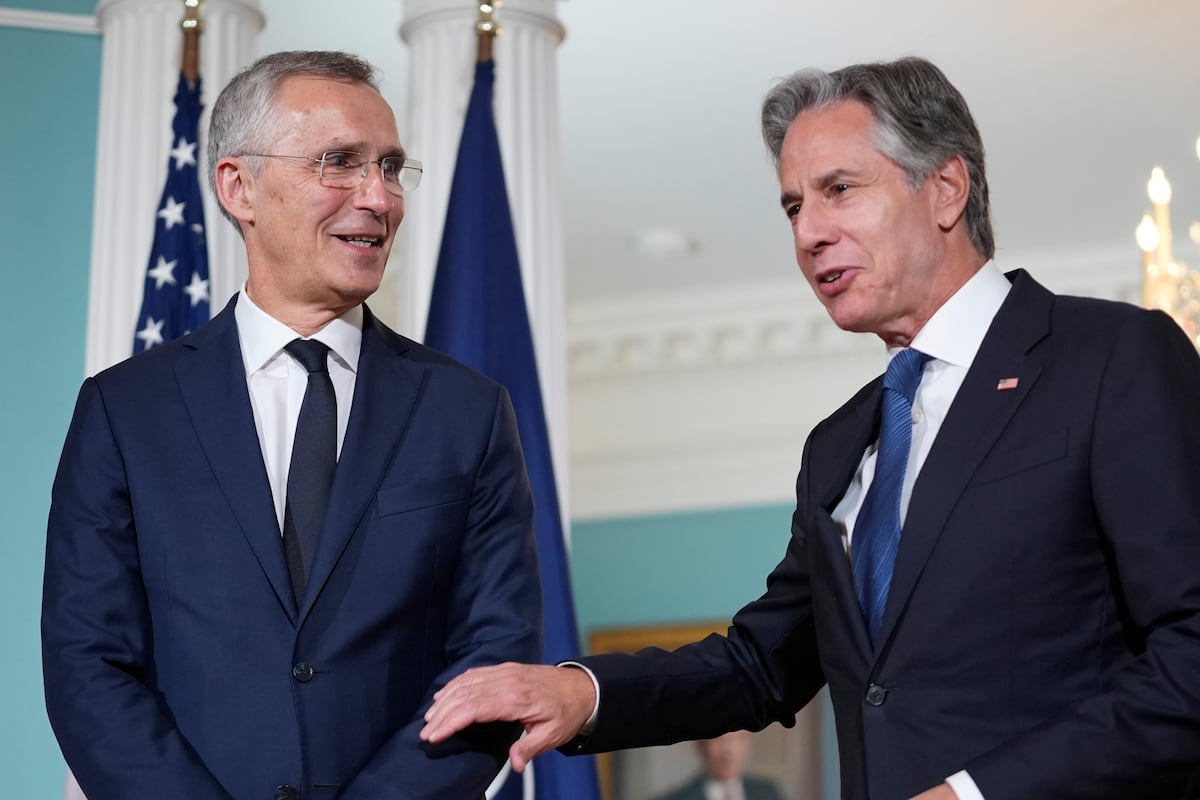
WASHINGTON (AP) — NATO has signed a nearly $700 million contract to have member countries produce more Stinger missiles, one of many steps the alliance is pressing at its summit in Washington to get each country to boost its own weapons production capabilities.
Outgoing NATO Secretary General Jens Stoltenberg announced the contract Tuesday at a Chamber of Commerce industry day focused on increasing NATO member countries' defense manufacturing capabilities to deter future attacks.
“There is no way to provide strong defense without a strong defense industry," Stoltenberg said.
The Stinger is a portable surface-to-air defense system that can be carried and fired by troops or mounted onto a vehicle and used as short-range defense against aircraft.
The Raytheon-produced system was one of the first weapons the U.S. shipped to Ukraine following Russia’s 2022 invasion. It is now among hundreds of types of systems, and tens of millions of rounds of ammunition, artillery and missiles, that countries have pulled from their stockpiles to help Ukraine. But the rapid push over the past two years exposed that defense firms both in the U.S. and in Europe were not set to produce at the levels needed in a major conventional war.
The NATO summit is also occurring against a backdrop of uncertainty: U.S. political divisions delayed weapons for Ukraine for months and the upcoming presidential election is raising concern that U.S. backing — with weapons and troops — in case of threats against member countries may not always be guaranteed.
Donald Trump, the presumptive Republican nominee, has boasted during campaign speeches that he'd encourage Russia to do as it wished with NATO members that do not meet their commitment to spend 2% of their gross domestic product on defense.
In some cases, defense production lines were stagnant at the time of the 2022 invasion and are only now getting production numbers up. The buildup has been dependent on getting new, longer-term contracts signed to support more capital investment in the needed infrastructure.
“This is not about shifts or a bottleneck. It’s building new factories,” said Morten Brandtzaeg, the chief executive officer of Nammo, a Norway-based ammunition firm.
The war also spurred those NATO members to increase the amount they spend on defense.
Out of 32 NATO members, 23 are expected to meet the 2% commitment this year, up from just six before Russia's invasion of Ukraine. That's seen as still not enough, as Russia has leveraged the sheer size of its workforce to rapidly replace weapons lost in the war.
“If you want to fight a war for a long time, you need to have an industry behind you, that has the capacity for a long time,” Brandtzaeg said.
Estonian Defense Minister Hanno Pevkur told the Chamber of Commerce that Russia is now spending an estimated 7% to 9% of its GDP on defense. Estonia is spending more than 3% of its GDP on defense, but needs to do more to refill its stockpiles, Pevkur said.
Polish Defense Minister Władysław Kosiniak-Kamysz, who also serves as a deputy prime minister, said his country will commit at least 4% of its GDP to defense this year.
The war in Ukraine “exposed major weaknesses of Poland, of region and of the world at large,” Kosiniak-Kamysz said.
Since the invasion, the U.S. has provided more than $53.6 billion in weapons and security assistance to Ukraine. This support, at a time when the U.S. also is sending weapons to Israel and Taiwan, has strained the U.S. stockpile. The rest of the NATO members and other international partners have provided about $50 billion altogether in weapons and security assistance, according to the Kiel Institute for the World Economy, an independent research organization based in Germany.
National security adviser Jake Sullivan told Tuesday's gathering that for the first time ever, the NATO countries will each pledge to make plans to strengthen their own industrial defense capacity. He said this would help the alliance “prioritize production of the most vital defense equipment we would need in the event of a conflict."
The 32 members have widely varying defense industry sizes and capabilities, so each country's plan could vary widely, from partnering with industry to partnering with other countries.
Cook reported from Brussels.
华盛顿(美联社)——北约签署了一项价值近 7 亿美元的合同,要求成员国生产更多毒刺导弹。这是北约在华盛顿峰会上推动各国提高自身武器生产能力的众多举措之一。
即将卸任的北约秘书长延斯·斯托尔滕贝格周二在商会举办的行业日活动上宣布了这项合同。此次活动旨在提高北约成员国的国防制造能力,以阻止未来的袭击。
“没有强大的国防工业,就不可能提供强大的国防,”斯托尔滕贝格说。
“毒刺”是一种便携式地对空防御系统,可由士兵携带和发射,也可安装在车辆上,用作近程防空武器。
雷神公司生产的这套系统是美国在俄罗斯2022年入侵乌克兰后首批运往乌克兰的武器之一。如今,各国已从库存中调出数百种系统以及数千万发弹药、火炮和导弹,援助乌克兰,这套系统只是其中之一。但过去两年来的快速部署暴露出,美国和欧洲的国防企业都未能做好应对大规模常规战争所需产能的准备。
北约峰会也在充满不确定性的背景下举行:美国政治分歧导致向乌克兰提供武器的计划被推迟了数月,即将到来的总统选举也引发了人们的担忧,即如果成员国受到威胁,美国提供的武器和军队支持可能无法始终得到保证。
共和党总统候选人唐纳德·特朗普在竞选演讲中吹嘘说,他会鼓励俄罗斯对那些不履行将国内生产总值2%用于国防开支承诺的北约成员国为所欲为。
在某些情况下,国防生产线在2022年入侵时处于停滞状态,直到现在才开始恢复生产。这种产能提升依赖于签署新的、更长期的合同,以支持对所需基础设施的更多资本投资。
“这与轮班或瓶颈无关。这是在建设新工厂,”挪威弹药公司Nammo的首席执行官莫滕·布兰特扎格说道。
这场战争也促使北约成员国增加了国防开支。
在北约32个成员国中,预计今年将有23个成员国达到2%的国防军部署承诺,高于俄罗斯入侵乌克兰前的6个。但这仍然被认为远远不够,因为俄罗斯利用其庞大的劳动力规模迅速补充了战争中损失的武器装备。
“如果你想打一场持久战,你需要一个有长期作战能力的产业作为后盾,”布兰特扎格说。
爱沙尼亚国防部长汉诺·佩夫库尔在商会会议上表示,俄罗斯目前国防开支约占其国内生产总值的7%至9%。佩夫库尔指出,爱沙尼亚的国防开支也超过其国内生产总值的3%,但仍需加大力度补充国防储备。
波兰国防部长兼副总理瓦迪斯瓦夫·科西尼亚克-卡梅什表示,波兰今年将把至少 4% 的 GDP 用于国防。
科西尼亚克-卡米什表示,乌克兰战争“暴露了波兰、该地区乃至整个世界的重大弱点”。
自入侵以来,美国已向乌克兰提供了超过536亿美元的武器和安全援助。与此同时,美国还在向以色列和台湾输送武器,这加剧了美国的武器储备压力。据总部位于德国的独立研究机构基尔世界经济研究所统计,北约其他成员国和其他国际伙伴总共提供了约500亿美元的武器和安全援助。
国家安全顾问杰克·沙利文在周二的会议上表示,北约各国将首次各自承诺制定计划,加强自身的国防工业能力。他表示,这将有助于北约“优先生产我们在冲突中所需的最关键的国防装备”。
这 32 个成员国的国防工业规模和能力差异很大,因此每个国家的计划也可能大相径庭,从与工业界合作到与其他国家合作。
库克从布鲁塞尔报道。