‘I’ve been exactly where they are’“我曾经和他们一样。”
Read more at straitstimes.com.
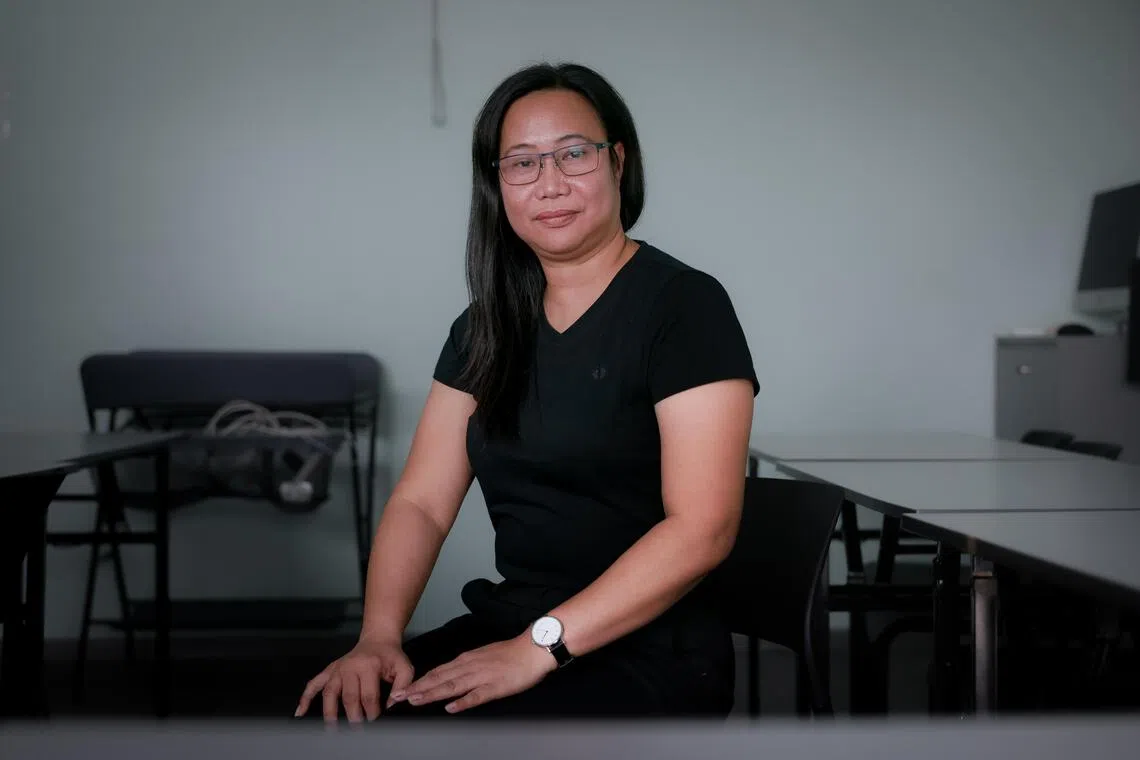
Cell group leader Monette, who declined to give her last name, overcame her own debt trap and now helps other foreign domestic workers.
Published Oct 25, 2026, 05:00 AM
Updated Oct 25, 2026, 05:00 AM
In 2019, Monette owed money to three loan sharks and was so frightened she could barely function.
The 42-year-old Filipina, who declined to give her last name, says: “You cannot sleep, you cannot eat, you cannot work. You’re so scared that you can’t even close your eyes.”
To harass her, a lender repeatedly sent food delivery riders to her employer’s home with orders worth about $100 each, payable on delivery. As the doorbell kept ringing, her employer grew suspicious and angry.
“My boss kept asking, ‘Why are so many things being delivered? How many times is the doorbell ringing?’” Monette says. “I had to tell her, ‘I didn’t order any of this’.”
Like many of the domestic workers she now advises, she had borrowed to send money home, taking on more debt than she could afford.
“I think I lost all sense of boundaries. I just gave and gave and gave. I didn’t think about what my family actually needed.”
When she finally told her British employer the truth, she expected the worst. Instead, her employer installed CCTV cameras, asked the condominium’s security guards to keep strangers out and helped her contact the Ministry of Manpower. The ministry referred her to Blessed Grace Social Services and Pastor Billy Lee.
She says: “Being honest with my employer changed everything. I faced the consequences, yes, but because I was a good worker and they valued me, they protected me.”
Today, she leads a cell group at her church and advises other Filipina domestic workers facing similar pressures. Her message is simple: set limits on what you send home, learn to say no and never borrow what you cannot repay.
“Explain to your family that you’re not earning much. If you can’t afford to send money, wait for your salary. Don’t borrow.”
Her experience gives her words weight. She says: “I know their feelings. I know their stress. I’ve been exactly where they are.”
She also urges workers in trouble to speak honestly with their employers and seek help before their debts deepen. “If you’re already in trouble, don’t make it worse. Learn to manage your money and your salary. That’s the best advice I can give you.”
Moneylending - illegal
小组组长莫内特(她拒绝透露自己的姓氏)克服了自己的债务陷阱,现在帮助其他外籍家庭佣工。
发布于2026年10月25日 上午5:00
更新于2026年10月25日上午5:00
2019 年,莫内特欠了三个高利贷者的钱,她吓坏了,几乎无法正常生活。
这位42岁的菲律宾女子拒绝透露自己的姓氏,她说:“你睡不着觉,吃不下饭,也工作不了。你害怕得连眼睛都闭不上。”
为了骚扰她,一家贷款机构反复派送餐员到她雇主家,每次送餐价值约100美元,货到付款。随着门铃不断响起,她的雇主开始起疑心,并感到愤怒。
莫内特说:“我的老板不停地问,‘为什么这么多东西送来?门铃响了多少次?’ 我不得不告诉她,‘这些东西我一个都没订。’”
和她现在指导的许多家政工人一样,她也曾借钱寄钱回家,背负了超出自己承受能力的债务。
“我觉得我完全失去了界限感。我一直在付出、付出、再付出。我根本没想过我的家人真正需要什么。”
当她最终向英国雇主坦白真相时,她做好了最坏的打算。然而,出乎意料的是,雇主安装了监控摄像头,要求公寓保安阻止陌生人进入,并帮助她联系了人力部。人力部将她转介给了蒙福恩典社会服务中心和比利·李牧师。
她说:“对雇主坦诚相待改变了一切。没错,我承担了后果,但因为我工作出色,他们重视我,所以他们保护了我。”
如今,她在教会带领一个小组,并为其他面临类似压力的菲律宾女佣提供建议。她的建议很简单:限制寄回家的钱,学会说“不”,永远不要借自己还不起的钱。
“跟家人解释一下你收入不高。如果你暂时没钱寄钱,那就等发工资。不要借钱。”
她的经历让她的话语更有分量。她说:“我了解他们的感受。我了解他们的压力。我曾经和他们感同身受。”
她还敦促陷入困境的员工坦诚地与雇主沟通,并在债务加重之前寻求帮助。“如果你已经陷入困境,就不要让情况变得更糟。学会管理你的金钱和薪水。这是我能给你的最好建议。”
放贷——非法