Your aircon isn’t cleaning your air, and bowls of water won’t either: What haze does indoors空调并不能净化空气,放几碗水也无济于事:雾霾对室内空气的影响
KUALA LUMPUR — Keeping windows and doors shut during haze can help limit polluted air entering homes, but it may not be enough to protect occupants from fine particles that seep indoors, two indoor air quality specialists said.Syida Nasri, Airscan’s head of indoor air quality and a Department of Occupational Safety and Health-accredited indoor air quality assessor, said fine particulate...
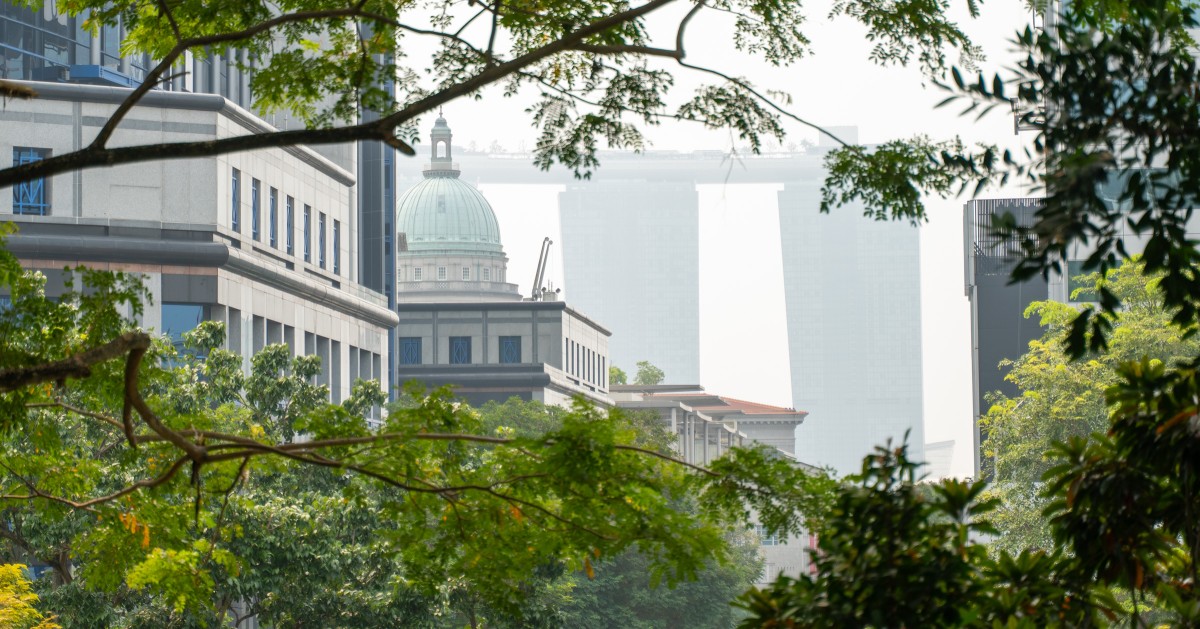
KUALA LUMPUR — Keeping windows and doors shut during haze can help limit polluted air entering homes, but it may not be enough to protect occupants from fine particles that seep indoors, two indoor air quality specialists said.
Syida Nasri, Airscan’s head of indoor air quality and a Department of Occupational Safety and Health-accredited indoor air quality assessor, said fine particulate matter measuring 2.5 micrometres or less (PM2.5) could enter homes through gaps around windows, doors and other openings, even when they were kept closed.
“Merely staying indoors isn’t enough to protect against the haze,” she said.
PM2.5 is of particular concern because the particles are small enough to penetrate deep into the lungs and, unlike larger particles, can stay suspended in the air for long periods.
Syida said PM2.5 levels in closed homes averaged about half those outdoors, but these fine particles can cause inflammation, while ultrafine particles may enter the bloodstream and raise health risks.
“You won’t feel any of it, and you wouldn’t even know you’re being exposed without an indoor air quality sensor,” she said.
However, Applied Air Quality Specialists Sdn Bhd chief executive Tan Zhi Shen said most households could manage without an air purifier, particularly if occupants had no existing respiratory conditions or unusual sensitivities.
Tan said the bigger concern was larger particles such as PM10 and PM5, which he linked to coughing, adding that the need for a purifier depended on factors such as a home’s size and layout.
The two specialists differed on how much protection ordinary homes could provide, but agreed that residents should monitor indoor air quality and cut avoidable sources of pollution.
Keep the haze out, but know when to ventilate
Ventilation is normally important because cooking, cleaning and bathing introduce pollutants and moisture into a home, but during heavy haze the priority is to keep outdoor pollution out, Syida said.
“But we need to flip this during a heavy haze. Stop the bleeding first,” she said.
She said closing windows and doors reduces exposure but does not create an airtight barrier, so residents should not assume that staying inside eliminates the risk.
Keeping a home shut for long periods, however, lets indoor pollutants build up.
“Your house is constantly emitting things: chemicals from your cleaning products, smoke and grease from cooking, moisture from everyday living,” she said.
In Malaysia’s hot and humid climate, trapped moisture can also encourage mould growth.
Syida advised opening windows when outdoor air improves, such as after rain or when wind clears the haze, and cutting back on frying, smoky cooking and strong cleaning detergents while windows are shut.
Both specialists said burning incense, candles or cigarettes indoors would worsen matters, with Syida noting that incense could be a significant source of particulate pollution.
Kitchen hoods and bathroom exhaust fans that vent outdoors also call for caution, as the air they expel must be replaced, potentially drawing polluted air in through gaps.
Both specialists also urged residents to monitor indoor air quality rather than judge by whether haze is visible outside.
“You measure it,” Syida said, adding, “I always tell people air quality measurement is like illuminating a dark room.”
She said even an inexpensive monitor could show trends, although its readings might not be accurate in absolute terms.
Does air-conditioning help, and do you need a purifier?
Switching on the air-conditioner with windows shut is the most convenient way to stay indoors during haze, but cooling a room is not the same as filtering its air.
Tan said conventional home air-conditioners filter larger particles reasonably well, but residents wanting to remove PM2.5 would need a separate purifier.
Syida was more sceptical, calling this one of the biggest misconceptions she hears from clients, friends and family.
“Nearly all home air-conditioning – whether split units or central or ducted units – pulls air from inside the house, cools it, and sends it back into the same room. It isn’t drawing in fresh air from outside and cleaning it on the way,” she said.
Most Malaysian homes use wall-mounted split units, whose mesh filters mainly catch dust, hair and larger debris to protect the equipment rather than clean the air.
“It’s not catching those particles to make your air more breathable. Different job, different solution,” she said.
For those considering a purifier, Syida recommended a genuine high-efficiency particulate air (HEPA) filter, preferably H13, and warned against terms such as “HEPA-type”, “HEPA-like” or “99 per cent HEPA”, which do not necessarily meet a recognised standard.
Tan said buyers should also check the clean air delivery rate (CADR), which indicates how quickly a purifier delivers filtered air, with living areas needing a higher rate than bedrooms.
Syida said a mid-range purifier costing about RM400, with a CADR of 400, had worked effectively in her own 800-square-foot living room, though she described this as personal experience rather than a controlled test.
She said that in a home experiment, indoor PM2.5 readings stayed high despite closed windows and doors, but fell by at least half near the unit within about 10 minutes of switching her purifier to full speed.
Tan said most people would not need to buy a purifier unless they had respiratory problems or other health concerns, though he said households with indoor pets might benefit, as purifiers help clear fur from the air, while animal waste must still be removed quickly before bacteria form.
Syida said there was no need to spend thousands of ringgit on a premium model.
“If you can only afford one, put it in the bedroom. You’re in there seven to eight hours a night breathing the same air while you sleep,” she said.
She advised running the purifier all day on automatic mode if it has a particulate sensor, with windows and doors closed, rather than waiting until the haze visibly worsens.
“By the time you react, the room’s already full of particles and the machine spends the next hour playing catch up,” she said.
What if you can’t afford a purifier?
“If haze has entered your home and you have no filtration and no budget, there’s very little you can do to clean the air,” Syida said.
Wet mopping helps with settled dust but not airborne particles, she said, while ordinary fans do not filter air and may stir up particles that have settled.
Nor should residents count on bowls of water or indoor plants.
“Bowls of water is a weird one — haven’t heard this one before. They do nothing,” Syida said.
On indoor plants, she said: “Effectively no. This is a famous myth that makes the rounds in our industry.”
She said a well-fitted mask could reduce exposure while awake, but fit matters because air leaking around the edges undermines the protection.
Syida said ordinary mesh filters are unlikely to clog faster during haze but should still be cleaned as the manufacturer advises, while units with genuine fine-particle filters may need replacing more often.
Tan’s advice suggests many households can manage by limiting outdoor pollution and maintaining good hygiene, while Syida argues that a suitable purifier adds another layer of protection.
For households weighing one, the decision comes down to the occupants’ health needs, the home’s size and layout, outdoor pollution levels and the device’s filtration capacity.
吉隆坡——两位室内空气质量专家表示,在雾霾期间关闭门窗可以帮助限制污染空气进入室内,但这可能不足以保护居住者免受渗入室内的细颗粒物的侵害。
Airscan 室内空气质量主管兼职业安全与健康部认可的室内空气质量评估员 Syida Nasri 表示,即使窗户、门和其他开口保持关闭状态,直径为 2.5 微米或更小的细颗粒物 (PM2.5) 也可能通过这些缝隙进入室内。
“仅仅待在室内不足以抵御雾霾,”她说。
PM2.5 尤其令人担忧,因为其颗粒足够小,可以深入肺部,而且与较大的颗粒不同,可以在空气中长时间悬浮。
Syida表示,封闭房屋内的PM2.5浓度平均约为室外的一半,但这些细颗粒物会引起炎症,而超细颗粒物可能会进入血液,增加健康风险。
“你不会有任何感觉,如果没有室内空气质量传感器,你甚至不会知道自己正在暴露于有害物质中,”她说。
然而,应用空气质量专家有限公司首席执行官陈志申表示,大多数家庭可以不用空气净化器,特别是如果居住者没有呼吸系统疾病或异常敏感症状的话。
Tan表示,更令人担忧的是PM10和PM5等较大颗粒物,他认为这些颗粒物会导致咳嗽。他还补充说,是否需要空气净化器取决于房屋的大小和布局等因素。
两位专家对于普通住宅能提供多少保护意见不一,但他们一致认为居民应该监测室内空气质量,并减少不必要的污染源。
防止雾霾进入,但也要知道何时通风。
Syida表示,通风通常很重要,因为烹饪、清洁和洗澡会将污染物和湿气带入室内,但在严重雾霾期间,首要任务是防止室外污染进入室内。
“但我们需要在浓雾弥漫的时候扭转局面。先止住伤势,”她说。
她表示,关闭门窗可以减少接触风险,但并不能形成完全密封的屏障,因此居民不应认为待在室内就能消除风险。
然而,长时间紧闭门窗会导致室内污染物积聚。
“你的房子一直在散发各种物质:清洁产品中的化学物质、烹饪产生的油烟、日常生活中的水分,”她说。
马来西亚气候炎热潮湿,水分滞留也容易导致霉菌滋生。
Syida建议,当室外空气质量改善时,例如下雨后或风吹散雾霾时,应该打开窗户;同时,在窗户关闭时,应减少煎炸、烟熏烹饪和使用强力清洁剂。
两位专家都表示,在室内燃烧香、蜡烛或香烟会使情况变得更糟,赛达指出,香可能是颗粒物污染的重要来源。
厨房油烟机和浴室排气扇向室外排气也需要注意,因为它们排出的空气必须被替换,这可能会通过缝隙将污染的空气吸入。
两位专家还敦促居民监测室内空气质量,而不是根据室外是否可见雾霾来判断。
“你要测量它,”赛达说,“我总是告诉人们,空气质量测量就像照亮一个黑暗的房间。”
她说,即使是价格低廉的显示器也能显示趋势,尽管其读数在绝对意义上可能并不准确。
空调有用吗?还需要空气净化器吗?
在雾霾天气里,关上窗户打开空调是待在室内最方便的方法,但是给房间降温和过滤空气是两回事。
Tan表示,传统的家用空调可以较好地过滤较大的颗粒物,但想要去除PM2.5的居民则需要单独的净化器。
Syida 对此持怀疑态度,称这是她从客户、朋友和家人那里听到的最大误解之一。
“几乎所有家用空调——无论是分体式、中央式还是管道式——都是从室内吸入空气,冷却后再送回同一个房间。它们不会从室外吸入新鲜空气并进行净化,”她说道。
大多数马来西亚家庭使用壁挂式分体空调,其网状过滤器主要捕捉灰尘、毛发和较大的碎屑,以保护设备,而不是净化空气。
“它并不能捕捉这些颗粒物来改善空气质量。这是不同的任务,需要不同的解决方案。”她说道。
对于那些考虑购买空气净化器的人,Syida 建议使用真正的高效空气微粒过滤器 (HEPA),最好是 H13 型,并警告不要使用“HEPA 型”、“类似 HEPA”或“99% HEPA”等术语,因为这些术语不一定符合公认的标准。
Tan表示,买家还应该查看洁净空气输出率(CADR),该指标表示净化器输送过滤空气的速度,起居室所需的净化率高于卧室。
Syida表示,一台售价约400令吉、CADR值为400的中档净化器在她800平方英尺的客厅里效果很好,不过她称这是个人经验,而不是受控测试。
她说,在一次家庭实验中,尽管门窗紧闭,室内 PM2.5 读数仍然很高,但将净化器调至全速运转约 10 分钟后,净化器附近的 PM2.5 读数至少下降了一半。
谭先生表示,除非有呼吸系统疾病或其他健康问题,否则大多数人不需要购买空气净化器。不过,他表示,有室内宠物的家庭可能会从中受益,因为空气净化器有助于清除空气中的宠物毛发,但动物粪便仍需在细菌滋生之前迅速清除。
Syida表示,没有必要花费数千令吉购买高级型号。
“如果你只能买得起一台,那就放在卧室里。你每晚要在卧室里待七八个小时,呼吸着同样的空气睡觉,”她说。
她建议,如果净化器有颗粒物传感器,就应该全天开启自动模式,并关闭门窗,而不是等到雾霾明显恶化才启动净化器。
“等你做出反应时,房间里已经充满了粒子,机器接下来要花一个小时来追赶进度,”她说。
如果你买不起净化器怎么办?
“如果雾霾进入你的家中,而你又没有过滤设备也没有预算,那么你几乎无法净化空气,”赛达说。
她说,湿拖有助于清除沉降的灰尘,但对空气中的颗粒物没有帮助,而普通风扇不能过滤空气,反而可能会扬起沉降的颗粒物。
居民们也不应该指望摆放几碗水或室内植物。
“用碗装水来做这件事很奇怪——我以前从没听说过。它们什么作用也没有,”赛达说。
关于室内植物,她说:“实际上并非如此。这是我们行业内流传甚广的一个著名误区。”
她说,佩戴合适的口罩可以减少清醒时的暴露,但贴合度很重要,因为边缘漏气会削弱防护效果。
Syida表示,普通网状过滤器在雾霾期间不太可能更快堵塞,但仍应按照制造商的建议进行清洗,而配备真正细颗粒过滤器的设备可能需要更频繁地更换。
Tan 的建议是,许多家庭可以通过限制室外污染和保持良好的卫生习惯来应对,而 Syida 则认为,合适的净化器可以增加一层保护。
对于一个家庭来说,最终的决定取决于居住者的健康需求、房屋的大小和布局、室外污染水平以及设备的过滤能力。