Helsing unveils interceptor missiles designed to chase Russia’s fast-flying Geran drones赫尔辛公司推出拦截导弹,旨在追击俄罗斯高速飞行的“格朗”无人机
Germany’s Helsing is offering a novel pair of air-defense missiles, plus the requisite AI software to organize intercepts, for downing fast attack drones for under $100,000 per shot.
Share on Facebook (Opens in new window) Facebook
Share on X (Opens in new window) X
Share on Bluesky (Opens in new window) Bluesky
Share on Reddit (Opens in new window) Reddit
Share on LinkedIn (Opens in new window) LinkedIn
Share using Native tools Share Copied to clipboard
Share on Mail (Opens in new window) Mail
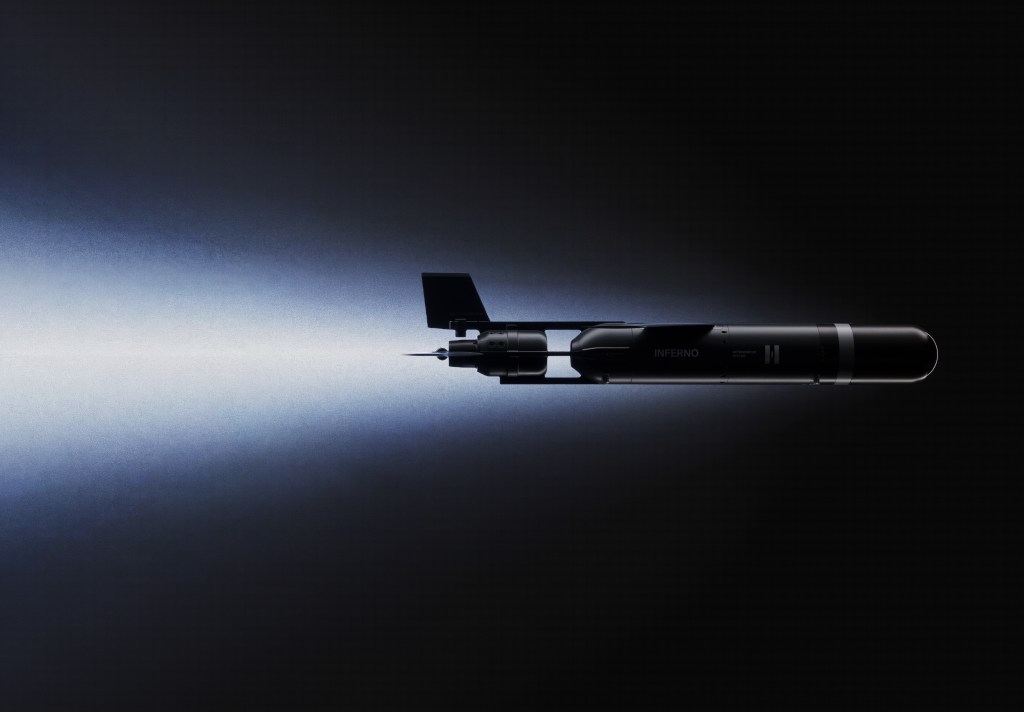
Helsing’s Inferno missile, unveiled on Oct. 26, 2026, is part of the company’s Contra air-defense offering. (Helsing image)
COLOGNE, Germany — Germany’s Helsing is offering a novel pair of air-defense missiles, plus the requisite AI software to organize intercepts, for downing fast attack drones for under $100,000 per shot, company officials said on Monday.
The offering, which goes by the name of Contra, is in testing for now but is expected to reach market readiness in the second half of 2027, Helsing CEO Gundbert Scherf told reporters during a product presentation.
Helsing’s suite is one of several newcomers on the global market that promise to solve the fundamental problem of the air defense discipline: Namely, that firing multimillion-dollar interceptors at drones costing a fraction of that amount is a losing proposition in the long run.
The product launch comes as European governments are eager to buy local equipment, fearing U.S.-made systems like the Patriot will become increasingly difficult for allies to obtain after the Iran war.
Company engineers have developed the AD-1 interceptor missile, named “Inferno” and powered by a jet engine, and the solid rocket motor-propelled AD-2, or “Ambush,” to bring down a new generation of attack drones that behave increasingly like cruise missiles, Scherf said.
The choice of propulsion systems and seeker technology on the interceptors is a direct response to the observed evolution of Russian strike drones unleashed on Ukrainian cities, he said.
Moscow’s Geran drones — based on the Iranian Shahed design — were initially propeller-based and slow, leading Ukrainian air defenders to achieve intercept rates of 90%. In recent months, however, Russia has begun producing and fielding thousands of Geran-4 and Geran-5 drones, which can fly at 400-700 kilometers per hour, causing almost half of the weapons to slip through and reach their intended targets, according to Scherf.
Helsing’s two new interceptor types are meant to complement each other, with the Inferno missile — flying at 700 km/h at a range of 20 kilometers — envisioned as the bread-and-butter countermeasure against all but the most sophisticated threats.
The Ambush, with its speed of more than twice the speed of sound, or almost 3,000 km/h, was designed to close quickly on so-called “leakers” as a last-ditch effort, a reference to threats about to make impact on the ground, said Maxwell Adams, senior product director at Helsing.
Adams said one key feature of the advertised mass-producibility of the Contra system lies in the design of the active radar seekers for the two new interceptors. Those components are made with widely available hardware, leaving prospective buyers free of any worries around Chinese-tinged supply chains or U.S. export controls, company executives said.
One Contra employment scenario, illustrated via a computer animation at the Monday product launch, envisions 20 Inferno and 40 Ambush interceptors streaking out of standard-sized shipping containers to bring down a swarm of incoming drones, with the order and distance of intercepts calculated automatically by the company’s artificial intelligence suite.
While the system will be deemed ready for sales next year, Scherf said one contract for it was already signed.
Sebastian Sprenger is associate editor for Europe at Defense News, reporting on the state of the defense market in the region, and on U.S.-Europe cooperation and multi-national investments in defense and global security. Previously he served as managing editor for Defense News. He is based in Cologne, Germany.
分享至 Facebook(在新窗口中打开) Facebook
分享至 X(在新窗口中打开)X
在 Bluesky 上分享(在新窗口中打开)Bluesky
分享到 Reddit(在新窗口中打开)
在领英上分享(在新窗口中打开)领英
使用原生工具分享 已复制到剪贴板
分享至邮件(在新窗口中打开)邮件
赫尔辛公司于2026年10月26日发布的“地狱火”(Inferno)导弹是该公司“反叛者”(Contra)防空系统的一部分。(赫尔辛公司图片)
德国科隆——德国赫尔辛公司官员周一表示,该公司推出了一款新型防空导弹,以及用于组织拦截的必要人工智能软件,用于击落快速攻击无人机,每次发射价格不到 10 万美元。
Helsing 首席执行官 Gundbert Scherf 在产品演示会上告诉记者,这款名为 Contra 的产品目前正在测试中,预计将于 2027 年下半年达到市场准备阶段。
赫尔辛的这套系统是全球市场上众多新推出的系统之一,这些系统承诺解决防空领域的根本问题:即,用价值数百万美元的拦截器攻击成本仅为其几分之一的无人机,从长远来看是一种得不偿失的做法。
此次产品发布之际,欧洲各国政府急于购买本地设备,他们担心伊朗战争后,盟友将越来越难以获得美国制造的“爱国者”导弹系统。
谢尔夫表示,公司工程师已经开发出由喷气发动机驱动的 AD-1 拦截导弹(名为“地狱火”)和由固体火箭发动机驱动的 AD-2 拦截导弹(名为“伏击”),用于击落新一代攻击无人机,这些无人机的行为越来越像巡航导弹。
他表示,拦截器推进系统和导引头技术的选择,是对观察到的俄罗斯攻击无人机在乌克兰城市中不断演变的直接回应。
莫斯科的“格兰”无人机——基于伊朗“沙赫德”无人机的设计——最初采用螺旋桨驱动,速度较慢,导致乌克兰防空部队的拦截率高达90%。然而,据谢尔夫称,近几个月来,俄罗斯已开始生产并部署数千架“格兰-4”和“格兰-5”无人机,这些无人机的飞行速度可达每小时400至700公里,使得近一半的武器能够突破防线,击中预定目标。
赫尔辛的两种新型拦截器旨在相互补充,其中“地狱火”导弹——飞行速度为700公里/小时,射程为20公里——被设想为应对除最复杂威胁之外的所有威胁的基本反制措施。
据赫尔辛公司高级产品总监麦克斯韦·亚当斯称,伏击战车的速度超过音速的两倍,或接近 3000 公里/小时,其设计目的是在最后一搏中迅速接近所谓的“泄密者”,指的是即将对地面造成冲击的威胁。
亚当斯表示,Contra系统之所以能够大规模量产,关键在于其两款新型拦截导弹的主动雷达导引头的设计。公司高管称,这些部件采用广泛应用的硬件制造,因此潜在买家无需担心涉及中国的供应链或美国的出口管制问题。
在周一的产品发布会上,通过计算机动画演示了 Contra 的一个使用场景:20 架 Inferno 和 40 架 Ambush 拦截器从标准尺寸的集装箱中疾驰而出,击落一群来袭的无人机,拦截的顺序和距离由公司的人工智能套件自动计算。
谢尔夫表示,虽然该系统预计明年即可上市销售,但目前已经签署了一份合同。
塞巴斯蒂安·斯普伦格是《防务新闻》欧洲版副主编,负责报道该地区的防务市场状况,以及美欧在防务和全球安全领域的合作和多国投资。此前,他曾担任《防务新闻》执行主编。他现居德国科隆。