Is the Pentagon’s demand signal for drones working? It depends on who you ask.五角大楼对无人机的需求信号是否奏效?这取决于你问谁。
“There's a lot of positive signaling, but we need to see the whites of the eyes: We need to see sustained, normalized demand,” said James Slider, CEO of Performance Drone Works.
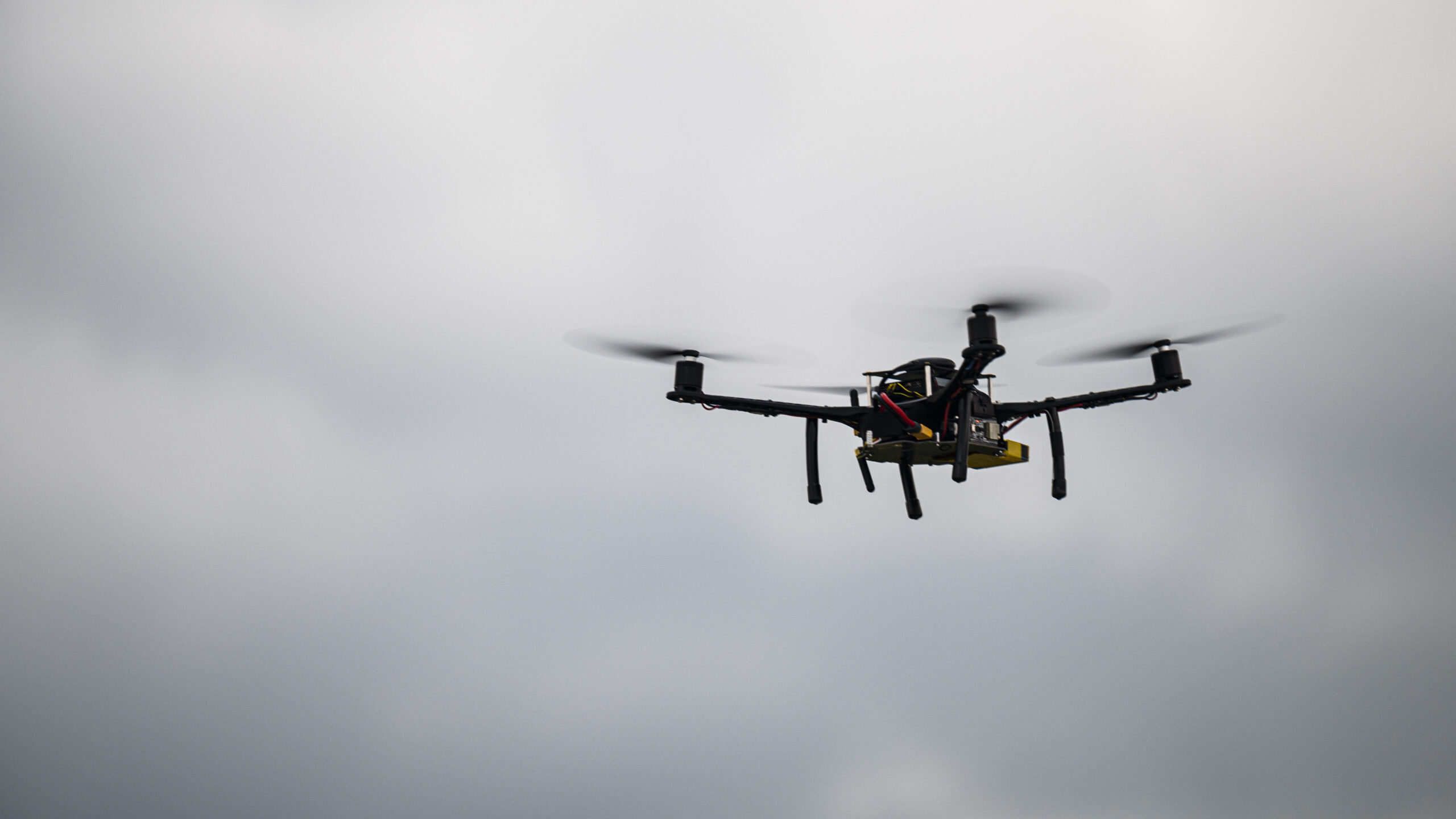
An unmanned aircraft system lands during the Global Information Dominance Experiment 3 and Architecture and Demonstration Evaluation 5 at Camp Grayling, Michigan, July 15, 2021. (US Air Force photo by Staff Sgt. Devin M. Rumbaugh)
WASHINGTON — As the Pentagon rushes to ramp up aerial drone production, industry and military officials tell Breaking Defense they are divided over whether the department’s approach can generate the sustained demand needed to build a lasting domestic drone industry.
“There’s a lot of positive signaling, but we need to see the whites of the eyes: We need to see sustained, normalized demand,” James Slider, CEO of Performance Drone Works, recently told Breaking Defense.
“So what does that look like?” Slider added. “If you win an award and then you’re providing 1,000 drones a month for a year, that’s a very healthy demand for us.”
The Pentagon has created multiple funding avenues and acquisition competitions to encourage companies to develop drones and expand production, without necessarily guaranteeing the longer-term orders needed to justify those investments. The strategy is intended to build up domestic manufacturing capacity, but industry leaders say uncertainty over future purchases could undermine that goal.
As the largest single source of demand for small drones, the Army is deliberately trying to push companies to invest in domestic production, even as some manufacturers question whether that demand will be enough to sustain their businesses.
Jon Strzelec, advanced manufacturing lead for small drones at Army Materiel Command, said the military recognizes that companies are reluctant to invest without more certainty about future orders. Therefore, the department is trying to “artificially induce” demand signals for industry at large .
“We’re trying to force a supply chain to stand up within the country, and so there’s a lot of companies that say, there’s just not enough demand for me to invest in that,” he recently told Breaking Defense.
Missiles and radar need more than demand – they need manufacturing capacity
Expanding manufacturing capacity is critical to producing missiles, radars, and launch systems.
Whether that signal can be boosted strongly enough to convince cautious industry officials may determine the fate of the Pentagon’s drone push — and billions of dollars in proposed defense spending.
An ‘Artificial’ Push
The push to acquire small, cheap aerial drones is not brand new. Under the Biden administration, the Pentagon launched its Replicator initiative to rapidly acquire and field thousands of inexpensive, attritable drones to prepare for a potential military contingency with China.
Over the past year and a half, however, that effort has accelerated. The Pentagon is now pursuing new acquisition programs, reorganizing how it manages autonomous warfare initiatives and seeking billions of dollars for drone purchases.
In mid-2025, Defense Secretary Pete Hegseth kicked off the broader push when he issued the Drone Dominance memo , laying out plans to boost unmanned aerial systems production, cut red tape associated with troops’ use of those aerial weapons, and equip every Army squad with small, one-way attack drones by the end of fiscal 2026.
The Pentagon has since reshuffled its autonomy leadership, with Hegseth seeking congressional approval for a four-star Autonomous Warfare Command, or AUTOWARCOM. Meanwhile, the Biden-era Replicator initiative was repackaged as the Defense Autonomous Warfare Group (DAWG) and later absorbed into Task Force Autonomous Warfare.
The Pentagon has outlined plans to spend nearly $55 billion on the initiative in its FY27 budget. But the bulk of that funding was requested through a reconciliation package, leaving its future uncertain as lawmakers weigh whether to approve the money and the department considers whether to retool its base budget request .
One of the clearest examples of the department’s approach is its Drone Dominance program, a gauntlet-style competition billed as a way to give companies repeated opportunities to win smaller deals that will collectively amount to $1 billion over two years. An online leaderboard tracks competitors in each gauntlet, including the number of drones ordered and each company’s reported delivery status.
“They’re artificially creating a demand signal to push the American industry to start manufacturing this stuff in the United States,” Strzelec said.
Under Gauntlet 1, the Pentagon has selected 11 companies to deliver 30,000 small drones through a combination of initial and “bonus” orders. At the lower end of the ordering scale, the department ordered 1,520 drones from Farage Precision while toward the top, Neros has received orders for 4,960.
For Gauntlet 2, the department divided drones into two categories — those best suited for deep strike and those better aligned for close-quarters combat. It has tapped five companies in both categories and awarded deals covering 30,000 drones in each.
But Drone Dominance awards do not guarantee future orders, leaving companies without a commitment to sustain production beyond their initial contracts.
That uncertainty reflects a broader challenge in the Pentagon’s acquisition strategy, as repeated competitions can give the military opportunities to select new technologies and encourage companies to improve their systems. But without predictable follow-on orders, the same approach can make it harder for manufacturers to justify long-term investments needed to scale — a conflict not lost on defense officials.
Andrew Evans, director of the Strategy & Transformation Office inside the Army’s Deputy Chief of Staff for Intelligence (G-2), called it an “ultimate economic challenge” for the department as it tries to leverage existing American manufacturing capacity while ensuring production lines remain open even when demand falls.
“The challenge that our senior leaders are having to contend with is, how do you incentivize industry to build if your ordering period is so episodic?” he said during a recent interview with Breaking Defense.
Whether companies are buying into the demand signal the Pentagon is hoping to provide remains up in the air, according to multiple interviews and comments made this month from industry leaders. Some described strong demand across government, while others questioned whether that demand would translate into sustained orders. In an interview with Breaking Defense on Oct. 13, Skydio Chief Revenue Officer Callan Carpenter said that from his perspective, the administration’s demand signal to industry is clear.
“The demand signals are very strong, and it’s not just DOW [the Department of War] either,” Carpenter said, referring to the Trump administration’s alternate name for the Defense Department. “It’s [Department of Homeland Security], it’s other parts of the civilian federal government, and we’re selling products into all of those segments,”
Other industry leaders offered differing opinions, noting challenges with smaller buys, a never-ending cycle of competitions and annual funds that are not yet approved by Congress or reflected in projected outyear spending requests.
John Burer, CEO for the American Center for Manufacturing & Innovation industry group, explained that companies need confidence that they will win contracts and produce drones at scale before committing to major capital expenditures.
“If I were a manufacturer of drone systems, I wouldn’t be investing ahead of a very large amount of money or a consistent demand signal,” he told Breaking Defense. “It’s great to do a bake off and to test some of these things and prove out that they can work, but then scaling production needs a different mindset, and it’s a cost focus oftentimes.”
Chad Chasteen, senior director and team leader of Army business development at AV, said that while the service’s preference for frequently running competitions affords more opportunities for companies to win a contract, the approach also comes with drawbacks.
“The Army system of continuous competition and not sticking with a solution for more than a year or two creates all kinds of havoc in the supply chain,” he said Oct. 13 during a panel at the AUSA conference. He added that successive competitions also need to be followed by a similar number of awards.
“There is no supply without demand,” he said. “Continuous competition doesn’t mean you make industry fill out continuous requests for white papers. There has to be continuous awards, continuous orders to create that.”
Performance Drone Works’ Slider voiced similar concerns about the Pentagon’s long-term demand signal, saying he did not expect much more private equity flow into the sector without stronger commitments.
For Slider, part of the uncertainty stems from the proposed $55 billion DAWG funding package, which remains stalled in Congress. However, if Pentagon leaders and lawmakers find a way to fund the initiative at those levels, even in a base request, that would be a big green flag.
“Seeing the DAWG money flow down would be very encouraging for us,” Slider said. “Depending on who you talk to, it’s definitely coming or definitely not coming.”
Michael Marrow contributed to this reporting.
Breaking Defense Video
Army’s tech chief talks autonomy, acquisition and the future of drones
Drones take over AUSA, plus the Army’s plan to bring in new vendors
Hegseth talks autonomy at AUSA, a key show focus
Army doubles down on autonomy, stakes out Indo-Pacific role: AUSA Day 2
Telle talks ‘manufacturing rodeo,’ supply chain ‘weak links’: AUSA Day 1
New leaders, new drone command: What we expect from AUSA 2026
Unpacking Boeing’s F/A-XX win, plus a report from wartime Ukraine
How Hegseth envisions a new Autonomous Warfare Command
What Europe’s military air fleets will look like in 30 years
Riyadh gets closer to F-35s, Damascus presses sovereignty and an expert take on Iran
2021年7月15日,在密歇根州格雷林营举行的全球信息优势实验3和架构与演示评估5期间,一架无人机系统着陆。(美国空军照片,由参谋军士德文·M·伦博拍摄)
华盛顿——随着五角大楼加紧提高无人机产量,行业和军方官员告诉《防务新闻》,他们对于国防部的做法能否产生建立持久的国内无人机产业所需的持续需求存在分歧。
“有很多积极的信号,但我们需要看到实际行动:我们需要看到持续、正常的需求,”Performance Drone Works 的首席执行官 James Slider 最近告诉 Breaking Defense。
“那具体会是什么样子呢?”斯莱德补充道,“如果你赢得奖项,然后一年内每月提供1000架无人机,这对我们来说就是一个非常健康的需求。”
五角大楼设立了多种融资渠道和采购竞赛,鼓励企业研发无人机并扩大生产规模,但并未保证能够获得长期订单以证明这些投资的合理性。该战略旨在提升国内制造能力,但业内人士表示,未来采购的不确定性可能会损害这一目标。
作为小型无人机的最大单一需求来源,陆军正刻意推动各公司投资国内生产,尽管一些制造商质疑这种需求是否足以维持其业务。
陆军装备司令部小型无人机先进制造负责人乔恩·斯特雷莱克表示,军方意识到,如果未来订单没有更多确定性,企业不愿投资。因此,国防部正试图“人为地”刺激整个行业的需求信号。
“我们正在努力推动国内供应链的建立,因此有很多公司表示,没有足够的需求让我进行投资,”他最近告诉《防务新闻》。
导弹和雷达需要的不仅仅是需求——它们还需要生产能力。
扩大生产能力对于导弹、雷达和发射系统的生产至关重要。
能否大力宣传这一信号,从而说服谨慎的行业官员,可能会决定五角大楼推进无人机计划的命运,以及数十亿美元的拟议国防开支的命运。
一种“人为”推动
采购小型、廉价无人机的呼声并非始于今日。在拜登政府时期,五角大楼启动了“复制者”计划,旨在快速采购并部署数千架价格低廉、可消耗的无人机,以应对与中国可能发生的军事冲突。
然而,在过去一年半的时间里,这项工作加速推进。五角大楼目前正在推进新的采购项目,重组其自主作战计划的管理方式,并寻求数十亿美元的无人机采购资金。
2025 年年中,国防部长皮特·赫格塞斯发布了《无人机优势备忘录》,启动了更广泛的推进计划,其中列出了提高无人机系统产量、减少部队使用这些空中武器的繁文缛节以及在 2026 财年末之前为每个陆军班配备小型单向攻击无人机的计划。
此后,五角大楼重组了其自主作战领导层,赫格塞斯正在寻求国会批准设立一个四星级的自主作战司令部(AUTOWARCOM)。与此同时,拜登时代的“复制者”计划被重新包装为国防自主作战小组(DAWG),后来又并入自主作战特遣队。
五角大楼已在其2027财年预算中列出了近550亿美元的计划用于该项目。但其中大部分资金是通过一项预算协调方案申请的,因此该项目的未来尚不明朗,因为国会正在权衡是否批准这笔资金,而国防部也在考虑是否调整其基本预算申请。
该部门策略最鲜明的例证之一是其“无人机主导权”计划。这项竞赛采用淘汰赛制,旨在为企业提供反复赢得小型订单的机会,这些订单将在两年内累计达到10亿美元。在线排行榜会追踪每轮比赛中的参赛者,包括无人机订单数量和各公司报告的交付状态。
斯特雷莱克说:“他们人为地制造需求信号,以推动美国工业开始在美国生产这些东西。”
在第一轮竞标中,五角大楼选定了11家公司,通过初始订单和“额外”订单相结合的方式交付3万架小型无人机。在订单量较低的区域,五角大楼向法拉奇精密公司订购了1520架无人机;而在订单量较高的区域,尼罗斯公司获得了4960架的订单。
在“挑战2”演习中,国防部将无人机分为两类——最适合纵深打击的无人机和更适合近距离作战的无人机。国防部已选定两类无人机的五家公司,并分别授予了每类3万架无人机的合同。
但无人机主导权奖项并不能保证未来的订单,这使得企业没有义务在初始合同之外维持生产。
这种不确定性反映了五角大楼采购战略面临的更广泛挑战,因为反复的竞标可以为军方提供选择新技术的机会,并鼓励企业改进其系统。但如果没有可预测的后续订单,同样的做法可能会使制造商更难证明扩大规模所需的长期投资的合理性——国防官员们对此矛盾心知肚明。
陆军情报副参谋长(G-2)战略与转型办公室主任安德鲁·埃文斯称,这是该部门面临的“终极经济挑战”,因为它试图利用现有的美国制造业能力,同时确保即使需求下降,生产线也能继续运转。
他在最近接受《防务新闻》采访时表示:“我们高层领导面临的挑战是,如果订单周期如此不稳定,如何激励行业进行建设?”
根据本月多位行业领袖的采访和评论,企业是否认同五角大楼希望传递的需求信号仍不明朗。一些行业领袖表示政府各部门需求强劲,而另一些则质疑这种需求能否转化为持续的订单。10月13日,Skydio首席营收官卡兰·卡彭特在接受Breaking Defense采访时表示,在他看来,政府向业界发出的需求信号是明确的。
“需求信号非常强劲,而且不仅仅是国防部(DOW),”卡彭特说道,他指的是特朗普政府对国防部的别称。“国土安全部、联邦政府的其他民事部门,我们都在向所有这些部门销售产品。”
其他行业领袖则提出了不同的意见,指出小额采购面临挑战,竞争永无止境,年度资金尚未获得国会批准或反映在预计的下一年支出申请中。
美国制造与创新中心行业集团首席执行官约翰·布雷尔解释说,企业在投入巨额资本支出之前,需要有信心赢得合同并大规模生产无人机。
“如果我是无人机系统制造商,在没有大量资金或持续的需求信号之前,我是不会进行投资的,”他告诉《防务新闻》。“进行测试并验证这些产品是否可行固然很好,但规模化生产需要不同的思维方式,而且通常情况下,成本控制才是关键。”
AV公司陆军业务发展高级总监兼团队负责人查德·查斯汀表示,虽然陆军倾向于频繁举办竞标活动,这为公司赢得合同提供了更多机会,但这种做法也有其缺点。
“陆军的这种持续竞争、不坚持使用任何解决方案超过一两年的制度,给供应链造成了各种各样的混乱,”他在10月13日美国陆军协会(AUSA)会议的一个小组讨论会上说道。他还补充说,连续的竞争之后也需要有数量相当的中标结果。
“没有需求就没有供给,”他说。“持续的竞争并不意味着要让业界不断地提交白皮书申请。必须要有持续的奖励和订单才能创造这种局面。”
Performance Drone Works 的 Slider 也表达了类似的担忧,认为五角大楼的长期需求信号可能不大,并表示如果没有更强有力的承诺,他预计不会有更多的私募股权流入该行业。
对斯莱德而言,部分不确定性源于拟议的550亿美元DAWG拨款方案,该方案目前仍停滞在国会。然而,如果五角大楼领导人和立法者能够找到办法,即使只是以基本拨款额度,也能为该计划提供资金,这将是一个重要的信号。
“如果DAWG的资金能够到位,对我们来说将是极大的鼓舞,”斯莱德说。“但资金肯定会到位,也可能不会到位,这取决于你问谁。”
Michael Marrow对本文亦有贡献。
突破性防御视频
陆军技术主管谈无人机的自主性、采购和未来
无人机主导了美国陆军协会(AUSA)的会议,此外,陆军还计划引入新的供应商。
Hegseth 在 AUSA 大会上谈到了自主性,这是本次大会的一个重点议题。
陆军加倍强调自主性,明确印太地区角色:AUSA第二天
特勒谈“制造业乱象”、供应链“薄弱环节”:AUSA第一天
新领导人,新无人机指挥部:我们对 AUSA 2026 的期待
深入剖析波音F/A-XX的竞标结果,以及来自战时乌克兰的报道
赫格塞斯设想的新型自主作战指挥部
30年后欧洲军用空军机队会是什么样子
利雅得距离F-35战机更近一步,大马士革强调主权,以及专家对伊朗的看法