Want to plan your finances to have enough for retirement in Malaysia? Here are some tips想规划好财务,为在马来西亚的退休生活做好准备吗?这里有一些建议。
KUALA LUMPUR, Oct 27 — As the average life expectancy of Malaysians rise, the pressing question becomes whether they are equipped financially to live past retirement.Based on...
KUALA LUMPUR, Oct 27 — As the average life expectancy of Malaysians rise, the pressing question becomes whether they are equipped financially to live past retirement.
Based on Malaysia’s latest official figures, babies born in 2026 are expected to live to 75.5, while a person aged 60 and 65 now are expected to live to 80.2 and 81.5 respectively.
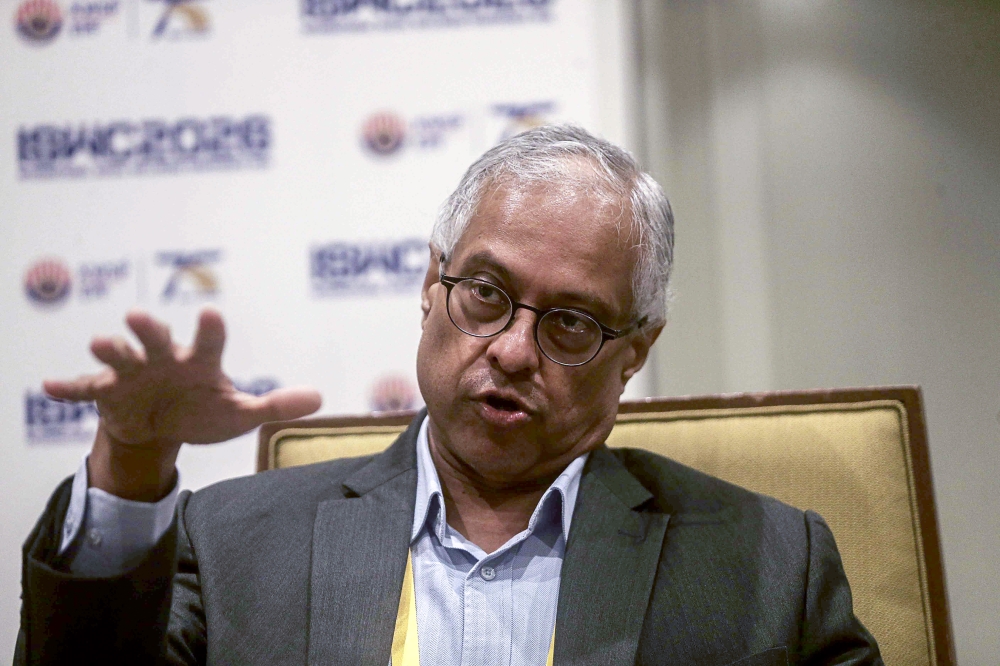
In an interview with Malay Mail , licensed financial planner Rajen Devadason said, “But what are you going to do if you live to be 85, 90, 95, 100, 105?”
In planning for your retirement finances, Rajen said you could split your net income (after paying taxes) into three portions of about 33 per cent each:
Past (Money that you have already spent, but are paying now = Existing debts, e.g. housing loan, car loan)
Present (Current expenses = What you have to pay for today)
Future (What you have to invest now for the future)
“You should probably commit one third to pay your debts, try and accelerate that, get rid of those as fast as possible; one third to take care of your middle section, your current expenses; and one third for tomorrow,” he told Malay Mail at the Employees Provident Fund’s (EPF) recent International Social Wellbeing Conference 2026 (ISWC 2026).
If you are currently contributing 11 per cent to your EPF retirement savings, Rajen said this means you would need to put aside about another 22 per cent into sources that can generate passive income for the future.
Rajen listed some common passive income sources:
Interest from money in the bank;
Dividends from EPF savings or from dividend-paying stocks;
Cash distributions from unit trust investments;
Rental income collected from properties you own (such as apartment, shoplot);
Listed Real Estate Investment Trusts (REIT) and REIT funds.
Once you have cleared off your debts, you can then spend half of your income on current expenses and preparing for the future, he suggested.
Rajen said he gives this advice to his clients too: “Then it’s really up to them. They’re the ones who are going to have to work on their budget. They need to have a written budget.
“They need to work harder, work longer, work smarter to increase their active income, their earned income. That can be salaries or business revenue.
“And then they need to control their expenses; create the surplus; and then they need to allocate the surplus,” he said, highlighting the importance of using the extra money to create multiple pipelines of passive income.
He stressed the need to take “personal responsibility” for your own finances and to create your own pension or retirement income, instead of expecting the government to take care of you.
Skip the lifestyle upgrades now for better cash flow, so you can be less stressed in the future
At ISWC 2026, Rajen said one key step is to get off the “hedonic treadmill” — or the cycle where a new lifestyle upgrade becomes the new norm, and you then spend increasingly more money to buy the next lifestyle upgrade.
“Now if you do this at a younger age, you’ll actually have more time to generate surpluses to take advantage of compounding,” he said, as you would have better cash flow or more money available to build up passive income.
He noted that the lack of passive income causes great stress during retirement, where people see their pool of money “evaporate” due to inflation, living expenses, emergencies, medical costs or vacations.
Choosing to delay gratification now and to create passive income would help with reducing that stress, he said.
Apart from building up financial reserves for retirement, Rajen said Malaysians should also build up their cognitive reserves and try to “stay mentally sharp for as long as possible so that you don’t lose control of the cerebral capacity to be able to manage your money”.
How old do you think you will live and when should you retire?
Rajen added that the longevity risk that people face globally is the risk of people living longer than their money lasts.
He suggested one way to work out what age you might likely live to: Get an average of how long your parents’ families have lived, and add another five years.
He recommended working past the official retirement age if necessary to hit retirement income goals.
“I recommend that regardless of what age you have to keep working to, do not retire until you have paid off all your debts,” he also said, adding that it would then be easier to manage finances.
Malaysia’s retirement age is currently 60, and Rajen has proposed to gradually raise it to 65 by the year 2035, and to 70 by the year 2050.
Work backwards from a retirement goal
At an ISWC 2026 panel session, JP Morgan Asset Management’s chief market strategist (Asia Pacific) Tai Hui proposed setting your retirement goal first, such as what you want to achieve at 65.
“I think the important thing is to start calculating roughly how much you need when you retire to live a comfortable life to cover your expenses, your contingencies.
“And then sort of work backwards, how much you got to save, how much you got to invest, what should you be investing in?” he said.
Currently, EPF’s Retirement Income Adequacy (RIA) framework sets out what Malaysians can target to save up in EPF by age 60: Basic Savings Level (RM390,000), Adequate Savings Level (RM650,000), or Enhanced Savings Level (RM1.3 million).
Kickstart your retirement planning today
If you still don’t know where to start, you can try:
Visiting your nearest EPF branch to get free financial planning and retirement planning advice from their Relationship & Advisory service
EPF’s Retirement Goal Calculator to set your retirement savings goal
(It’s really easy to use. Just sign in to EPF’s i-Akaun app for an estimate of how long your savings can last during retirement, and how much more you may need to save.)
Recommended reading:
No idea how to plan your retirement or manage your money after retiring? Get free advice from EPF’s award-winning Relationship & Advisory service
Make your EPF savings go the distance: Smart tips for retirement at 55 and beyond
How Malaysia can raise its retirement age from 60 to 65: Experts explain the math and more
Budget 2027 autism initiatives aim to bridge early education gap for rural, low-income children
Nepal turns to SMART’s drones, detection gear after declining two Malaysian rescue offers
Abang Johari confirms AI data centre plan in Sarawak under US$50b investment
吉隆坡,10月27日讯——随着马来西亚人平均预期寿命的延长,一个紧迫的问题是,他们是否有足够的经济能力来维持退休后的生活。
根据马来西亚最新的官方数据,2026 年出生的婴儿预计寿命为 75.5 岁,而现在 60 岁和 65 岁的人预计寿命分别为 80.2 岁和 81.5 岁。
持牌理财规划师拉詹·德瓦达森在接受《马来邮报》采访时表示:“但是,如果你活到 85 岁、90 岁、95 岁、100 岁、105 岁,你打算怎么办?”
拉詹表示,在规划退休财务时,您可以将净收入(税后)分成三部分,每部分约占 33%:
过去(已支出但现在正在偿还的款项 = 现有债务,例如住房贷款、汽车贷款)
当前支出(当期支出 = 您今天必须支付的费用)
未来(你现在需要为未来投资什么)
“你应该拿出三分之一来偿还债务,尽量加快还款速度,尽快摆脱债务;三分之一来照顾你的中间部分,也就是你目前的开支;还有三分之一用于未来,”他在最近由雇员公积金局 (EPF) 主办的 2026 年国际社会福祉大会 (ISWC 2026) 上告诉《马来邮报》。
Rajen表示,如果你目前将11%的收入存入公积金退休储蓄账户,这意味着你需要将大约22%的收入投入到未来可以产生被动收入的来源中。
拉詹列举了一些常见的被动收入来源:
银行存款利息;
来自公积金储蓄或派息股票的股息;
来自单位信托投资的现金分配;
从您拥有的房产(如公寓、商铺)收取的租金收入;
上市房地产投资信托基金(REIT)和REIT基金。
他建议,一旦还清债务,就可以将收入的一半用于当前开支和为未来做准备。
拉詹表示,他也会给客户同样的建议:“接下来就真的取决于他们了。他们必须自己制定预算。他们需要一份书面预算。”
“他们需要更加努力工作、延长工作时间、更聪明地工作,以增加他们的主动收入,也就是他们的劳动收入。这可以是工资,也可以是企业收入。”
“然后他们需要控制开支;创造盈余;然后他们需要分配盈余,”他说道,强调了利用额外的资金创造多个被动收入渠道的重要性。
他强调,人们需要对自己的财务状况承担“个人责任”,并创造自己的养老金或退休收入,而不是指望政府来照顾自己。
现在放弃生活方式升级,争取更好的现金流,这样未来压力就会小很多。
在 ISWC 2026 上,Rajen 表示,关键的一步是摆脱“享乐跑步机”——或者说,摆脱那种新的生活方式升级成为新常态,然后你花费越来越多的钱去购买下一个生活方式升级的循环。
“如果你在年轻的时候就这样做,你实际上会有更多的时间来积累盈余,从而利用复利效应,”他说,因为你会有更好的现金流或更多的资金来建立被动收入。
他指出,缺乏被动收入会在退休期间造成巨大的压力,人们眼睁睁地看着自己的积蓄因为通货膨胀、生活开支、紧急情况、医疗费用或度假而“蒸发”。
他表示,现在选择延迟满足并创造被动收入有助于减轻这种压力。
拉詹表示,除了为退休积累财务储备外,马来西亚人还应该积累认知储备,并努力“尽可能长时间地保持头脑敏锐,这样你就不会失去管理金钱的脑力”。
你认为自己能活到多大岁数?你打算什么时候退休?
拉詹补充说,全球范围内人们面临的长寿风险是人们寿命超过其财富消耗量的风险。
他建议了一种计算你可能活到多大年纪的方法:取你父母家族的平均寿命,然后加上五年。
他建议,如有必要,可以工作到超过法定退休年龄,以达到退休收入目标。
“我建议,无论你工作到什么年龄,都不要在还清所有债务之前退休,”他还说,并补充说,那样会更容易管理财务。
马来西亚目前的退休年龄为 60 岁,拉詹提议到 2035 年逐步提高到 65 岁,到 2050 年提高到 70 岁。
从退休目标倒推制定计划
在 ISWC 2026 的小组讨论会上,摩根大通资产管理公司亚太区首席市场策略师 Tai Hui 建议首先设定你的退休目标,例如你希望在 65 岁时实现什么目标。
我认为重要的是,要开始大致计算一下,退休后需要多少钱才能过上舒适的生活,以支付你的开支和应对突发情况。
“然后反过来算算,你要存多少钱,要投资多少钱,应该投资什么?”他说道。
目前,马来西亚雇员公积金局 (EPF) 的退休收入充足性 (RIA) 框架规定了马来西亚人在 60 岁时可以在 EPF 中储蓄的目标金额:基本储蓄水平(390,000 令吉)、充足储蓄水平(650,000 令吉)或增强储蓄水平(130 万令吉)。
今天就开始您的退休规划吧!
如果你仍然不知道从哪里开始,可以尝试:
前往您附近的公积金局分行,即可通过其关系与咨询服务获得免费的财务规划和退休规划建议。
公积金局退休目标计算器,助您设定退休储蓄目标
(使用起来非常简单。只需登录公积金局的 i-Akaun 应用程序,即可估算出您的储蓄可以维持多久的退休生活,以及您可能还需要储蓄多少。)
推荐阅读:
不知道如何规划退休生活或退休后如何理财?可从公积金局屡获殊荣的关系与咨询服务处获得免费建议。
让您的公积金储蓄发挥最大效用:55岁及以后退休的明智之选
马来西亚如何将退休年龄从60岁提高到65岁:专家解读计算方法及更多细节
2027年预算案中的自闭症倡议旨在弥合农村低收入家庭儿童早期教育的差距
尼泊尔拒绝了马来西亚的两项救援提议后,转而寻求SMART公司的无人机和探测设备。
阿邦佐哈里确认砂拉越人工智能数据中心计划投资 500 亿美元