For European envoys in DC, a new chill from Trump’s Pentagon对于驻华盛顿的欧洲特使来说,特朗普五角大楼带来了新的寒意
Delegates describe having trouble securing meetings with longtime contacts, and listening to scripted spiels about new priorities for the U.S. military.
Over his years in Washington, a European defense official — granted anonymity to speak freely — grew used to a certain warmth from his American counterparts.
He gave the Air Force’s annual conference as an example. Every year he went, the speakers thanked U.S. allies for their help, and at least one U.S. officer approached him with a question: “What can we do for you?”
That changed this month, at the same conference in Aurora, Colorado. The scarce crowd in attendance barely mentioned American allies, the official noted. No one asked him what he needed.
For many Europeans either visiting or posted to Washington, moments of comity are becoming scarcer as the second Trump administration rapidly alters America’s 75-year military role in Europe.
Officials described struggling to get meetings with their Pentagon counterparts, including longtime contacts. At the same time, in private conversations, American defense officials are delivering abrupt changes in policy, from a drop in American forces on the continent to a lack of interest in having them counter China in the Pacific. The shift has many European officials wondering who they should listen to, and what is the Pentagon’s new strategy.
“It feels like the task is not to promote European allies and NATO but to ensure a U.S. withdrawal with minimum fuss,” said a second European defense official.
This story is based on interviews with half a dozen European officials, all of whom were allowed to speak anonymously to avoid becoming a target of the Trump administration. They described the personal effect of a new chill felt from the Pentagon toward Europe, one that is already causing their governments to doubt America’s commitment to them, and in turn their commitment to America.
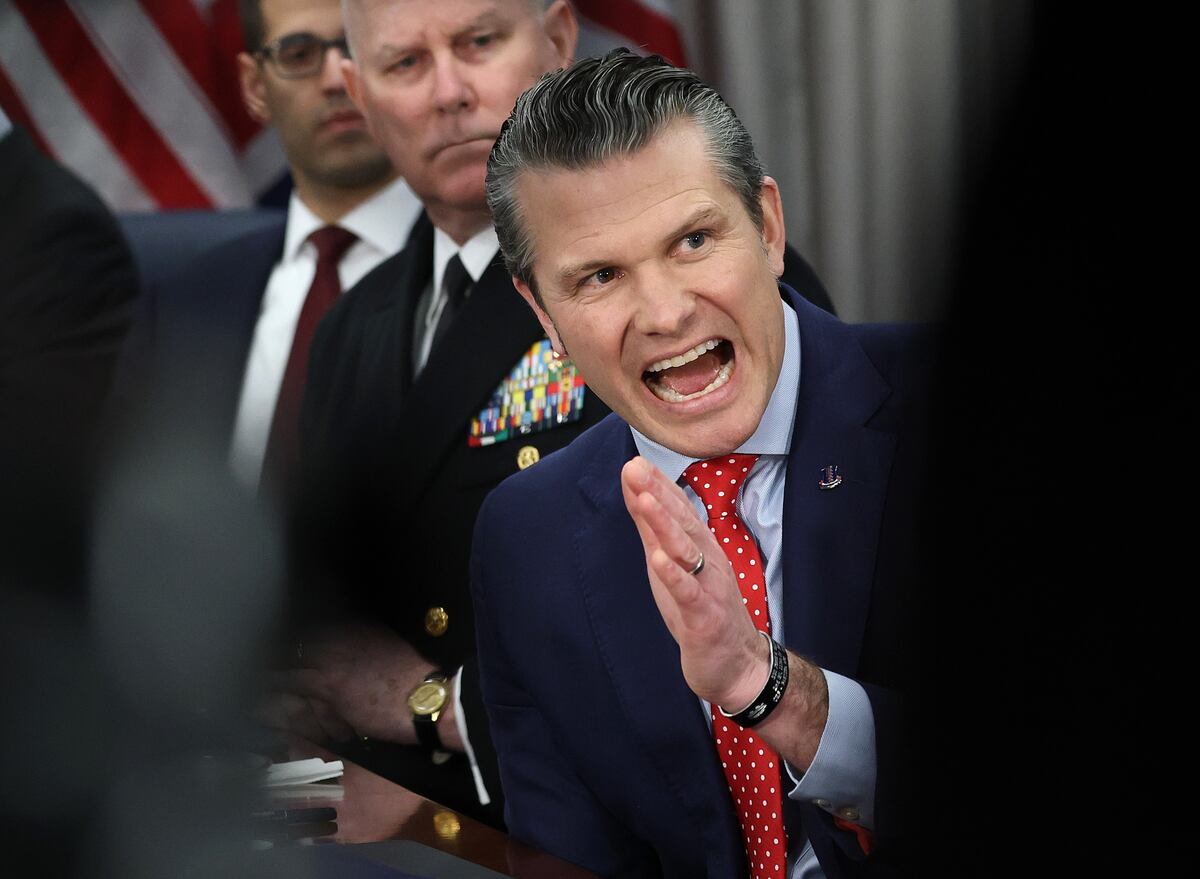
The warning signs for Europe under the second Trump administration came early. The president has long been skeptical of America’s role in NATO and accused European partners of free-riding off U.S. military power. That rhetoric hardened when Defense Secretary Pete Hegseth traveled to the alliance’s headquarters in February.
“Leaders of our European allies should take primary responsibility for defense of the continent,” he said, arguing they should spend closer to 5% of GDP on defense.
In private, some on the continent welcomed the lecture. A record 23 of NATO’s 32 members now spend the alliance’s 2% floor of GDP on defense, but Europe would still struggle to defend itself without American assistance — a problem clear to many of the countries in the east.
What no country in the alliance wants, though, is American abandonment, something Europeans began to fear two weeks after Hegseth’s speech.
In late February, Ukrainian President Volodymyr Zelenskyy visited the Oval Office to sign an agreement trading natural resources for U.S. military support. It ended up in a shouting match, with Trump and Vice President JD Vance berating him for a perceived lack of gratitude.
The U.S. paused military and intelligence support for Ukraine days later, a suspension that lasted a week.
Trump had threatened such steps before but largely avoided acting on them in his first term. The pause made it clear to many in Europe that this time was different, said Max Bergmann, who studies European security at the Center for Strategic and International Studies.
“It [created] the sense that the U.S. is walking away, and may not be on our side,” Bergmann said, describing European sentiments.
For many Europeans inside or visiting Washington, Zelenskyy’s visit has come to represent a growing sense of alienation they feel from the U.S., especially from the Pentagon.
Several defense officials from the continent described having much more difficulty getting meetings with counterparts in the Defense Department, even with long-term contacts. Some said their counterparts were now having to get approval from supervisors before gathering casually, say for coffee or lunch.
Others who have secured meetings reported stiff discussions in which U.S. officials stuck closely to prepared talking points, despite at times outlining sharp changes in policy.
After years of courting allies to take the threat of China more seriously, the Pentagon is now discouraging Europeans from getting more involved in the Pacific. Countries such as Britain and Germany that join U.S.-led military drills around Asia haven’t yet been disinvited, the officials said, while noting that they still saw it as a possibility. Instead, the message now is that Europe should focus almost solely on its own security.
“[There is] no demand signal from the U.S. for the Europeans to be involved in the Pacific,” the second official said.
Meanwhile, Europeans are also preparing for a drastic change in America’s military posture on the continent. Pentagon officials have previewed a drawdown in private, though they haven’t specified which units will depart, except to say it will likely involve the 20,000 troops the Biden administration surged to Europe after Russia’s 2022 invasion of Ukraine.
Several top policy officials now in the Pentagon have previously argued that the U.S. military is over-committed in Europe and should shift forces toward Asia, to better deter China.
The Defense Department did not respond to a request for comment.
That said, some European officials are struggling to discern the signal from the noise, hearing different things from different parts of the administration. Their confusion is part of a larger issue many allies are facing: Who has real authority when Trump himself dictates so much of America’s foreign policy?
Indeed, one official said NATO Secretary General Mark Rutte was assured during his March visit to Washington, where he met with Trump, that the 20,000 troops surged to Europe would remain.
“The United States has repeatedly reaffirmed its strong commitment to NATO. President Trump emphasized this when he met with Secretary General Rutte at the White House last week,” a NATO spokesperson said when asked for comment.
The alienation has also not been universal. While visiting Europe last month, Hegseth traveled to Poland and had a warm reception with the country’s Deputy Prime Minister Wladyslaw Kosiniak-Kamysz, who also serves as the defense minister.
“It’s quite intentional that our first European bilateral is right here in Poland,” Hegseth said at a press conference. “We see Poland as the model ally on the continent,” he continued.
Poland spends over 4% of GDP on defense, and its president has pledged to increase that to 4.7% this year, which would make it the largest among NATO countries. And up until last year, Warsaw had been governed by a right-wing party that courted Trump, at one point even proposing a Polish military base named after the U.S. president.
Other allies are taking note.
In early March, Britain’s secretary of state for defense arrived in Washington to meet with Hegseth, a cordial meeting that ran 30 minutes longer than scheduled. Speaking with reporters later, John Healey delivered two points.
One, the United Kingdom was grateful for the Trump administration’s effort to end the war in Ukraine, despite the still-active pause in aid.
Two, Britain was stepping up. A week before, Britain pledged to increase defense spending to 2.5% of GDP within two years — on the way to reaching a full 3% later on.
Other members of NATO have since unveiled pledges of their own to spend more, a top goal of the Trump administration.
In private, officials from some of those countries offered a counter: Don’t expect the extra money to go to American defense firms — the new creed in Brussels amid a planned rearmament of the European Union to the tune of hundreds of billions of euros.
“I expect Europe to buy European,” Bergmann said.
Noah Robertson is the Pentagon reporter at Defense News. He previously covered national security for the Christian Science Monitor. He holds a bachelor’s degree in English and government from the College of William & Mary in his hometown of Williamsburg, Virginia.
一位在华盛顿工作的欧洲国防官员(为方便发言,特此匿名)多年来一直习惯于美国同行们的某种热情。
他以空军年会为例。他每年都去参加,演讲者感谢美国盟友的帮助,而且每年至少会有一位美国军官走过来问他:“我们能为您做些什么?”
本月在科罗拉多州奥罗拉举行的同一会议上,情况发生了变化。这位官员指出,出席会议的寥寥无几,几乎没有人提及美国的盟友。也没有人问他需要什么。
对于许多到访华盛顿或被派驻华盛顿的欧洲人来说,随着特朗普第二届政府迅速改变美国在欧洲75年的军事角色,友好相处的时刻变得越来越少。
官员们表示,他们很难与五角大楼的同行会面,即使是那些长期保持联系的人也不例外。与此同时,在私下谈话中,美国国防官员却突然宣布政策发生变化,从减少驻欧美军到不再希望美军在太平洋地区对抗中国。这种转变让许多欧洲官员感到困惑,他们不知道应该听谁的,也不知道五角大楼的新战略究竟是什么。
“感觉现在的任务不是促进欧洲盟友和北约的发展,而是确保美国以最小的代价撤军,”另一位欧洲国防官员说。
本文基于对六位欧洲官员的采访,所有受访者均获准匿名接受采访,以避免成为特朗普政府的打击目标。他们描述了五角大楼对欧洲日益增长的冷淡态度给他们带来的切身影响,这种冷淡态度已经开始让欧洲各国政府怀疑美国对他们的承诺,进而也动摇了他们对美国的忠诚。
特朗普第二任期内,欧洲面临的危险信号出现得早。长期以来,特朗普总统一直对美国在北约中的角色持怀疑态度,并指责欧洲伙伴国搭美国军事力量的便车。今年2月,国防部长皮特·赫格塞斯访问北约总部后,这种言论变得更加强硬。
“我们欧洲盟国的领导人应该承担起保卫欧洲大陆的首要责任,”他说道,并认为他们应该将国内生产总值的5%左右用于国防开支。
私下里,欧洲大陆一些人对这场讲座表示欢迎。北约32个成员国中,已有创纪录的23个国家将国内生产总值2%的最低国防开支用于国防,但如果没有美国的援助,欧洲仍然难以自卫——东欧许多国家都清楚地认识到这个问题。
然而,联盟中的任何国家都不希望美国抛弃他们,欧洲人在赫格塞斯发表讲话两周后就开始担心这种情况。
2月下旬,乌克兰总统泽连斯基访问白宫椭圆形办公室,签署一项以自然资源换取美国军事支持的协议。结果却演变成一场激烈的争吵,特朗普和副总统万斯指责泽连斯基缺乏感恩之心。
几天后,美国暂停了对乌克兰的军事和情报支持,暂停持续了一周。
特朗普此前也曾威胁要采取类似措施,但在其第一任期内基本上没有付诸行动。战略与国际研究中心研究欧洲安全的马克斯·伯格曼表示,这种拖延让许多欧洲人清楚地意识到,这一次情况有所不同。
伯格曼在描述欧洲人的感受时说:“这让人感觉美国正在离开,可能不会站在我们这边。”
对于许多身处华盛顿或到访华盛顿的欧洲人来说,泽连斯基的访问代表着他们与美国,尤其是与五角大楼之间日益增长的疏离感。
来自非洲大陆的多位国防官员表示,即使是长期保持联系的官员,现在也很难与国防部的同行会面。一些官员说,他们的同行现在即使只是想进行一些非正式的会面,比如喝咖啡或吃午餐,也需要先获得上级的批准。
其他一些获得会晤机会的人士表示,会谈气氛紧张,尽管美国官员有时提出了政策上的重大变化,但他们仍然严格按照事先准备好的发言要点进行讨论。
多年来,五角大楼一直游说盟友更加重视中国的威胁,如今却开始劝阻欧洲国家更多地参与太平洋事务。官员们表示,英国和德国等参与美国主导的亚洲军事演习的国家尚未被取消邀请,但他们也指出,这种情况仍有可能发生。相反,现在传递的信息是,欧洲应该几乎完全专注于自身安全。
第二位官员表示:“美国没有发出任何要求欧洲人参与太平洋事务的信号。”
与此同时,欧洲人也在为美国在欧洲大陆军事态势的剧变做准备。五角大楼官员私下透露了撤军计划,但并未具体说明哪些部队将撤离,只表示很可能包括拜登政府在2022年俄罗斯入侵乌克兰后向欧洲增派的2万名士兵。
五角大楼几位高级政策官员此前曾表示,美国在欧洲的军事投入过多,应该将兵力转移到亚洲,以更好地威慑中国。
美国国防部未回应置评请求。
尽管如此,一些欧洲官员仍然难以从纷繁的信息中辨别出真正的信号,因为他们从美国政府的不同部门听到了不同的说法。他们的困惑反映了许多盟友面临的一个更大的问题:当特朗普本人主导美国外交政策的很大一部分时,谁拥有真正的权力?
事实上,一位官员表示,北约秘书长马克·吕特在3月份访问华盛顿期间与特朗普会面时,得到了保证,增派到欧洲的2万名士兵将会继续留驻。
北约发言人在被问及此事时表示:“美国已多次重申其对北约的坚定承诺。特朗普总统上周在白宫会见北约秘书长吕特时也强调了这一点。”
这种疏离感也并非普遍存在。上个月访问欧洲期间,赫格塞斯前往波兰,受到了该国副总理兼国防部长瓦迪斯瓦夫·科西尼亚克-卡梅什的热情接待。
“我们特意选择在波兰举行首次欧洲双边会谈,”赫格塞斯在新闻发布会上说。“我们视波兰为欧洲大陆的模范盟友,”他继续说道。
波兰国防开支占GDP的4%以上,其总统承诺今年将这一比例提高到4.7%,这将使其成为北约国家中国防开支最高的国家。直到去年,华沙一直由一个右翼政党执政,该党曾积极拉拢特朗普,甚至一度提议将波兰军事基地以这位美国总统的名字命名。
其他盟友都在关注此事。
3月初,英国国防大臣抵达华盛顿与赫格塞斯会面,会晤气氛友好,比原计划延长了30分钟。会后,约翰·希利在接受记者采访时阐述了两点。
第一,尽管援助仍然暂停,但英国对特朗普政府为结束乌克兰战争所做的努力表示感谢。
第二,英国正在加大力度。就在一周前,英国承诺在两年内将国防开支提高到GDP的2.5%,并最终达到3%。
北约其他成员国也纷纷公布了各自的增加开支承诺,而这正是特朗普政府的首要目标之一。
私下里,其中一些国家的官员提出了反驳:不要指望额外的资金会流向美国国防公司——这是布鲁塞尔在欧盟计划斥资数千亿欧元重新武装之际所奉行的新信条。
“我希望欧洲人购买欧洲产品,”伯格曼说。
诺亚·罗伯逊是《防务新闻》的五角大楼记者。他此前曾为《基督教科学箴言报》报道国家安全新闻。他拥有弗吉尼亚州威廉斯堡威廉与玛丽学院的英语和政治学学士学位。