Another Michigan auto firm enters defense industry as state tries to revive ‘Arsenal of Democracy’密歇根州另一家汽车公司进军国防工业,该州试图重振“民主兵工厂”。
JVIS is one of the latest Michigan-based automotive commercial companies to become involved in the defense sector.
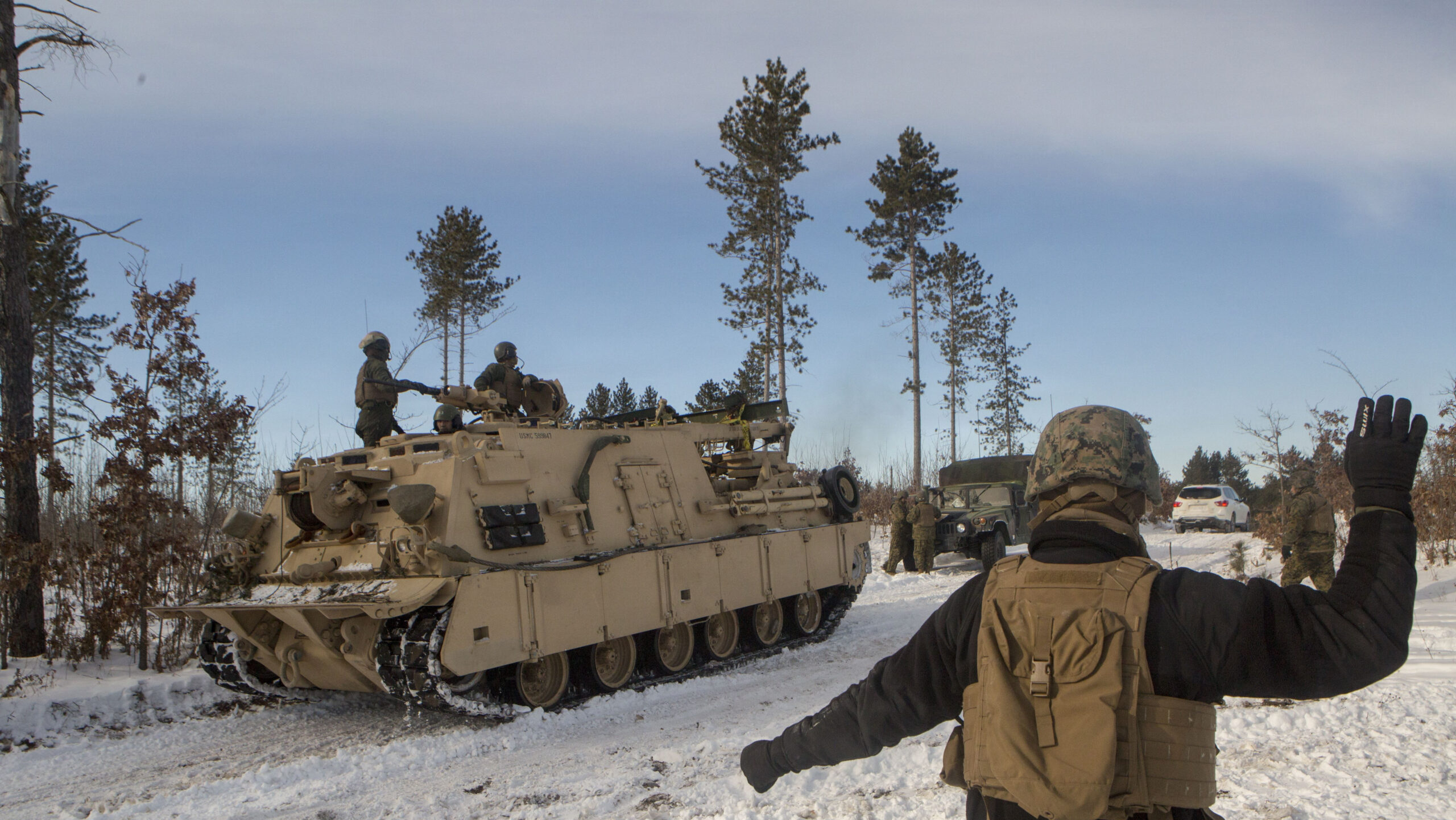
A Marine with Company F, 4th Tank Battalion, 4th Marine Division, ground guides an M88 recovery vehicle to a fuel resupply station during exercise Winter Break 2018, near Camp Grayling, Michigan, Feb. 10, 2018. Winter Break 18 allows the Marines of Fox Co. to develop essential mechanized infantry tactics and offensive and defensive capabilities in an austere cold weather environment. (Photo by Cpl. Dallas Johnson)
WASHINGTON — JVIS , a commercial automotive component provider, announced the grand opening of its defense branch today, marking another Michigan automotive company’s entry into the defense industrial base as the state attempts to become one of America’s leading hubs for defense manufacturing once again.
“Michigan built the Arsenal of Democracy once, and we intend to build it again. Today is about bringing defense work, and the good-paying jobs that come with it, back to Michigan, where the engineering talent and manufacturing know-how have been all along,” Alan Wagner, managing director of the new JVIS Defense and Aerospace company, said today in a press release.
The company will operate as a “standalone business” separate from the original JVIS and will provide a variety of “advanced defense solutions,” according to the release. Ahead of the announcement, a company spokesperson told Breaking Defense that JVIS Defense and Aerospace had received its fi rst contract — worth $13.2 million — with the Army’s Ground Vehicle Systems Center for its “Silent Watch” auxiliary power unit (APU).
The device converts diesel into electric power to keep military systems running without relying solely on diesel generator s, which can create hefty heat signatures and lots of noise — characteristics that make forces easier for adversaries to detect.
The award comes after Army senior leaders told a Detroit audience in August that the service is looking for more exportable power solutions as soldiers currently lack sufficient power to efficiently charge drones, communications systems, command posts and more. The leaders said the solution is not buying more generators, heavier battery packs or even relying exclusively on liquid fuel.
“We have got to change the fact that liquid fuel is still the most power dense, efficient way to move energy across the battlefield. We’ve got to change that,” Alex Miller, the Army’s chief technology officer, said at the time. “Those are the types of things that we need your help, that I truly believe that only this crowd — because you’ve been doing it for literally since World War II — can help us solve those problems. So, please dig into those things.”
The announcement also follows last week’s publication of the Michigan Office of Defense and Aerospace Innovation’s (ODAI) strategic five-year plan to better leverage its automotive and other commercial industries for military projects.
A leap in drone range and payloads come from a battery with different chemistry
Lithium-metal batteries are one way to break the weight and endurance limits of today’s unmanned systems.
Signed by Michigan Governor Gretchen Whitmer, the strategy aims to attract military contracts not only for ground vehicles, but also in drones, space manufacturing and other emerging technology areas. The state plans to do so by driving interest from “high impact” companies and projects, increasing and accelerating applied research, expanding defense-ready production capacity and more.
Whitmer wrote in the strategy that it will “evolve each day as we deepen partnerships, attract investment, collaborate with private sector and academic partners, access private capital, secure federal opportunities, and advance major efforts to strengthen Michigan’s role in national defense.”
Both the establishment of JVIS Defense and Aerospace and the release of the ODAI strate gy join efforts by other Michigan-based companies to expand into the defense sector over the past several months.
For example, Michigan companies— including Ford, General Motors , Pratt Miller , Roush and startup Salient Motion — have expanded into defense, pursuing new military contracts for ground vehicles and r obots. Salient Motion has also looked to develop components for munitions systems, such as the PAC-3 missile.
“Today, our state continues to lead the way in producing the cutting-edge vehicles and technologies that keep our servicemembers safe,” Democratic Sen. Gary Peters of Michigan told a crowd today at the JVIS Defense and Aerospace opening. “Investments like this new technology center build on that legacy by driving the development of next-generation defense technologies, creating good-paying Michigan jobs, and strengthening our national security.”
Breaking Defense Video
The new must-have capabilities for drones [Sponsored]
Army’s tech chief talks autonomy, acquisition and the future of drones
Drones take over AUSA, plus the Army’s plan to bring in new vendors
Hegseth talks autonomy at AUSA, a key show focus
Army doubles down on autonomy, stakes out Indo-Pacific role: AUSA Day 2
Telle talks ‘manufacturing rodeo,’ supply chain ‘weak links’: AUSA Day 1
New leaders, new drone command: What we expect from AUSA 2026
Unpacking Boeing’s F/A-XX win, plus a report from wartime Ukraine
How Hegseth envisions a new Autonomous Warfare Command
What Europe’s military air fleets will look like in 30 years
2018年2月10日,在密歇根州格雷林营附近举行的“冬季假期2018”演习期间,美国海军陆战队第四师第四坦克营F连的一名陆战队员引导一辆M88抢修车前往燃料补给站。此次演习旨在让F连的陆战队员在严寒的冬季环境下发展必要的机械化步兵战术以及攻防能力。(摄影:下士达拉斯·约翰逊)
华盛顿——商业汽车零部件供应商 JVIS 今天宣布其国防分公司盛大开业,这标志着又一家密歇根州汽车公司进入国防工业基地,该州正努力再次成为美国领先的国防制造中心之一。
“密歇根州曾经建造过民主兵工厂,我们打算再次建造它。今天,我们的目标是将国防工作以及随之而来的高薪工作带回密歇根州,这里一直以来都拥有工程人才和制造技术,”新成立的JVIS国防与航空航天公司总经理艾伦·瓦格纳今天在一份新闻稿中表示。
根据新闻稿,该公司将作为一家独立于原JVIS的“独立企业”运营,并将提供各种“先进国防解决方案”。在此消息公布前,该公司发言人告诉《防务新闻》,JVIS国防与航空航天公司已与美国陆军地面车辆系统中心签订了首份价值1320万美元的合同,为其“静默守望”(Silent Watch)辅助动力装置(APU)提供产品。
该装置将柴油转化为电力,使军事系统能够持续运转,而无需完全依赖柴油发电机。柴油发电机可能会产生大量的热信号和噪音,这些特性使得敌方更容易探测到部队。
此前,陆军高级领导人在8月份于底特律向听众表示,由于士兵目前缺乏足够的电力来高效地为无人机、通信系统、指挥所等设备充电,陆军正在寻求更多可出口的电力解决方案。这些领导人表示,解决方案并非购买更多发电机、更重的电池组,甚至也不是完全依赖液态燃料。
“我们必须改变现状,目前液态燃料仍然是战场上能量传输最高效、能量密度最高的载体。我们必须改变这种状况,”陆军首席技术官亚历克斯·米勒当时说道。“我们需要你们的帮助来解决这些问题,我坚信只有像你们这样的人——因为你们从二战以来就一直在为此努力——才能帮助我们解决这些问题。所以,请深入研究这些问题。”
此外,就在上周,密歇根州国防和航空航天创新办公室 (ODAI) 发布了其五年战略计划,旨在更好地利用其汽车和其他商业产业来开展军事项目。
无人机航程和有效载荷的飞跃得益于采用不同化学成分的电池。
锂金属电池是突破当今无人系统重量和续航能力限制的一种方法。
该战略由密歇根州州长格雷琴·惠特默签署,旨在吸引军方合同,不仅包括地面车辆,还包括无人机、航天制造和其他新兴技术领域。密歇根州计划通过以下方式实现这一目标:吸引“高影响力”企业和项目的兴趣;增加并加快应用研究;扩大国防生产能力等等。
惠特默在战略中写道,该战略将“随着我们深化伙伴关系、吸引投资、与私营部门和学术伙伴合作、获取私人资本、争取联邦机会以及推进加强密歇根州在国防中作用的重大举措,该战略将每天发展演变”。
JVIS 国防与航空航天公司的成立以及 ODAI 战略的发布,都与过去几个月里其他总部位于密歇根州的公司向国防领域扩张的努力相呼应。
例如,包括福特、通用汽车、普拉特·米勒、劳什以及初创公司Salient Motion在内的密歇根州企业已将业务拓展至国防领域,积极争取地面车辆和机器人的新军方合同。Salient Motion还致力于开发弹药系统部件,例如PAC-3导弹。
“今天,我们州在生产尖端车辆和技术方面继续保持领先地位,这些车辆和技术保障着我们军人的安全,”密歇根州民主党参议员加里·彼得斯今天在联合国防信息系统中心(JVIS)国防和航空航天中心开幕式上对人群说道。“像这座新的技术中心这样的投资,将延续这一传统,推动下一代国防技术的发展,创造密歇根州的高薪就业机会,并加强我们的国家安全。”
突破性防御视频
无人机必备的新功能 [赞助内容]
陆军技术主管谈无人机的自主性、采购和未来
无人机主导了美国陆军协会(AUSA)的会议,此外,陆军还计划引入新的供应商。
Hegseth 在 AUSA 大会上谈到了自主性,这是本次大会的一个重点议题。
陆军加倍强调自主性,明确印太地区角色:AUSA第二天
特勒谈“制造业乱象”、供应链“薄弱环节”:AUSA 第一天
新领导人,新无人机指挥部:我们对 AUSA 2026 的期待
深入剖析波音F/A-XX的中标,以及来自战时乌克兰的报道
赫格塞斯设想的新型自主作战指挥部
30年后欧洲军用空军机队会是什么样子