Ukraine’s StarGate Drone Now Evacuating Wounded Soldiers乌克兰的“星门”无人机现在正在撤离受伤士兵
The purpose-built aerial CASEVAC platform is claimed to have completed two battlefield evacuations in a week, including a mission under electronic attack. The purpose-built aerial CASEVAC platform completed two battlefield evacuations in a week, including a mission under Russian electronic warfare attack.
新闻视频
Published Oct 27, 2026 12:32 PM EDT
Ukraine’s 475th Separate Assault Regiment, known as CODE 9.2, says it has used the StarGate uncrewed aerial platform to evacuate two seriously wounded soldiers from the battlefield in the span of a week. Reportedly, this is the first time the specialized drone has been used for an operation of this kind. It is not, however, the first instance of Ukraine using an aerial rescue drone on the battlefield, with the more extemporized heavy hexacopter also having been used recently, as you can read about here .
Taken together, the missions underscore Ukraine’s efforts to develop alternative casualty evacuation capabilities as Russian drone threats, electronic warfare, and harsh terrain increasingly complicate conventional recovery operations, including those using uncrewed ground vehicles (UGVs).
According to CODE 9.2, on its Facebook page, the regiment’s personnel carried out two complex evacuation missions using StarGate, a platform developed and manufactured by Ukrainian company SkyFall. The two wounded servicemen were 25-year-old Yevhen, callsign “Izyum,” and 24-year-old Artem, callsign “Kolobok.” Both belonged to adjacent units and had suffered severe limb injuries while occupying positions in a so-called gray zone approximately three miles from the Russian border.
Difficult terrain, including water obstacles, and the threat posed by Russian first-person-view (FPV) drones prevented ground vehicles from reaching the casualties, the regiment said. Air evacuation was the only available option.
Drone operators watch as two soldiers carry their injured comrade to the SkyFall drone for evacuation. CODE 9.2/screencap
The missions were planned and executed by CODE 9.2 personnel with support from SkyFall. They required coordination among multiple units, additional forces and equipment, and dedicated fire support — much like a more traditional casualty evacuation effort involving crewed helicopters . Vampire heavy strike drones were employed to suppress enemy positions during the operations.
“The injury tore off half of my foot, so a lot of blood was lost already,” Izyum said in a video interview from his hospital room. “I think if that incredible little bird hadn’t flown in, well, getting out from there would have been unrealistic.”
During one of the missions, StarGate reportedly flew nearly 20 miles to reach the casualty before covering approximately the same distance on the return leg with the wounded serviceman aboard. CODE 9.2 said Russian electronic warfare systems were actively attempting to suppress satellite navigation signals in the area.
An injured soldier is helped out of the drone after recovery to a safe area. CODE 9.2/screencap
Despite the reported interference, the platform completed the mission using its onboard artificial intelligence-based navigation system, according to the regiment. The statement did not specify the navigation technologies involved.
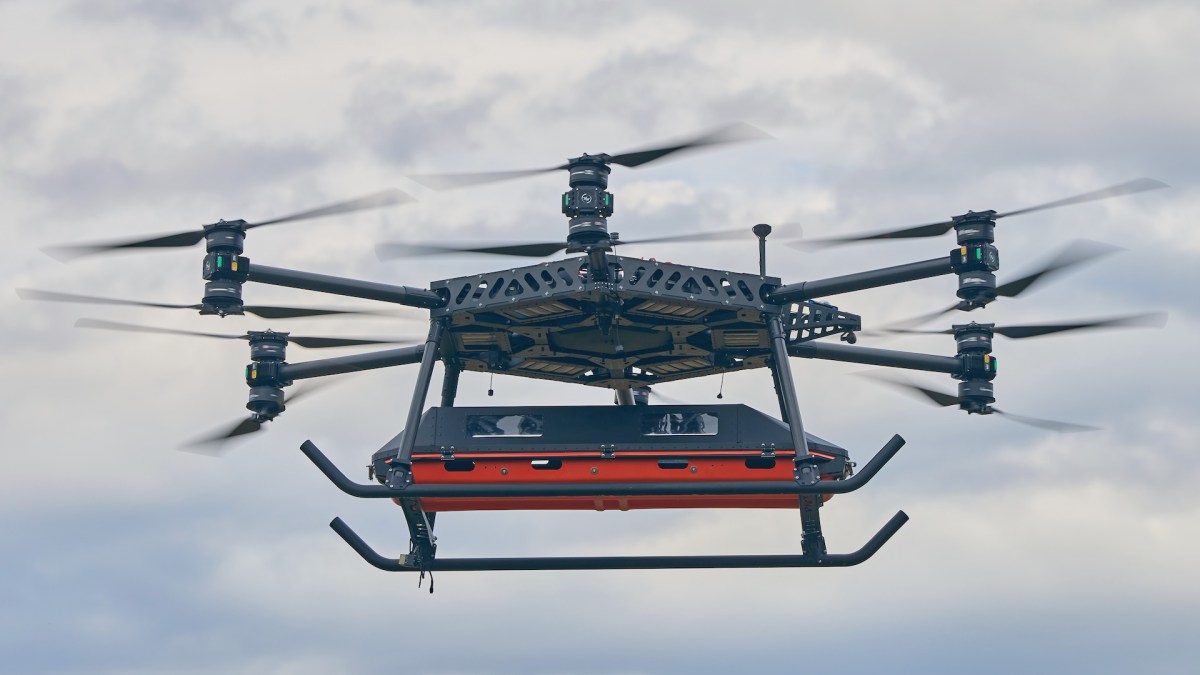
StarGate was designed specifically for casualty evacuation, or CASEVAC, when conventional ground transportation cannot reach wounded personnel or would expose them to unacceptable risks. Its stated specifications include a payload capacity of up to 330 pounds and a maximum speed of approximately 65 miles per hour. The evacuation module is based on a covered, medical-grade stretcher.
StarGate on the ground. SkyFall
Oleksandr Nastenko, commander of CODE 9.2, callsign “Flint,” said the regiment intends to use the experience gained from the two missions to train crews and make aerial evacuation a more established capability. The regiment also plans to set up a dedicated aerial medical evacuation unit within its medical company.
The StarGate missions follow a separate reported operation involving the 92nd Assault Brigade, which says its personnel helped evacuate a wounded soldier using a heavy-lift hexacopter drone, produced by Gurzuf Defense, with the casualty suspended beneath it, as seen in the video below:
This drone was reportedly an Audag-6 model , which is said to be capable of carrying a 200-pound payload over a distance of up to 15 miles.
In that incident, the soldier had been wounded while holding his position. Once again, aerial extraction was judged the only suitable option; in this case, due to the presence of mines and intense Russian drone activity.
This was a more improvised approach, which the brigade described as the world’s first frontline aerial drone evacuation of a wounded soldier. Compared to Stargate, the Gurzuf drone brings some drawbacks with it, including casualty stability, exposure to the elements, the risk of swinging during flight, and the difficulty of safely lifting and lowering a severely injured person. It subsequently emerged that the soldier involved, Kostiantyn Vlasenko, had been forced to amputate his own foot as part of a 491-day ordeal on a frontline position.
A soldier clipped to the underside of a Gurzuf drone via a harness is flown to safety. 92nd Assault Brigade/YouTube screencap
This was not the first time that Ukrainian forces have adapted existing drone technology to effect battlefield evacuations.
TWZ also previously reported on a Ukrainian soldier who managed to escape from the Russians that surrounded him after an electric bike was dropped to him by a large aerial drone.
As a purpose-built platform, StarGate offers a more standardized way to secure and transport casualties, and to transport them protected from the elements, in a secure, prone position. However, StarGate still faces the challenges of flying in contested airspace and navigating under electronic warfare conditions. Once again, depending on the degree of injuries, the casualty may need assistance being put on the stretcher and, regardless of the degree of medical care that can be provided, StarGate is only an option if already available in proximity to the victim.
Close-up view of the StarGate stretcher. SkyFall
The fact that the StarGate missions also needed strike drones for fire support underscores that casualty recovery, whatever the platform being used, typically requires coordination across multiple combat elements.
Despite the limitations, CODE 9.2’s plan to create a dedicated medical aviation element indicates it wants to move beyond one-off missions toward a repeatable capability.
StarGate in flight. SkyFall
As with other emerging technologies from the war in Ukraine, this is likely to be studied by other armed forces, too. The U.S. military, for example, has long looked at the potential of uncrewed aerial systems to effect casualty evacuation missions, as you can read about here.
Meanwhile, the challenges of that conflict mean that Ukrainian troops continue to explore different ways to recover wounded troops from positions that more conventional evacuation methods can no longer safely reach.
Contact the author: thomas@thewarzone.com
Comments couldn’t be loaded. Please refresh the page.
发布于美国东部时间2026年10月27日下午12:32
乌克兰第475独立突击团(代号CODE 9.2)称,他们使用“星门”(StarGate)无人机平台在一周内从战场上撤离了两名重伤士兵。据报道,这是该专用无人机首次用于此类行动。但这并非乌克兰首次在战场上使用空中救援无人机,此前他们也曾使用过一款临时改装的重型六旋翼无人机,详情请点击此处阅读。
总的来说,这些任务凸显了乌克兰为发展替代伤员撤离能力所做的努力,因为俄罗斯的无人机威胁、电子战和恶劣的地形日益使传统的救援行动(包括使用无人地面车辆 (UGV) 的救援行动)变得复杂。
据CODE 9.2在其Facebook页面上发布的消息,该团人员使用乌克兰SkyFall公司研发制造的StarGate平台执行了两起复杂的撤离任务。两名受伤的士兵分别是25岁的叶夫根尼(呼号“伊久姆”)和24岁的阿尔乔姆(呼号“科洛博克”)。两人均隶属于相邻部队,在距离俄罗斯边境约三英里的所谓“灰色地带”阵地作战时,均遭受了严重的肢体创伤。
该团表示,由于地形复杂,包括水域障碍,以及俄罗斯第一人称视角(FPV)无人机的威胁,地面车辆无法抵达伤员所在位置。空中撤离是唯一可行的选择。
无人机操作员注视着两名士兵将受伤的战友抬上“天降”无人机进行撤离。CODE 9.2/截图
这些任务由CODE 9.2人员策划并执行,并得到了SkyFall的支持。任务需要多个单位、额外兵力和装备的协调配合,以及专门的火力支援——这与传统的伤员撤离行动非常相似,后者通常需要有人驾驶直升机参与。“吸血鬼”重型攻击无人机在行动中被用于压制敌方阵地。
“我的脚被撕裂了一半,已经失血过多,”伊兹尤姆在医院病房接受视频采访时说。“我想,如果不是那只神奇的小鸟飞过来,我恐怕很难活着出来。”
据报道,在其中一次任务中,“星门”无人机飞行了近20英里到达伤员所在位置,随后载着受伤的军人返回,飞行距离也大致相同。9.2号通报称,俄罗斯电子战系统正在积极尝试压制该区域的卫星导航信号。
一名受伤士兵被救出无人机并转移到安全区域后,被搀扶出来。CODE 9.2/屏幕截图
据该团称,尽管有报道称该平台受到干扰,但它仍利用其机载人工智能导航系统完成了任务。声明并未具体说明所涉及的导航技术。
StarGate 专为伤员后送(CASEVAC)而设计,适用于传统地面交通工具无法抵达伤员所在位置或会使伤员面临不可接受的风险的情况。其额定载荷高达 330 磅,最高时速约为 65 英里/小时。该后送模块基于一个带盖的医用级担架。
地面上的星际之门。《007:大破天幕杀机》
“CODE 9.2”中队指挥官奥列克桑德·纳斯坚科(呼号“弗林特”)表示,该团计划利用这两次任务积累的经验来训练机组人员,并使空中医疗后送成为一项更加成熟的能力。该团还计划在其医疗连内设立一个专门的空中医疗后送小组。
在 StarGate 任务之前,据报道,第 92 突击旅参与了另一次行动,该旅称其人员使用 Gurzuf Defense 生产的重型六旋翼无人机帮助撤离了一名受伤士兵,伤员被悬挂在无人机下方,如下方视频所示:
据报道,这架无人机是 Audag-6 型号,据说能够携带 200 磅的有效载荷飞行长达 15 英里。
在那次事件中,这名士兵在坚守阵地时受伤。空中撤离再次被认为是唯一合适的选择;这次是因为地雷的存在以及俄罗斯无人机的频繁活动。
这是一种更为临时的方案,该旅称之为世界上首次在前线使用无人机撤离受伤士兵。与“星门”(Stargate)无人机相比,“古尔祖夫”(Gurzuf)无人机存在一些缺点,包括伤员稳定性差、易受恶劣天气影响、飞行过程中摇晃的风险,以及难以安全地吊起和放下重伤员。后来得知,这名士兵科斯蒂安廷·弗拉先科(Kostiantyn Vlasenko)在前线阵地经历了长达491天的磨难,被迫截肢。
一名士兵通过安全带固定在古尔祖夫无人机的底部,被安全送往安全地带。第92突击旅/YouTube截图
这并非乌克兰军队首次利用现有无人机技术进行战场撤离。
TWZ 此前还报道过一名乌克兰士兵,他被俄罗斯人包围后,一架大型无人机向他投放了一辆电动自行车,帮助他成功逃脱。
作为一款专用平台,StarGate 提供了一种更为标准化的方式来固定和运送伤员,并能以安全、俯卧的姿势保护他们免受恶劣天气的影响。然而,StarGate 仍然面临着在敌对空域飞行以及在电子战环境下导航的挑战。此外,根据伤情程度,伤员可能需要协助才能被抬上担架。无论能够提供何种程度的医疗救护,StarGate 只有在伤员附近已有可用设备的情况下才能使用。
星际之门担架的特写镜头。《007:大破天幕杀机》
星际之门任务也需要攻击无人机提供火力支援这一事实表明,无论使用何种平台,伤员救援通常都需要多个作战要素之间的协调。
尽管存在局限性,CODE 9.2 计划创建一个专门的医疗航空部门,这表明它希望超越一次性任务,走向可重复的能力。
星际之门飞行中。天幕坠落
与乌克兰战争中涌现的其他新兴技术一样,这项技术很可能也会被其他国家的军队研究。例如,美军长期以来一直在研究无人机系统在伤员撤离任务中的潜力,您可以在这里阅读相关内容。
与此同时,这场冲突带来的挑战意味着乌克兰军队仍在探索不同的方法,从更传统的撤离方法无法安全到达的位置救出受伤的士兵。
联系作者:thomas@thewarzone.com
评论加载失败,请刷新页面。