EU’s 2030 defense plan pushes for more joint spending at home欧盟2030年国防计划推动增加国内联合支出
The plan for now excludes the U.K., Turkey and the U.S., though officials in Brussels are planning fresh overtures at Britain in defense cooperation.
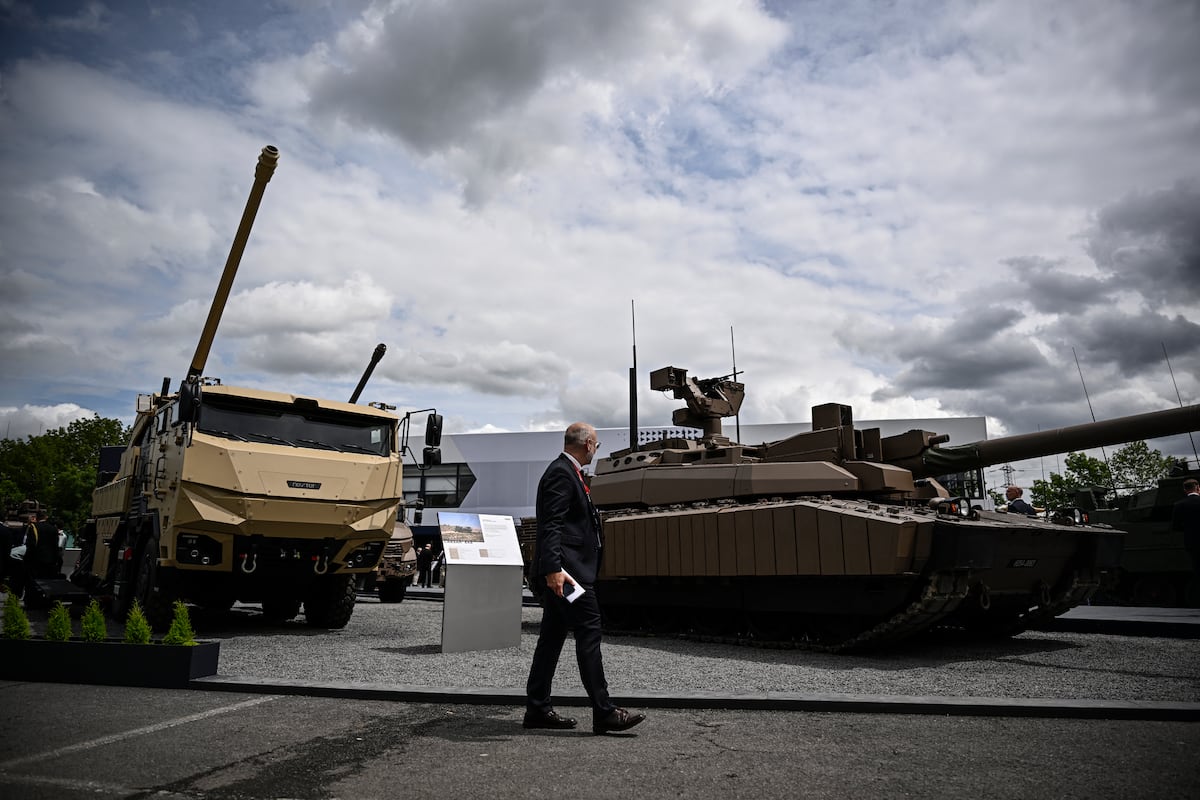
PARIS — The European Commission, the executive arm of the European Union, is pushing for member states to spend more on joint defense procurement within the 27-nation bloc, as part of a plan to build up a credible military deterrent against Russia by 2030.
Up to €150 billion ($163 billion) in EU-backed loans would be made available for joint procurement from the European defense industry by two or more member states or a member state with partner countries including Norway, Switzerland and Ukraine, according to a defense white paper released on March 19.
The 23-page paper called for increased defense spending, and identified critical areas of investment including air defense, military mobility, drones and strategic enablers.
The plan for now excludes the U.K., Turkey and the U.S., though the commission said other partner countries’ entities and products can be eligible for common procurement, subject to an agreement with the EU on financial conditions and security of supply.
“We have this opportunity window to really build up the European defense industry,” Kaja Kallas, the EU’s top official for foreign affairs and security policy, said at a press conference in Brussels. “What we see also with Ukraine, if they use weapons that are not produced in Ukraine, then sometimes there are limitations on how you can use those weapons. Your military really needs to have free hands in this regard.”
Kallas said the EU is working on a defense and security partnership with the U.K., and the high representative said she’s “really hoping” for results in May, when the EU and the U.K. are scheduled to hold a bilateral summit on strengthening their ties. The white paper calls the U.K. an “essential European ally” with which security and defense cooperation should be increased.
The white paper calls for creating a EU-wide market for defense equipment, by simplifying and harmonizing rules for procurement and intra-EU transfers of defense-related products, as well as mutual recognition of certification and permits.
Kallas said the international order is undergoing “changes of a magnitude not seen since 1945,” and the moment is pivotal for European security. She said Russia’s economy is “in full war mode,” with the country investing in a long-term plan of aggression, and the EU needs a long-term plan to arm Ukraine to avoid future attacks.
The white paper includes three mentions of the United States, one referring to a demand that Europe take more responsibility for its own defense, one about the transatlantic ally turning its focus away from Europe to other regions of the world, and one about the country reducing its historical role as a primary security guarantor.
The priority for Europe must now be on implementing the proposed plan, said Andrius Kubilius, the European commissioner for defense and space.
Russian President Vladimir “Putin will not be deterred if we shall read the white paper to him, he shall be deterred if we shall turn the white paper into action, and if we shall use it to build very real drones, tanks and artillery for our defense,” Kubilius said.
Europe has three areas to tackle, according to Kubilius: massive production of what the continent already makes, such as conventional ammunition; development of strategic enablers such as air-to-air refueling capabilities and space-based intelligence; and defense products of common European interest such as air-defense systems.
The commission will work on defining options for defense projects of common European interest, with the goal of presenting those options to the European Council, possibly in June, Kubilius said. “Member states need to decide which kind of defense projects of common European interest they are ready to implement in the next stage.”
The European Commission earlier this month proposed a plan which it says could free up around €800 billion in defense spending by member countries over the next four years. In addition to the plan for €150 billion in EU-backed loans, the proposal includes loosening fiscal rules that could be used by countries to raise defense spending.
The EU has capability gaps in air and missile defense, artillery systems, ammunition and missiles, drones and counter-drone systems, military mobility, AI and quantum, electronic warfare, and strategic enablers, according to Kallas.
“These all cost a lot of money,” Kallas said. “The point of the white paper is that we can do them together, because it’s not just national defense, but actually regional.” She declined to say what percentage of GDP EU countries should spend on defense, other than to say that “the new level of ambition is higher than 2%.”
The defense white paper proposes that the commission act as a central purchasing body on behalf of member states, if so requested, though Kallas said the EU has structures such as the European Defence Agency, which she said is underused.
Joint procurement “is one of the most important instruments for us to try to diminish the systemic problems of our defense industry, which is very much fragmented,” Kubilius said. “Also we are spending quite a lot of money outside of our defense industry.”
Rudy Ruitenberg is a Europe correspondent for Defense News. He started his career at Bloomberg News and has experience reporting on technology, commodity markets and politics.
巴黎——欧盟执行机构欧盟委员会正在推动成员国在27个成员国组成的欧盟内部增加联合防务采购支出,这是到2030年建立对俄罗斯具有可信军事威慑力的计划的一部分。
根据3月19日发布的一份国防白皮书,欧盟将提供高达1500亿欧元(1630亿美元)的担保贷款,用于两个或多个成员国或一个成员国与包括挪威、瑞士和乌克兰在内的伙伴国家从欧洲国防工业进行联合采购。
这份 23 页的文件呼吁增加国防开支,并确定了关键的投资领域,包括防空、军事机动性、无人机和战略赋能技术。
该计划目前不包括英国、土耳其和美国,但欧盟委员会表示,其他伙伴国家的实体和产品可以参与共同采购,但需与欧盟就财务条件和供应安全达成协议。
欧盟外交与安全政策高级官员卡娅·卡拉斯在布鲁塞尔举行的新闻发布会上表示:“我们现在拥有一个真正发展欧洲国防工业的良机。我们也看到,在乌克兰,如果他们使用非乌克兰生产的武器,那么使用这些武器的方式有时会受到限制。你们的军队在这方面确实需要拥有更大的自主权。”
卡拉斯表示,欧盟正在与英国推进防务和安全伙伴关系,这位高级代表还表示,她“非常希望”5月份能取得成果,届时欧盟和英国将举行双边峰会,讨论加强彼此关系。白皮书称英国是“重要的欧洲盟友”,应加强与英国在安全和防务领域的合作。
该白皮书呼吁建立欧盟范围内的国防装备市场,简化和协调国防相关产品的采购和欧盟内部转让规则,以及相互承认认证和许可证。
卡拉斯表示,国际秩序正经历着“自1945年以来前所未有的巨大变革”,而此刻对欧洲安全至关重要。她指出,俄罗斯经济“已全面进入战争模式”,该国正投资于一项长期侵略计划,欧盟需要制定一项长期计划来武装乌克兰,以避免未来遭受袭击。
白皮书三次提到美国,一次是要求欧洲承担更多自身防务责任,一次是提到这个跨大西洋盟友将重心从欧洲转移到世界其他地区,还有一次是提到美国正在减少其作为主要安全保障者的历史作用。
欧盟国防与航天事务专员安德留斯·库比留斯表示,欧洲现在的首要任务必须是落实这项提议的计划。
俄罗斯总统弗拉基米尔·库比柳斯说:“如果我们把白皮书读给普京听,他不会被吓倒;但如果我们把白皮书付诸行动,并用它来为我们的国防建造真正的无人机、坦克和大炮,他才会被吓倒。”
库比留斯认为,欧洲有三个领域需要解决:大规模生产欧洲大陆已经生产的产品,例如常规弹药;发展战略赋能技术,例如空中加油能力和天基情报;以及欧洲共同利益的国防产品,例如防空系统。
库比柳斯表示,委员会将致力于制定符合欧洲共同利益的国防项目方案,目标是在6月份将这些方案提交给欧洲理事会。“成员国需要决定在下一阶段准备实施哪些符合欧洲共同利益的国防项目。”
欧盟委员会本月初提出一项计划,称该计划可在未来四年内为成员国释放约8000亿欧元的国防开支。除了提供1500亿欧元的欧盟担保贷款外,该提案还包括放宽财政规则,以便各国增加国防开支。
卡拉斯表示,欧盟在防空和导弹防御、火炮系统、弹药和导弹、无人机和反无人机系统、军事机动性、人工智能和量子技术、电子战以及战略赋能技术等方面存在能力差距。
卡拉斯说:“这些都需要大量资金。白皮书的重点在于我们可以共同努力,因为这不仅关乎国家安全,更关乎区域安全。”她拒绝透露欧盟各国应将GDP的多少比例用于国防,只表示“新的目标高于2%”。
国防白皮书建议,如果成员国提出要求,欧盟委员会可以作为成员国的中央采购机构。不过,卡拉斯表示,欧盟拥有欧洲防务局等机构,但她认为这些机构没有得到充分利用。
库比留斯表示:“联合采购是我们努力减少国防工业系统性问题的最重要手段之一,因为我们的国防工业非常分散。此外,我们在国防工业之外的支出也相当多。”
鲁迪·鲁伊滕贝格是《防务新闻》的欧洲记者。他的职业生涯始于彭博新闻社,拥有报道科技、大宗商品市场和政治方面的经验。