Saifuddin: More stringent checks at KLIA to combat drug smuggling赛夫丁:吉隆坡国际机场将加强检查以打击毒品走私
JOHOR BAHRU, Oct 28 — More stringent inspections are set to be implemented at the Kuala Lumpur International Airport (KLIA) following an increase in reported drug smuggling cases...
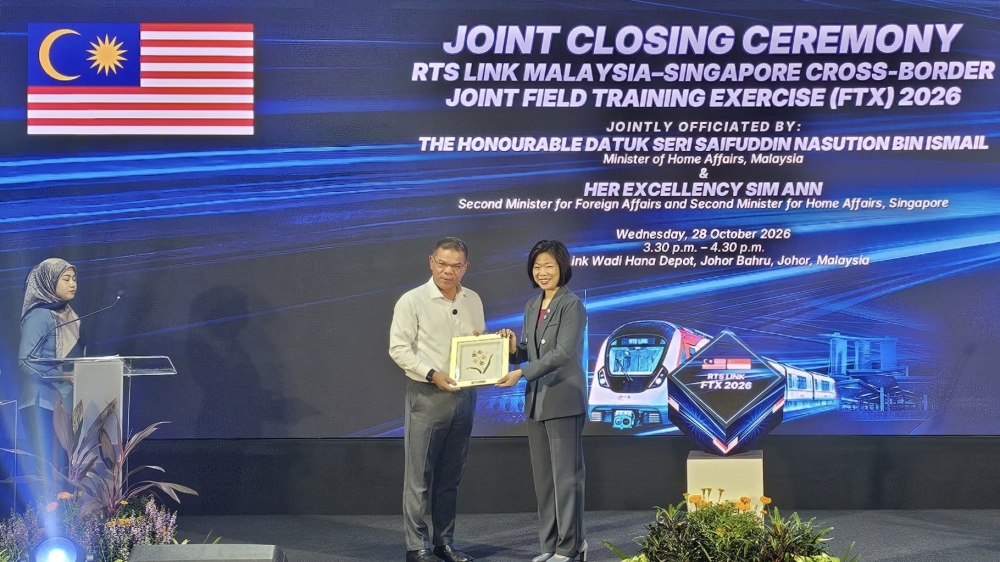
JOHOR BAHRU, Oct 28 — More stringent inspections are set to be implemented at the Kuala Lumpur International Airport (KLIA) following an increase in reported drug smuggling cases at the nation’s primary gateway, said Home Minister Datuk Seri Saifuddin Nasution Ismail.
He stated that the inspections will be highly rigorous with checking passengers from head-to-toe and will extend to all luggage or bags being carried.
“The current inspection practices are primarily focused on aviation security, such as the detection of firearms and sharp weapons.
“However, we will implement improvements to also curtail contraband and illegal items by strengthening 17 specific initiatives to be carried out by the home and transport ministries.
“We will also employ a profiling system, particularly for passenger arrivals from destinations we have identified as high-risk,” he said during a press conference at the Malaysia-Singapore RTS Link Security Joint Exercise closing ceremony held at the RTS Link Wadi Hana site here today.
Also present were Singapore’s Second Minister for Home Affairs Sim Ann and the Johor Public Works, Transport, Infrastructure, and Communications Committee chairman Mohamad Fazli Mohamad Salleh.
Saifuddin Nasution said the Home Ministry will also be identifying ‘blind spot’ areas that are not monitored by close circuit television (CCTV) cameras at the KLIA 1 and 2 terminals.
He said both KLIA 1 and 2 have 5,000 operational CCTV cameras, but said there are still ‘blind spot’ areas.
“The relevant department will be addressing this issue as part of the security enhancement process,” he said.
Separately, Saifuddin Nasution said the recent security exercise is essential for testing the level of preperation, response capabilities and coordination between agencies from Malaysia and Singapore.
He pointed out that such exercises are crucial for managing potential crises or emergencies once the service becomes operational.
“The RTS Link is expected to carry up to 10,000 passengers per hour in each direction, necessitating thorough preparation to ensure that any incidents can be handled effectively.
“This particular scenario presents a challenge that requires close coordination between the two countries – specifically in defining the responsibilities and actions of the relevant agencies in the event of a cross-border emergency,” he said.
Preparations for the exercise began in March under the coordination of the National Security Council (NSC) and involving 28 Malaysian ministries and agencies.
Malaysia to deploy latest body scanners at RTS Link border checkpoint
Man remanded over Facebook caricature allegedly insulting police
Ex-convicts among nine arrested in Miri grave desecration probe
新山,10月28日讯——内政部长拿督斯里赛夫丁·纳苏蒂安·伊斯梅尔表示,由于该国主要门户吉隆坡国际机场(KLIA)报告的毒品走私案件增加,将实施更严格的检查。
他表示,检查将非常严格,将对乘客进行从头到脚的全面检查,并包括所有携带的行李或包袋。
“目前的检查措施主要集中在航空安全方面,例如检测枪支和利器。
“但是,我们将通过加强内政部和交通部将要执行的 17 项具体举措,来实施改进措施,以遏制违禁品和非法物品。
“我们还将采用旅客分析系统,特别是针对来自我们已确定为高风险目的地的旅客,”他在今天于此地瓦迪哈纳RTS连接线安全联合演习闭幕式上举行的新闻发布会上表示。
新加坡内政部第二部长沈颖和柔佛州公共工程、交通、基础设施和通讯委员会主席穆罕默德·法兹利·穆罕默德·萨利赫也出席了会议。
赛夫丁·纳苏蒂安表示,内政部还将确定吉隆坡国际机场 1 号航站楼和 2 号航站楼闭路电视 (CCTV) 摄像头未监控的“盲区”。
他表示,吉隆坡国际机场1号航站楼和2号航站楼都安装了5000个运行中的闭路电视摄像头,但仍然存在“盲区”。
他说:“相关部门将把这个问题纳入安全加强流程中进行处理。”
另外,赛夫丁·纳苏蒂安表示,最近的安全演习对于检验马来西亚和新加坡各机构之间的准备水平、应对能力和协调能力至关重要。
他指出,此类演练对于管理该服务投入运营后可能发生的危机或紧急情况至关重要。
“RTS Link预计每小时每个方向运送多达10,000名乘客,因此需要进行充分的准备,以确保能够有效处理任何突发事件。
他说:“这种情况带来了一项挑战,需要两国密切协调——尤其是在跨境紧急情况下,明确相关机构的职责和行动。”
此次演习的准备工作于 3 月份在国家安全理事会 (NSC) 的协调下开始,涉及马来西亚 28 个部委和机构。
马来西亚将在RTS Link边境检查站部署最新型人体扫描仪
男子因涉嫌在脸书上发布侮辱警察的漫画而被还押候审
美里亵渎坟墓案调查中,九名被捕者中有前科人员