Australia targets major spending boost for Asia-Pacific defense澳大利亚计划大幅增加亚太地区国防开支
Budget plans foresee the most significant ramp-up only at the end of the decade, leaving Australia vulnerable to Chinese aggression in the meantime.
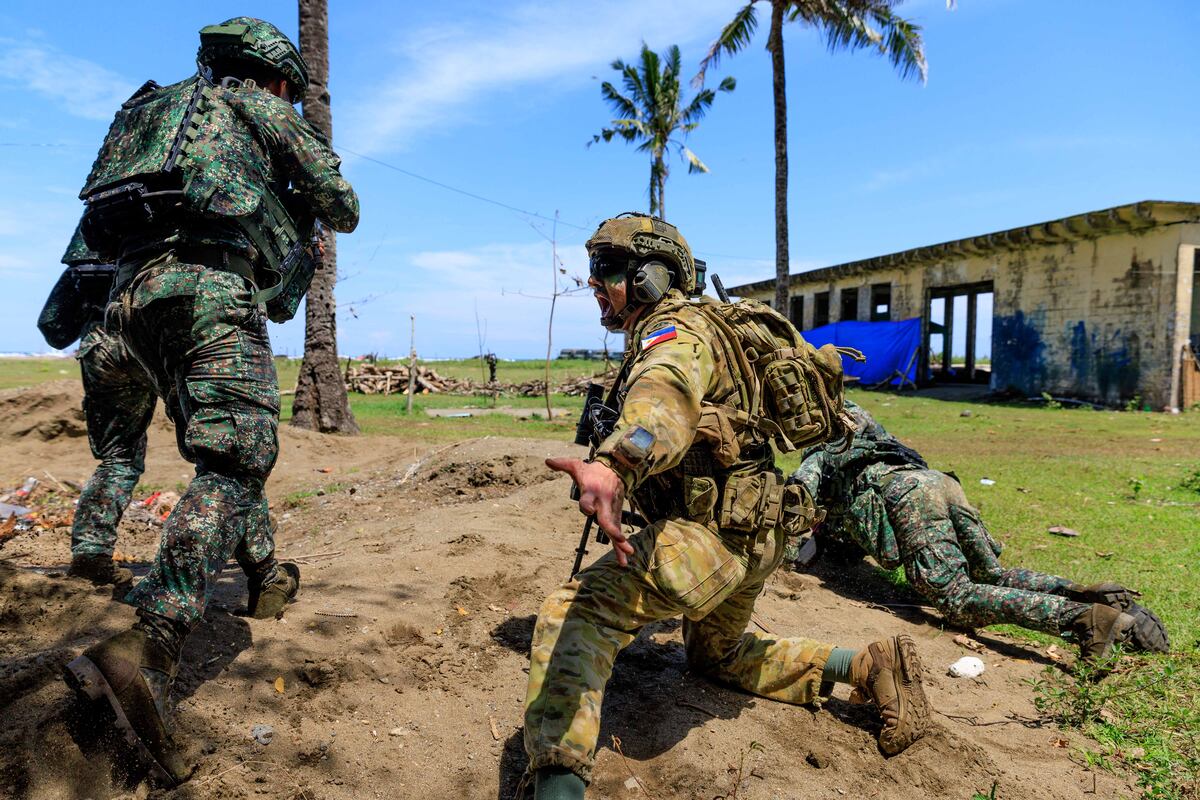
CHRISTCHURCH, New Zealand — Australia simultaneously unveiled two pivotal documents on April 17 — its inaugural “National Defence Strategy” and the 2024 “Integrated Investment Program″ — with a promise that defense spending will reach AU$765 billion (U.S. $491 billion) over the next decade.
In line with that trajectory, the government projected the 2033-2034 annual defense budget would surpass AU$100 billion, equating to 2.4% of gross domestic product.
The defense strategy is meant to provide the overarching rationale for Australia’s “integrated, focused force,” while the investment plan spells out ways to pay for specific objectives.
“The inaugural National Defence Strategy sets out a clear and priority-driven approach to protecting against threats to Australia and our interests,” Defence Minister Richard Marles said at the document launch event in Canberra. China was notably prominent among those threats.
An Australian defense expert warned there “cannot be anymore lag” in implementing the strategy’s pointers.
“We actually need to be putting them [the documents] into service now. We can’t wait another two or three years for that,” Bec Shrimpton, director of the defense strategy and national security program at the Australian Strategic Policy Institute think tank, told Defense News.
Shrimpton found the strategy document “slightly underwhelming” in its articulation of concepts already described in previous policy papers. “I’m not seeing a lot added,” she said.
Marles said Australia’s activity should focus “unambiguously” on the Asia-Pacific region, especially to protect trade routes. “We simply have to make the difficult decision to keep the vast bulk of our effort in our region.”
Compared with the broad-brush goals of the defense strategy, the accompanying investment plan provides more meat, according to Shrimpton. “It actually starts to fill in a genuine picture of what the future force is going to look like and what it’s going to do.”
For example, the government plans to steer 38% of funds to maritime capabilities, 22% to enterprise and enabling programs — including infrastructure and information technology — 16% to land, 14% to air, 7% to cyberspace and 3% to space.
About AU$76 billion will go to undersea warfare by 2034, including AU$53 billion to AU$63 billion focused on nuclear-powered submarines and associated infrastructure. Some of those investments are already appearing on the books, as Defence Industry Minister Pat Conroy announced April 18 that the Navy would adopt Anduril’s Ghost Shark long-range autonomous underwater vessel.
Up to AU$69 billion will be spent on surface ships over the next decade, eventually giving the service 26. However, hull numbers will dip to a nadir of nine in a few years’ time.
With an influx of AU$44 billion over 10 years, the Australian Army will continue transforming to a littoral and expeditionary force akin to the U.S. Marine Corps.
Approximately AU$18 billion will go to integrated air and missile defense, but there is no investment pegged in long-range, ground-based air defense systems like the Patriot or Terminal High Altitude Area Defense systems to defend against ballistic missiles. Counter-drone systems are also listed, an area in which the Australian Defence Force lacks capabilities.
The Air Force will receive AU$33 billion over the coming decade. It will keep investing in MQ-28A Ghost Bat drones, but its original plan to obtain 100 F-35A fighter jets is capped at 72.
Thus, Conroy said , “we’ve decided to keep the [F/A-18] Super Hornets in service for two reasons. One, they’re doing great work. Secondly, the Joint Strike Fighter is even more capable than we initially thought. So we can delay the replacement of the Super Hornet which frees up funding to invest in more long‑range missiles, for example.”
Regarding space, Australia will continue developing a satellite communications network and spend funds on the Deep Space Advanced Radar Capability . The plan mentions “measures to enhance [the Department of] Defence’s space control capability to deny attempts to interfere with, or attack Australia’s use of the space domain.”
This could prove critical in the face of China’s counter-space capabilities .
Marles vowed that defense spending, compared to earlier allocations, would increase by AU$50.3 billion in the next decade.
However, Shrimpton pointed out that 11% of this amount will be allocated in the coming four years. In other words, approximately 90% of the spending increase will not come to fruition until the late 2020s.
“So we’re accepting an element of risk,” the analyst said, adding that the quick fielding of promising technology should play a more prominent role as a hedge against near-term underfunding.
Many commentators see the period from now till the end of this decade as carrying the highest risk of Chinese aggression, but where the Australian Defence Force has significant weaknesses.
“What are we cutting, canceling, divesting and re-scoping? A lot of the story of this investment plan and this strategy is going to sit in what we’re not doing,” Shrimpton said. “That picture is not fully clear yet.”
Gordon Arthur is an Asia correspondent for Defense News. After a 20-year stint working in Hong Kong, he now resides in New Zealand. He has attended military exercises and defense exhibitions in about 20 countries around the Asia-Pacific region.
新西兰基督城——4月17日,澳大利亚同时发布了两份关键文件——首份“国防战略”和2024年“综合投资计划”——并承诺未来十年国防开支将达到7650亿澳元(4910亿美元)。
根据这一发展趋势,政府预计 2033-2034 年年度国防预算将超过 1000 亿澳元,相当于国内生产总值的 2.4%。
国防战略旨在为澳大利亚的“一体化、重点部队”提供总体理由,而投资计划则详细说明了为特定目标支付费用的方法。
“首份《国防战略》制定了一项清晰且以优先事项为导向的方针,旨在保护澳大利亚及其利益免受威胁,”国防部长理查德·马尔斯在堪培拉的文件发布会上表示。中国在这些威胁中尤为突出。
一位澳大利亚国防专家警告说,在落实该战略的各项指导方针方面“不能再有任何拖延了”。
“我们实际上需要立即投入使用这些文件。我们不能再等两三年了,”澳大利亚战略政策研究所智库国防战略和国家安全项目主任贝克·施林普顿告诉《防务新闻》。
施林普顿认为这份战略文件在阐述之前政策文件中已经描述过的概念方面“略显不足”。她说:“我没看到多少新增内容。”
马尔斯表示,澳大利亚的行动应该“毫不含糊地”聚焦亚太地区,尤其是在保护贸易路线方面。“我们必须做出艰难的决定,将绝大部分精力投入到本地区。”
施林普顿认为,与国防战略的宏观目标相比,配套的投资计划提供了更多具体细节。“它真正开始描绘出未来军队的雏形和职能。”
例如,政府计划将 38% 的资金用于海上能力建设,22% 用于企业和赋能计划(包括基础设施和信息技术),16% 用于陆地建设,14% 用于空中建设,7% 用于网络空间建设,3% 用于太空建设。
到2034年,澳大利亚将投入约760亿澳元用于水下作战,其中包括530亿至630亿澳元用于核动力潜艇及相关基础设施。部分投资已落实到位,国防工业部长帕特·康罗伊于4月18日宣布,海军将采用安杜里尔公司(Anduril)的“幽灵鲨”(Ghost Shark)远程自主水下航行器。
未来十年,澳大利亚将在水面舰艇上投入高达 690 亿澳元,最终使该部队拥有 26 艘舰艇。然而,几年后,舰艇数量将降至最低点,仅剩 9 艘。
澳大利亚将在未来 10 年内获得 440 亿澳元的资金,继续向类似于美国海军陆战队的近海和远征部队转型。
约180亿澳元将用于综合防空和导弹防御系统,但并未投资建设远程陆基防空系统,例如“爱国者”导弹系统或末段高空区域防御系统(用于防御弹道导弹)。反无人机系统也被列入计划,而澳大利亚国防军在该领域恰恰缺乏能力。
未来十年,空军将获得330亿澳元的拨款。空军将继续投资MQ-28A“幽灵蝙蝠”无人机,但其最初采购100架F-35A战斗机的计划将被限制在72架。
因此,康罗伊说:“我们决定继续让F/A-18超级大黄蜂战斗机服役,原因有二。第一,它们表现出色。第二,联合攻击战斗机的性能甚至比我们最初预想的还要强。所以我们可以推迟超级大黄蜂的替换计划,从而腾出资金用于研发更多远程导弹等。”
在太空领域,澳大利亚将继续发展卫星通信网络,并投入资金建设深空先进雷达能力。该计划提到“采取措施增强国防部的太空控制能力,以阻止任何干扰或攻击澳大利亚太空领域使用的企图”。
面对中国的反太空能力,这可能至关重要。
马尔斯承诺,未来十年国防开支将比之前的拨款增加 503 亿澳元。
然而,施林普顿指出,这笔款项的11%将在未来四年内拨付。换句话说,大约90%的支出增长要到2020年代末才能实现。
“所以我们接受了一定程度的风险,”这位分析师说,并补充说,快速部署有前景的技术应该在对冲近期资金不足方面发挥更重要的作用。
许多评论员认为,从现在到本十年末这段时期,中国侵略的风险最高,但澳大利亚国防军却存在明显的弱点。
“我们要削减、取消、剥离和调整哪些项目?这项投资计划和战略的很多关键在于我们不做什么,”施林普顿说。“目前情况还不完全明朗。”
戈登·阿瑟是《防务新闻》的亚洲特派记者。在香港工作20年后,他现居新西兰。他曾到访亚太地区约20个国家,参加过军事演习和防务展览。