Delivery rider blind in one eye loses bid for $500 monthly maintenance from ex-wife一名单眼失明的送货员争取前妻每月500美元赡养费的努力失败
Singapore court rejects blind delivery rider’s bid for $500 monthly maintenance after divorce. Read more at straitstimes.com.
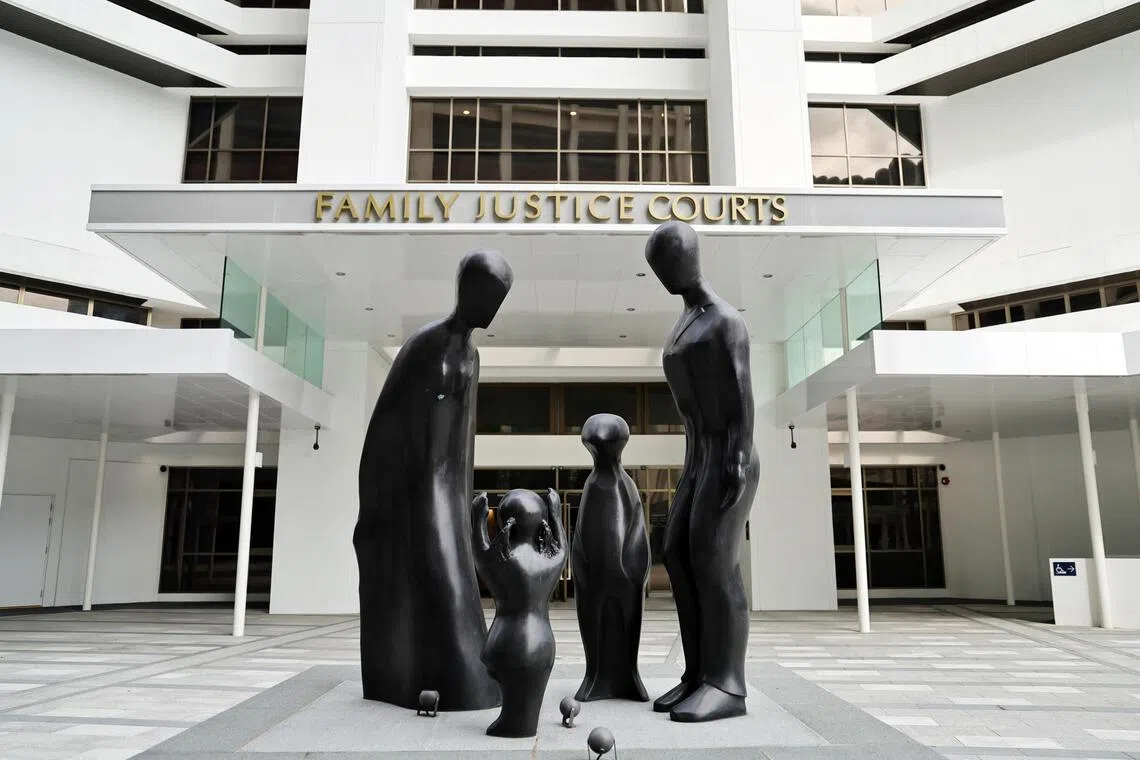
The Family Justice Courts found that the delivery rider had not proved he was unable to support himself, despite his serious health problems.
ST PHOTO: KELVIN CHNG
Published Oct 28, 2026, 03:55 PM
Updated Oct 29, 2026, 03:06 AM
SINGAPORE – A 51-year-old man who is blind in one eye and suffered a heart attack has failed in his bid to obtain $500 a month in maintenance from his former wife, who earns a higher income, after a 28-year marriage.
The man, who has worked as a driver and food delivery rider, argued that his medical conditions had affected his ability to earn a living. But the Family Justice Courts found that he had not proved that he was unable to support himself, despite his serious health problems.
District Judge Kow Keng Siong dismissed his application for maintenance, as well as his former wife’s application for nominal maintenance of $1 a month.
The written judgment, dated Oct 23, detailed the couple’s journey through financial hardship, the husband’s bankruptcy and the raising of their four children.
The couple married in 1997 and separated in late 2024. Their divorce was finalised on Jan 1, 2026. They were not identified in line with the practice of family court judgments.
Three phases of the marriage
The husband was the main breadwinner in the early years of the marriage, working as an assistant manager at a fast-food restaurant before starting a car dealership business in 2000. The wife, who is a year younger, gave up her job as a flight stewardess to become a homemaker. They had four children between 1998 and 2003.
The family’s financial position deteriorated after the husband was declared a bankrupt in 2003. His business folded in 2005, and he later took on ad hoc work before becoming a driver. The wife began working full-time as a flight stewardess in 2012, the year her husband was discharged from bankruptcy.
The family also moved in with the husband’s sister and brother-in-law in 2018, renting out their flat to help cover the mortgage and household expenses.
The couple worked in the later years of the marriage. During the Covid-19 pandemic, the husband worked as a food delivery rider while the wife took on odd jobs.
The judge found that the wife had made greater financial contributions over the marriage, including pawning her jewellery and working through the family’s years of financial hardship. She was also the principal caregiver when the children were young, although the husband helped care for them while she was away on flights.
The four children are now working adults. The eldest, 28, and the second, 26, have moved out. The two younger children, aged 24 and 23, live with their mother.
The husband sought $500 a month from his former wife, arguing that his health had affected his ability to work and support himself.
He was diagnosed with permanent blindness in his right eye in February 2025. In June that year, he suffered a heart attack and was hospitalised for six days. His doctors advised him to avoid strenuous activities and not to drive taxis.
He said his impaired vision made it difficult to see kerbs and obstacles in poor lighting, and that he could no longer work evening or night shifts.
But the judge found that the husband had not established that he met the legal definition of an “incapacitated former husband” under the Women’s Charter, which provides the legal basis for a wife to maintain her former husband after divorce.
The medical evidence confirmed his serious conditions, but did not certify that he was permanently unfit for work. “The fact that some kinds of work are unsuitable does not mean that a former husband is incapacitated from earning a livelihood,” the judge noted.
The judge also noted that the husband’s net earnings of about $2,725 a month as a delivery rider exceeded his stated basic necessities of $2,190.
While acknowledging the man’s concerns about the dangers of delivery work, given his vision and heart condition, the judge said: “The law cannot turn an apprehension into an incapacity.”
Wife’s request for $1 maintenance also rejected
The wife, who earns about $7,900 a month, sought nominal maintenance of $1 a month. Such an order would preserve her ability to seek a larger amount in future if her circumstances changed.
She cited a pre-existing slipped disc in her lower back. But the medical evidence referred to her condition as under “conservative management” without adequately explaining its severity, likely progression or effect on her ability to work, the court noted.
The judge also considered that the wife earned substantially more than her former husband.
“The significance of nominal maintenance lies in the possible future obligation to pay substantive maintenance,” the judge said. “Preserving that obligation here would make the husband, who has much lower means and a poor health condition, the insurer of the wife who earns far more and has better health.”
Her application for maintenance was dismissed.
The husband had argued that the length of the marriage and the fact that both parties worked in their later years supported an equal division of their matrimonial assets.
However, the court awarded him 25% of the marital pool, valued at about $569,000, and 75% to the wife in recognition of her overall greater financial and caregiving contributions.
The wife was also granted the right to retain the matrimonial flat by paying her former husband for his share.
Both parties were ordered to bear their own legal costs.
In concluding remarks, the judge told the husband that dismissing his maintenance application did not mean he would have to face future difficulties alone.
“Parliament has recognised, in the Maintenance of Parents Act 1995, that children have a responsibility towards parents in need,” the judge noted.
The couple’s four adult children are all gainfully employed, but the judge said he could not assume they would or could provide financial help. “I hope that should you require such help in the future, you and your children will approach the issue with understanding and a shared sense of family responsibility,” the judge said to the man.
Addressing both former spouses, the judge said: “You have worked together to successfully raise four children through very difficult years. Each of you contributed to this success in your own way.
“I hope that both of you can work together, one more time, to ensure that the remaining steps needed to wind up the marriage – the transfer or sale of the flat – can proceed as smoothly as possible.”
Divorces, separations, annulments
Food delivery services
家庭司法法庭认定,尽管该送货员患有严重的健康问题,但他未能证明自己无法养活自己。
《海峡时报》摄影:KELVIN CHNG
发布于 2026 年 10 月 28 日下午 3:55
更新于2026年10月29日凌晨3:06
新加坡——一名51岁的男子一只眼睛失明,还曾心脏病发作,他试图从收入更高的前妻那里获得每月500美元的赡养费,但最终未能成功。两人已结婚28年。
这名曾做过司机和外卖员的男子辩称,他的健康状况影响了他的谋生能力。但家庭法庭裁定,尽管他存在严重的健康问题,但他未能证明自己无力养活自己。
地方法官高庆祥驳回了他的赡养费申请,以及他前妻每月象征性赡养费 1 美元的申请。
这份日期为 10 月 23 日的书面判决详细描述了这对夫妇经历的经济困境、丈夫的破产以及抚养四个孩子的过程。
这对夫妇于 1997 年结婚,2024 年底分居。他们的离婚于 2026 年 1 月 1 日正式生效。根据家庭法院判决的惯例,他们的身份没有被公开。
婚姻的三个阶段
婚后初期,丈夫是家里的主要经济支柱,在一家快餐店担任助理经理,之后于2000年创办了一家汽车经销店。妻子比他小一岁,放弃了空姐的工作,成为一名家庭主妇。1998年至2003年间,他们育有四个孩子。
丈夫于2003年被宣布破产后,家庭经济状况急剧恶化。他的生意在2005年倒闭,之后他做过一些零工,后来成为一名司机。妻子于2012年开始全职担任空乘人员,同年她的丈夫也结束了破产程序。
2018 年,一家人还搬去和丈夫的姐姐和姐夫同住,并将他们的公寓出租以帮助支付抵押贷款和家庭开支。
这对夫妇在婚姻后期都工作了。新冠疫情期间,丈夫做外卖员,妻子则打零工。
法官认定,妻子在婚姻期间对家庭经济贡献更大,包括典当珠宝,并在家庭经济困难时期辛勤工作。孩子们年幼时,妻子也是主要的照顾者,尽管丈夫在她出差期间也会帮忙照看孩子。
四个孩子现在都已成年工作。最大的孩子28岁,第二年的孩子26岁,已经搬出去住了。两个最小的孩子,分别24岁和23岁,和他们的母亲住在一起。
丈夫向前妻索要每月 500 美元,理由是他的健康状况影响了他的工作和自食其力的能力。
2025年2月,他被诊断出右眼永久性失明。同年6月,他突发心脏病,住院六天。医生建议他避免剧烈运动,也不要再开出租车。
他说,视力受损导致他在光线昏暗的情况下难以看清路缘和障碍物,因此他无法再上晚班或夜班。
但法官认为,丈夫未能证明自己符合《妇女宪章》中“无行为能力的前夫”的法律定义,该宪章为妻子在离婚后赡养前夫提供了法律依据。
医疗证据证实了他的病情严重,但并未证明他永久丧失了工作能力。“某些类型的工作不适合他,并不意味着前夫就丧失了谋生能力,”法官指出。
法官还指出,丈夫作为送货员每月净收入约 2725 美元,超过了他声称的基本生活必需品 2190 美元。
法官虽然承认该男子对送货工作的危险性感到担忧,考虑到他的视力和心脏病状况,但表示:“法律不能将担忧变成无能为力。”
妻子要求每月支付1美元赡养费的请求也被拒绝。
妻子月收入约7900美元,她只要求每月象征性地获得1美元的赡养费。这样的裁决将保留她未来如果情况发生变化时要求更高金额的权利。
她声称自己腰椎间盘突出,但法庭指出,医疗证据仅称其病情处于“保守治疗”阶段,并未充分解释病情的严重程度、可能的进展情况以及对她工作能力的影响。
法官还考虑到妻子的收入远高于她的前夫。
法官表示:“名义赡养费的意义在于未来可能承担支付实质性赡养费的义务。如果保留这项义务,就等于让经济条件差、健康状况不佳的丈夫,成为收入更高、健康状况更好的妻子的保险人。”
她的赡养费申请被驳回了。
丈夫认为,婚姻持续时间长,而且双方晚年都有工作,因此应该平等分割夫妻共同财产。
然而,法院判给他婚姻财产的 25%(价值约 569,000 美元),其余 75% 判给妻子,以表彰她总体上更大的经济和照顾贡献。
妻子还被赋予了保留婚房的权利,只需向前夫支付他应得的份额即可。
双方均被责令自行承担诉讼费用。
法官在结案陈词中告诉丈夫,驳回他的赡养费申请并不意味着他将不得不独自面对未来的困难。
法官指出:“议会在 1995 年《父母赡养法》中承认,子女对需要帮助的父母负有责任。”
这对夫妇的四个成年子女都有稳定的工作,但法官表示,他不能假定他们会或能够提供经济援助。“我希望,如果将来你需要这样的帮助,你和你的孩子们能够以理解和共同的家庭责任感来处理这个问题,”法官对这位男士说道。
法官对两位前配偶说:“你们共同努力,在非常艰难的岁月里成功地养育了四个孩子。你们每个人都以自己的方式为这一成功做出了贡献。”
“我希望你们两人能够再次携手合作,确保结束婚姻所需的剩余步骤——房产过户或出售——能够尽可能顺利地进行。”
离婚、分居、婚姻无效
食品配送服务