Kaliningrad is more than the Suwałki Gap, and NATO cannot ignore it加里宁格勒不仅仅是苏瓦乌基山口,北约不能忽视它。
In an age of drones and long-range precision weapons, Kaliningrad’s location shows Europe's security isn’t neatly divided between frontline states and everyone else.
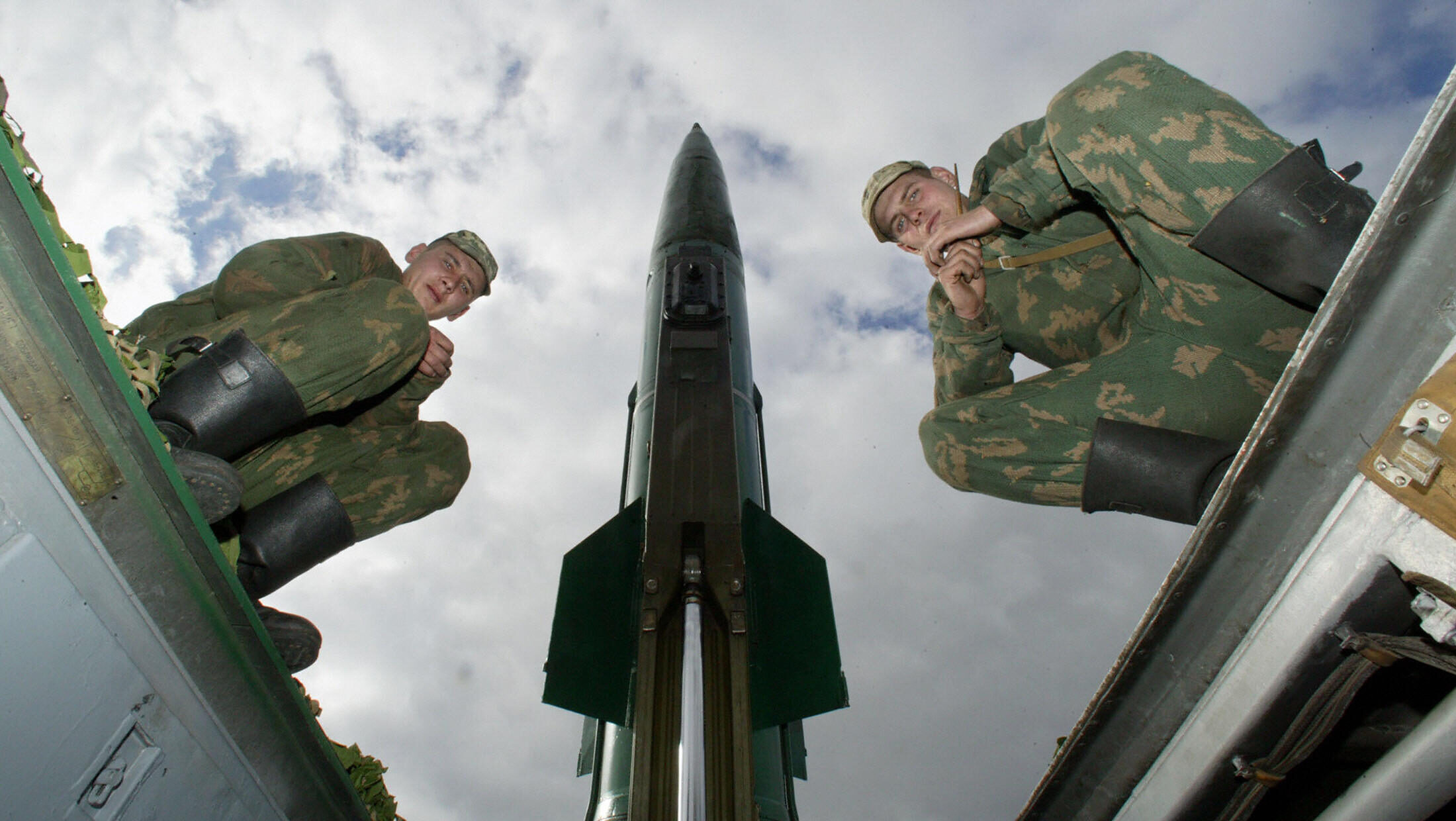
Russian soldiers sit on the launcher of a missile outside the Russian enclave of Kaliningrad in a 2005 file photo. (STRINGER/AFP via Getty Images)
For years, Western discussion of Kaliningrad has focused on the Suwałki Gap, the roughly 100-kilometer corridor between Poland and Lithuania that separates the exclave from Belarus. In a conflict scenario, this corridor could theoretically be cut by Russian forces operating simultaneously from Kaliningrad and Western Belarus, isolating the Baltic states from the rest of NATO.
While this scenario remains relevant to the defense of the Eastern Flank, its dominance in the discourse is masking Kaliningrad’s much broader significance as a platform threatening not just the Baltics, but Western Europe as a whole. The assumption that a war with Russia would primarily affect Eastern EU states belongs to an earlier era. Kaliningrad gives Russia the ability to project that threat deep into western Europe, placing capitals, critical infrastructure and civilian targets far from the eastern frontier at risk.
Ukraine has shown that modern conflict is fought not only at the contact line, but across large geographic areas through drone, ballistic missile and long-range strike barrages fired into civilian infrastructure . Kyiv has endured sustained missile and drone attacks despite being roughly as far from Russia as much of Western Europe is from Kaliningrad. In an age of long-range precision weapons and mobile drones, strategic depth is becoming a relic. Kaliningrad is a reminder that Europe’s security can no longer be divided neatly between frontline states and everyone else.
As a result, European leaders should simultaneously raise public awareness of the threat posed by the Russian exclave and try to convince Moscow that reducing the military buildup there is in Russia’s best interest.
The ‘ unsinkable aircraft carrier’ hosts an impressive war machine . The exclave includes Iskander missile systems capable of carrying nuclear warheads, S-400 batteries and other coastal missile systems whose range reaches well beyond Poland and Lithuania, putting targets in Germany within reach. Some assessments suggest potential range extension using the Baltic Fleet, and Russian exercises and transport (like the major Russian–Belarusian strategic military exercise “Zapad” in September 2025) can shroud intentions. The dual-use nature of certain systems means NATO is less able to distinguish conventional from nuclear loadout in advance – this forces worst-case planning around every Russian deployment or “exercise.”
Moreover, Russia’s Baltic Fleet, also housed in the exclave, combines conventional and nuclear-capable missile forces with existing malign maritime initiatives — including the shadow fleet of Russian ships aimed at circumnavigating Western sanctions. These malign activities are not just about commercial traffic; American intelligence reportedly warned that Gerbera-type attack drones could be put aboard commercial ships, threatening sensitive NATO territory across Europe and the United States. Moreover, the disruption of undersea infrastructure like cables and pipelines has been affecting Western European energy and data connectivity for years.
How integrated modeling and simulation accelerates Europe’s defensive edge
Lockheed Martin’s ACES platform delivers a shared virtual battlespace that strengthens readiness, interoperability, and faster decision-making through advanced, integrated modeling and simulation capabilities designed for evolving global threats.
Steps have been made to respond to the long-range threat to Europe, but as European leaders cohere around increased defense spending and work to create greater military ties across the continent, they should seek to clearly message around Kaliningrad.
When discussing the exclave, leaders need to explicitly communicate the threat to Central Europe, not only the Eastern flank. They need to explain how Kaliningrad is one of many vectors of a wider alliance-wide threat posed by the Russian Federation, both in NATO planning documents and public messaging about worst-case scenarios.
But that messaging needs to go back to Moscow as well, with a clear, consistent voice warning that what makes Kaliningrad a threat to Europe also means it will be target number one, met with overwhelming force at the start of any conflict.
At the Warsaw Security Forum on October 12, SACEUR Gen. Alexus Grynkewich presented the public version of the alliance’s newly declassified version of the theory of victory : block an attack, blunt its advance and, if necessary, break not only the attacking force but everything that supports, sustains, or controls it. From Moscow, this means Kaliningrad’s missile brigades, air defenses and Baltic Fleet would be among the first targets in any war, which makes the exclave as much a liability as an asset.
Russia’s military machine is depleted from its invasion of Ukraine, and replacing the assets it has in Kaliningrad would not be easy. That exposure is the basis for a bargain: should future negotiations for peace in Ukraine occur, it is essential that any resulting framework also address arms reductions and increased transparency in Kaliningrad.
Reductions worth putting on the table are specific and would be basic trust-building measures for Western military planners in the event of cessation of hostilities. Ideally, these confidence-building measures should be a precursor to demilitarization of Kaliningrad as part of a more comprehensive European-wide security architecture .
In the short term, goals for the negotiation could include the removal of specific warheads from storage in the exclave, a cap on dual-capable Iskander launchers, a ban on ground-launched missiles with ranges above 500 kilometers and limits on snap exercises along the Polish and Lithuanian borders.
Perhaps the most realistic outcome of negotiations would be pushing for a return of transparency measures that went away when the Open Skies Treaty was officially ended in 2021. Ideally, there would be inspections available beyond those of the 2011 Vienna Document, but a return to an Open Skies-esque flyover option would at least provide some measure of surveillance.
It would not be perfect, but a Kaliningrad that is less armed and more visible would serve both sides better than one primed to be the first target in a war neither claims to want. Failing to address these concerns would leave a permanent forward operating base for coercion against NATO in the future.
Zak Schneider is a visiting fellow at the Casimir Pulaski Foundation in Warsaw, where he researches Euro-Atlantic security. He holds an MA from Georgetown University’s Department of Government and previously worked in Atlantic Council’s Transatlantic Security Initiative.
2005年,俄罗斯士兵坐在俄罗斯飞地加里宁格勒郊外的一枚导弹发射架上(资料照片)。(图片来源:STRINGER/AFP via Getty Images)
多年来,西方对加里宁格勒的讨论一直集中在苏瓦乌基走廊上,这条位于波兰和立陶宛之间、长约100公里的走廊将这块飞地与白俄罗斯隔开。在冲突情境下,理论上,俄罗斯军队可以从加里宁格勒和白俄罗斯西部同时发起进攻,切断这条走廊,从而使波罗的海三国与北约其他成员国隔绝。
尽管这一设想对东翼防御仍然至关重要,但它在讨论中的主导地位掩盖了加里宁格勒战役更广泛的意义,它不仅威胁波罗的海三国,更威胁整个西欧。认为与俄罗斯开战主要影响欧盟东部国家的假设已经过时。加里宁格勒战役使俄罗斯能够将威胁投射到西欧腹地,使远离东部边境的首都、关键基础设施和民用目标都面临风险。
乌克兰战争表明,现代冲突不仅发生在接触线,还会跨越广阔的地理区域,通过无人机、弹道导弹和远程打击等手段,对民用基础设施发动攻击。尽管基辅距离俄罗斯的距离与西欧大部分地区距离加里宁格勒的距离大致相当,但它仍然遭受了持续不断的导弹和无人机袭击。在远程精确武器和移动无人机时代,战略纵深正逐渐成为历史。加里宁格勒战役提醒我们,欧洲的安全不能再简单地划分为前线国家和其他所有国家。
因此,欧洲领导人应同时提高公众对俄罗斯飞地所构成威胁的认识,并努力说服莫斯科,减少在该地的军事集结符合俄罗斯的最大利益。
这艘“永不沉没的航空母舰”搭载着一台威力强大的战争机器。这块飞地包括能够携带核弹头的“伊斯坎德尔”导弹系统、S-400防空导弹系统以及其他岸基导弹系统,其射程远超波兰和立陶宛,足以打击德国境内的目标。一些评估表明,俄罗斯可能利用波罗的海舰队进一步扩大射程,而俄罗斯的演习和运输活动(例如2025年9月举行的俄白联合战略军事演习“西部”)可能会掩盖其真实意图。某些系统的两用特性意味着北约难以提前区分其常规武器和核武器的部署——这迫使北约在每次俄罗斯部署或“演习”前后都必须制定最坏情况应对方案。
此外,同样驻扎在该飞地的俄罗斯波罗的海舰队,将常规导弹部队和核导弹部队与现有的恶意海上行动相结合,其中包括旨在规避西方制裁的俄罗斯影子舰队。这些恶意活动不仅限于商业运输;据报道,美国情报部门警告称,俄罗斯可能将“非洲菊”(Gerbera)型攻击无人机部署到商船上,威胁到欧洲和美国境内的敏感北约领土。此外,海底电缆和管道等基础设施的破坏已经影响西欧的能源和数据连接多年。
集成建模与仿真如何加速欧洲的防御优势
洛克希德·马丁公司的 ACES 平台提供了一个共享的虚拟战场空间,通过先进的集成建模和仿真功能,增强了战备能力、互操作性和更快的决策速度,旨在应对不断演变的全球威胁。
为应对欧洲面临的长期威胁,已经采取了一些措施,但随着欧洲领导人围绕增加国防开支达成共识,并努力在整个欧洲大陆建立更紧密的军事联系,他们应该努力就加里宁格勒问题发出明确的信息。
在讨论这块飞地时,领导人需要明确传达其对中欧的威胁,而不仅仅是对东翼的威胁。他们需要在北约规划文件和关于最坏情况的公开信息中解释,加里宁格勒是如何成为俄罗斯联邦对整个联盟构成更广泛威胁的众多途径之一的。
但这种信息也需要传达回莫斯科,发出清晰一致的声音警告说,加里宁格勒对欧洲构成威胁的原因也意味着它将成为首要目标,在任何冲突开始时都会遭到压倒性的打击。
10月12日,在华沙安全论坛上,欧盟最高司令阿列克修斯·格林克维奇将军公开了联盟新近解密的“胜利理论”:阻止进攻,削弱其推进,并在必要时不仅摧毁进攻部队本身,还要摧毁所有支持、维持或控制进攻的要素。从莫斯科的角度来看,这意味着加里宁格勒的导弹旅、防空系统和波罗的海舰队将在任何战争中成为首要目标,这使得这块飞地既是资产也是负担。
俄罗斯的军事力量因入侵乌克兰而严重损耗,要重建其在加里宁格勒的军事力量并非易事。这种脆弱性正是达成协议的基础:如果未来就乌克兰和平问题展开谈判,任何最终达成的框架都必须包含削减武器和提高加里宁格勒局势透明度的内容。
值得提上议程的裁军方案应具体明确,并作为西方军事策划者在停火后建立信任的基本措施。理想情况下,这些建立信任的措施应成为加里宁格勒非军事化的先决条件,并纳入更全面的欧洲安全架构之中。
短期内,谈判的目标可能包括从飞地储存的特定弹头中移除、限制双用途“伊斯坎德尔”导弹发射装置的数量、禁止射程超过 500 公里的陆基导弹以及限制在波兰和立陶宛边境沿线举行的突击演习。
或许谈判最现实的结果是推动恢复那些在2021年《开放天空条约》正式终止时消失的透明措施。理想情况下,除了2011年《维也纳文件》规定的检查之外,还应该有其他检查手段,但恢复类似《开放天空条约》的飞越检查选项至少可以提供一定程度的监督。
这并非完美之策,但一个武装程度较低、更易被外界关注的加里宁格勒,对双方都比一个随时可能成为双方都不愿卷入的战争首当其冲的目标的城市更有利。若不解决这些问题,未来将为北约提供一个永久性的前沿作战基地,使其得以胁迫北约。
扎克·施耐德是华沙卡西米尔·普拉斯基基金会的访问学者,主要研究欧洲-大西洋安全问题。他拥有乔治城大学政府系硕士学位,此前曾在大西洋理事会的跨大西洋安全倡议组织工作。