Elusive hypersonic arms need Western teamwork, NATO researcher says北约研究人员称,难以捉摸的高超音速武器需要西方国家的团队合作。
"Every single nation brings a certain puzzle piece to the bigger picture," said Kerstin Huber, of NATO’s Science and Technology Organization.
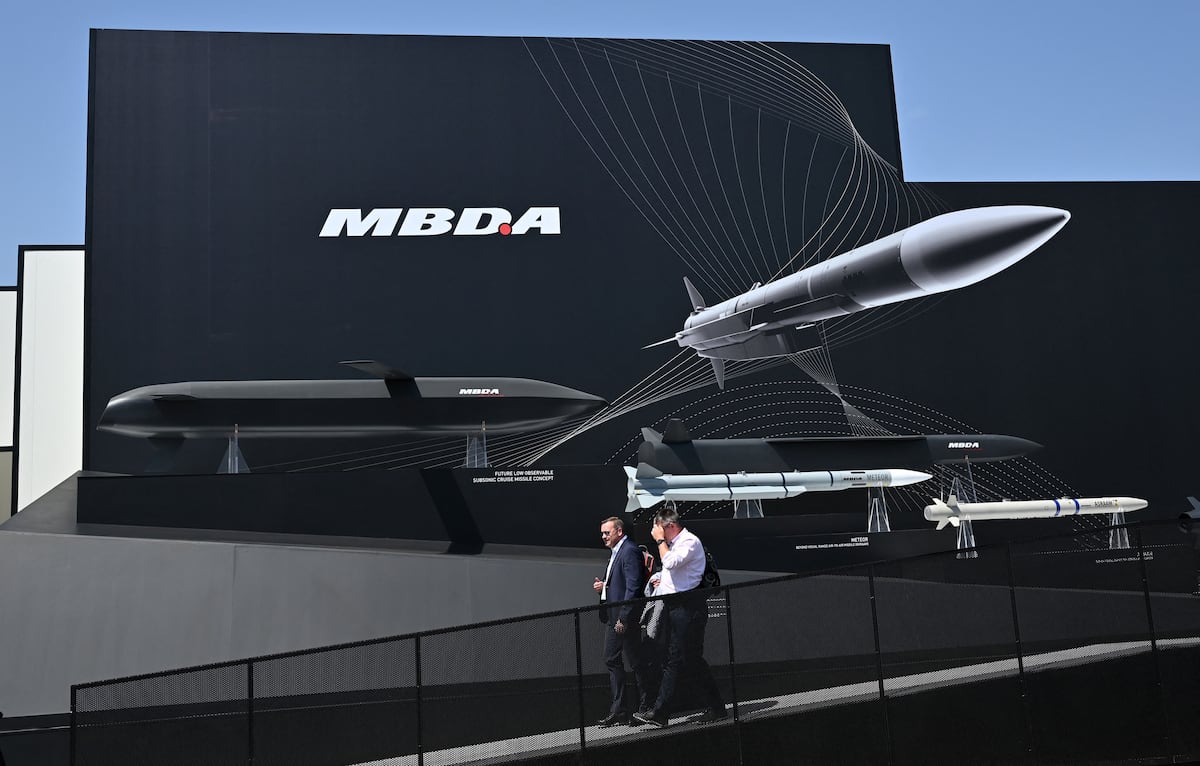
PARIS — Hypersonic weapons are likely still decades away from fielding, and the requisite research is best carried out collaboratively among Western nations, according to Kerstin Huber, executive officer for applied vehicle technology at NATO’s Science and Technology Organization.
“I would think it needs another 20 years,” Huber told Defense News on the sidelines of a round table discussion on the technology at the Eurosatory defense show in Paris.
Governments have generally been tight-lipped about hypersonic technology, which could provide an edge over adversaries, or lead to an arms race. Hypersonic missiles are typically defined as flying faster than five times the speed of sound while being maneuverable in atmospheric conditions, and their fundamental challenge is the extreme heat generated during flight.
“With this new type of technology, you will not be able to rush into things,” Huber said during the briefing. “It will take a number of nations, a number of scientists, industries to collaborate in order to tackle the challenges.”
NATO partners should consider working on hypersonic technology within the alliance framework, “because every single nation brings a certain puzzle piece to the bigger picture.” The U.S. has lots of outer space-related infrastructure that will be needed to develop the technology, Australia has the requisite space – geographically speaking – for testing and Europe is strong on materials science and numerical simulation, Huber said.
Shielding hypersonic missiles’ sensitive electronics, understanding how various materials behave and predicting aerodynamics at temperatures as high as 3,000 degrees Fahrenheit (1,649 degrees Celsius) will require extensive flight testing, the U.S. Congressional Budget Office said in a 2023 report , adding that test failures in recent years have delayed progress.
Hypersonic missiles could cost one-third more than ballistic missiles of the same range with maneuverable warheads, according to CBO analysts.
While Russia has been using something it calls hypersonic weapons, Huber questioned whether the country has really developed technology that meets the typical definition.
The number of actors who would be able to build such a capacity is “quite limited” due to the high level of technology required, according to Col. Christophe Cabaj, in charge of missile capacity architecture at France’s armaments agency, who participated in the round table.
The high speed at which hypersonic missiles travel and the heat generated as a result means they’re surrounded by ionized air, which makes communication, navigation, guidance and control “very difficult,” according to Huber. Development of new materials is helping protect sensors, she said.
Much of the information around solutions for hypersonics to deal with the high temperatures is classified, according to Lionel Mazenq, who helps develop advanced systems at pan-European missile maker MBDA. “This is well-known that ceramic materials are of key importance, as well as very high temperature alloys. Going into more details is difficult.”
Rudy Ruitenberg is a Europe correspondent for Defense News. He started his career at Bloomberg News and has experience reporting on technology, commodity markets and politics.
巴黎——北约科学技术组织应用车辆技术执行官克斯汀·胡贝尔表示,高超音速武器距离部署可能还有数十年时间,而必要的研发最好由西方国家合作进行。
“我认为还需要 20 年的时间,”胡贝尔在巴黎举行的欧洲防务展期间,在一次关于该技术的圆桌讨论会间隙告诉《防务新闻》。
各国政府通常对高超音速技术保持缄默,这项技术可能使某些国家在对抗对手时占据优势,甚至引发军备竞赛。高超音速导弹通常被定义为飞行速度超过音速五倍,且能够在各种大气条件下保持机动性的导弹,其面临的根本挑战是飞行过程中产生的极端高温。
“有了这种新型技术,就不能操之过急了,”胡贝尔在简报会上说。“需要多个国家、众多科学家和各行各业通力合作,才能应对这些挑战。”
北约伙伴国应考虑在联盟框架内开展高超音速技术合作,“因为每个国家都能为这项技术贡献自己的一份力量”。休伯表示,美国拥有开发该技术所需的大量外太空基础设施,澳大利亚拥有进行测试所需的空间(从地理位置上看),而欧洲在材料科学和数值模拟方面实力雄厚。
美国国会预算办公室在 2023 年的一份报告中指出,保护高超音速导弹的敏感电子设备、了解各种材料的性能以及预测高达 3000 华氏度(1649 摄氏度)温度下的空气动力学特性,都需要进行大量的飞行测试。报告还补充说,近年来测试的失败延缓了进展。
据国会预算办公室分析师称,高超音速导弹的成本可能比射程相同且配备可机动弹头的弹道导弹高出三分之一。
尽管俄罗斯一直在使用其所谓的超音速武器,但胡贝尔质疑该国是否真的开发出了符合典型定义的技术。
参加圆桌会议的法国军备机构导弹能力架构负责人克里斯托夫·卡巴杰上校表示,由于所需的技术水平很高,能够建立这种能力的参与者数量“相当有限”。
胡贝尔表示,高超音速导弹飞行速度极高,由此产生的高温使其周围充满电离空气,这使得通信、导航、制导和控制“非常困难”。她还说,新材料的研发有助于保护传感器。
据欧洲导弹制造商MBDA公司负责先进系统研发的莱昂内尔·马赞克(Lionel Mazenq)称,关于高超音速武器应对高温问题的解决方案,大部分信息都属于机密。“众所周知,陶瓷材料和耐高温合金至关重要。但要深入探讨更多细节则很困难。”
鲁迪·鲁伊滕贝格是《防务新闻》的欧洲记者。他的职业生涯始于彭博新闻社,拥有报道科技、大宗商品市场和政治方面的经验。