Congressional report tallies 42 US aircraft lost or damaged in Operation Epic Fury国会报告统计,在“史诗狂怒行动”中,美国有42架飞机损失或受损。
Drones took the heaviest hit, accounting for 25 of the 42 aircraft losses listed in the report.
A Congressional Research Service report released this month tallied 42 U.S. aircraft lost or damaged during Operation Epic Fury, the 40-day campaign against Iran that began Feb. 28. It is the most complete public accounting of a war the Pentagon has yet to assess on its own terms.
The May 13 report, “U.S. Aircraft Combat Losses in Operation Epic Fury: Considerations for Congress,” draws on news accounts and statements by the Defense Department and U.S. Central Command to compile the list.
The CRS, the nonpartisan research arm of the Library of Congress, works from open sources and has no access to classified damage assessments.
The CRS authors note their count “may remain subject to revision due to multiple factors, which may include classification, ongoing combat activity, and attribution.”
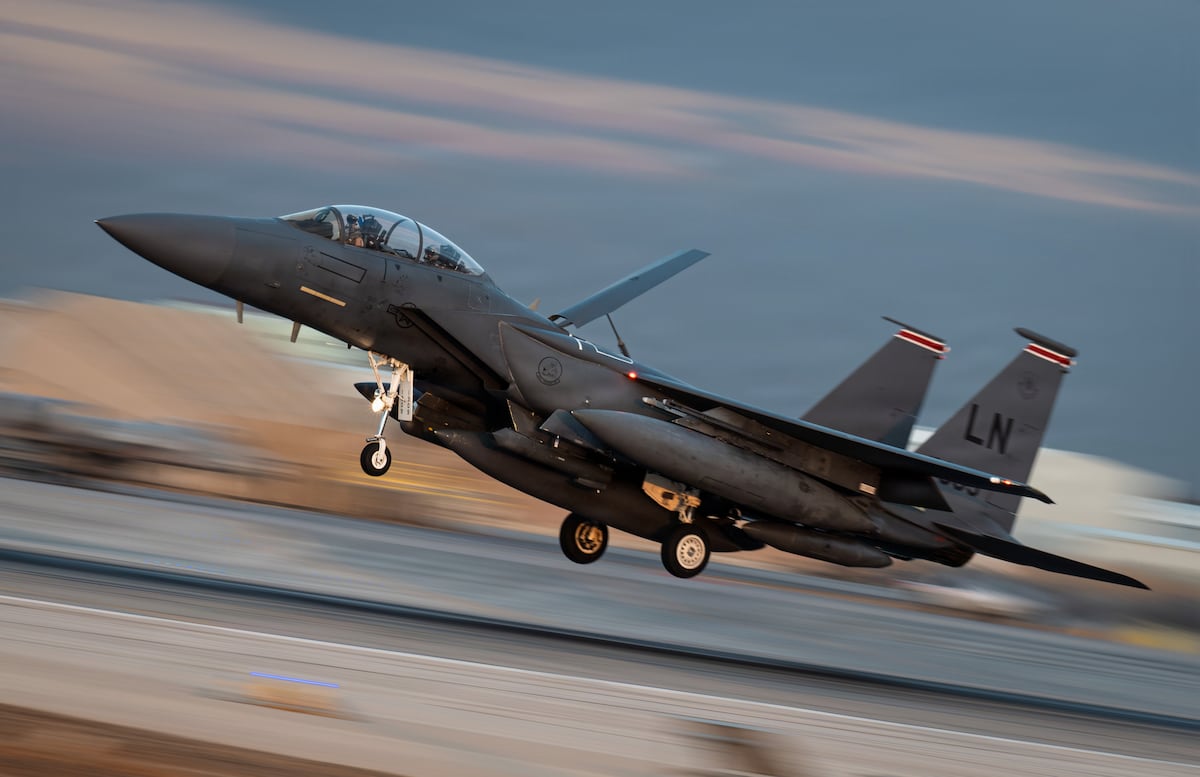
The first losses came March 1-2, when a Kuwaiti Air Force F/A-18 Hornet mistakenly shot down three F-15E Strike Eagles over Kuwait. All six aircrew ejected and were recovered. The shoot-down occurred during active combat that included attacks from Iranian aircraft, ballistic missiles and drones, CENTCOM said.
A fourth F-15E was shot down over Iran on April 3, with both crew members recovered in separate search-and-rescue operations.
A KC-135 Stratotanker went down over western Iraq on March 12 during a refueling sortie, killing all six aircrew. The crew members are the only fatalities on the CRS list. The loss was not the result of hostile or friendly fire, CENTCOM said. A second KC-135 involved in the same incident landed safely at Ben Gurion Airport in Israel.
The toll on the tanker fleet grew two days later, when Iranian missiles and drones struck Prince Sultan Air Base, Saudi Arabia, damaging five more KC-135s on the ground and bringing total tanker losses to seven.
An F-35A Lightning II took Iranian ground fire over Iran on March 19 and returned to base.
Iran hit Prince Sultan again on March 27, damaging an E-3 Sentry airborne warning and control aircraft. A May 7 Washington Post report cited by CRS said the E-3 had been parked on an unprotected taxiway.
An A-10 Thunderbolt II went down April 3 after taking enemy fire during a search-and-rescue mission . The pilot ejected and was recovered.
Two days later, U.S. forces blew up two MC-130J Commando II special operations aircraft on the ground in Iran during the broader rescue effort for the downed F-15E weapon systems officer, after the transports couldn’t fly out of a forward airstrip. All aircrew were evacuated. An HH-60W Jolly Green II combat search-and-rescue helicopter took small-arms fire during the same mission.
Drones, meanwhile, took the heaviest hit , accounting for 25 of the 42 losses. The list includes 24 MQ-9 Reapers and one MQ-4C Triton lost in a mishap reported April 14.
Air Force Chief of Staff Gen. Kenneth Wilsbach told the House Armed Services Committee on May 20 that the Reaper had been the campaign’s standout platform despite the losses.
“Perhaps maybe the most valuable player was unmanned,” Wilsbach said. “No other platform is even close to the MQ-9.”
Multiple outlets reported the E-3 was not just damaged but destroyed. Photos of tail 81-0005 published days after the March 27 strike showed the rear fuselage burned through , with debris scattered around the airframe.
The Jerusalem Post and Air & Space Forces Magazine both called the airframe a write-off. The Air Force operated only 16 E-3s before the war began, six of them deployed to Prince Sultan.
The HH-60W count is also likely low. At his April 6 news conference, Joint Chiefs Chairman Air Force Gen. Dan Caine described two helicopters in the rescue flight taking fire, with a crew member on the trailing aircraft suffering a minor injury. The Aviationist noted the account suggests both airframes were hit, not one.
The report does not list any AH/MH-6 Little Birds. Between two and four Little Birds operated by the U.S. Army’s 160th Special Operations Aviation Regiment were intentionally destroyed at the same Iranian airstrip where the two MC-130Js were demolished in place, The War Zone reported in early April, and photos geolocated by open-source analysts showed the burned-out helicopters next to the C-130 wreckage.
The 160th SOAR operates under U.S. Special Operations Command, and the absence of a DoD or CENTCOM statement on the Little Birds may explain why none appear in the CRS list.
Acting Pentagon Comptroller Jules Hurst told the House Appropriations defense subcommittee on May 12 that the cost of operations in Iran has risen to $29 billion, up from the $25 billion figure he provided April 29.
“So, at the time of testimony from the ask, it was $25 billion, but the joint staff team and the comptroller team are constantly looking at that estimate, and so now we think it’s closer to $29 [billion],” Hurst told Rep. Pete Aguilar, D-Calif.
Hurst blamed the increase on “updated repair and replacement of equipment costs and also just general operational costs keep people in theater.”
The figure does not include the cost of repairing damaged air bases and other U.S. installations in the region.
Michael Scanlon is a defense journalist covering air and space warfare. A former U.S. Air Force A-10 crew chief, he has supported land and sea programs for the U.S. Army, Navy, Marine Corps and Coast Guard.
美国国会研究服务处本月发布的一份报告统计,在“史诗狂怒行动”(Operation Epic Fury)中,共有 42 架美国飞机损失或受损。该行动是针对伊朗发起的为期 40 天的军事行动,始于 2 月 28 日。这是五角大楼迄今为止对这场战争进行的最全面的公开评估。
5 月 13 日的报告《美国飞机在“史诗狂怒行动”中的战斗损失:国会的考量》引用了新闻报道以及国防部和美国中央司令部的声明来编制这份清单。
美国国会图书馆的无党派研究机构 CRS 使用公开信息来源,无法获取机密损害评估报告。
CRS 的作者指出,他们的统计结果“可能仍会因多种因素而进行修订,这些因素可能包括分类、正在进行的战斗活动和归属问题”。
首次损失发生在3月1日至2日,当时一架科威特空军的F/A-18“大黄蜂”战斗机在科威特上空误击落了三架F-15E“攻击鹰”战斗机。六名机组人员全部弹射逃生并获救。美国中央司令部表示,此次击落事件发生在激烈的空战中,伊朗飞机、弹道导弹和无人机都曾发动攻击。
4月3日,第四架F-15E在伊朗上空被击落,两名机组人员分别在不同的搜救行动中获救。
3月12日,一架KC-135空中加油机在伊拉克西部执行空中加油任务时坠毁,机上六名机组人员全部遇难。机组人员是中央司令部伤亡名单上仅有的遇难者。中央司令部表示,此次坠机并非敌方或友军误伤所致。另一架卷入同一事件的KC-135安全降落在以色列本古里安机场。
两天后,伊朗导弹和无人机袭击了沙特阿拉伯苏丹王子空军基地,造成地面上又有五架 KC-135 加油机受损,加油机损失总数达到七架,加油机队的损失进一步扩大。
3月19日,一架F-35A闪电II战斗机在伊朗上空遭到伊朗地面火力攻击后返回基地。
3月27日,伊朗再次袭击了苏丹王子号航空母舰,导致一架E-3“哨兵”预警机受损。美国国会研究服务处(CRS)援引《华盛顿邮报》5月7日的报道称,这架E-3当时停放在一条没有防护的滑行道上。
4月3日,一架A-10“雷电II”攻击机在执行搜救任务时遭到敌方火力攻击后坠毁。飞行员弹射逃生后获救。
两天后,在营救被击落的F-15E武器系统官的行动中,美军在伊朗地面引爆了两架MC-130J“突击队员II”特种作战飞机。此前,这两架运输机因无法从前线简易机场起飞而坠毁。所有机组人员均已撤离。在同一任务中,一架HH-60W“快乐绿巨人II”战斗搜救直升机遭到轻武器射击。
与此同时,无人机遭受的损失最为严重,在42架损失的无人机中占了25架。其中包括24架MQ-9“死神”无人机和1架MQ-4C“海神”无人机,后者于4月14日报告的事故中损失。
空军参谋长肯尼斯·威尔斯巴赫将军于 5 月 20 日告诉众议院军事委员会,“死神”无人机是此次行动中表现突出的平台,尽管遭遇了一些损失。
“或许最有价值的参与者是无人驾驶飞机,”威尔斯巴赫说。“没有任何其他平台能与MQ-9相提并论。”
多家媒体报道称,这架E-3预警机不仅受损,而且被彻底摧毁。3月27日袭击事件发生几天后公布的尾号为81-0005的飞机照片显示,其后机身已被烧穿,碎片散落在机身周围。
《耶路撒冷邮报》和《空军与太空部队杂志》都称这架飞机已报废。战前,空军仅装备了16架E-3预警机,其中6架部署在苏丹王子空军基地。
HH-60W的损失数量可能也很低。在4月6日的新闻发布会上,参谋长联席会议主席、空军上将丹·凯恩描述了救援飞行中的两架直升机起火的情况,其中一架后方飞机的机组人员受了轻伤。航空专家网站(The Aviationist)指出,凯恩的说法表明两架飞机的机身都被击中,而不是只有一架。
报告中并未提及任何AH/MH-6“小鸟”直升机。据“战区”(The War Zone)网站4月初报道,美国陆军第160特种作战航空团运营的两到四架“小鸟”直升机在同一伊朗简易机场被蓄意摧毁,该机场也是两架MC-130J运输机被就地摧毁的地点。开源分析人士通过地理定位照片显示,被烧毁的直升机就停在C-130残骸旁边。
第 160 特种作战航空团隶属于美国特种作战司令部,国防部或中央司令部没有就“小鸟”导弹发表声明,这或许可以解释为什么 CRS 名单中没有“小鸟”导弹。
代理五角大楼审计长朱尔斯·赫斯特于 5 月 12 日告诉众议院拨款委员会国防小组委员会,在伊朗的行动成本已上升至 290 亿美元,高于他 4 月 29 日提供的 250 亿美元数字。
“所以,在当时提出拨款要求时,金额是 250 亿美元,但联合工作人员团队和审计长团队一直在审查这一估算,因此现在我们认为它更接近 290 亿美元,”赫斯特告诉加州民主党众议员皮特·阿吉拉尔。
赫斯特将成本增加归咎于“设备维修和更换成本的更新,以及维持人员在剧院工作的日常运营成本”。
该数字不包括修复受损空军基地和该地区其他美军设施的费用。
迈克尔·斯坎伦是一位报道空天战的国防记者。他曾是美国空军A-10攻击机的机组长,并为美国陆军、海军、海军陆战队和海岸警卫队的陆地和海上项目提供支持。