Ukraine’s Fire Point starts to integrate European tech into missile defense system乌克兰的“火力点”导弹防御系统开始整合欧洲技术
Ukrainian drone and missile maker Fire Point has secured agreements from European defense companies for the Freyja missile defense project, its CEO said.
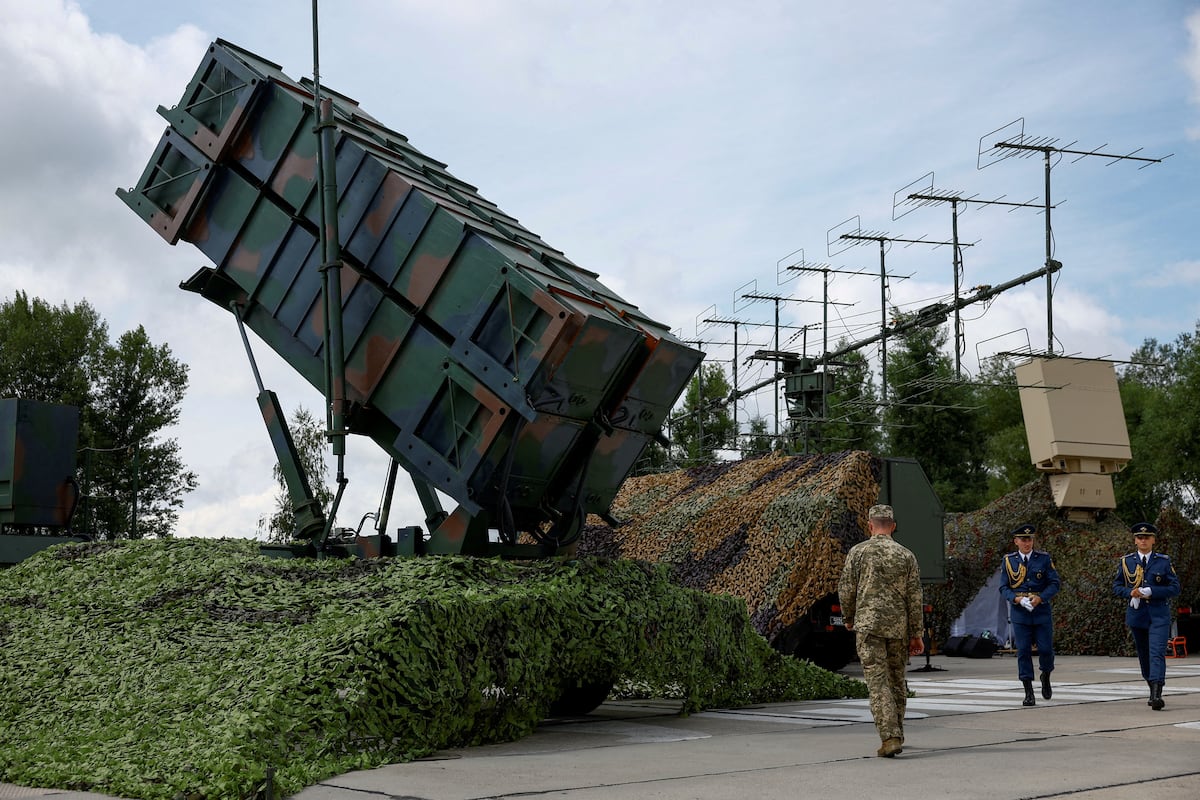
Ukrainian drone and missile maker Fire Point has secured agreements from over a dozen European defense companies to provide radar, guidance and other systems for the Freyja missile defense project, and is starting to integrate the various systems, its CEO has said.
Ukraine had urgently sought partners to develop a weapon capable of stopping Russia’s ballistic missiles. The pan-European project was launched officially in Paris last month by 10 governments and 12 defense firms - including Eurosam, Leonardo, Thales and SAAB.
Kyiv currently relies on the U.S.-made Patriot system to down ballistic missiles that fly at several times the speed of sound, but global shortages of its interceptor missiles, exacerbated by the war in Iran, have left Ukraine exposed.
“Pretty much everything is agreed,” CEO Iryna Terekh told Reuters, saying 13 industrial partners had already joined. Fire Point aims to achieve its first successful interception by mid-2027, she added.
Ukraine’s Fire Point builds pan European Freyja missile
The Ukrainian company is providing the FP7.X – a faster version of its FP7 ballistic missile – as the interceptor and is now integrating that with the guidance system, known as a seeker.
“Right now we are in the most intense and also in the most complicated stage of finally assembling everything together with surveillance radars, with tracking radars, with the seekers,” Terekh said.
Norway’s Kongsberg is working on the command center integrating the various systems. The company did not immediately respond to a request for comment.
Industry publications have reported that Germany’s Diehl Defence — which produces a seeker for its own IRIS-T air defense system — will provide the guidance system.
A Diehl spokesperson confirmed the firm was in talks with Fire Point but declined to discuss details. Terekh declined to comment.
Fire Point aims to produce a ballistic interceptor for less than €1 million ($1.2 million) per missile, Terekh said — a quarter to a sixth of the cost of a Patriot.
“We’re trying to squeeze a program that usually takes 20 or 30 years into a matter of a couple of years,” Terekh said, adding that there had been at least five tests of the interceptor missile.
The project would use open-source architecture and allow different options to be swapped in and out — such as a Weibel radar for one made by Saab, according to Ukrainian officials.
The number of industrial partners could rise to around 20, increasing production capacity, Terekh said. She added Fire Point was in talks with Ukrainian state-owned missile makers, but declined to name them.
Terekh said the participating companies would finance research and development until a minimum viable product (MVP) was reached — which she said would mean the successful interception of a ballistic missile.
Attack missiles nearly ready for combat
“We expect the launcher to have from four to six missiles. So if from one batch there was an interception of a ballistic missile for MVP, this would be a wonderful result,” Terekh said.
A missile gets through only if all the interceptors in a launcher miss. Keeping the probability of six misses in a row below 5% — an industry standard — requires each interceptor to hit roughly 40% of the time, according to Fabian Hoffmann, missile expert at the Norwegian Institute for Defence Studies.
If it could really be done for €1 million, it would be “pretty impressive,” and “very cheap,” Hoffmann said.
The FP7 missile has an attack variant that can be used to strike ground targets. This has undergone about 15 test launches and is now being certified by the Ukrainian Defence Ministry, which she expected to take two to four more weeks.
Fire Point aims for first combat use of this version in early autumn, and late autumn for the much larger FP9 ballistic missile, which it says will be able to reach Moscow.
Terekh said the FP7’s architecture was based on Soviet-era designs for the S300 and S400 interceptors, but that Fire Point’s missile now shared only 20% similarity with those weapons.
In a recent interview, Fire Point co-founder Denys Shtilierman said the Soviet plans had been procured as a favor by Timur Mindich, a former business associate of President Volodymyr Zelenskiy who faces charges of corruption and is now a fugitive in Israel.
Fire Point says it declined an offer from Mindich to buy a stake in the company.
Fire Point is pressing ahead with building its own engine for its FP5 cruise missile, known as the Flamingo, which has hit several prominent military targets in Russia this year.
It had been using second-hand jet engines — “digging through the cemetery of the engines ... like in a thrift store,” Terekh said.
But these are getting harder and harder to find, so Fire Point is assembling the first 10 units of its own prototype.
“As soon as we’re happy with the results of tests of these test engines, there’ll definitely be many more Flamingos,” Terekh said.
乌克兰无人机和导弹制造商 Fire Point 的首席执行官表示,该公司已与十几家欧洲国防公司达成协议,为 Freyja 导弹防御项目提供雷达、制导和其他系统,并开始整合各种系统。
乌克兰曾急于寻找合作伙伴,共同研发一种能够拦截俄罗斯弹道导弹的武器。这项泛欧项目上个月在巴黎正式启动,由包括欧洲导弹集团(Eurosam)、莱昂纳多公司(Leonardo)、泰雷兹公司(Thales)和萨博公司(SAAB)在内的10个国家政府和12家国防企业共同参与。
基辅目前依靠美国制造的“爱国者”导弹防御系统来拦截以数倍音速飞行的弹道导弹,但由于伊朗战争加剧了全球拦截导弹的短缺,乌克兰的防御能力受到了威胁。
“几乎所有事项都已达成一致,”首席执行官伊琳娜·特雷赫告诉路透社,并表示已有13家工业合作伙伴加入。她补充说,Fire Point的目标是在2027年年中实现首次成功拦截。
乌克兰火力点公司正在研发泛欧弗雷亚导弹
这家乌克兰公司提供的 FP7.X(其 FP7 弹道导弹的更快版本)作为拦截器,目前正在将其与制导系统(称为导引头)集成在一起。
“目前我们正处于最紧张、也是最复杂的阶段,即将所有东西,包括监视雷达、跟踪雷达和导引头,最终组装在一起,”特雷克说。
挪威康士伯公司正在参与构建整合各种系统的指挥中心。该公司尚未对此置评。
行业出版物报道称,德国迪尔防务公司(该公司为其自己的 IRIS-T 防空系统生产导引头)将提供制导系统。
Diehl公司的一位发言人证实,该公司正在与Fire Point公司进行洽谈,但拒绝透露详情。Terekh拒绝置评。
特雷克表示,火点导弹公司的目标是生产每枚弹道拦截导弹成本低于 100 万欧元(120 万美元)的导弹——仅为爱国者导弹成本的四分之一到六分之一。
“我们正试图将通常需要 20 到 30 年才能完成的项目压缩到短短几年内完成,”特雷克说,并补充说,拦截导弹至少已经进行了五次测试。
据乌克兰官员称,该项目将采用开源架构,并允许更换不同的选项——例如用 Weibel 雷达替换 Saab 制造的雷达。
特雷赫表示,工业合作伙伴的数量可能会增加到20家左右,从而提高产能。她还补充说,火点公司正在与乌克兰国有导弹制造商进行谈判,但拒绝透露这些制造商的名称。
Terekh表示,参与的公司将资助研发,直到达到最小可行产品(MVP)——她表示,这意味着成功拦截弹道导弹。
攻击导弹已接近作战准备就绪
“我们预计发射器将携带四到六枚导弹。因此,如果其中一批导弹能够拦截一枚MVP的弹道导弹,那将是一个非常好的结果,”特雷克说。
只有当发射器中的所有拦截器都未命中目标时,导弹才能成功拦截。挪威国防研究所的导弹专家法比安·霍夫曼表示,要将连续六次拦截失败的概率保持在5%以下(这是行业标准),每个拦截器的命中率就需要达到大约40%。
霍夫曼说,如果真的能用 100 万欧元完成,那将“非常令人印象深刻”,而且“非常便宜”。
FP7导弹有一种攻击型,可用于打击地面目标。该型导弹已进行了约15次试射,目前正在接受乌克兰国防部的认证,预计还需要两到四周时间。
Fire Point 计划在初秋首次使用该型号导弹进行实战部署,并在深秋部署更大的 FP9 弹道导弹,该公司称该导弹能够打到莫斯科。
Terekh表示,FP7的架构基于苏联时代S300和S400拦截器的设计,但火点导弹公司生产的这款导弹与这些武器的相似度只有20%。
在最近的一次采访中,Fire Point 联合创始人 Denys Shtilierman 表示,苏联的这些计划是总统弗拉基米尔·泽连斯基的前商业伙伴蒂穆尔·明迪奇(Timur Mindich)帮忙获得的,他面临腐败指控,目前在以色列是逃犯。
Fire Point表示已拒绝Mindich提出的收购公司股份的提议。
Fire Point 正在加紧为其 FP5 巡航导弹(又名“火烈鸟”)制造自己的发动机,该导弹今年已击中俄罗斯的几个重要军事目标。
特雷克说,该公司一直使用二手喷气发动机——“就像在旧货店里翻找废旧发动机一样”。
但这些产品越来越难找到,因此 Fire Point 正在组装自己的首批 10 台原型机。
“一旦我们对这些测试发动机的测试结果感到满意,肯定会有更多的火烈鸟发动机,”特雷克说。