US used ‘virtually all’ long-range precision missiles during Iran war, sources say消息人士称,美国在两伊战争期间“几乎动用了所有”远程精确导弹。
The U.S. Army has reportedly used up much of its stockpile of highly accurate long-range missiles during America's five-month war with Iran.
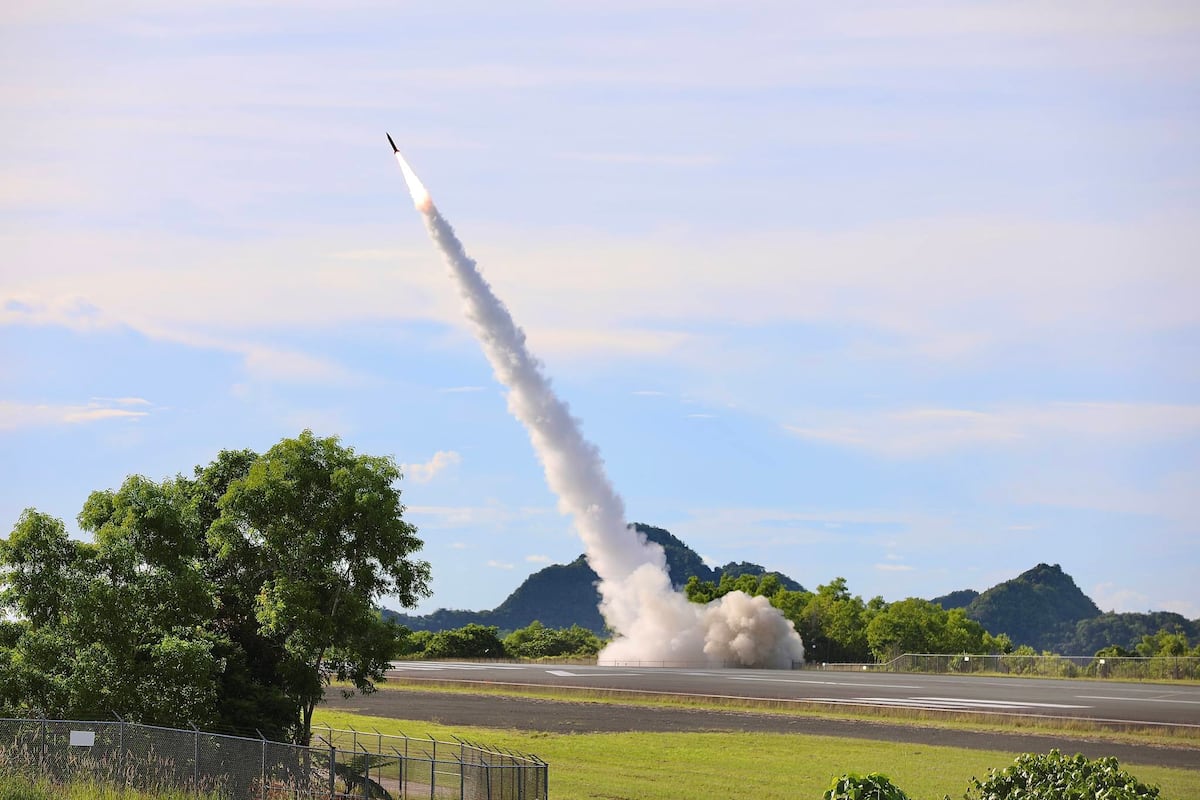
The U.S. Army has used up much of its stockpile of highly accurate long-range missiles during America’s five-month war with Iran, according to three people familiar with the data, raising concerns about the military’s readiness for future conflicts.
The missiles are principally the Army’s surface-to-surface weapons, known as Army Tactical Missile Systems (ATACMS) and Precision Strike Missiles (PrSM). The U.S. has used “virtually all” of these weapons, according to two of the sources.
The degree to which the military is running out of ATACMS and Precision Strike Missiles has not been previously reported.
The long-range munitions are an important part of the military’s arsenal, allowing accurate strikes from a safe distance. U.S.-supplied ATACMS have played a key role in the war in Ukraine, allowing Ukrainian forces to attack targets inside Russia. The PrSM is a newer, more advanced generation that will replace the ATACMS, which have a shorter range.
Analysts say such weapons — which cost over $1 million each — would also be important in any conflict with China.
The sources declined to say how many of each munition the U.S. had left.
President Donald Trump launched the Iran war jointly with Israel in February, predicting that the conflict would last a short time.
But as the war drags on, the three people familiar with the matter expressed worry that the falling missile supplies could limit the U.S. ability to deter adversaries, including Russia and China.
A fourth person familiar with the matter said that while Central Command — which oversees U.S. forces in the Middle East — has nearly used up the land-based missiles it had before the war began, it has been able to reload from U.S. military supplies elsewhere in the world.
The sources interviewed for this story spoke on the condition of anonymity.
Asked for comment on the stockpile data, the White House issued a statement from Trump, saying the U.S. had “far more munitions than anyone in the world” and “far more than we need.”
“Our defense companies are, at this moment, making more munitions than they have ever made before, in addition to expanding their plants and equipment at record levels,” Trump said.
Analysts agree that certain munitions, including artillery shells and several types of missiles, are being produced at record levels but caution that supplies might far short of what is needed for a prolonged war.
Lockheed Martin, which makes the ATACMs and PrSMs, along with the anti-ballistic missile THAAD system, did not immediately respond to questions about Trump’s statements or about supply levels.
Raytheon, which makes Tomahawk missiles and Patriot interceptors, two important U.S. weapons, also did not immediately respond.
Responding to a request for comment, chief Pentagon spokesperson Sean Parnell said: “America’s military is the most powerful in the world and has everything it needs to execute at the time and place of the President’s choosing. We have executed multiple successful operations across combatant commands while ensuring the U.S. military possesses a deep arsenal of capabilities to protect our people and our interests.”
The supply figures have circulated inside the federal government over the last week during tense conversations inside the Trump administration about how much longer the U.S. can continue striking Iran without drawing down the stockpile to levels that would limit the military’s ability to respond to crises elsewhere.
One of the sources said the drawdown of the ATACMS and PrSM stockpiles reflected a decision by the Trump administration to avoid riskier ways of attacking Iranian targets, such as by using piloted aircraft to drop bombs.
Because these weapons allow the military to attack targets from a distance, analysts say they would be valuable in a war against an adversary with strong air defenses, such as China.
They have been used to strike targets inside Iran, according to a March report by the Center for Strategic and International Studies (CSIS).
According to the report, PrSM stockpiles were low to start with, since it is a relatively new munition, but the U.S. military has ordered a large number of them for 2027. The Army has said that ATACMS are being phased out and that production is shifting to the newer PrSM missiles.
Military leaders have for weeks warned the president that stockpiles of defensive weapons — including Patriot interceptors, which are effective against ballistic missiles — were dwindling, said two of the sources.
Last week, several media outlets reported Trump had decided not to launch another massive offensive inside Iran in part because his military advisers had warned about the U.S. stockpile.
A U.S. official disputed those accounts, saying Trump chose not to move forward with another attack because of pressure from Gulf states.
The Middle East conflict has sparked intense debate about Trump’s authority to prosecute hostilities against Iran without congressional authorization. No request for a declaration of war or an authorization to use military force has been submitted to Congress.
Last week, CSIS published a report estimating that between February and July about 65% of Patriot interceptors had been expended and that the number of THAAD ballistic missile interceptors in U.S. stockpiles was at least 38% lower than at the start of the war.
Patriots and THAADs are systems that detect and destroy incoming missiles and are among the most effective in the country’s arsenal.
While Reuters has not seen the supply figures, those numbers match internal U.S. data, two of the sources said.
The U.S. also burned through a little less than half of its global supply of Tomahawk cruise missiles, which are generally launched from ships, since the start of the war, one of the sources said.
Reuters could not independently verify that number.
The Tomahawk is a Navy weapon, launched from destroyers, cruisers and submarines, and has long served as the sea service’s principal means of striking heavily defended targets without risking pilots.
Raytheon, a unit of RTX, has reached a tentative multi-year agreement with the Pentagon aimed at boosting Tomahawk production, alongside increases in other munitions, as Washington races to rebuild stockpiles.
三位知情人士透露,在美伊长达五个月的战争中,美国陆军消耗了大量高精度远程导弹,这引发了人们对美军未来冲突战备能力的担忧。
这些导弹主要是美国陆军的地对地武器,包括陆军战术导弹系统(ATACMS)和精确打击导弹(PrSM)。据两位消息人士称,美国“几乎”已经使用了所有这些武器。
此前从未有报道指出军方ATACMS和精确打击导弹的短缺程度。
远程弹药是军火库的重要组成部分,能够从安全距离进行精确打击。美国提供的ATACMS导弹在乌克兰战争中发挥了关键作用,使乌克兰军队能够攻击俄罗斯境内的目标。PrSM导弹是更新、更先进的一代产品,将取代射程较短的ATACMS导弹。
分析人士表示,此类武器(每件造价超过 100 万美元)在与中国的任何冲突中也将发挥重要作用。
消息人士拒绝透露美国还剩下多少种弹药。
今年2月,美国总统唐纳德·特朗普与以色列共同发动了伊朗战争,并预测这场冲突将持续很短的时间。
但随着战争的持续,三位知情人士表示担忧,导弹供应的减少可能会限制美国威慑包括俄罗斯和中国在内的对手的能力。
第四位知情人士表示,虽然负责监督驻中东美军的中央司令部几乎用完了战前拥有的陆基导弹,但它能够从世界其他地方的美国军事物资中补充弹药。
本文采访对象均要求匿名。
当被问及库存数据时,白宫发表了特朗普的声明,称美国拥有的“弹药比世界上任何国家都多得多”,而且“远远超过我们的需求”。
特朗普说:“目前,我们的国防企业正在生产比以往任何时候都多的军火,同时还在以创纪录的速度扩建工厂和设备。”
分析人士一致认为,包括炮弹和几种导弹在内的某些弹药的产量正以创纪录的水平增长,但他们也警告说,供应量可能远远不足以应对一场持久战。
生产反坦克导弹、精确制导导弹以及反导系统“萨德”的洛克希德·马丁公司没有立即回应有关特朗普言论或供应水平的问题。
生产战斧导弹和爱国者拦截导弹(美国两大重要武器)的雷神公司也未立即作出回应。
五角大楼首席发言人肖恩·帕内尔在回应置评请求时表示:“美国军队是世界上最强大的军队,拥有在总统选择的时间和地点执行任务所需的一切资源。我们已经在各作战司令部成功执行了多次行动,同时确保美军拥有强大的武器库,以保护我们的人民和利益。”
过去一周,联邦政府内部一直在流传着有关供应数据的消息。与此同时,特朗普政府内部就美国还能在不将库存削减到限制军队应对其他地区危机能力的水平的情况下,继续打击伊朗多久进行了紧张的讨论。
其中一位消息人士称,削减ATACMS和PrSM库存反映了特朗普政府避免使用风险更高的方式攻击伊朗目标的决定,例如使用有人驾驶飞机投掷炸弹。
分析人士表示,由于这些武器能够让军队从远处攻击目标,因此在与拥有强大防空能力的对手(如中国)的战争中,这些武器将非常有价值。
根据战略与国际研究中心 (CSIS) 3 月份的一份报告,它们已被用于打击伊朗境内的目标。
报告指出,由于PrSM导弹是一种相对较新的弹药,其库存量原本就较低,但美军已订购了大量PrSM导弹,计划于2027年交付。陆军方面表示,ATACMS导弹正在逐步淘汰,生产重心正在转移到新型PrSM导弹上。
两名消息人士称,军方领导人数周以来一直警告总统,包括能有效拦截弹道导弹的“爱国者”拦截器在内的防御性武器库存正在减少。
上周,多家媒体报道称,特朗普决定不再对伊朗发动另一次大规模攻势,部分原因是他的军事顾问警告说,美国的武器库存在问题。
一位美国官员反驳了这些说法,称特朗普之所以选择不再发动另一次袭击,是因为受到了海湾国家的压力。
中东冲突引发了关于特朗普是否有权在未经国会授权的情况下对伊朗发动敌对行动的激烈辩论。目前尚未向国会提交任何宣战请求或使用武力的授权申请。
上周,战略与国际研究中心 (CSIS) 发布了一份报告,估计从 2 月到 7 月,大约 65% 的爱国者拦截器已被消耗,而美国库存中的萨德弹道导弹拦截器数量比战争开始时至少减少了 38%。
“爱国者”和“萨德”系统是能够探测和摧毁来袭导弹的系统,是美国武器库中最有效的系统之一。
路透社虽然没有看到供应数据,但两位消息人士称,这些数字与美国内部数据相符。
一位消息人士称,自战争开始以来,美国还消耗了其全球“战斧”巡航导弹供应量的近一半,这种导弹通常从舰艇上发射。
路透社无法独立核实该数字。
战斧导弹是海军的一种武器,可从驱逐舰、巡洋舰和潜艇上发射,长期以来一直是海军打击重兵把守目标而不冒飞行员风险的主要手段。
雷神公司(RTX旗下子公司)与五角大楼达成了一项初步的多年协议,旨在提高战斧导弹的产量,同时增加其他弹药的产量,因为华盛顿正加紧重建库存。