‘This was surgical’: The tactics behind the Maduro mission“这是外科手术式的精准打击”:马杜罗行动背后的策略
The entire mission hinged on a narrow break in Venezuela’s weather. When that window opened, the U.S. military moved fast.
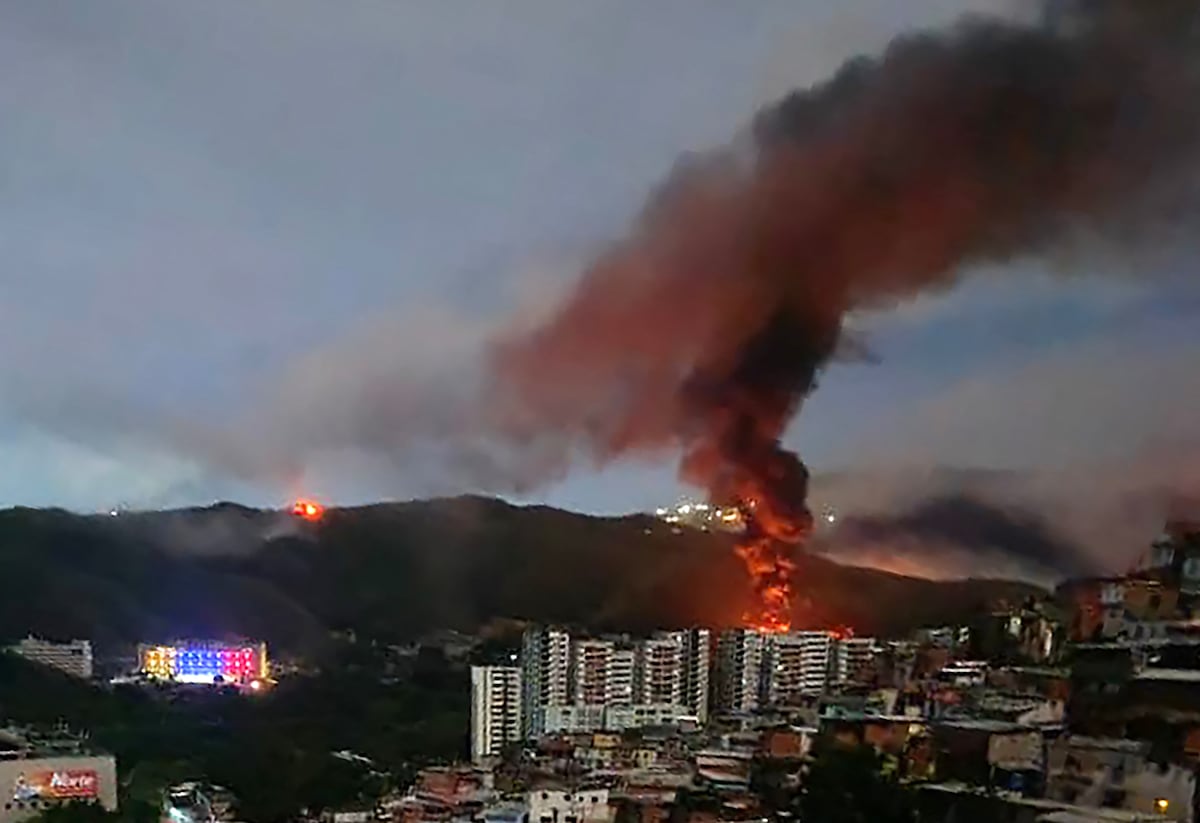
The entire mission hinged on a narrow break in Venezuela’s weather.
When that window opened, the U.S. military moved fast, launching more than 150 aircraft from 20 bases in a high-risk operation to capture Venezuelan leader Nicolás Maduro from the country’s populated capital over the weekend.
After a tightly synchronized mission that lasted less than five hours from authorization to exfiltration, Maduro and his wife, Cilia Flores, were taken Saturday by U.S. forces from their Caracas compound, according to President Donald Trump and Gen. Dan Caine, the chairman of the Joint Chiefs of Staff.
One defense expert, who was not involved in the operation, said that unlike past regime-change operations that involved the deployment of troops en masse, this operation appeared to have been designed to be precise.
“This was surgical,” Carlton Haelig, a fellow with the defense program at the Center for a New American Security, told Military Times. “But in terms of the tactical and support elements surrounding it, it was still relatively large scale.”
Though many details remain opaque, the mission, dubbed Operation Absolute Resolve, offered a rare public look at how today’s military plans and executes complicated, high-stakes interagency operations.
Months of planning, days of waiting
According to Caine, intelligence planning for the mission began months earlier and relied heavily on intelligence work to track Maduro’s whereabouts — “where he lived, where he traveled, what he ate, what he wore,” — and even information about his pets.
In a press conference Saturday, Caine said the apprehension would not have been possible without the Central Intelligence Agency, National Security Agency and the National Geospatial-Intelligence Agency, though he did not elaborate on each branch’s exact contributions.
Adam Taichi Kraft, a former intelligence collection strategist with the Defense Intelligence Agency who now consults on national security issues, speaking generally, said that for missions like this, information gathering never stops.
“Intelligence collection is going on 24/7, all around the world,” he said in an interview with Military Times. “You cannot hide; we are in a zero-privacy world.”
He emphasized that watching people’s behavior — whether in person or online — cannot be understated.
“If you are breathing oxygen, if you leave a fingerprint on a cab door, if you go to the doctor, if you order Starbucks, you are opening yourself up to surveillance,” he said.
Haelig said mapping the patterns of Maduro’s life was essential, but equally important would also be the military intelligence that enables U.S. forces to safely enter and exit a targeted area.
“Most of that comes from knowing the enemy’s order of battle — where their defensive assets are positioned. What are their response capabilities? What needs to occur in order to take those capabilities offline — whether that’s kinetically — through missile and air strikes — or by other means like electronic jamming,” he said.
Outlets including Reuters and The New York Times reported that the U.S. Army’s elite Delta Force practiced the extraction using a mockup of Maduro’s compound, but officials have not publicly confirmed which units were involved in the mission.
Even with extensive preparation, operations of this scale carry inherent uncertainty, including the possibility of shifting air defense and unseen threats along a route, Haelig said.
Those risks, he said, “were almost certainly something that was in the back of the minds of all of the planners and the operators themselves.”
And yet, the final go-ahead hinged on weather. In a Saturday morning phone interview on “Fox and Friends Weekend,” Trump said military forces had been waiting for “days” until the weather was right.
This photo, contained in a Truth Social post from President Donald Trump, shows a photo described as being Venezuelan President Nicolás Maduro on board the USS Iwo Jima on Saturday. (TruthSocial via AP)
Trump gave the green light at 10:46 p.m. Eastern Standard Time on Jan. 2, according to Caine, and over 150 aircraft began to launch across the Western Hemisphere.
“As the night began, the helicopters took off with the extraction force, which included law enforcement officers, and began their flight into Venezuela at 100 feet above the water,” Caine said in a statement.
The helicopters, skimming the water at such a low altitude to avoid detection, were protected by a fleet that included fighter jets, bombers and surveillance aircrafts.
After clearing the last stretch of high terrain, leaders determined that the force had maintained the element of surprise, Caine said.
The force descended.
Shortly after one in the morning Saturday, helicopters arrived at Maduro’s compound. A firefight ensued, and according to Caine, one aircraft was hit but did not sustain catastrophic damage and was able to remain flyable.
Trump said in his “Fox and Friends Weekend” interview that Maduro “got bum-rushed so fast” in “a house that was more like a fortress than a house.”
By 3:29 a.m., the force had left the compound with Maduro and his wife and were “over the water,” Caine said, after multiple engagements.
Trump on Saturday posted a photo of a blindfolded man who he said was Maduro post-capture aboard the USS Iwo Jima. Maduro is now facing federal criminal charges in New York.
Defense Secretary Pete Hegseth said Monday in a speech that nearly 200 Americans were on the ground in Caracas during the operation; he did not specify if that number represented soldiers or others supporting the operation.
When asked to clarify if special operations forces were involved in the mission, the Pentagon declined to comment citing operational security.
Col. Allie Weiskopf, the U.S. Special Operations Command director of public affairs, said in an email Tuesday that the operation belonged to the U.S. Southern Command.
Haelig said that many have speculated — based on the rotary wing aircraft seen in videos posted on social media by people on the ground in Venezuela — that the 160th Special Operations Aviation Regiment was involved in the mission. That unit, known as the Night Stalkers, is trained for risky aviation missions at low altitudes.
“They work equally with Delta Force and SEAL Team 6 on missions like this,” he said, adding that “both are absolutely capable and trained for high value target missions.” Delta Force and SEAL Team 6 are elite units trained to conduct the military’s most sensitive operations — often at night and in close coordination with intelligence agencies.
The people selected for these missions, Kraft said, are extremely high caliber and often handpicked.
“These guys are so well-rehearsed and so mature,” he said, adding “there are contingencies and branch plans as part of training. They’re always practicing. So if something goes wrong, they’re able to accomplish the mission regardless.”
Eve Sampson is a reporter and former Army officer. She has covered conflict across the world, writing for The New York Times, The Washington Post and The Associated Press.
整个任务能否成功,就取决于委内瑞拉天气能否出现短暂的转机。
当这个机会出现时,美军迅速行动,周末从 20 个基地派出 150 多架飞机,在委内瑞拉人口稠密的首都发动了一场高风险行动,抓捕委内瑞拉领导人尼古拉斯·马杜罗。
据美国总统唐纳德·特朗普和参谋长联席会议主席丹·凯恩将军称,经过从授权到撤离不到五个小时的紧密协调行动,马杜罗和他的妻子西莉亚·弗洛雷斯于周六被美军从他们在加拉加斯的住所带走。
一位未参与此次行动的国防专家表示,与以往大规模部署军队的政权更迭行动不同,这次行动似乎旨在做到精准打击。
“这次行动精准到位,”新美国安全中心国防项目研究员卡尔顿·黑利格告诉《军事时报》,“但就其战术和支援要素而言,规模仍然相对较大。”
尽管许多细节仍不透明,但这项名为“绝对决心行动”的任务,让公众难得地了解了当今军队如何计划和执行复杂、高风险的跨部门行动。
数月的计划,数日的等待
凯恩表示,此次行动的情报计划早在几个月前就开始了,并且严重依赖情报工作来追踪马杜罗的行踪——“他住在哪里,他去哪里旅行,他吃什么,他穿什么”,甚至包括有关他宠物的信息。
凯恩在周六的新闻发布会上表示,如果没有中央情报局、国家安全局和国家地理空间情报局的协助,这次抓捕行动是不可能完成的,但他没有详细说明每个部门的具体贡献。
曾任国防情报局情报收集战略家、现从事国家安全问题咨询的亚当·泰奇·克拉夫特 (Adam Taichi Kraft) 表示,就此类任务而言,信息收集永不停歇。
他在接受《军事时报》采访时表示:“情报收集工作在全球范围内24小时不间断进行。你无处可藏;我们生活在一个零隐私的世界。”
他强调,观察人们的行为——无论是在现实生活中还是在网络上——都至关重要。
他说:“如果你呼吸氧气,如果你在出租车门上留下指纹,如果你去看医生,如果你点星巴克咖啡,你就把自己置于监视之下。”
海利格表示,绘制马杜罗的生活模式图至关重要,但同样重要的是军事情报,它能够使美军安全进入和撤离目标区域。
他说:“这主要来自于了解敌人的作战序列——他们的防御资产部署在哪里,他们的应对能力如何,以及需要采取什么措施才能使这些能力失效——无论是通过导弹和空袭等动能手段,还是通过电子干扰等其他手段。”
包括路透社和《纽约时报》在内的多家媒体报道称,美国陆军精锐部队三角洲部队使用马杜罗住所的模拟模型进行了撤离演习,但官方尚未公开确认哪些部队参与了此次任务。
海利格表示,即使经过充分准备,这种规模的行动也存在固有的不确定性,包括防空力量转移的可能性以及沿途可能出现的未知威胁。
他说,这些风险“几乎肯定是所有规划者和运营者心中都考虑到的”。
然而,最终能否成行取决于天气。特朗普在周六上午接受“福克斯与朋友们周末版”电话采访时表示,军方已经等待了“好几天”,直到天气适宜。
这张照片来自美国总统唐纳德·特朗普在Truth Social上发布的一则帖子,照片显示委内瑞拉总统尼古拉斯·马杜罗周六在“硫磺岛”号航空母舰上。(TruthSocial via AP)
据凯恩称,特朗普于美国东部时间 1 月 2 日晚上 10 点 46 分开了绿灯,超过 150 架飞机开始在西半球各地起飞。
凯恩在一份声明中说:“夜幕降临,直升机载着包括执法人员在内的撤离部队起飞,开始以水面以上 100 英尺的高度飞往委内瑞拉。”
为了避免被发现,这些直升机以极低的高度掠过水面飞行,并由包括战斗机、轰炸机和侦察机在内的机队进行保护。
凯恩说,在清除了最后一段高地之后,指挥官们认定部队保持了出其不意的优势。
那股力量降临了。
周六凌晨一点刚过,直升机抵达马杜罗的住所。双方随即交火,据凯恩称,一架飞机被击中,但并未遭受致命损坏,仍可继续飞行。
特朗普在接受“福克斯与朋友们周末版”采访时表示,马杜罗“很快就被突袭了”,而“那房子与其说是房子,不如说更像一座堡垒”。
凯恩说,凌晨 3 点 29 分,这支部队带着马杜罗和他的妻子离开了营地,经过多次交火后,“已经越过水域”。
特朗普周六发布了一张蒙眼男子的照片,称照片中的人是马杜罗在“硫磺岛”号航空母舰上被捕后的样子。马杜罗目前在纽约面临联邦刑事指控。
国防部长皮特·赫格塞斯周一在一次演讲中表示,行动期间有近 200 名美国人在加拉加斯;他没有具体说明这个数字是士兵还是其他支援行动的人员。
当被问及特种作战部队是否参与了此次任务时,五角大楼以行动安全为由拒绝置评。
美国特种作战司令部公共事务主任艾莉·魏斯科夫上校周二在一封电子邮件中表示,此次行动属于美国南方司令部。
海利格表示,许多人根据委内瑞拉地面人员在社交媒体上发布的视频中出现的旋翼飞机推测,参与此次任务的是美国陆军第160特种作战航空团。这支部队绰号“夜行者”,专门执行低空高风险航空任务。
他说:“在执行此类任务时,他们与三角洲部队和海豹突击队第六分队密切合作。”他还补充道:“这两支部队都完全有能力执行高价值目标任务,并接受过相关训练。”三角洲部队和海豹突击队第六分队都是精锐部队,训练有素,负责执行军事上最敏感的行动——通常是在夜间,并与情报机构密切协调。
克拉夫特说,被选中执行这些任务的人员素质极高,而且往往是精挑细选的。
“这些人训练有素,非常成熟,”他说道,“训练中会制定应急预案和分部计划。他们一直在练习。所以即使出现意外情况,他们也能完成任务。”
伊芙·桑普森是一名记者,也是一名前陆军军官。她曾报道过世界各地的冲突,为《纽约时报》、《华盛顿邮报》和美联社撰稿。