India boosts Southeast Asia military ties, Indo-Pacific role印度加强与东南亚的军事联系,提升其在印太地区的作用
India is tightening military ties with Southeast Asian countries with deals to sell advanced missiles and enhancing security cooperation.
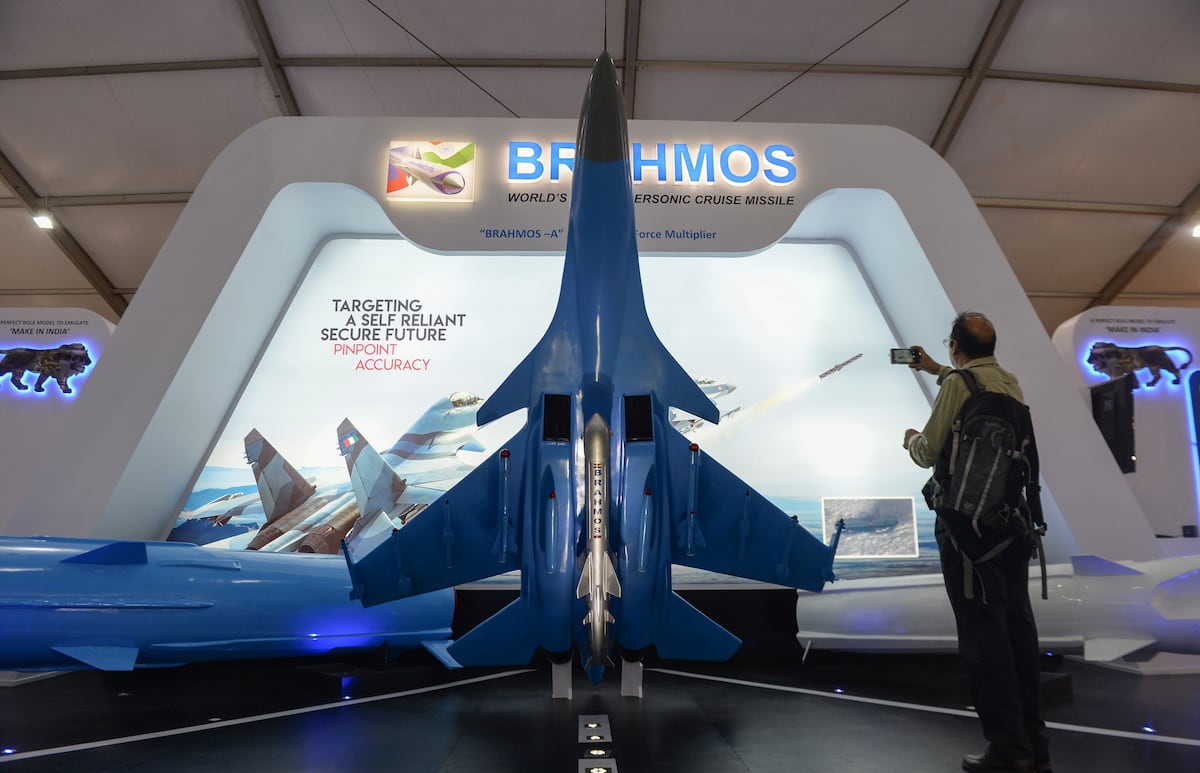
NEW DELHI — India is tightening military ties with Southeast Asian countries with deals to sell advanced missiles and enhancing security cooperation in a region where several countries are involved in maritime disputes with China in the South China Sea.
Analysts say New Delhi’s outreach to countries such as Indonesia, the Philippines and Vietnam marks its growing strategic role in the Indo-Pacific. It also complements the push by the United States and its allies to counterbalance China in the region.
“India is a relatively new player in the region where countries are trying to build up their own capacities,” according to Chintamani Mahapatra, founder of the Kalinga Institute of Indo-Pacific Studies in New Delhi.
“China is an important economic partner for these nations, but at the same time poses a security challenge, so they want to strengthen themselves in handling Beijing,” he said by phone.
Indian Defense Minister Rajnath Singh met with his Indonesian counterpart, Sjafrie Sjamsoeddin, in New Delhi last month on supplying BrahMos supersonic cruise missiles to Jakarta. A deal would make Indonesia the second country to acquire the missiles, produced under a joint venture with Russia in which the Indian side is the majority stakeholder.
Although the BrahMos missile, the centerpiece of New Delhi’s defense sales in Southeast Asia, was developed with Russian collaboration, it will not boost Russia’s role as an arms supplier in Southeast Asia, analysts say.
“Russia has been under sanctions since the Ukraine war, so countries would be extremely wary of any purchases from Moscow,” Rahul Bedi, a defense analyst in New Delhi, said by phone.
India began delivering a shore-based, anti-ship BrahMos missile system to the Philippines under a $375 million deal last year, with deliveries continuing. Manila began procuring the system to boost its maritime defense as its ties with Beijing are strained by frequent clashes with China in the South China Sea, which China claims mostly as its own.
India has upgraded ties with several countries, such as Indonesia and Vietnam, in recent years to a comprehensive strategic partnership, which means deepening ties in a range of areas such as economy, defense and technology. New Delhi has also been helping train troops from several Southeast Asian countries – such as Vietnam, Singapore, Malaysia, Indonesia, the Philippines and Thailand – and conducts joint naval and military drills with them.
India’s increasing role in bolstering small East Asian countries’ military capabilities has also been propelled by its growing defense ties with the United States.
India and the U.S. signed a 10-year defense pact to advance cooperation on the sidelines of the Association of Southeast Asian Nations defense ministers meeting in Malaysia in October.
“This advances our defense partnership, a cornerstone for regional stability and deterrence,” U.S. Defense Secretary Pete Hegseth said in a post on X after the signing.
The U.S.-Indian security partnership has integrated India deeper into the Southeast Asian security architecture, analysts say.
“It is part of a concerted U.S. effort to push its allies and partners to build closer political and security ties to reduce Washington’[s] burden of balancing China in the region,” Ivan Lidarev, a visiting research fellow at the National University of Singapore’s Institute of South Asian Studies, said in emailed comments.
“This ‘latticework strategy’ aims to create an integrated, interconnected network of defense, economic, and supply chain partnerships in the Indo-Pacific. As a geostrategically crucial U.S. partner in balancing China, India is a key element in this,” he said.
He also stressed that the U.S. is not the only factor in the improved ties.
“India and its Southeast Asian partners are pursuing their own strategic interests through their partnerships and not merely responding to American encouragement,” Lidarev said.
India’s deepening role in Southeast Asian security underlines the need of these countries to build their own deterrence capacities, analysts say, which is important given current uncertainty about the U.S. strategy in the Indo-Pacific.
“Due to current geostrategic uncertainties and the need to expand options at a time when China continues to have a bigger hold on the various maritime zones of Southeast Asia, diversification is definitely a practical step and India seems a natural partner. So, we are seeing a lot of effort by New Delhi and the Philippines, for example, to build its resilience,” according to Don McLain Gill, a geopolitical analyst and lecturer at the Department of International Studies, De La Salle University in Manila.
Acquiring weapons and defense technology from India also reflects Southeast Asian countries’ reluctance to depend on the U.S. as the sole security provider or dominant defense supplier in the Indo Pacific. While looking at other options, military hardware purchases from New Delhi pose an attractive option – they avoid the risk of sanctions that could accompany those bought from Russia or China.
The Philippines Armed forces chief of staff, Gen. Romeo Brawner Jr., said in August that Manila will get more military equipment from India, citing affordability and quality, the official Philippine News Agency said Aug. 1.
“The sale of weapons by India is without any strings attached. When the U.S. or Chinese sell weapons, there are tangible or intangible strings attached, so it is easier for Southeast Asian countries to tie up with India than with major powers,” Mahapatra said.
“At the same time, India wants to emerge as a defense exporter, so it is a win-win situation for both sides,” he said.
新德里——印度正通过出售先进导弹和加强在东南亚地区的安全合作来加强与东南亚国家的军事联系。该地区多个国家与中国在南海存在海上争端。
分析人士指出,新德里与印尼、菲律宾和越南等国的接触标志着其在印太地区日益重要的战略地位。这也与美国及其盟友在该地区制衡中国的努力相辅相成。
新德里卡林加印太研究所创始人钦塔马尼·马哈帕特拉表示:“印度是该地区一个相对较新的参与者,各国都在努力提升自身的能力。”
“中国是这些国家重要的经济伙伴,但同时也构成安全挑战,所以他们希望加强自身对北京的管控能力,”他在电话中说道。
印度国防部长拉杰纳特·辛格上个月在新德里会见了印尼国防部长沙弗里·沙姆苏丁,商讨向雅加达供应布拉莫斯超音速巡航导弹的事宜。如果达成协议,印尼将成为第二个采购该型导弹的国家。布拉莫斯导弹由印度与俄罗斯的合资企业生产,印度是该合资企业的控股股东。
分析人士表示,虽然布拉莫斯导弹是新德里在东南亚国防销售的核心产品,并且是与俄罗斯合作开发的,但这并不会提升俄罗斯在东南亚作为武器供应国的地位。
新德里国防分析师拉胡尔·贝迪在电话中表示:“自乌克兰战争以来,俄罗斯一直受到制裁,因此各国对从莫斯科购买任何商品都会极其谨慎。”
去年,印度开始根据一项价值3.75亿美元的协议向菲律宾交付岸基反舰“布拉莫斯”导弹系统,交付工作仍在继续。马尼拉采购该系统旨在加强其海上防御能力,因为南海地区与中国频繁发生冲突,导致两国关系紧张。中国声称对南海大部分海域拥有主权。
近年来,印度已将与印度尼西亚、越南等多个国家的关系提升为全面战略伙伴关系,这意味着在经济、国防和技术等诸多领域深化合作。新德里还帮助训练来自越南、新加坡、马来西亚、印度尼西亚、菲律宾和泰国等多个东南亚国家的军队,并与这些国家举行联合海军和陆军演习。
印度在增强东亚小国军事能力方面发挥的作用日益增强,也得益于其与美国日益密切的防务关系。
10 月在马来西亚举行的东盟国防部长会议期间,印度和美国签署了一项为期 10 年的防务协议,以推进两国合作。
“这将推进我们的防务伙伴关系,这是地区稳定和威慑的基石,”美国国防部长皮特·赫格塞斯在签署仪式后在 X 上发帖称。
分析人士称,美印安全伙伴关系使印度更深入地融入东南亚安全体系。
新加坡国立大学南亚研究所访问研究员伊万·利达列夫在电子邮件评论中表示:“这是美国为推动其盟友和伙伴建立更紧密的政治和安全关系,以减轻华盛顿在该地区平衡中国的压力而做出的共同努力的一部分。”
他说:“这项‘网状战略’旨在印太地区建立一个整合的、相互联系的国防、经济和供应链伙伴关系网络。作为美国在制衡中国方面具有地缘战略意义的重要伙伴,印度是其中的关键要素。”
他还强调,美国并非两国关系改善的唯一因素。
利达列夫表示:“印度及其东南亚伙伴正在通过伙伴关系追求自身的战略利益,而不仅仅是响应美国的鼓励。”
分析人士表示,印度在东南亚安全领域日益深化的作用凸显了这些国家建立自身威慑能力的必要性,鉴于目前美国在印太地区的战略存在不确定性,这一点尤为重要。
“鉴于当前地缘战略的不确定性,以及在中国持续加强对东南亚各海域控制的情况下,需要拓展选择,多元化无疑是切实可行的步骤,而印度似乎是天然的合作伙伴。因此,我们看到新德里和菲律宾等国都在努力增强自身韧性,”马尼拉德拉萨大学国际研究系地缘政治分析师兼讲师唐·麦克莱恩·吉尔表示。
从印度采购武器和国防技术也反映出东南亚国家不愿依赖美国作为印太地区唯一的安全保障或主要国防供应国。在考虑其他选择的同时,从新德里购买军事装备不失为一个颇具吸引力的选择——这可以避免从俄罗斯或中国购买装备可能带来的制裁风险。
据菲律宾官方通讯社8月1日报道,菲律宾武装部队总参谋长罗密欧·布劳纳将军在8月份表示,马尼拉将从印度获得更多军事装备,理由是价格实惠且质量优良。
“印度出售武器没有任何附加条件。而美国或中国出售武器时,往往会附加一些有形或无形的条件,因此东南亚国家更容易与印度合作,而不是与大国合作,”马哈帕特拉说。
“与此同时,印度也希望成为国防出口国,所以这对双方来说都是双赢的局面,”他说。