US Senate joins House in voting to halt Iran war美国参议院与众议院一道投票决定停止伊朗战争
It marks the first time both chambers approved directing a president to remove armed forces from hostilities since the War Powers Act was adopted in 1973.
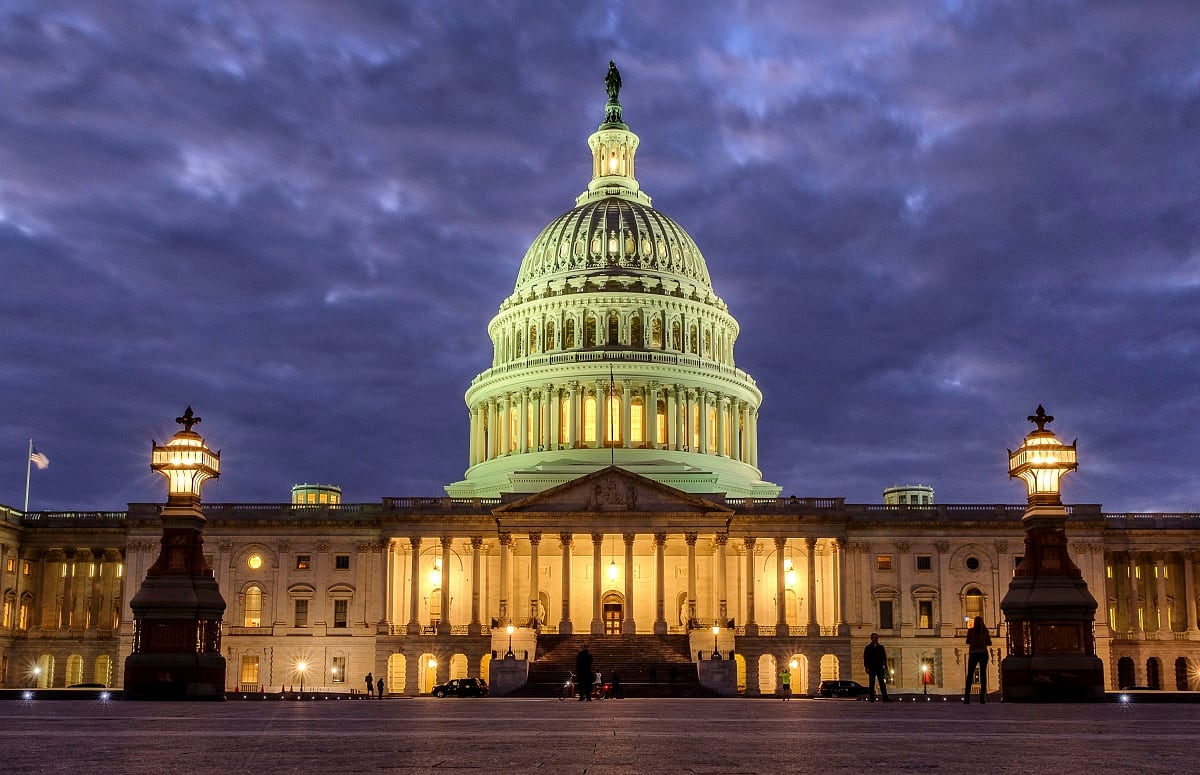
The U.S. Senate backed legislation on Tuesday directing President Donald Trump to halt U.S. military action against Iran, the latest rebuke of the Republican president from an increasingly restive Congress.
The Senate voted 50-48 in favor of the war powers resolution, which passed the House of Representatives early this month, reflecting growing concern even among some of Trump’s Republicans about the unpopular conflict that began on February 28 when the U.S. and Israel launched an attack on Iran.
It was the first time both chambers of Congress had passed a resolution directing a president to remove U.S. armed forces from hostilities since the War Powers Resolution, more commonly known as the War Powers Act, was enacted in 1973 .
While likely to remain largely symbolic, the vote was a setback for Trump, who until recently had enjoyed near-unanimous support from Republican members of Congress.
It also comes as the administration is expected to ask Congress to authorize tens of billions of dollars to pay for the war.
Trump’s Republicans hold slim majorities in both the Senate and House, but a few have broken with the president on a handful of issues ahead of mid-term elections in November, which will determine whether the party will retain control of Congress.
Some Republicans recently balked at Trump’s $1.8 billion “anti-weaponization” fund to compensate political allies he says have been targeted by federal authorities and stalled a $70 billion bill to fund his immigration crackdown.
Reuters/Ipsos poll results released on Tuesday showed that just one in four Americans believe the war against Iran was worth its costs , and a majority worry that a truce with Tehran is unlikely to last.
The Senate vote was largely along party lines, with four Republicans joining all but one Democrat in favor. Two Republican senators did not vote.
In a post late on Tuesday, Trump criticized the vote, calling it “poorly timed and meaningless” and accused those who voted in favor of providing “comfort” to Iran and making his job “more difficult”.
Constitutional uncertainty
Trump’s administration is working to negotiate a peace agreement with Iran. Support for the resolution in Congress is likely to put pressure on the president not to resume hostilities, something he has suggested he might do if negotiations falter.
Under the 1973 War Powers Act, the concurrent resolution - passed by both the House and Senate - does not go to the White House for Trump’s signature. In the 1973 law, Congress intended such resolutions as a mechanism for ending military operations.
But legal experts said the issue remains unsettled. No war powers resolution had previously passed both chambers of Congress and a 1983 Supreme Court ruling said such a measure must be submitted for a president’s signature or veto to have legal effect.
The White House has insisted the War Powers Act is not constitutional and thus not binding.
On Tuesday, a White House official said the Senate vote has no significance because the resolutions do not go to the president and have no force of law and the measure passed only because two Republicans were absent.
The official also said the resolution directs Trump to remove U.S. forces from hostilities, which the White House says were terminated with a ceasefire on April 7.
Experts say the constitutionality of the War Powers Act likely will be settled in the courts.
“The executive branch will likely ignore it on constitutional grounds, and it’s not clear who might have standing to sue to enforce it,” said Scott Anderson, a senior fellow at the Brookings Institution and senior editor of the online legal publication Lawfare.
Representative Gregory Meeks of New York, who sponsored the resolution in the House, said he viewed the resolution as binding and would pursue all legal avenues to ensure that the administration complies.
Democrats also noted that the U.S. Constitution gives Congress, not the president, the right to take the country to war. “Congress has to own this responsibility,” Democratic Senator Tim Kaine of Virginia said in a speech urging support for the measure.
Slim, but significant, support
The resolution had also passed the House with slim Republican support. The tally there was 215-208 with four Republicans and every Democrat voting in favor.
In the Senate, the four Republicans who voted for the measure were Susan Collins of Maine, Rand Paul of Kentucky, Bill Cassidy of Louisiana and Lisa Murkowski of Alaska. Democratic Senator John Fetterman of Pennsylvania voted against it.
Republicans Mitch McConnell of Kentucky and David McCormick of Pennsylvania missed the vote.
Democratic lawmakers have promised additional votes on war powers measures, saying they want to force Republicans to go on the record about the war.
Additionally, Congress has the right to review and vote on any peace agreement with Tehran if it affects Iran’s nuclear program, under a 2015 law passed as then-President Barack Obama negotiated a nuclear agreement with Iran and other world powers.
Senate Republican Majority Leader John Thune of South Dakota said on Tuesday he expected Congress would review and vote on an eventual Iran peace deal.
美国参议院周二支持一项法案,指示总统唐纳德·特朗普停止美国对伊朗的军事行动,这是日益不安的国会对这位共和党总统的最新一次谴责。
参议院以 50 比 48 的投票结果通过了战争权力决议,该决议已于本月初在众议院获得通过。这反映出,即使是特朗普的一些共和党人也越来越关注这场不得人心的冲突。这场冲突始于 2 月 28 日,当时美国和以色列对伊朗发动了袭击。
这是自 1973 年《战争权力决议》(更广为人知的名称是《战争权力法》)颁布以来,国会两院首次通过决议,指示总统将美国武装部队从敌对行动中撤出。
虽然这次投票可能主要只是象征性的,但对特朗普来说却是一次挫败,因为直到最近,他几乎都得到了国会共和党议员的一致支持。
与此同时,预计政府将要求国会授权拨款数百亿美元用于支付战争费用。
特朗普领导的共和党在参议院和众议院都仅占微弱多数,但在11月中期选举前夕,一些共和党人在少数几个问题上与总统决裂,而此次中期选举将决定该党是否能够继续控制国会。
最近,一些共和党人对特朗普提出的 18 亿美元“反武器化”基金表示反对,该基金旨在补偿他所说的被联邦当局针对的政治盟友,并阻挠了一项 700 亿美元的法案,该法案旨在资助他的移民打击行动。
路透社/益普索周二公布的民意调查结果显示,只有四分之一的美国人认为对伊朗的战争值得付出如此代价,而且大多数人担心与德黑兰的停火不太可能持久。
参议院的投票结果基本按党派划分,除一名民主党参议员外,其余四名共和党参议员均投了赞成票。另有两名共和党参议员未参与投票。
周二晚些时候,特朗普在一篇帖子中批评了这次投票,称其“时机不当且毫无意义”,并指责那些投赞成票的人向伊朗提供“安慰”,使他的工作“更加困难”。
宪法不确定性
特朗普政府正努力与伊朗达成和平协议。国会对该决议的支持可能会给总统施加压力,迫使其不要恢复敌对行动——此前他曾暗示,如果谈判破裂,他可能会这样做。
根据1973年《战争权力法》,由众议院和参议院共同通过的决议无需提交白宫由特朗普签署。1973年的这项法律旨在将此类决议作为结束军事行动的机制。
但法律专家表示,这个问题仍未有定论。此前没有任何一项战争权力决议在国会两院获得通过,而且1983年最高法院的一项裁决指出,此类决议必须提交总统签署或否决才能生效。
白宫坚称《战争权力法》不符合宪法,因此不具有约束力。
周二,一位白宫官员表示,参议院的投票毫无意义,因为这些决议不会提交给总统,也没有法律效力,而且该决议的通过仅仅是因为两名共和党人缺席。
该官员还表示,该决议指示特朗普将美军撤出敌对行动,而白宫则表示,敌对行动已于4月7日通过停火协议结束。
专家表示,《战争权力法》的合宪性很可能要通过法庭裁决来解决。
“行政部门可能会以违反宪法为由无视它,而且目前还不清楚谁有资格提起诉讼来强制执行它,”布鲁金斯学会高级研究员、在线法律出版物 Lawfare 的高级编辑斯科特·安德森说。
纽约州众议员格雷戈里·米克斯是该决议在众议院的发起人,他表示,他认为该决议具有约束力,并将采取一切法律途径确保政府遵守该决议。
民主党人还指出,美国宪法赋予国会而非总统发动战争的权力。“国会必须承担起这份责任,”弗吉尼亚州民主党参议员蒂姆·凯恩在一次呼吁支持该法案的演讲中说道。
虽小但意义重大的支持
该决议也在众议院获得通过,但共和党人的支持力度有限。最终投票结果为215票赞成,208票反对,其中四名共和党人和所有民主党人投了赞成票。
在参议院,投赞成票的四位共和党参议员分别是来自缅因州的苏珊·柯林斯、来自肯塔基州的兰德·保罗、来自路易斯安那州的比尔·卡西迪和来自阿拉斯加州的丽莎·穆尔科斯基。来自宾夕法尼亚州的民主党参议员约翰·费特曼投了反对票。
肯塔基州共和党参议员米奇·麦康奈尔和宾夕法尼亚州共和党参议员大卫·麦考密克缺席了投票。
民主党议员承诺将就战争权力法案进行更多投票,称他们希望迫使共和党人就战争问题公开表态。
此外,根据 2015 年通过的一项法律,如果与德黑兰达成的任何和平协议影响到伊朗的核计划,国会有权对其进行审查和投票。当时,美国总统巴拉克·奥巴马正与伊朗和其他世界大国谈判达成核协议。
南达科他州参议院共和党多数党领袖约翰·图恩周二表示,他预计国会将审查并投票表决最终的伊朗和平协议。