Frustrating Israel, fiber-optic killer drone technology has arrived in southern Lebanon令以色列感到沮丧的是,光纤杀手无人机技术已经抵达黎巴嫩南部。
Analysts believe that any military engaged in conflict will, in one form or another, encounter technologies first seen in Ukraine.
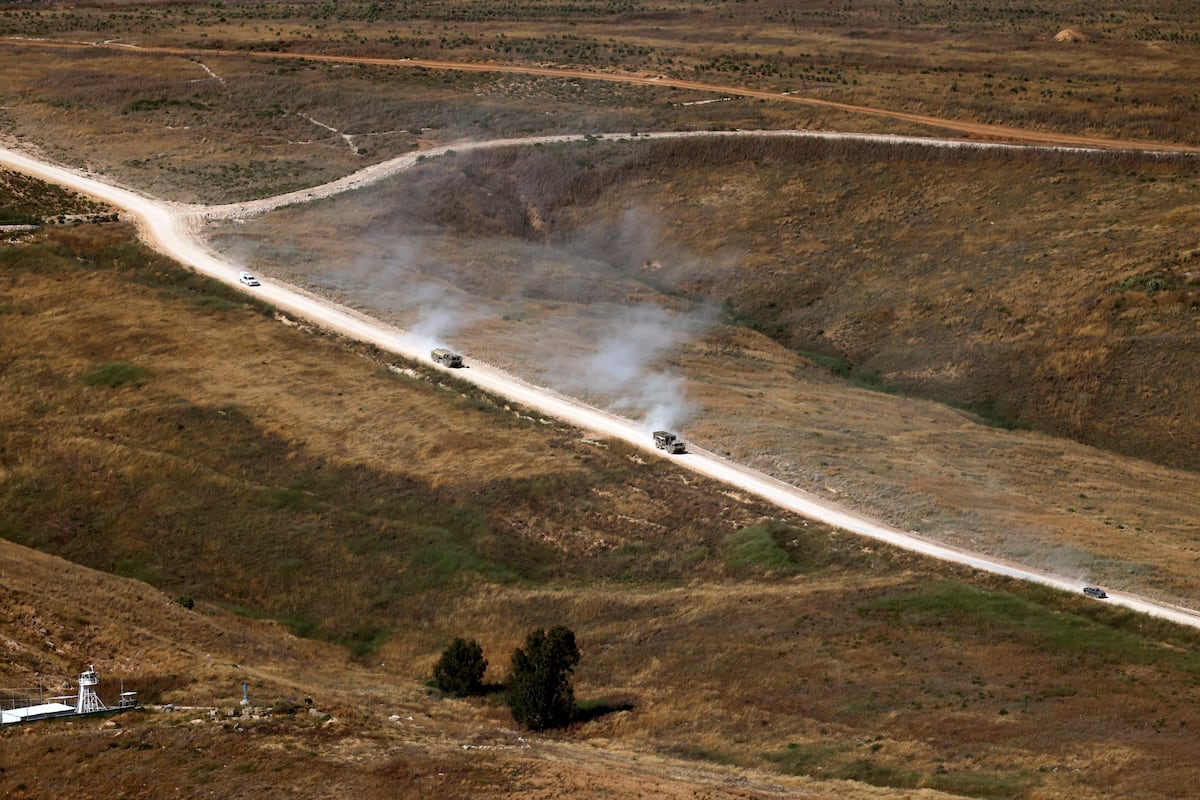
BEIRUT — Fiber-optic First Person View (FPV) drones operated by the Iran-backed armed group Hezbollah have changed the battlefield in southern Lebanon , inflicting losses and causing damage to Israeli forces occupying parts of the area.
The technology, a hallmark of the fighting in Ukraine , arrived here shortly after Hezbollah launched an attack against Israel on March 2, following the U.S.-Israeli war against Iran that began days prior, reigniting a new large-scale war.
The tethered drones rely on a spool of fiber-optic cable that maintains a direct link between the operator and the aircraft, making them immune to jamming and to other regular electronic warfare measures. In the context of southern Lebanon, their appearance represents a major shift in the nature of the conflict.
Hezbollah released the first video footage of a fiber-optic drone attack on an Israeli tank in late March 2026.
Asked about the technology, Hezbollah referred to Ali Jazini, a military expert close to the group, who said that the drones are estimated to cost between $300 and $400 each. The craft appear to be manufactured locally using 3D printing technology, relying on available electronic components commonly used for civilian purposes.
“Hezbollah is one of the most sophisticated non-state actors in the world. But when it comes to FPV’s drones, they’re learning themselves,” Samuel Bendett, a military analyst and Russia defense expert with the U.S.-based Center for Naval Analyses, said.
Fiber-optic FPV drones have quickly become a critical weapon, and the only real requirement is having experienced operators, as improper handling can easily damage the cable.
“But if you are in your 30s or 40s, you grew up with PCs and PlayStations and know how to maneuver a joystick,” said Luxembourg-based defense commentator Hamzé Attar.
As part of the growing gamification of warfare, simulation tools now allow operators to train across a wide range of scenarios, significantly shortening the learning curve, “ultimately enabling Hezbollah to also deploy night-vision-capable FPV systems”, he said.
Fiber-optic FPV drones represent a solution born out of necessity to evade electronic warfare and enable more precise strikes, after the group’s supply line from Syria was disrupted following the fall of Assad regime. These drones do not require runways or any specialized launch infrastructure, and they also allow the pilot to retain visual contact with the target until the final seconds before impact.
Intelligence about launch sites and a pilot’s location is significantly more difficult to obtain than intelligence on other drone activity, and actors are banking on that asymmetry.
In that sense, Israeli forces seem to have been caught flat-footed. “No one is more aware of technological and drone developments around the world than Israel,” said Bendett. “So it was rather surprising to see the Israeli military not fully accounting for the potential use of these drones.”
This created a battlefield advantage for Hezbollah, alongside its deep familiarity with the terrain and geography of southern Lebanon.
Knowledge transfer of technologies and tactics typically occurs through multiple channels, including observation of other battlefields, widely available open-source footage, and training, according to analysts. Some of the expertise developed in Russia may have been transferred to Iran, and passed on to Hezbollah.
“Just as Iran has supplied technology and training for Russia’s use of Shahed drones, it is likely that Iran may have received training from Russian forces on the use of certain types of tactical UAVs”, Bendett said.
Analysts believe that any military engaged in conflict will, in one form or another, encounter technologies first seen in Ukraine, driven in part by the trade-off between efficiency and cost.
“We are seeing some of that in conflicts across the Middle East, Africa, the Sahel, and South Asia. We are also seeing the use of drones by drug cartels in Latin America,” Bendett said.
Countermeasures against the flying warheads include nets, acoustic warning sensors, spinning cables, or electromagnetic systems intended to disrupt electronics, but such measures can also risk affecting a force’s own assets operating in the same area.
According to Jazini, solutions remain limited at present, even for larger armies.
Said Attar: “They changed the battlefield and will continue to be a destabilizing factor in warfare until a proper solution is found.”
Agnese Stracquadanio is a Middle East correspondent for Defense News. She has a background in writing and photojournalism, holds a master's degree in international relations, and previously worked for Reuters.
贝鲁特——由伊朗支持的武装组织真主党操控的光纤第一人称视角(FPV)无人机改变了黎巴嫩南部的战场格局,给占领该地区部分地区的以色列军队造成了损失和破坏。
这项技术是乌克兰战争的标志性技术,在真主党于 3 月 2 日对以色列发动袭击后不久便传入美国。此前几天,美国和以色列对伊朗发动了战争,重新点燃了一场大规模战争。
系留无人机依靠一卷光纤电缆维持操作员与无人机之间的直接连接,使其免受干扰和其他常规电子战手段的影响。在黎巴嫩南部,它们的出现标志着冲突性质的重大转变。
2026年3月下旬,真主党发布了第一段使用光纤无人机袭击以色列坦克的视频片段。
当被问及相关技术时,真主党援引了与该组织关系密切的军事专家阿里·贾齐尼的话。贾齐尼表示,每架无人机的成本估计在300至400美元之间。这些无人机似乎是利用3D打印技术在当地制造的,使用的电子元件也都是常见的民用电子元件。
“真主党是世界上最老练的非国家行为体之一。但就FPV的无人机而言,他们还在摸索学习,”美国海军分析中心军事分析师兼俄罗斯国防专家塞缪尔·本德特说。
光纤FPV无人机已迅速成为一种关键武器,而唯一真正的要求是拥有经验丰富的操作员,因为操作不当很容易损坏电缆。
“但如果你已经三四十岁了,你是在个人电脑和 PlayStation 的陪伴下长大的,你知道如何操控游戏手柄,”卢森堡的国防评论员哈姆泽·阿塔尔说道。
他表示,随着战争游戏化程度的不断提高,模拟工具现在允许操作人员在各种场景中进行训练,大大缩短了学习曲线,“最终使真主党也能部署具备夜视能力的FPV系统”。
在阿萨德政权垮台后,该组织从叙利亚的补给线被切断,为了规避电子战并实现更精确的打击,光纤FPV无人机应运而生。这些无人机无需跑道或任何专用发射设施,还能让飞行员在撞击前的最后一刻仍能与目标保持目视联系。
与其他无人机活动相关的情报相比,获取有关发射场和飞行员位置的情报要困难得多,而各方势力正利用这种不对称性。
从这个意义上讲,以色列军队似乎措手不及。“没有哪个国家比以色列更了解世界各地的技术和无人机发展,”本德特说。“因此,看到以色列军方没有充分考虑到这些无人机的潜在用途,着实令人惊讶。”
这使得真主党在战场上占据了优势,再加上真主党对黎巴嫩南部的地形和地理非常熟悉。
分析人士指出,技术和战术的知识转移通常通过多种渠道进行,包括观察其他战场、利用广泛公开的素材以及开展培训。俄罗斯发展出的一些专业知识可能已经转移到伊朗,并最终传给了真主党。
“正如伊朗向俄罗斯提供技术和培训以使用‘沙赫德’无人机一样,伊朗很可能也从俄罗斯军队那里获得了使用某些类型战术无人机的培训,”本德特说。
分析人士认为,任何卷入冲突的军队都会以某种形式遇到在乌克兰首次出现的技术,部分原因是效率和成本之间的权衡。
“我们在中东、非洲、萨赫勒地区和南亚的冲突中都看到了这种情况。我们也看到拉丁美洲的贩毒集团在使用无人机,”本德特说。
针对飞行弹头的反制措施包括网、声学告警传感器、旋转电缆或旨在干扰电子设备的电磁系统,但这些措施也可能影响在同一区域作战的部队自身的资产。
贾齐尼认为,即使对于规模更大的军队来说,目前的解决方案仍然有限。
阿塔尔说:“他们改变了战场格局,在找到合适的解决方案之前,他们将继续成为战争中的不稳定因素。”
阿格尼斯·斯特拉夸达尼奥是《防务新闻》的中东记者。她拥有写作和摄影新闻背景,持有国际关系硕士学位,此前曾在路透社工作。