Abandoned projects: No easy fix废弃项目:难以修复
Buying a home is a major financial commitment that many Malaysians save for for years. Between massive down payments and strict loan approvals, getting a mortgage can feel like an uphill battle.
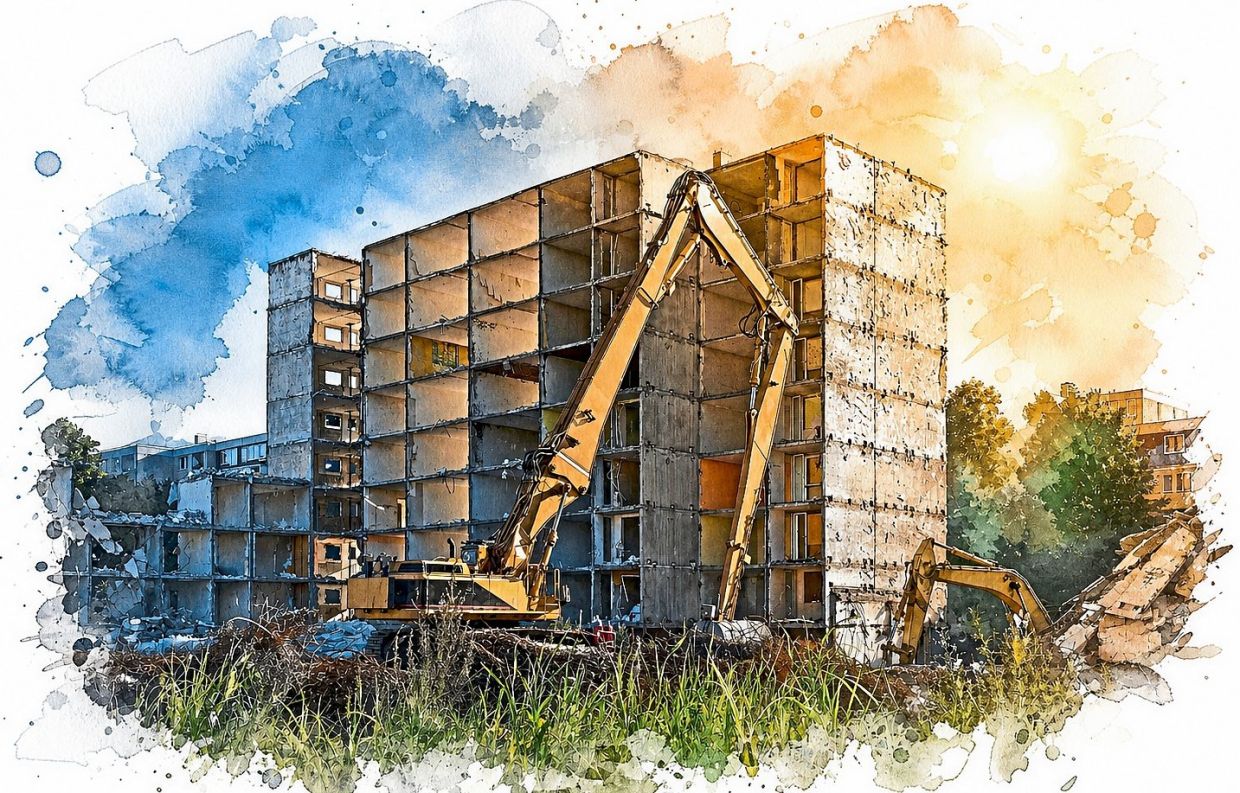
Buying a home is a major financial commitment that many Malaysians save for for years. Between massive down payments and strict loan approvals, getting a mortgage can feel like an uphill battle.
After signing the sale and purchase agreement (SPA), the next step is to get the keys and move in. But when that anticipation gets cut short and the promised completion date suddenly goes missing, the limbo strikes hard.
That is the case of buyers who see their investment sitting in deteriorating, half-built structures. Left in a pickle, some buyers end up trapped in a long-term financial commitment.
And then there is the feeling of constant uncertainty about when the unfinished structure will become the functional residence it was promised to be.
Abandoned properties have been a thorn in the Malaysian property market for decades.
The government has not been resting on its laurels, it aims to eliminate sick and abandoned housing projects by 2030, only four years away.
Attention is being placed on rehabilitating these troubled properties, together with bettering safeguards for homebuyers.
Housing and Local Government Minister Nga Kor Ming recently said the ministry remains committed to its goal.
Speaking in the Dewan Rakyat and also at the StarProperty Malaysia Developer Awards 2026 gala night, he announced that 1,726 private housing projects had been successfully revived as of August this year. This involved a total of 199,643 residential units with a whopping combined gross development value (GDV) of RM158.16bil.
According to his announcement, from the total number, Certificates of Completion and Compliance (CCCs) had been issued to 1,542 sick projects comprising 163,621 units overall.
Additionally, another 147 projects involving 29,900 units had been restored to normal construction progress.
A total of 37 abandoned projects consisting of 6,122 units had been revived or resolved using arrangements that benefit the homebuyers themselves.
So, what do these figures really tell us?
For one, the efforts of the Special Task Force on Sick and Abandoned Private Housing Projects that was set up in 2023 have received praise from industry players. Its work has helped bring many troubled developments back on track, although there is still some way to go.
Not every troubled housing project has found its way out of the woods. Based on figures released by the Housing and Local Government Ministry (KPKT), there were still 303 sick private housing projects in Peninsular Malaysia as of June 30 this year.
Together, they accounted for 43,288 residential units with a GDV of RM40.25bil.
Then there are the abandoned projects. Another 100 developments, comprising 27,998 units, were on the ministry’s list, with 14,961 homebuyers affected.
Selangor had the largest share with 41 projects, while Kelantan and Terengganu recorded 13 and 11, respectively.
Under KPKT’s own definition, a housing project is considered sick when construction progress falls more than 30% behind schedule or when the completion period stipulated in the SPA has expired.
An abandoned project, meanwhile, involves more serious circumstances such as prolonged inactivity at the construction site or financial and legal difficulties affecting the developer, though that is subject to the ministry’s confirmation.
For a sick project that has yet to be abandoned, timely intervention could be all it needs before the situation deteriorates.
But as always, it is not easy to spot a shaky development because delays come in many forms. The developer may have insufficient financing due to rising construction costs.
Other hurdles include contractor disputes and complicated land-ownership issues can spring up out of nowhere. Developers had also reported that regulatory approvals had slowed their project’s progress.
The price of waiting
For homebuyers, an unfinished property represents more than an investment that has yet to deliver its expected returns.
It may have been intended as a first family home, a place to settle down after marriage or a property purchased to provide greater financial security in later life.But these plans are put on hold when construction stalls.
Some buyers, even though their homes remain incomplete, may have to continue paying interest on amounts already disbursed by their banks.
Those currently renting may also have to continue coughing up for temporary accommodation, leaving them with financial commitments that were never supposed to overlap for such a prolonged period.
Unlike buyers of completed properties, buyers who purchase under-construction homes do not really have control over the development process once their financing arrangements and contractual commitments are set.
So this makes early intervention particularly important.
Bringing developments back to life
However, reviving an abandoned housing project depends on just how long construction has been suspended because it may require structural assessments, revised construction estimates and negotiations among several parties.
The financial viability of rehabilitation is another consideration. A developer taking over an unfinished project must assess whether the remaining construction work can be completed within a reasonable budget, particularly when the original selling prices do not accurately reflect the current material and labour costs.
The government, under Budget 2027, has focused on rehabilitating abandoned housing developments via incentives like the 100% stamp duty exemption on eligible loan agreements and instruments of transfer involving rescue contractors or developers and original homebuyers.
The exemption is scheduled to take effect from Jan 1, 2027, to Dec 31, 2030, subject to KPKT’s certification. The incentive aims to reduce transaction costs associated with rehabilitation.
Legal disputes can also make it harder to revive an unfinished development.
For example, take the 1,120-unit Residensi Wilayah Pangsapuri Salak Selatan project which Nga highlighted in his parliamentary response.
Classified as sick in August 2021, the development faced complications arising from legal proceedings between the developer and landowner that caused expensive delays.
Prevention better than cure
While rehabilitation provides a way forward for affected purchasers, preventing projects from becoming sick or abandoned in the first place would reduce the need for costly recoveries.
The government has introduced several measures to strengthen oversight of residential developments, including the Housing Integrated Management System, the Transforming and Empowering Data Usage in Housing platform and regular audits of housing development accounts.
These are meant to improve monitoring of construction progress and developers’ financial commitments, while providing greater visibility into potential problems before they become more serious.
Nga indicated that additional reforms, including an option to purchase mechanism and an order to build initiative, are being studied and tested to strengthen the housing delivery system.
With 2030 drawing closer, the government’s ambition to eliminate sick and abandoned housing projects will depend on more than resolving the existing backlog.
It will also require consistent monitoring, timely intervention and an industry capable of responding to emerging financial difficulties.
Already a subscriber? Log in
Get 20% OFF The Star Digital Access
Cancel anytime. Ad-free. Unlimited access with perks.
RM 13.90/month RM 11.12 /month
Billed as RM 11.12 for the 1st month, RM 13.90 thereafter.
RM 12.33/month RM 9.87 /month
Billed as RM 118.40 for the 1st year, RM 148 thereafter.
Thank you for your report!
Abandoned projects: No easy fix
Reshaping Malaysia’s built environment
Paws, permits and private property
买房是一项重大的财务决策,许多马来西亚人为此需要攒钱多年。从巨额首付到严格的贷款审批,获得抵押贷款往往如同一场艰苦的战斗。
签署买卖协议(SPA)后,下一步就是拿到钥匙搬进去。但如果这种期待落空,承诺的交房日期突然消失,那种悬而未决的状态就会让人难以承受。
这种情况指的是,一些买家眼睁睁地看着自己的投资项目沦为破败不堪、半成品建筑。进退两难的境地,一些买家最终被长期的财务负担所困。
此外,人们还始终感到不确定,这座未完工的建筑何时才能成为人们承诺的那座功能齐全的住宅。
几十年来,废弃房产一直是马来西亚房地产市场的一大难题。
政府并没有止步不前,而是计划在2030年之前(仅剩四年时间)消除破旧和废弃的住房项目。
目前正着力于修复这些问题房产,同时加强对购房者的保障。
房屋及地方政府部长倪可敏近日表示,该部仍致力于实现其目标。
他在国会下议院以及2026年《星报》马来西亚开发商大奖颁奖晚会上宣布,截至今年8月,已有1726个私人住宅项目成功重启。这些项目共涉及199643套住宅单元,总开发价值高达1581.6亿令吉。
根据他的声明,在所有问题项目中,已向 1,542 个问题项目颁发了竣工验收合格证书 (CCC),这些项目总共包含 163,621 个单元。
此外,另有 147 个项目(涉及 29,900 个单元)已恢复正常施工进度。
总共有 37 个废弃项目(共计 6,122 套住房)通过有利于购房者自身的安排得以恢复或解决。
那么,这些数据究竟告诉我们什么?
首先,2023年成立的“问题及废弃私人住宅项目特别工作组”的工作受到了业内人士的赞扬。该工作组的工作已帮助许多陷入困境的项目重回正轨,尽管仍有很长的路要走。
并非所有陷入困境的房屋项目都已摆脱困境。根据房屋及地方政府部(KPKT)公布的数据,截至今年6月30日,马来西亚半岛仍有303个陷入困境的私人房屋项目。
它们加起来共有 43,288 个住宅单元,总开发价值达 402.5 亿令吉。
此外,还有一些烂尾项目。另有100个开发项目,共计27998套住房,被列入该部名单,影响到14961名购房者。
雪兰莪州的项目数量最多,达到 41 个,吉兰丹州和登嘉楼州分别有 13 个和 11 个项目。
根据 KPKT 的定义,当住房建设进度落后计划 30% 以上,或者 SPA 中规定的竣工期限已过时,该住房项目即被视为“病态”项目。
与此同时,废弃项目则涉及更严重的情况,例如施工现场长期停工或开发商面临财务和法律困难,但这仍需经该部确认。
对于一个尚未被放弃的病态项目来说,及时干预或许就能阻止情况进一步恶化。
但一如既往,要发现开发项目存在的问题并不容易,因为延误的形式多种多样。开发商可能由于建筑成本上涨而资金不足。
其他障碍还包括承包商纠纷和复杂的土地所有权问题,这些问题可能随时出现。开发商还反映,监管审批也延缓了项目的进展。
等待的代价
对于购房者来说,未完工的房产不仅仅意味着一项尚未带来预期回报的投资。
这处房产原本可能是为家庭打造的第一套住房,或是婚后安家之所,又或是为了晚年生活提供更稳定的经济保障而购置的。但随着施工停滞,这些计划也只能搁置。
有些购房者即使房屋尚未完工,也可能不得不继续支付银行已发放款项的利息。
目前租房的人可能还不得不继续支付临时住宿费用,这让他们背负着原本不应该如此长时间重叠的财务负担。
与购买已竣工房产的买家不同,购买期房的买家一旦融资安排和合同承诺确定,就无法真正控制开发过程。
因此,早期干预尤为重要。
让开发项目重焕生机
然而,重启一个废弃的住房项目取决于施工暂停了多久,因为这可能需要结构评估、修改施工估算以及多方之间的谈判。
翻新工程的经济可行性是另一个需要考虑的因素。接手未完工项目的开发商必须评估剩余的建设工作是否能在合理的预算内完成,尤其是在原售价未能准确反映当前材料和人工成本的情况下。
根据 2027 年预算案,政府重点通过激励措施来改造废弃的住房开发项目,例如对符合条件的贷款协议和涉及救援承包商或开发商和原始购房者的转让文件免征 100% 的印花税。
该项豁免措施计划于2027年1月1日至2030年12月31日期间生效,但须经韩国土地及物业管理厅(KPKT)认证。该激励措施旨在降低与房屋修复相关的交易成本。
法律纠纷也会使未完工的开发项目更难重启。
以拥有 1,120 个单位的 Residensi Wilayah Pangsapuri Salak Selatan 项目为例,Nga 在国会回应中强调了这一项目。
该项目于 2021 年 8 月被列为病态项目,由于开发商和土地所有者之间的法律诉讼而导致工期延误,造成了高昂的代价。
预防胜于治疗
虽然修复工程为受影响的购房者提供了一条出路,但从一开始就防止项目陷入困境或被废弃,可以减少昂贵的补救措施。
政府已推出多项措施加强对住宅开发的监管,包括住房综合管理系统、住房数据利用转型赋能平台以及对住房开发账目的定期审计。
这些措施旨在加强对施工进度和开发商财务承诺的监控,同时在潜在问题变得更加严重之前,提高问题的可见性。
Nga表示,政府正在研究和测试包括购买选择权机制和按订单建造计划在内的其他改革措施,以加强住房供应体系。
随着 2030 年的临近,政府消除破败和废弃住房项目的雄心壮志,不仅仅取决于解决现有的积压问题。
这还需要持续的监测、及时的干预以及一个能够应对新出现的金融困难的行业。
已经是订阅用户?登录
订阅《星报》数字版,立享八折优惠
随时取消。无广告。无限畅享,更有专属福利。
每月 13.90 马币 每月 11.12 马币
第一个月收费 11.12 马币,之后每月收费 13.90 马币。
每月12.33令吉 每月9.87令吉
第一年收费 118.40 马币,之后每年收费 148 马币。
感谢您的报告!
废弃项目:难以修复
重塑马来西亚的建筑环境
爪印、许可证和私人财产