US Marine Corps opens new center to more rapidly get tech to operators美国海军陆战队开设新中心,旨在更快地向作战人员提供技术。
The Marine Corps is trying to speed up its modernization through a new Fusion Center and a capability-centric acquisition approach.
The U.S. Marine Corps has established a new office that brings together science, technology, requirements and acquisition professionals to help streamline how the service fields new technology.
The Fusion Center, located at Marine Corps Base Quantico, Virginia, allows for discussions about what technology is becoming mature enough to use versus what is useful to the Corps, leaders said Tuesday during a panel discussion at the Modern Day Marine conference in Washington, D.C.
Brig. Gen. David Walsh, who runs Marine Corps Systems Command, said he was told two years ago upon taking on the role to “pick up the pace” for acquisition.
“That involves getting closely involved with what’s going on over at the labs, over with our industry partners, and seeing where the cutting edge of technology is, prepping ourselves, getting ourselves ready to accept that technology as it matures,” he noted.
With this Fusion Center in place, the team is expected to ensure it’s using money to develop the technologies that will fill the most critical capability gaps. In addition, the group is to consider up front the doctrine, training, sustainment strategies and more that go along with any new technology.
Generally, Walsh said, the tech itself matures faster than other aspects — doctrine, organization, training, materiel, leadership and education, personnel, and facilities (DOTMLPF).
But in trying to achieve rapid acquisition, trade-offs are often required.
“You can get it to the Marines right now, get the first iteration out there, get the first unit equipped, and then training will come along” after the fact, he said. “Or you wait for all those same DOTMLPF considerations to be lined up, ready to go, and then you field” the new tech on a slower timeline.
But, he noted, the Fusion Center gives the acquisition community an improved look at what technology may be on the way in order to reduce trade-offs, especially if officials can start considering training or sustainment implications while researchers mature the tech.
Stephen Bowdren, the service’s program executive officer for land systems, said by peeking down the science and technology pipeline, his team can consider new technology for incorporation into existing programs via an engineering change proposal or as part of a tech refresh effort. Alternatively, he added, his office would consider what technology might require standing up a new program of record.
While the Fusion Center is meant to improve communication among the various communities, the Corps is also trying move along acquisition efforts faster and become more agile by focusing on acquiring capabilities rather than specific hardware solutions.
Bowdren also noted the new office could benefit how the service manages various portfolios.
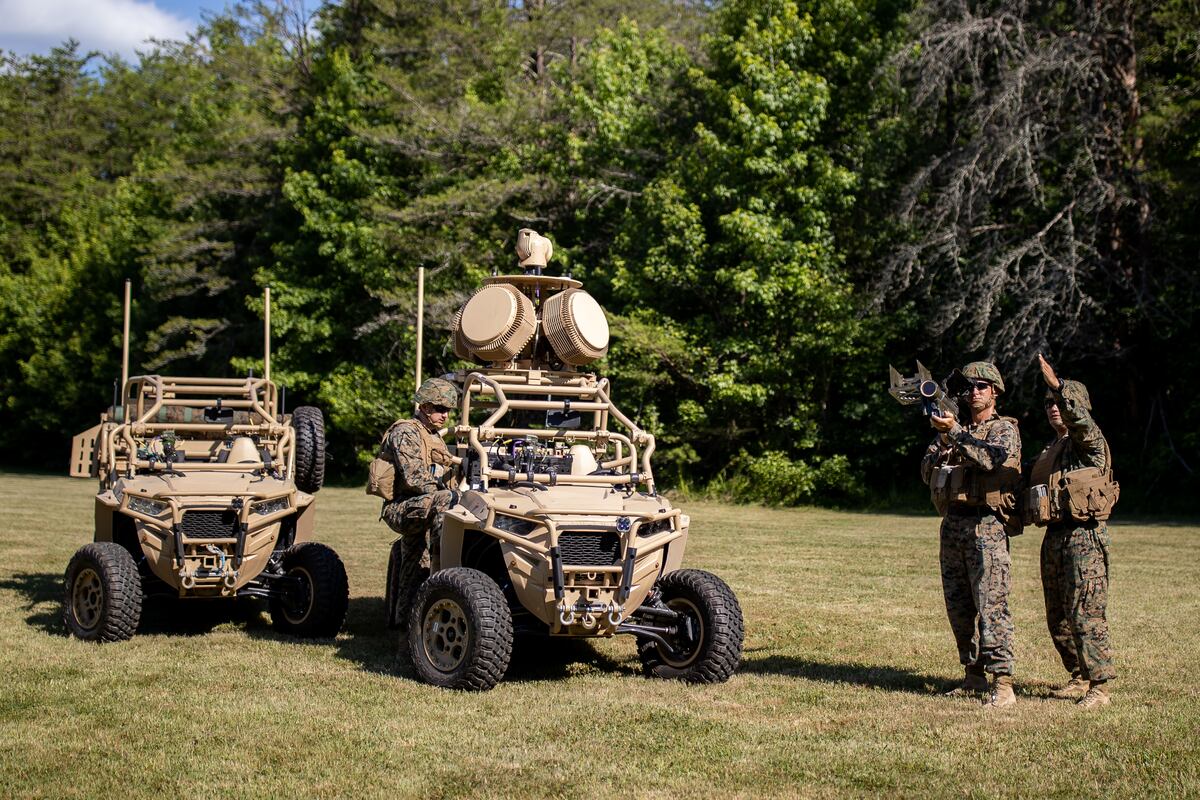
For example, the Marine Corps needs a ground-based air defense system that includes sensors, target identification tools, and kinetic and non-kinetic effectors. But different Marine Corps formations in different geographies might have slightly different air defense needs, meaning Bowdren can rely on the Fusion Center to help him create a family of systems that collectively cover all the service’s needs within this broad capability set.
Megan Eckstein is the naval warfare reporter at Defense News. She has covered military news since 2009, with a focus on U.S. Navy and Marine Corps operations, acquisition programs and budgets. She has reported from four geographic fleets and is happiest when she’s filing stories from a ship. Megan is a University of Maryland alumna.
美国海军陆战队成立了一个新的办公室,汇集了科学、技术、需求和采购方面的专业人员,以帮助简化该部队部署新技术的方式。
位于弗吉尼亚州匡蒂科海军陆战队基地的融合中心,旨在促进各方探讨哪些技术已经足够成熟可以应用,以及哪些技术对海军陆战队真正有用。领导人们周二在华盛顿特区举行的“现代海军陆战队”会议的小组讨论会上表示。
海军陆战队系统司令部司令大卫·沃尔什准将表示,两年前他上任时就被告知要“加快”采购速度。
他指出:“这意味着要密切参与实验室和行业合作伙伴的各项工作,了解技术的前沿发展方向,做好准备,迎接技术的成熟。”
有了这个融合中心,团队需要确保资金用于开发能够填补最关键能力缺口的技术。此外,该团队还需预先考虑与任何新技术相关的理论、训练、保障策略等诸多方面。
沃尔什表示,一般来说,技术本身的成熟速度比其他方面更快——理论、组织、训练、物资、领导和教育、人员和设施(DOTMLPF)。
但要想快速获取资源,往往需要做出一些权衡。
他说:“你可以现在就把这套系统交付给海军陆战队,推出第一版,给第一个单位配备装备,然后训练可以随后进行。” “或者你可以等到所有DOTMLPF(国防部装备、战术、技术和流程)方面的考量都落实到位,一切就绪后再部署”这项新技术,但那样进度会慢一些。
但他指出,融合中心让采购界更好地了解未来可能出现的技术,从而减少权衡取舍,尤其是在研究人员完善技术的同时,官员们可以开始考虑培训或维护方面的影响。
美国海军陆战队系统项目执行官斯蒂芬·鲍德伦表示,通过密切关注科技发展进程,他的团队可以考虑将新技术纳入现有项目,具体方式包括提交工程变更提案或进行技术更新。他还补充说,他的办公室也会考虑哪些技术可能需要设立新的正式项目。
虽然融合中心旨在改善各个社区之间的沟通,但海军陆战队也在努力加快采购工作,并通过专注于获取能力而不是具体的硬件解决方案来变得更加灵活。
鲍德伦还指出,新办公室可能会有利于该部门管理各种投资组合的方式。
例如,海军陆战队需要一套地面防空系统,其中包括传感器、目标识别工具以及动能和非动能效应器。但不同地理位置的海军陆战队不同部队的防空需求可能略有不同,这意味着鲍德伦可以依靠融合中心来帮助他构建一套系统,从而在这一广泛的能力范围内全面满足海军陆战队的所有需求。
梅根·埃克斯坦是《防务新闻》的海军作战记者。自2009年以来,她一直从事军事新闻报道,主要关注美国海军和海军陆战队的行动、采购项目和预算。她曾报道过四个不同地理区域的舰队,最喜欢在舰艇上进行新闻报道。梅根毕业于马里兰大学。