Canada-led brigade in Latvia moves beyond tripwire role, commander says指挥官称,加拿大领导的驻拉脱维亚旅已不再扮演绊线角色。
“Right now I have a brigade, there is nothing on the other side of the border that can take out this brigade,” the unit commander told Defense News.
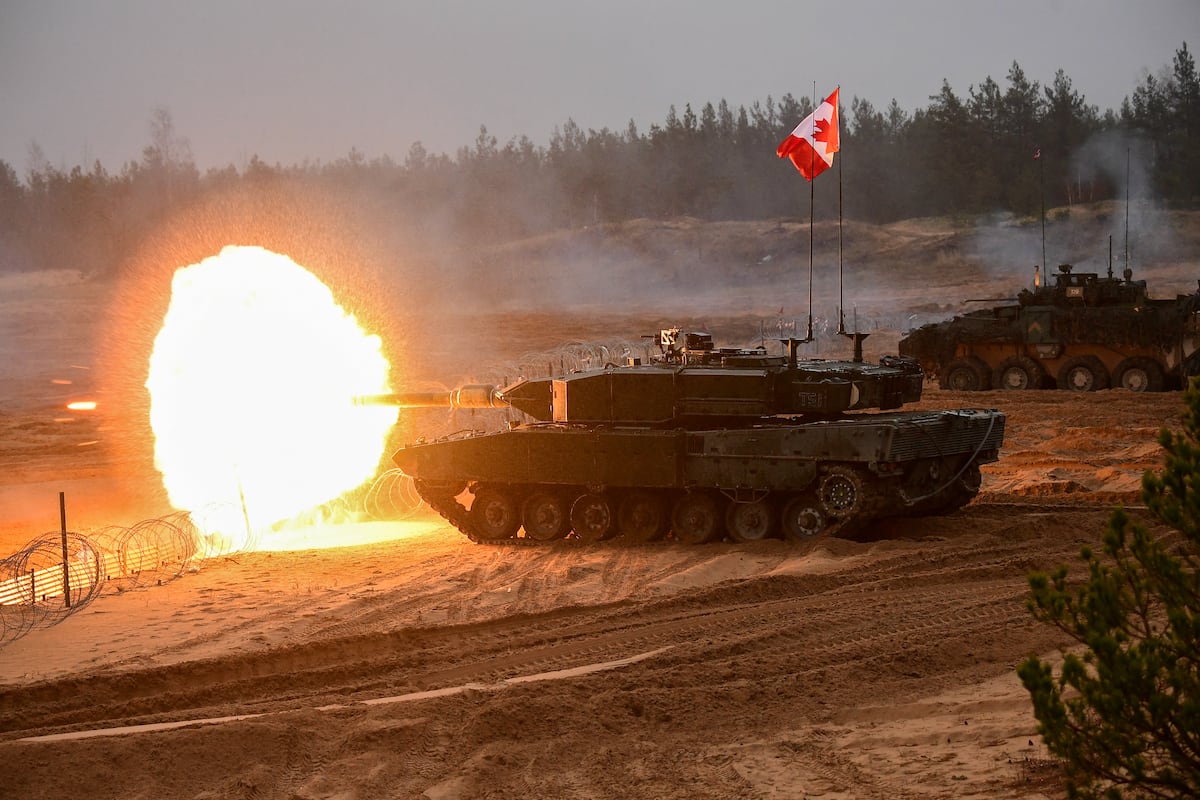
RIGA, Latvia — The Canada-led NATO brigade in Latvia has moved beyond its original “tripwire” deterrence posture and is now focused on mounting a credible defense of the Baltic country bordering Russia, according to its commander, Col. Kris Reeves.
Reeves said the shift towards what he described as “tactical credibility” has meant establishing forward locations and stationing troops near Latvia’s eastern border, in the terrain where they would actually fight in the event of a conflict, the Canadian commander told Defense News.
“Right now I have a brigade, there is nothing on the other side of the border that can take out this brigade,” Reeves said in an interview at the Sēlija training range in central Latvia this week. “And when there’s something that can take out this brigade, NATO’s going to put more forces here, I’m confident in that.”
Canada has about 2,000 troops in Latvia, and its contribution to the NATO Multinational Brigade there represents its largest overseas deployment. Alliance doctrine on the eastern flank defended by Canadian troops has shifted following Russia’s invasion of Ukraine, and while the tripwire logic still exists, it’s now backed militarily by forces expected to actively hold ground rather than just trigger a response and await reinforcements.
NATO agreed in 2016 to establish multinational battlegroups in the Baltic countries and Poland as part of what it called enhanced forward presence, with Canada the framework nation for Latvia. After the invasion of Ukraine, Canada in June 2022 agreed to scale up the battlegroup to a brigade.
From a single garrison in a training area, the Canadian forces are now based in four different areas, with forward locations along the eastern flank providing familiarity with the terrain and improved readiness, according to Reeves.
“And even more important than that, the local population out there is now beginning to trust us and understand us, because they’re going to support us when we fight,” Reeves said. “We are, to use your term, still the tripwire force, but we’ll be even more effective by being out there quicker and understanding the terrain out there even more, and having more support.”
Canadian Army Col. Kris Reeves, commander of the NATO Multinational Brigade in Latvia, speaks with NATO officials at the Sēlija training area in Latvia on May 12, 2026. (Rudy Ruitenberg/staff)
The brigade operates under NATO’s Multinational Division North alongside Latvia’s Mechanized Infantry Brigade.
“I want to see, and I see, signs of the Canadian Army understanding NATO better,” Reeves said. “We haven’t operated in an operational theater with NATO since Afghanistan. Now we’re here, working again in an operational theater with our NATO partners, and we can see where we’re interoperable and where we’re not, and we’re working on that.”
With the brigade actively operating and training every single day, Reeves said soldiers bring lessons identified in Ukraine back to Canada and other NATO countries. “When soldiers leave an operational theater, one of their first tasks is to teach. So now they’re teaching, after having six months or a year of experience trying to learn from the Ukrainian theater.”
The multinational brigade includes troops from 14 nations, and while Reeves said the goal is to have fewer nations at the unit level “because it’s very hard to be perfectly seamlessly interoperable at the lowest level,” he said there’s value in NATO diversity at the brigade headquarters, “because we see problems differently and we see different solutions.”
Lt. Col. Dan Richel, the Canadian deputy commander of Latvia’s Mechanized Infantry Brigade, likewise highlighted the value of different perspectives, in a separate interview. He said the six Canadians embedded in the national formation “definitely learn just as much from the Latvian side that we’re able to bring back home as well.”
He said that the approach of the Latvian brigade as a relatively small formation tends to be practical and time-efficient, able to integrate new equipment and techniques “without worrying about waiting for somebody else to develop that doctrine.”
“The Latvians are definitely very proactive and take a lot of initiative,” Richel said.
Rudy Ruitenberg is a Europe correspondent for Defense News. He started his career at Bloomberg News and has experience reporting on technology, commodity markets and politics.
拉脱维亚里加——据其指挥官克里斯·里夫斯上校称,由加拿大领导的驻拉脱维亚北约旅已超越了最初的“绊线”威慑姿态,现在专注于对这个与俄罗斯接壤的波罗的海国家进行可信的防御。
里夫斯告诉《防务新闻》,他所说的向“战术可信度”的转变意味着在拉脱维亚东部边境附近建立前沿阵地并驻扎部队,在发生冲突时他们将实际作战的地形中部署部队。
“目前我麾下有一个旅,边境另一侧没有任何力量能够击败这个旅,”里夫斯本周在拉脱维亚中部塞利亚训练场接受采访时表示。“一旦出现能够击败这个旅的力量,北约肯定会增派兵力,对此我深信不疑。”
加拿大在拉脱维亚驻扎着约2000名士兵,其向北约驻拉脱维亚多国旅的部署是其规模最大的海外部署。在俄罗斯入侵乌克兰后,由加拿大军队守卫的北约东翼的战略发生了转变。虽然“绊线”战略依然存在,但如今的军事支持力量不再仅仅是为了触发反应而等待增援,而是会积极坚守阵地。
北约于2016年同意在波罗的海国家和波兰组建多国战斗群,作为其所谓的“增强前沿部署”的一部分,加拿大是拉脱维亚的框架国。在乌克兰战争爆发后,加拿大于2022年6月同意将该战斗群扩编为旅级单位。
里夫斯表示,加拿大军队最初在一个训练区驻扎,现在已扩展到四个不同的地区,东翼的前沿阵地有助于熟悉地形并提高战备水平。
“更重要的是,当地民众现在开始信任我们、理解我们,因为他们会在战斗中支持我们,”里夫斯说。“用你们的话来说,我们仍然是‘绊线部队’,但通过更快地抵达现场、更深入地了解当地地形以及获得更多支持,我们将更加有效。”
2026年5月12日,加拿大陆军上校克里斯·里夫斯(Kris Reeves)在拉脱维亚塞利亚训练区与北约官员交谈。里夫斯是北约驻拉脱维亚多国旅的指挥官。(鲁迪·鲁伊滕贝格/工作人员摄)
该旅隶属于北约北方多国师,与拉脱维亚机械化步兵旅并肩作战。
里夫斯说:“我希望看到,而且也确实看到了,加拿大军队对北约的理解正在加深。自阿富汗战争以来,我们还没有与北约在同一作战区域进行过联合行动。现在我们再次与北约伙伴在作战区域并肩作战,我们可以清楚地看到彼此的协同作战能力,以及哪些方面存在不足,我们正在努力改进。”
里夫斯说,该旅每天都在积极开展行动和训练,士兵们会将从乌克兰汲取的经验教训带回加拿大和其他北约国家。“士兵们离开作战区域后,首要任务之一就是进行教学。所以现在,他们在积累了六个月或一年从乌克兰战场汲取的经验之后,正在将所学传授给他人。”
这支多国旅由来自 14 个国家的部队组成。里夫斯表示,虽然目标是在单位层面减少成员国数量,“因为在最低层级实现完全无缝的互操作性非常困难”,但他表示,北约在旅部层面的多样性是有价值的,“因为我们看待问题的方式不同,我们也看到了不同的解决方案”。
加拿大驻拉脱维亚机械化步兵旅副旅长丹·里歇尔中校在另一次采访中也强调了不同视角的重要性。他说,六名随拉脱维亚部队部署的加拿大军人“肯定能从拉脱维亚方面学到很多东西,这些知识我们也能带回加拿大”。
他表示,拉脱维亚旅作为一个相对较小的部队,其做法往往务实高效,能够整合新的装备和技术,“而不必担心等待其他人发展出相应的理论”。
“拉脱维亚人确实非常积极主动,”里歇尔说。
鲁迪·鲁伊滕贝格是《防务新闻》的欧洲记者。他的职业生涯始于彭博新闻社,拥有报道科技、大宗商品市场和政治方面的经验。