Beware of malware targeting computer users via hijacked WhatsApp accounts警惕通过被劫持的 WhatsApp 帐户攻击计算机用户的恶意软件
WhatsApp malware scam targets computer users via hijacked accounts, with police warning of stolen data and fake work file attachments. Read more at straitstimes.com.
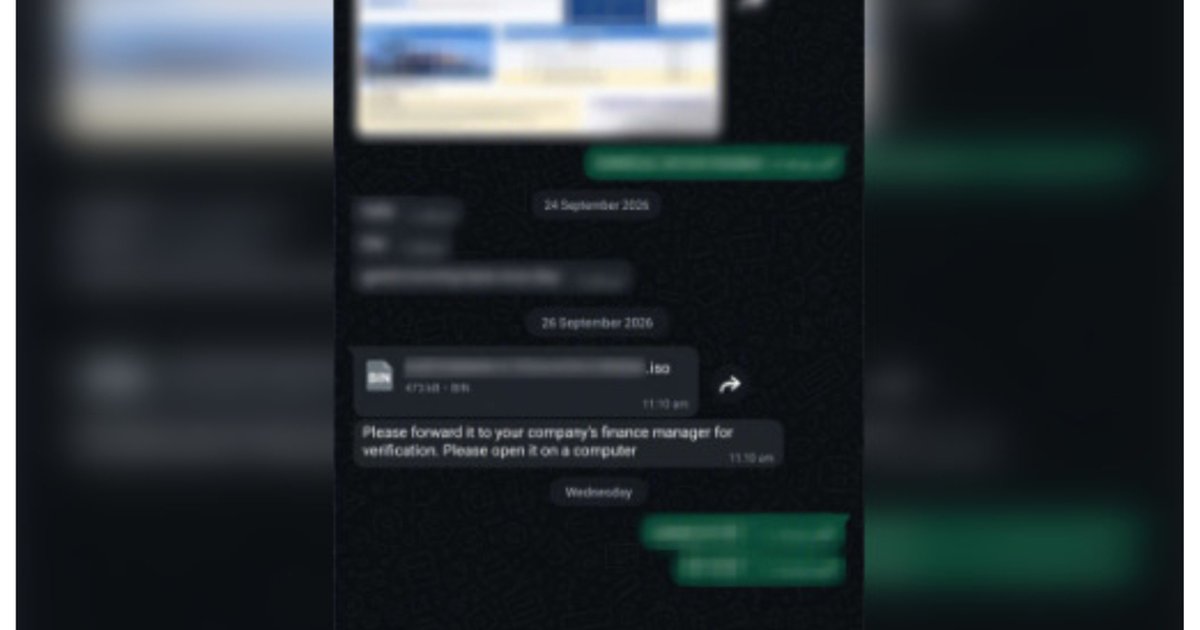
Victims would receive messages from compromised WhatsApp accounts belonging to friends, colleagues or bosses.
PHOTO: SINGAPORE POLICE FORCE
Published Nov 03, 2026, 10:36 AM
Updated Nov 03, 2026, 10:36 AM
Police warned of a WhatsApp scam that uses hacked friends' and bosses' accounts to send fake work files to computer users. Victims are told to open attachments on WhatsApp Desktop or Web, which installs malware.
The malware can record keystrokes, take screenshots, and let hackers control computers. It can also take over WhatsApp accounts and send the same scam to other contacts or ask for money.
No money loss has been reported yet, but victims risk stolen personal data. Police urged people to use two-step verification, check linked devices, install ScamShield, and verify unexpected files first.
SINGAPORE – Be on the alert for scams circulating on WhatsApp where computers are targeted via hijacked accounts belonging to friends, colleagues and bosses.
While no money has been reported lost to the scam yet, victims risk having their personal information stolen, the police warned in a statement on Nov 2.
In this scam variant, victims would receive seemingly legitimate or work-related file attachments – under file names such as “Invoice 2026-09-15.iso”, “Statement of Account_54d3.zip” or “Salary Revision.rar” – from contacts whose WhatsApp accounts had already been hacked.
The recipients would be told to open the files on a computer, typically under the pretext of reviewing work documents, or asked to forward them to finance managers.
Those using WhatsApp Desktop or Whatsapp Web who fell for the ruse would end up downloading the malware directly onto their computers.
Once the file was opened, the malicious software would be installed in the background and be able to record keystrokes, take screenshots, as well as communicate with external hacker servers, essentially giving fraudsters the ability to control the victims’ computers.
These cyber attackers would then take over the victims’ WhatsApp accounts to distribute the same malware to other contacts or ask for money under the guise of borrowing funds.
Victims would only discover the breach after noticing abnormal behaviour on their device, or getting alerts from their WhatsApp contacts who received suspicious messages from them, the police said.
Scams remain the dominant crime type in Singapore, with $410.6 million lost to these ruses in the first half of 2026 alone.
Eight in 10 victims are still being manipulated into handing funds over to scammers, with seniors aged 65 and above suffering the highest losses on average across all age groups, police statistics show.
The public is urged by the police to enable two-step verification on WhatsApp, routinely disconnect unrecognised devices under “Linked Devices”, install ScamShield, and use bank “Money Lock” features.
Refrain from opening unexpected attachments, even from known contacts, without verifying the request via a phone call or separate channel first, the police said.
Anyone with doubts or scam-related queries should call the 24/7 ScamShield Helpline on 1799.
For more information on scams, go to www.scamshield.gov.sg
Internet crimes and scams
受害者会收到来自朋友、同事或老板被盗用的 WhatsApp 帐户的消息。
照片:新加坡警察部队
发布于 2026 年 11 月 3 日上午 10:36
更新于2026年11月3日上午10:36
警方警告称,一种利用WhatsApp进行诈骗的分子会盗用朋友或老板的账户,向电脑用户发送虚假工作文件。受害者被诱导在WhatsApp桌面版或网页版上打开附件,从而安装恶意软件。
这种恶意软件可以记录键盘输入、截取屏幕截图,并让黑客控制电脑。它还可以接管 WhatsApp 账户,向其他联系人发送同样的诈骗信息或索要钱财。
目前尚未收到金钱损失报告,但受害者面临个人数据被盗的风险。警方敦促民众启用双重验证、检查已关联的设备、安装 ScamShield 防诈骗软件,并先验证来路不明的文件。
新加坡——请警惕WhatsApp上流传的诈骗,不法分子通过劫持朋友、同事和老板的账户来攻击电脑。
虽然目前还没有人因这起骗局蒙受金钱损失,但警方在 11 月 2 日的一份声明中警告说,受害者的个人信息可能会被盗。
在这种诈骗变种中,受害者会收到看似合法或与工作相关的附件——文件名诸如“Invoice 2026-09-15.iso”、“Statement of Account_54d3.zip”或“Salary Revision.rar”——这些附件来自已被黑客入侵的 WhatsApp 帐户的联系人。
收件人通常会被告知在电脑上打开文件,借口是查看工作文件,或者被要求将文件转发给财务经理。
使用 WhatsApp 桌面版或 WhatsApp 网页版的用户如果中了圈套,最终会将恶意软件直接下载到他们的电脑上。
文件一旦打开,恶意软件就会在后台安装,并能够记录键盘输入、截取屏幕截图,以及与外部黑客服务器通信,从而使诈骗者能够控制受害者的计算机。
这些网络攻击者随后会接管受害者的 WhatsApp 帐户,将同样的恶意软件传播给其他联系人,或者以借钱为幌子索要钱财。
警方表示,受害者只有在注意到设备上的异常行为,或者收到 WhatsApp 联系人的警报(称收到了可疑消息)后,才会发现数据泄露。
诈骗仍然是新加坡最主要的犯罪类型,仅在 2026 年上半年,因这些骗局造成的损失就高达 4.106 亿美元。
警方统计数据显示,十分之八的受害者仍然被骗子欺骗,将钱财交给骗子,其中 65 岁及以上的老年人在所有年龄组中平均损失最大。
警方敦促公众在 WhatsApp 上启用两步验证,定期断开“关联设备”下未识别的设备,安装 ScamShield,并使用银行的“资金锁定”功能。
警方表示,即使是来自已知联系人的附件,也不要在没有先通过电话或其他渠道核实请求的情况下打开。
如有任何疑问或与诈骗相关的问题,请拨打 24/7 ScamShield 热线 1799。
如需了解更多有关诈骗的信息,请访问 www.scamshield.gov.sg
网络犯罪和诈骗