No need for more PM2.5 forecasts as too many indicators may confuse public: Grace Fu傅海燕:无需发布更多PM2.5预测数据,指标过多可能令公众困惑。
The minister for sustainability and the environment also answered parliamentary questions on mask distribution and indoor air quality.
The minister for sustainability and the environment also answered parliamentary questions on mask distribution and indoor air quality.
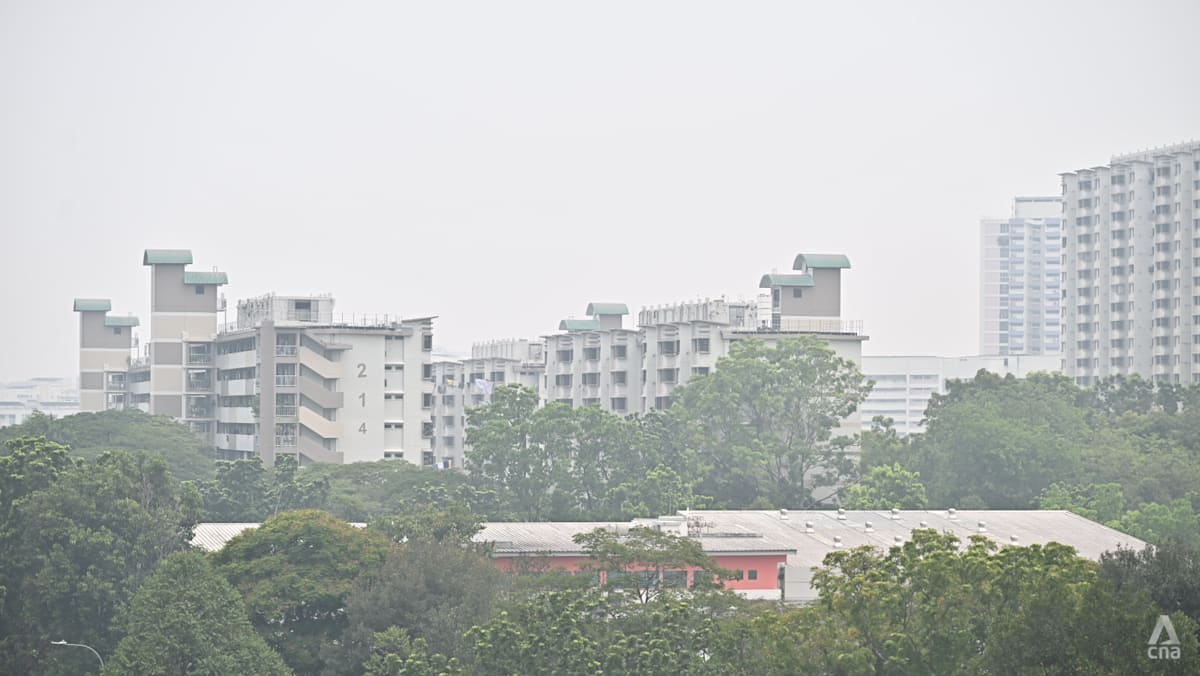
View of the haze in the Boon Lay neighbourhood on Oct 12, 2026. (Photo: CNA/Raydza Rahman)
This audio is generated by an AI tool.
SINGAPORE: Singapore does not need additional PM2.5 forecasts as too many indicators may confuse the public, Minister for Sustainability and the Environment Grace Fu said on Tuesday (Nov 3).
She was responding to questions from Members of Parliament on air quality readings, N95 masks and other haze issues. The questions followed more than a week of unhealthy air quality in Singapore, sending residents scrambling for masks and air purifiers.
Ms Fu said the 24-hour Pollutant Standards Index (PSI) and hourly readings of fine particulate matter (PM2.5) have worked well in guiding decisions.
“We don’t think there is a need to include 12-hour, 24-hour or 48-hour PM2.5 forecasts as having too many indicators may complicate our public messages,” she said.
MP Fadli Fawzi (WP-Aljunied) had asked why the National Environment Agency (NEA) cannot provide such forecasts, which are similar to those issued by the US National Weather Service.
Ms Fu said the daily PSI forecast helps the public plan activities for the next day, while hourly PM2.5 readings can guide immediate outdoor activities. NEA draws region-specific hourly readings from its 23 air quality monitoring stations across the country.
Close to 30 per cent of eligible Singaporeans had collected their masks as of Oct 29, Ms Fu said.
Masks were distributed in two rounds as haze conditions worsened. The second round was open to all Singaporeans aged 60 and above, instead of only those 67 and above, in response to public feedback.
Pregnant women, children aged seven to 16 and holders of Community Health Assist Scheme (CHAS) Orange and Blue cards were also eligible, with the government prioritising those who are more vulnerable to the health effects of haze and those who may have limited means.
N95 or equivalent masks are generally not required for short periods outdoors, such as commuting, Ms Fu said, adding that the most important first response is to reduce prolonged or strenuous outdoor activity.
When activating mask distribution, the government weighs the severity and expected duration of the haze, the prevailing public-health risk and the needs of vulnerable groups, she said.
“In the case of haze, there is no risk of people-to-people transmission which would have required all Singaporeans to be masked up as soon as possible,” she said.
Ms Fu said the government will continue to review the scale and eligibility of distribution as conditions evolve, and is prepared to expand support if necessary.
MANAGING INDOOR AIR QUALITY
On indoor air quality, Ms Fu said this is managed through standards, guidelines, advisories and sector-specific measures by building owners and relevant agencies.
“Ensuring good indoor quality is important during haze periods, particularly in facilities serving vulnerable groups,” she said.
Larger air-conditioned buildings fall under the Code of Practice for Indoor Air Quality for Air-Conditioned Buildings, which sets recommended indoor air-quality parameters and measures, including enhanced air filtration during haze episodes.
Schools, preschools, healthcare institutions and community care providers also have sector-specific haze measures. These include closing windows, deploying air purifiers where needed, adjusting outdoor activities and monitoring vulnerable individuals.
Employers of personnel supporting essential services should implement business-continuity and workplace measures according to operational needs and severity of the haze, she said.
CNA Games Guess Word Crack the word, one row at a time Buzzword Create words using the given letters Mini Sudoku Tiny puzzle, mighty brain teaser Mini Crossword Small grid, big challenge Word Search Spot as many words as you can Show More Show Less
Get our pick of top stories and thought-provoking articles in your inbox
Stay updated with notifications for breaking news and our best stories
Join our channel for the top reads for the day on your preferred chat app
可持续发展和环境部长还回答了议会关于口罩分发和室内空气质量的问题。
2026年10月12日,文礼地区笼罩在雾霾之中。(图片:CNA/Raydza Rahman)
这段音频由人工智能工具生成。
新加坡:新加坡永续发展及环境部长傅海燕周二(11月3日)表示,新加坡不需要额外的PM2.5预测,因为过多的指标可能会让公众感到困惑。
她当时正在回答国会议员们关于空气质量读数、N95口罩和其他雾霾问题的提问。此前,新加坡的空气质量已持续一周多处于不健康状态,导致居民们争相抢购口罩和空气净化器。
傅女士表示,24 小时污染物标准指数 (PSI) 和每小时细颗粒物 (PM2.5) 读数在指导决策方面发挥了良好的作用。
“我们认为没有必要纳入 12 小时、24 小时或 48 小时 PM2.5 预测,因为指标过多可能会使我们的公共信息变得复杂,”她说。
议员法德利·法齐(工人党-阿裕尼)曾质问,为什么国家环境局(NEA)不能提供与美国国家气象局发布的预报类似的预报。
傅女士表示,每日空气污染指数(PSI)预报有助于公众规划次日活动,而每小时的PM2.5读数则可以指导人们进行即时的户外活动。国家环境局(NEA)从其遍布全国的23个空气质量监测站获取各区域的每小时读数。
傅女士表示,截至10月29日,近30%符合资格的新加坡人已经领取了口罩。
随着雾霾加剧,口罩分两轮发放。第二轮发放对象扩大到所有60岁及以上的新加坡公民,而非此前仅限67岁及以上人士,这是根据公众反馈而做出的决定。
孕妇、7 至 16 岁的儿童以及持有社区健康援助计划 (CHAS) 橙色和蓝色卡的人员也符合资格,政府优先考虑那些更容易受到雾霾健康影响的人以及那些经济能力有限的人。
傅女士表示,短时间户外活动(例如通勤)通常不需要佩戴 N95 或同等口罩,并补充说,最重要的第一反应是减少长时间或剧烈的户外活动。
她表示,政府在启动口罩发放工作时,会权衡雾霾的严重程度和预计持续时间、当前的公共卫生风险以及弱势群体的需求。
“就雾霾而言,不存在人传人的风险,因此不需要所有新加坡人尽快戴上口罩,”她说。
傅女士表示,政府将根据情况变化继续检讨援助的规模和资格,并准备在必要时扩大援助范围。
室内空气质量管理
关于室内空气质量,傅女士表示,这是由建筑物业主和相关机构通过标准、指南、建议和行业特定措施来管理的。
“在雾霾期间,确保良好的室内空气质量非常重要,尤其是在服务于弱势群体的场所,”她说。
较大的空调建筑适用《空调建筑室内空气质量规范》,该规范规定了推荐的室内空气质量参数和措施,包括在雾霾期间加强空气过滤。
学校、幼儿园、医疗机构和社区护理机构也针对雾霾采取了相应的应对措施。这些措施包括关闭门窗、在需要的地方部署空气净化器、调整户外活动以及监测易感人群。
她表示,为基本服务部门提供服务的用人单位应根据运营需要和雾霾严重程度,实施业务连续性和工作场所保障措施。
CNA游戏 猜词游戏 逐行破解单词 流行词游戏 用给定的字母组成单词 迷你数独 小小谜题,挑战你的大脑 迷你填字游戏 小方格,大挑战 单词搜索 尽可能多地找出单词 显示更多 显示更少
订阅我们的邮件,即可获取精选热点新闻和引人深思的文章。
订阅通知,第一时间获取突发新闻和精彩报道。
加入我们的频道,即可在您常用的聊天应用上获取当日热门文章。