Drug cartel operatives snuck into Ukraine for drone training: report据报道,贩毒集团成员潜入乌克兰接受无人机训练。
The revelations highlight Ukraine’s unintended emergence as a training ground for modern asymmetric warfare techniques amid the conflict with Russia.
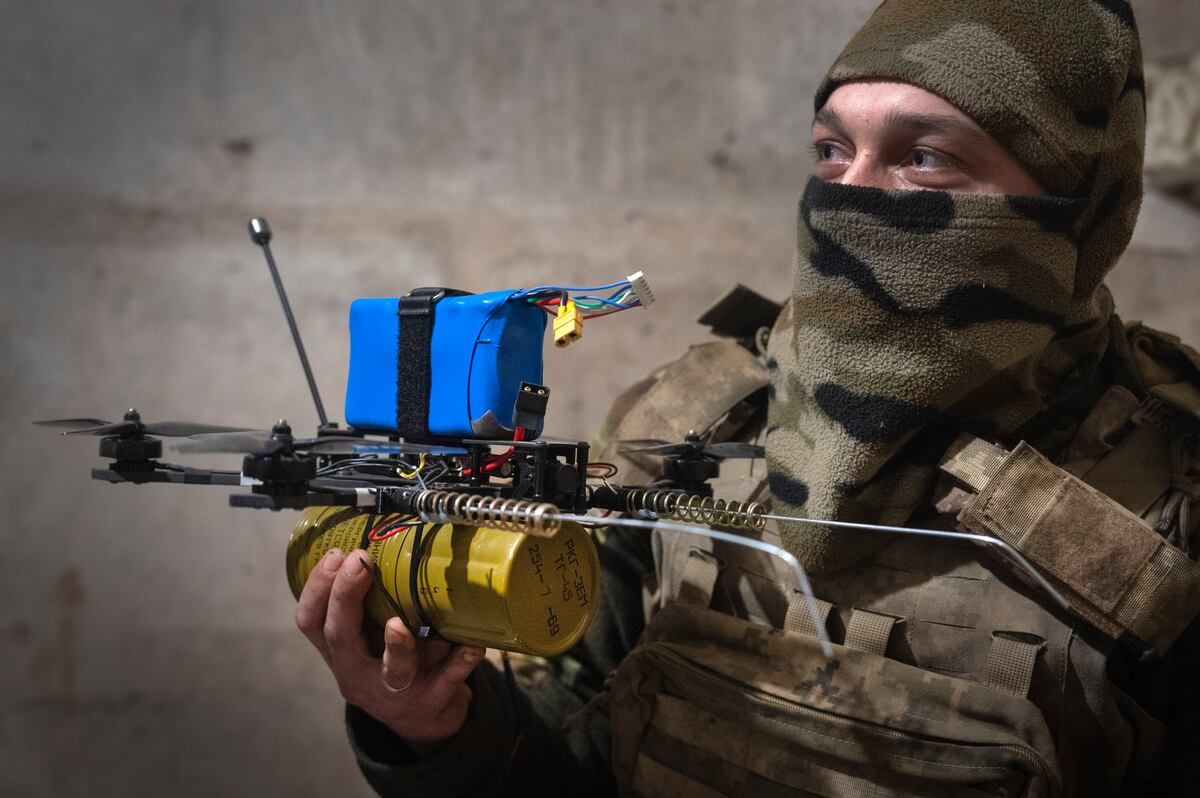
THE HAGUE, Netherlands — Ukrainian counterintelligence services are investigating the infiltration of Latin American drug cartel members into the country’s International Legion, with operatives seeking advanced drone training to later deploy against rivals and security forces in their home countries.
The Security Service of Ukraine (SBU) launched a joint investigation with military intelligence after Mexico’s National Intelligence Center warned in early summer that Mexican volunteers had joined Ukraine’s foreign fighter units specifically to acquire first-person view (FPV) drone capabilities. The probe has since expanded to include Colombian nationals, raising concerns about Ukraine’s inadvertent role as a training ground for transnational criminal organizations.
French outlet Intelligence Online was the first to report the story on Tuesday.
The investigation centers on several Spanish-speaking units within the International Legion, particularly the tactical group “Ethos,” operating in the Donetsk and Kharkiv regions. Ukrainian investigators reportedly suspect that some Mexican and Colombian volunteers intentionally sought placement in drone operator units to later use this training in the service of foreign criminal organizations.
One noteworthy case is that of a Mexican national operating under the alias “Águila-7,” who registered in March 2024 using fraudulent Salvadoran documentation. Posing as a humanitarian volunteer, he completed comprehensive drone training in Lviv while demonstrating exceptional technical expertise that eventually had instructors suspicious.
His extensive technical knowledge, including familiarity with electronic warfare countermeasures and thermal detection avoidance, reportedly stood out. Background investigations later revealed probable connections to Mexico’s elite GAFE special forces, some of whose former personnel have historically transitioned to cartel employment, notably through the ultra-violent Zetas organization.
The infiltration demonstrates remarkable operational sophistication for a nonstate group, with suspects employing false identities, forged documentation and front companies to facilitate their passage into Ukrainian territory and military structures. Intelligence analysts have identified a network of private security firms across Latin America that appear to have coordinated these placements.
Additional cases have emerged involving former FARC guerrillas who infiltrated the system using Panamanian and Venezuelan identity documents. At least three former FARC fighters passed through the International Legion using forged documents, with their relocation reportedly organized by cartel-linked entities.
The revelations highlight Ukraine’s unintended emergence as a premier training ground for modern asymmetric warfare techniques amid its conflict with Russia. Ukrainian authorities have developed comprehensive curricula covering drone manufacturing, tactical deployment, electronic warfare resistance and real-time battlefield coordination. Coincidentally, these capabilities also represent exactly the type of force multiplication that criminal organizations seek.
Mexican cartels are already conducting drone attacks against rivals and security forces domestically, making the acquisition of Ukrainian battlefield-tested tactics particularly concerning for regional security.
An unnamed SBU official told Intelligence Online: “We welcomed volunteers in good faith. But we must now recognize that Ukraine has become a platform for the global dissemination of FPV tactics. Some come here to learn how to kill with a $400 drone, then sell this knowledge elsewhere to the highest bidder.”
Linus Höller is Defense News' Europe correspondent and OSINT investigator. He reports on the arms deals, sanctions, and geopolitics shaping Europe and the world. He holds master’s degrees in WMD nonproliferation, terrorism studies, and international relations, and works in four languages: English, German, Russian, and Spanish.
荷兰海牙——乌克兰反情报部门正在调查拉丁美洲贩毒集团成员渗透到该国国际军团的情况,这些成员寻求接受高级无人机训练,以便日后部署到各自国家对抗竞争对手和安全部队。
墨西哥国家情报中心在初夏发出警告,称有墨西哥志愿者加入乌克兰外国战斗部队,其目的在于获取第一人称视角(FPV)无人机操作能力。此后,乌克兰安全局(SBU)与军事情报部门展开联合调查。调查范围随后扩大至哥伦比亚公民,引发了人们对乌克兰可能无意中成为跨国犯罪组织训练基地的担忧。
法国媒体 Intelligence Online 于周二率先报道了这则新闻。
调查的重点是国际军团内几个讲西班牙语的单位,特别是活跃在顿涅茨克和哈尔科夫地区的战术小组“Ethos”。据报道,乌克兰调查人员怀疑一些墨西哥和哥伦比亚的志愿者故意申请加入无人机操作员部队,以便日后利用所受训练为外国犯罪组织效力。
其中一个值得注意的案例是一名化名为“Águila-7”的墨西哥公民,他于2024年3月使用伪造的萨尔瓦多证件注册。他伪装成人道主义志愿者,在利沃夫完成了全面的无人机培训,并展现出卓越的技术水平,最终引起了教官的怀疑。
据报道,他拥有丰富的技术知识,包括对电子战对抗措施和热成像规避技术的熟悉程度,这一点尤为突出。背景调查随后显示,他可能与墨西哥精锐特种部队GAFE有关联,该部队的一些前成员曾加入贩毒集团,特别是臭名昭著的泽塔斯贩毒集团。
此次渗透行动展现了非国家行为体非凡的行动技巧,嫌疑人使用虚假身份、伪造文件和幌子公司,以便利其潜入乌克兰境内和军事设施。情报分析人员已发现一个遍布拉丁美洲的私人安保公司网络,这些公司似乎协调了这些渗透行动。
另有案例显示,一些前哥伦比亚革命武装力量(FARC)游击队员利用巴拿马和委内瑞拉的身份证件渗透到军队系统中。至少有三名前FARC战士使用伪造证件进入国际军团,据报道,他们的转移是由与贩毒集团有关联的实体安排的。
这些披露凸显了乌克兰在与俄罗斯的冲突中,无意间成为了现代非对称战争技术的重要训练基地。乌克兰当局已制定了涵盖无人机制造、战术部署、电子战防御和实时战场协调等方面的综合课程。巧合的是,这些能力也正是犯罪组织所寻求的那种力量倍增方式。
墨西哥贩毒集团已经在国内对竞争对手和安全部队发动无人机袭击,因此,获得乌克兰战场上经过检验的战术对地区安全来说尤其令人担忧。
一位不愿透露姓名的乌克兰国家安全局(SBU)官员告诉《情报在线》:“我们本着诚意欢迎志愿者。但我们现在必须认识到,乌克兰已经成为全球传播第一人称视角(FPV)战术的平台。有些人来这里学习如何用价值400美元的无人机杀人,然后将这些知识卖给出价最高的人。”
林努斯·霍勒是《防务新闻》的欧洲记者和开源情报调查员。他报道影响欧洲乃至全球的军火交易、制裁和地缘政治。他拥有大规模杀伤性武器不扩散、恐怖主义研究和国际关系三个硕士学位,并精通英语、德语、俄语和西班牙语四种语言。