COE review: Most people support merging car categories, and five-band rebate system拥车证评述:大多数人支持合并汽车类别和五级回扣制度
Most respondents back merging Singapore’s car COE categories and a five-band feebate system, Transport Minister Jeffrey Siow says. Read more at straitstimes.com.
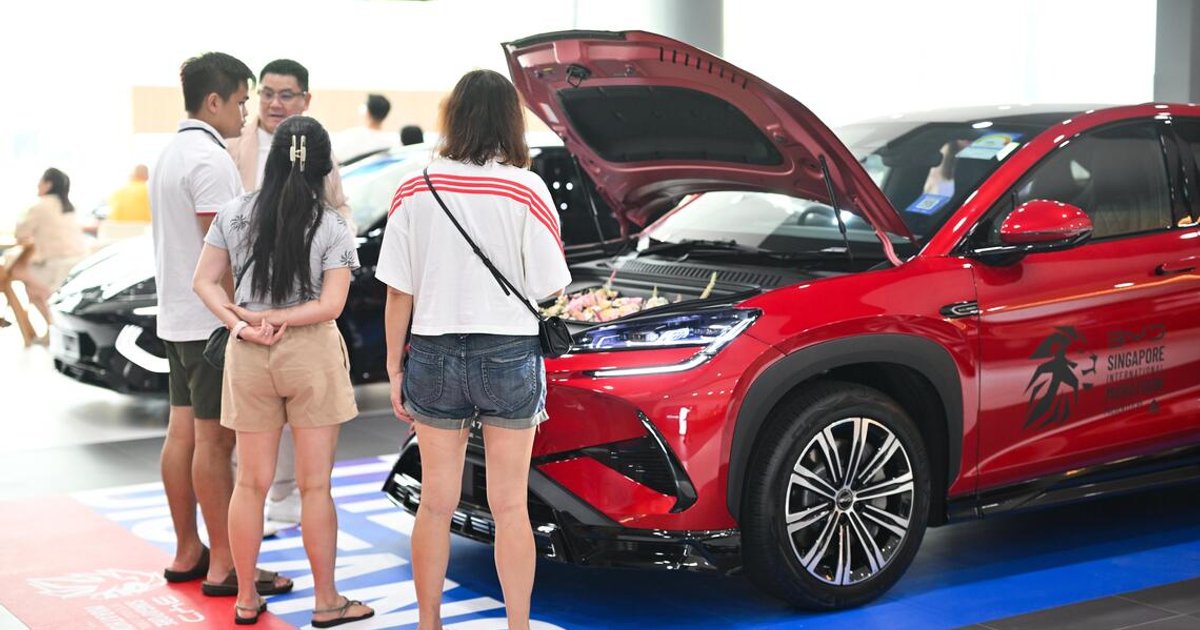
The majority of respondents in the public consultation on COE review supports merging the two car COE categories and to use a five-band system.
ST PHOTO: LIM YAOHUI
Published Nov 03, 2026, 03:57 PM
Updated Nov 03, 2026, 03:57 PM
Most respondents support merging the two car COE categories and prefer a five-band “feebate” system. The Land Transport Authority is still studying submissions, with the review due in the first half of 2027.
The five-band option uses smaller rebates and surcharges to reduce “cliff effects”. Transport Minister Jeffrey Siow said it makes prices fairer for mass-market and luxury cars.
Siow said COE rules must control car numbers and support public transport, which gets about $6 billion to $7 billion a year. MPs also raised concerns about affordability for households, workers and small businesses.
SINGAPORE – Most of the people who provided feedback for a review of the certificate of entitlement (COE) system supported merging categories A and B, with a preference for five-band fee rebate structure.
The five-band fee rebate structure will cover the range of rebates and surcharges, based on the open market value of cars, with the “aim of restoring a permanent price distinction in COE premiums between mass-market and luxury cars”, said Transport Minister Jeffrey Siow.
Speaking in Parliament on Nov 3, Siow gave an update on the Land Transport Authority’s public consultation exercise on COE categorisation, which closed on Nov 2.
“We are studying the submissions, and have not decided on the outcomes”, he added.
The COE review is expected to be completed by the first half of 2027. Apart from merging the two car categories, proposed changes will include a fee rebate system under which buyers of higher-value cars pay a higher premium than buyers of mass-market cars.
Currently, Category A COEs are used to register mass-market cars and electric vehicles (EVs) while Category B certificates are meant for larger and more powerful cars and EVs.
Two options were put up by the LTA for consideration – one with three bands and another with five bands.
Under the three-band option, cars with open market value (OMV) – the price before taxes – that fall in the lowest band would get a $15,000 rebate. Those in the middle band will pay the full price without rebate or surcharge, while those in the top tier will incur a $15,000 surcharge.
The five-band option adds two bands, with a rebate or surcharge of $7,500.
Siow said most respondents preferred the system with five-band structure because it reduces the “cliff effects”, when a vehicle will pay a disproportionately higher price when it crosses into the next less-favourable banding.
MP Edward Chia (Holland-Bukit Timah GRC), who first mooted the idea of merging car categories in March, asked if LTA looked at pegging the rebate or surcharge amounts as a percentage of the COE price instead of using a fixed amount.
Siow said using a percentage formula could further reduce the cliff effects, but it also means that buyers will not know the exact rebate or surcharge before the COE bidding exercise begins.
There are also competing demands for land and roads already occupy over 12% of Singapore’s land area, so there is a need to give priority to public transport over car ownership, he added.
Siow said over the past decade, COE revenues averaged about $5 billion annually. Every year, about $6 billion to $7 billion is spent on public transport, including subsidies to keep fares affordable, he added.
“Put another way, without COE revenues, we would have to find some other way to fund the public transport system that millions of Singaporeans use every day,” he said.
Public transport cannot meet every need, but Singapore’s taxi and private-hire car service are “more affordable options” for people to travel by car without incurring the expenses of owning one, he added.
Several MPs, including Choo Pei Ling (Chua Chu Kang GRC) and Tin Pei Ling (Marine Parade-Braddell Heights) raised concerns over the affordability of mass-market cars.
Siow said there are households who may prefer to own a car, but the principle is that the Government must support all families, including those who do not own and do not wish to own one.
He also said families receive broader support, like childcare subsidies, healthcare support and other assistance which defray household expenses.
Families, he added, can decide how to best manage the additional expenses of car ownership after factoring these subsidies.
Jessica Tan (East Coast GRC) asked if the Transport Ministry will look into the affordability of vehicles for self-employed and small businesses. Siow, in his reply , said it is something that will be looked into as the COE system is continually being reviewed.
Yip Hon Weng (Yio Chu Kang) asked if the Transport Ministry will look at putting in an income-linked benchmark, in addition to considering the vehicle’s OMV, to study if cars remain affordable to Singaporeans.
In response, Siow said the COE policies are designed to control the overall quantity of cars and that it will be difficult to try to control the price of cars.
He said: “What we want to do, knowing that we cannot enable everybody to own a car, we try to enable as many people to have access to a car ride and of course, beyond that, to focus our attention on public transport, which can meet the needs of most Singaporeans.”
In a Facebook update on Nov 3, LTA said it received more than 4,000 responses when the public consultation closed on Nov 2.
Lee Nian Tjoe is senior transport correspondent at The Straits Times, where he also oversees the Motoring section.
Singapore Parliament
在关于拥车证审查的公众咨询中,大多数受访者支持合并两种汽车拥车证类别,并采用五级制度。
ST 照片:林耀辉
发布于 2026 年 11 月 3 日下午 3:57
更新于2026年11月3日下午3:57
大多数受访者支持合并两种汽车拥车证类别,并倾向于采用五级“费用返还”制度。陆路交通管理局仍在研究各方意见,预计将于2027年上半年进行审查。
五级定价方案采用较小的折扣和附加费,以减少“价格断崖式”上涨。交通部长萧敬腾表示,此举使大众市场汽车和豪华汽车的价格更加公平。
萧女士表示,拥车证规则必须控制车辆数量,并支持公共交通,公共交通每年可获得约60亿至70亿新元的拨款。议员们还对家庭、工人和小企业的负担能力表示担忧。
新加坡——在对拥车证(COE)制度进行审查时,大多数提供反馈意见的人支持合并 A 类和 B 类,并倾向于五级费用回扣结构。
交通部长萧正树表示,五级费用回扣结构将涵盖一系列回扣和附加费,以汽车的公开市场价值为基础,“旨在恢复大众市场汽车和豪华汽车在拥车证溢价方面的永久价格差异”。
11月3日,萧在国会发言,介绍了陆路交通管理局关于拥车证分类的公众咨询活动的最新进展,该活动已于11月2日结束。
“我们正在研究提交的材料,尚未决定结果,”他补充道。
拥车证审查预计将于 2027 年上半年完成。除了合并两类汽车外,拟议的改革还将包括一项费用返还制度,根据该制度,购买高价值汽车的买家将比购买大众市场汽车的买家支付更高的溢价。
目前,A类拥车证用于注册大众市场汽车和电动汽车(EV),而B类拥车证则用于更大、更强大的汽车和电动汽车。
陆路交通管理局提出了两个方案供考虑——一个方案包含三个频段,另一个方案包含五个频段。
根据三级定价方案,市场公开价(OMV,即税前价格)处于最低档的车辆可获得 15,000 美元的折扣;处于中间档的车辆需支付全价,不享受任何折扣或附加费;而处于最高档的车辆则需额外支付 15,000 美元的附加费。
五频段选项增加了两个频段,但需支付 7,500 美元的退款或附加费。
Siow表示,大多数受访者更喜欢五级结构的系统,因为它减少了“悬崖效应”,即当车辆进入下一个不利的等级时,需要支付不成比例的更高价格。
3 月份首次提出合并汽车类别想法的国会议员谢永康(荷兰-武吉知马集选区)询问陆路交通管理局是否考虑将回扣或附加费金额与拥车证价格的百分比挂钩,而不是使用固定金额。
Siow表示,使用百分比公式可以进一步减少断崖效应,但这同时也意味着买家在拥车证竞标开始前无法知道确切的折扣或附加费。
他还补充说,土地需求也存在竞争,道路已经占用了新加坡超过 12% 的土地面积,因此有必要优先发展公共交通,而不是汽车拥有量。
萧先生表示,过去十年,拥车证收入平均每年约为50亿美元。他还补充说,每年约有60亿至70亿美元用于公共交通,其中包括为保持票价可负担性而提供的补贴。
“换句话说,如果没有拥车证收入,我们就必须找到其他方式来资助数百万新加坡人每天使用的公共交通系统,”他说。
他补充说,公共交通虽然不能满足所有需求,但新加坡的出租车和私家车服务是“更经济实惠的选择”,人们可以开车出行而无需承担拥有汽车的费用。
包括朱佩玲(蔡厝港集选区)和陈佩玲(马林百列-布莱德尔岭选区)在内的几位国会议员对大众市场汽车的可负担性表示担忧。
萧先生表示,有些家庭可能更喜欢拥有汽车,但原则是政府必须支持所有家庭,包括那些没有汽车也不想拥有汽车的家庭。
他还表示,家庭将获得更广泛的支持,例如托儿补贴、医疗保健支持和其他可以减轻家庭开支的援助。
他还补充说,家庭在考虑这些补贴后,可以决定如何最好地管理拥有汽车的额外费用。
东海岸集选区议员陈慧珊询问交通部是否会考虑自雇人士和小企业主的购车负担能力。萧正树在答复中表示,拥车证制度一直在持续审查,交通部会考虑这个问题。
叶汉荣(义顺)询问交通部是否会考虑在考虑车辆的OMV(官方市场价值)之外,引入与收入挂钩的基准,以研究汽车是否仍然是新加坡人能够负担得起的。
对此,萧先生表示,拥车证政策旨在控制汽车的总体数量,而控制汽车价格是很难的。
他说:“我们知道不可能让每个人都拥有汽车,所以我们努力让尽可能多的人能够乘坐汽车,当然,除此之外,我们还要关注公共交通,它可以满足大多数新加坡人的需求。”
陆路交通管理局 (LTA) 在 11 月 3 日的 Facebook 更新中表示,在 11 月 2 日公众咨询结束后,他们收到了 4000 多份回复。
李念祖是《海峡时报》的高级交通记者,同时负责汽车版块。
新加坡国会