Airborne Laser Weapon For Tactical Aircraft Being Developed By Germany德国正在研发用于战术飞机的机载激光武器
The new initiative aims to eventually equip Luftwaffe combat aircraft with a laser capable of shooting down drones and missiles. A new contract aims to lay the groundwork for a Luftwaffe laser weapon against drones and cruise missiles.
Published Nov 3, 2026 11:29 AM EST
Germany has launched a new effort to develop an airborne laser weapon . MBDA Deutschland has received a contract to build a pod-based demonstrator intended to lay the technological foundations that could lead to future directed-energy capabilities aboard Luftwaffe aircraft. The new contract is Germany’s first formal foray into airborne laser weapons, but builds on years of German investment and maritime laser weapon trials.
As we have explored in the past , translating that progress into a practical aircraft-mounted weapon presents a much greater engineering challenge. While hurdles apply to lasers in general, they are particularly acute in airborne applications.
PRESSEMITTEILUNG – MBDA ERHÄLT AUFTRAG FÜR AIRBORNE-LASER-DEMONSTRATOR VON BUNDESWEHR: MBDA in Deutschland hat vom @BaainBw einen Auftrag zum Bau eines Demonstrators für einen luftgestützten #Laser erhalten. Ziel ist es, die technologischen Grundlagen für zukünftige Laserwaffen… pic.twitter.com/OK2lzmwDur — MBDA Deutschland (@MBDADeutschland) November 2, 2026
PRESSEMITTEILUNG – MBDA ERHÄLT AUFTRAG FÜR AIRBORNE-LASER-DEMONSTRATOR VON BUNDESWEHR: MBDA in Deutschland hat vom @BaainBw einen Auftrag zum Bau eines Demonstrators für einen luftgestützten #Laser erhalten. Ziel ist es, die technologischen Grundlagen für zukünftige Laserwaffen… pic.twitter.com/OK2lzmwDur
MBDA announced today that it had been contracted by the Federal Office of Bundeswehr Equipment, Information Technology and In-Service Support (BAAINBw) to undertake the development effort. The project centers on a pod-based demonstrator system, with essential components already being designed.
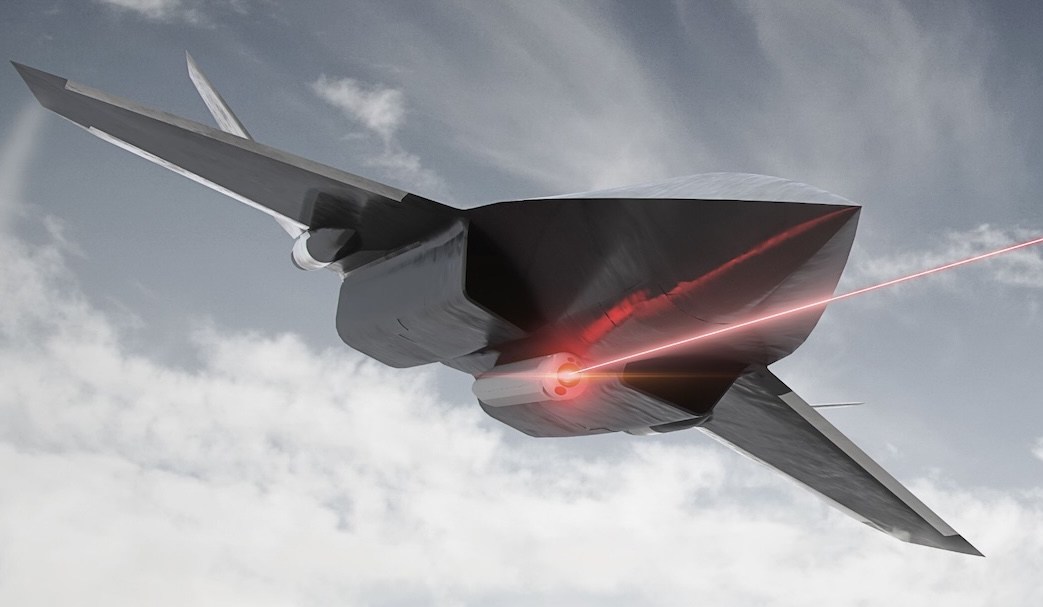
According to MBDA, the longer-term objective is to develop an airborne laser capability that could be used to shoot down enemy drones and cruise missiles. There are other potential use cases, which we will come back to later on. An accompanying rendering also showed a pair of large, stealthy, fighter-like uncrewed aircraft with laser pods under the fuselage.
MBDA rendering showing large, stealthy, fighter-like uncrewed aircraft with laser pods under the fuselages. MBDA
The company described airborne laser development as the “supreme discipline” of laser weapon technology, citing the particularly demanding requirements for size, weight, and resistance to the stresses associated with flight.
The announcement provides few details about the demonstrator’s technical specifications, intended host aircraft, laser output, or anticipated development schedule. No contract value or timeline has been disclosed.
U.S. Air Force art depicting a future dogfight with laser weapons. U.S. Air Force
The airborne demonstrator builds on a longer-running German effort to develop directed-energy technology. According to MBDA, laser technology has been considered a strategic priority for German research and development since 2019. It is also designated a key national technology under the German government’s National Security and Defense Industry Strategy ( SVI Strategy ).
MBDA is a fairly well-established industrial partner in this effort, having worked on laser effectors and weapons for all branches of the German armed forces. The company also highlights substantial investments of its own in recent years, which it says have enabled it to advance the underlying technologies and build and test various demonstrators.
An existing domestic technology base could provide MBDA with a head start in developing the airborne system. Experience with laser sources, beam control, tracking, and thermal management could potentially be carried over into the laser pod.
MBDA’s airborne project builds on a substantial history of German laser weapon development. The company says it has been working on the necessary technologies since 2008, conducting successive demonstrations and technology trials. It claims to have demonstrated the functionality of a complete laser weapon system as early as 2012.
A particularly important milestone came through cooperation with Rheinmetall. In 2021, the two companies received a BAAINBw contract to develop a maritime laser weapon demonstrator for the German Navy. The system was subsequently installed aboard the F124 frigate Sachsen in June 2022 and underwent an extensive series of sea trials that continued until September 2023.
The MBDA/Rheinmetall maritime laser weapon demonstrator installed aboard the German Navy frigate Sachsen . Bundeswehr
During six test campaigns spanning nearly a year, the demonstrator conducted more than 100 test firings against different targets under increasingly complex conditions. The trials included tracking highly agile targets, integrating sensors and command systems, and engaging targets with the high-energy laser. A drone was also successfully shot down during a demonstration.
First live fire exercise of a laser weapon used by the German Navy. The Frigate “Sachsen” successfully shot down an UAV. pic.twitter.com/WG8AMfwhnw — (((Tendar))) (@Tendar) October 28, 2022
First live fire exercise of a laser weapon used by the German Navy. The Frigate “Sachsen” successfully shot down an UAV. pic.twitter.com/WG8AMfwhnw
MBDA subsequently continued developing more compact and modular laser weapon configurations, seeking to move beyond the container-based demonstrator used aboard Sachsen . In September 2024, MBDA and Rheinmetall signed a further cooperation agreement aimed at developing a marketable maritime laser weapon, particularly for countering drones.
However, there is a big difference between a maritime laser weapon demonstration and adapting that same technology to aircraft. The power, cooling, weight, vibration, volume, and aerodynamic constraints of airborne operations bring a very different set of engineering challenges.
The attraction of an airborne laser weapon lies in its ability to engage incoming threats without expending conventional missiles, offering a functionally unlimited magazine depth as long as there is available electrical power and cooling capacity. This could be particularly valuable when facing down large waves of drones and/or cruise missiles, which, as mentioned, are the primary targets MBDA is envisioning for a future podded airborne laser weapon.
The increasing proliferation of relatively inexpensive longer-range one-way attack drones is already driving particularly significant demand for new, lower-cost anti-air intercept options and greater magazine depth. The transformation of the 70mm laser-guided Advanced Precision Kill Weapon System II (APKWS II) rocket, originally designed for air-to-surface attacks , into a highly effective counter-drone weapon that aircraft can carry in large numbers is a prime example of this.
A US Air Force F-15E Strike Eagle carrying a load of 42 APKWS II rockets in six seven-shot pods, as well as traditional air-to-air missiles. CENTCOM
The other potential use cases for a podded airborne laser weapon, as well, include attacking targets on the surface. In this mode, lasers offer the additional benefit of being silent and largely invisible to the naked eye, creating additional dilemmas for opponents who may not know where an attack is coming from . Still, this would be very limited to certain types of soft targets, if any at all.
Furthermore, crewed and uncrewed aircraft could also use laser pods for protecting themselves or other critical aerial assets against incoming threats , such as surface-to-air and air-to-air missiles. Drones with these pods could also potentially be able to shoot down missiles streaking toward high-value assets like airborne early warning aircraft, tankers, and other platforms.
At the same time, as we have discussed in the past , putting a high-energy laser aboard an aircraft presents a difficult combination of power, weight, thermal-management, and optical-control requirements. The system must accommodate the laser, its power-generation and conditioning equipment, cooling systems, beam director, tracking sensors, and associated electronics within a relatively constrained package.
Waste heat is a particularly important consideration. High-energy lasers generate considerable thermal loads, which must be removed without compromising the weapon or the aircraft’s other systems.
Concept art from Lockheed Martin showing a notional sixth-generation stealth fighter firing a high-energy laser weapon. Lockheed Martin
An externally mounted pod must also withstand aerodynamic loads, vibration, acceleration, and temperature variations. Its optical system must maintain precise beam alignment despite aircraft movement and vibration.
Atmospheric conditions introduce another limitation. Moisture, dust, and turbulence can absorb, scatter, or distort laser energy, reducing the amount reaching a target. Operating at altitude would offer some advantages, but it does not eliminate these effects and is not ideal for many drone and cruise missile targets.
Ultimately, a laser’s nominal power rating tells only part of the story. Beam quality, tracking accuracy, engagement range, atmospheric conditions, and the dwell time required to achieve a kill at various distances are equally important.
Germany’s effort comes as the U.S. military continues to reassess several high-profile directed-energy programs.
American laser weapon initiatives have encountered significant difficulties moving from technology demonstrations toward operational deployment.
The Air Force’s Self-protect High Energy Laser Demonstrator (SHiELD) program was intended to develop a podded laser weapon capable of protecting fighter aircraft against incoming missiles and possibly engage other kinds of targets. Despite considerable development work in recent years, the program ended quietly and unceremoniously without achieving its central objective of demonstrating a complete laser weapon aboard a fighter aircraft.
Members of the SHiELD program and the Boeing contractor team inspect the newly arrived SHiELD pod in February 2021. Boeing
Another ambitious effort, the Airborne High Energy Laser (AHEL) program, sought to equip the AC-130J Ghostrider gunship with a directed-energy weapon. This would be used against targets on the ground, a potential mission for a future fighter-mounted pod, too. The AHEL effort also encountered technical difficulties, and plans to test the system aboard the aircraft were abandoned.
A rendering depicting an older AC-130U Spooky II gunship employing a laser along with its other weapons. U.S. Air Force
The Army’s 50-kilowatt Directed Energy Maneuver Short-Range Air Defense (DE M-SHORAD) program has likewise highlighted the difficulties of integrating high-energy lasers into operational military platforms, particularly in terms of thermal management, power requirements, and reliability. The Army has since had more success with lower-powered LOCUST systems in the counter-drone role, prompting Marine Corps and Navy interest, too. Meanwhile, the Army and Navy continue to push ahead on higher-powered lasers for ground- and ship-based applications.
These experiences underscore the fact that successfully engaging selected targets under controlled conditions is worlds apart from delivering a reliable combat capability.
For the German Defense Ministry and MBDA, the most important milestones will be demonstrating that the laser, beam director, tracking system, power supply, and cooling equipment can operate together within a practical airborne package. Subsequent flight testing and engagements against representative targets would then provide a much clearer indication of its potential.
Germany’s designation of laser technology as a strategic priority since 2019 indicates that the new contract forms part of a longer-term effort to build national expertise in directed-energy weapons.
The German effort comes amid a broader international push to develop directed-energy weapons, with ground-based and naval systems generally further along than airborne applications. In Europe, the United Kingdom is preparing to install its Dragonfire laser aboard a Royal Navy destroyer, while Germany, the Netherlands, and other NATO countries are pursuing laser systems for countering drones and other aerial threats.
A Dragonfire night shot during tests on the U.K. Ministry of Defence’s ranges in the Hebrides, Scotland. Crown Copyright
China is also investing heavily in directed-energy technology , including mobile ground-based systems and naval lasers . These efforts reflect growing interest in using lasers to counter increasingly numerous and inexpensive threats, but they also highlight the gap between successful demonstrations and reliable operational capabilities.
For Germany, there is a lot of work to be done to bridge the gap between industrial investment, technological demonstrators, strategic prioritization, and deployable, reliable weapons. The experience of U.S. programs provides a reminder that the path from promising laser demonstrations to dependable operational systems is far from certain.
MBDA and the Bundeswehr have taken another step toward an airborne laser capability. But before an airborne laser pod gets close to being fielded, Germany has to overcome the many challenges that have complicated similar efforts elsewhere.
Contact the author: thomas@thewarzone.com
Comments couldn’t be loaded. Please refresh the page.
发布于美国东部时间2026年11月3日上午11:29。
德国启动了一项新的机载激光武器研发计划。MBDA德国公司已获得一份合同,将建造一个吊舱式演示样机,旨在为未来德国空军飞机搭载定向能武器奠定技术基础。这份新合同标志着德国首次正式涉足机载激光武器领域,但也是建立在德国多年来的投资和海上激光武器试验的基础之上。
正如我们过去探讨过的,将这些进展转化为实用的机载武器面临着更大的工程挑战。虽然激光技术本身就存在诸多障碍,但在机载应用中,这些障碍尤为突出。
PRESSEMITTEILUNG – MBDA ERHIAL AUFTRAG FÜR 空中激光演示器 VON BUNDESWEHR:德国 MBDA 帽子 vom @BaainBw einen Auftrag zum Bau eines Demonstrators für einen luftgestützten #Laser erhalten。 Ziel ist es,die technologischen Grundlagen für zukünftige Laserwaffen… pic.twitter.com/OK2lzmwDur — MBDA Deutschland (@MBDADeutschland) 2026 年 11 月 2 日
PRESSEMITTEILUNG – MBDA ERHIAL AUFTRAG FÜR 空中激光演示器 VON BUNDESWEHR:德国 MBDA 帽子 vom @BaainBw einen Auftrag zum Bau eines Demonstrators für einen luftgestützten #Laser erhalten。 Ziel ist es,die technologischen Grundlagen für zukünftige Laserwaffen… pic.twitter.com/OK2lzmwDur
MBDA公司今天宣布,已与德国联邦国防军装备、信息技术和在役支持办公室(BAAINBw)签订合同,负责开展一项研发工作。该项目的核心是基于吊舱的演示系统,其关键组件的设计工作已经完成。
据MBDA公司称,其长期目标是开发一种可用于击落敌方无人机和巡航导弹的机载激光武器。此外还有其他潜在用途,我们稍后会详细介绍。随附的效果图还展示了两架大型隐形战斗机式无人飞行器,机身下方装有激光吊舱。
MBDA公司渲染图展示了一款大型隐形战斗机式无人飞行器,机身下方装有激光吊舱。
该公司将机载激光器的研发描述为激光武器技术的“最高学科”,并指出其对尺寸、重量以及抵抗飞行相关应力的要求特别苛刻。
该公告并未提供关于演示验证机的技术规格、目标搭载机型、激光输出功率或预期研发进度等详细信息。合同金额和时间表也未披露。
美国空军艺术作品,描绘了未来使用激光武器的空战场景。美国空军
这款机载演示验证机建立在德国长期研发定向能技术的基础之上。据MBDA公司称,自2019年以来,激光技术一直被视为德国研发的战略重点。它也被德国政府的《国家安全与国防工业战略》(SVI战略)列为关键国家技术。
MBDA是这项工作中相当成熟的工业合作伙伴,曾为德国武装部队各军种研发激光效应器和武器。该公司还强调,近年来自身也进行了大量投资,这些投资使其能够推进相关技术的发展,并建造和测试各种演示样机。
MBDA公司现有的国内技术基础可以帮助其在机载系统的研发方面获得先发优势。激光源、光束控制、跟踪和热管理方面的经验可以应用于激光吊舱的研发。
MBDA的机载激光武器项目建立在德国激光武器研发的悠久历史之上。该公司表示,自2008年以来,他们一直在研发相关技术,并进行了多次演示和技术试验。他们声称早在2012年就已展示了一套完整激光武器系统的功能。
与莱茵金属公司的合作取得了尤为重要的里程碑。2021年,两家公司获得德国联邦航空航天工业协会(BAAINBw)的合同,为德国海军开发海上激光武器演示系统。该系统随后于2022年6月安装在F124型护卫舰“萨克森”号上,并进行了一系列广泛的海上试验,一直持续到2023年9月。
MBDA/莱茵金属公司研制的海上激光武器演示样机安装在德国海军“萨克森”号护卫舰上。德国联邦国防军
在历时近一年的六次测试活动中,该演示样机在日益复杂的条件下对不同目标进行了超过100次试射。测试内容包括跟踪高机动性目标、集成传感器和指挥系统,以及使用高能激光攻击目标。在一次演示中,该样机还成功击落了一架无人机。
德国海军首次进行激光武器实弹演习。“萨克森”号护卫舰成功击落一架无人机。pic.twitter.com/WG8AMfwhnw — (((Tendar))) (@Tendar) 2022年10月28日
德国海军首次进行激光武器实弹演习。“萨克森”号护卫舰成功击落一架无人机。pic.twitter.com/WG8AMfwhnw
MBDA随后继续研发更紧凑、模块化的激光武器配置,力求超越此前在“萨克森”号上使用的集装箱式演示样机。2024年9月,MBDA与莱茵金属公司签署了进一步的合作协议,旨在开发一种可市场化的海上激光武器,特别是用于对抗无人机的武器。
然而,海上激光武器演示与将同一技术应用于飞机之间存在着巨大的差异。空中作业的功率、冷却、重量、振动、体积和空气动力学限制带来了截然不同的工程挑战。
机载激光武器的吸引力在于其无需消耗常规导弹即可应对来袭威胁,只要电力和冷却能力充足,其弹药储备几乎无限。这在对抗大规模无人机和/或巡航导弹时尤为重要,正如前文所述,这正是MBDA公司设想的未来吊舱式机载激光武器的主要目标。
相对廉价、射程更远、单向攻击无人机的日益普及,已经显著推动了对新型、低成本防空拦截方案和更大弹药库的需求。最初设计用于空对地攻击的70毫米激光制导先进精确杀伤武器系统II(APKWS II)火箭,如今已转变为一种高效的反无人机武器,且可由飞机大量携带,这便是一个典型的例子。
一架美国空军F-15E“攻击鹰”战斗机携带42枚APKWS II火箭弹,分装在六个七联装发射巢中,此外还携带了传统的空空导弹。中央司令部
此外,吊舱式机载激光武器的其他潜在用途还包括攻击地面目标。在这种模式下,激光武器的优势在于其无声且肉眼几乎不可见,这会给对手造成更大的困扰,因为他们可能无法判断攻击的来源。然而,这种攻击方式即便有效,也仅限于某些类型的软目标。
此外,有人驾驶和无人驾驶飞机还可以使用激光吊舱来保护自身或其他关键空中资产免受来袭威胁,例如地对空导弹和空对空导弹。配备这些吊舱的无人机也可能能够击落射向高价值资产(例如空中预警机、加油机和其他平台)的导弹。
同时,正如我们之前讨论过的,将高能激光器安装在飞机上,对功率、重量、热管理和光学控制等方面的要求提出了很高的挑战。该系统必须在一个相对有限的空间内容纳激光器、其发电和功率调节设备、冷却系统、光束导向器、跟踪传感器以及相关的电子设备。
废热是一个特别重要的考虑因素。高能激光器会产生相当大的热负荷,必须在不影响武器或飞机其他系统的情况下将其排出。
洛克希德·马丁公司提供的概念图,展示了一架假想的第六代隐形战斗机发射高能激光武器的场景。
外置吊舱还必须承受空气动力载荷、振动、加速度和温度变化。其光学系统必须在飞机移动和振动的情况下保持精确的光束对准。
大气条件也带来了另一项限制。水分、尘埃和湍流会吸收、散射或扭曲激光能量,从而减少到达目标的能量。在高空作业会带来一些优势,但并不能消除这些影响,而且对于许多无人机和巡航导弹目标而言,高空作业并非理想之选。
归根结底,激光器的标称功率只能说明部分问题。光束质量、跟踪精度、射程、大气条件以及在不同距离上达到击杀目标所需的停留时间都同样重要。
德国此举正值美国军方继续重新评估几项备受瞩目的定向能计划之际。
美国激光武器计划在从技术演示向实际部署过渡的过程中遇到了重大困难。
美国空军的“自卫高能激光演示器”(SHiELD)项目旨在研发一种吊舱式激光武器,用于保护战斗机免受来袭导弹攻击,并可能打击其他类型的目标。尽管近年来投入了大量研发工作,但该项目最终悄然终止,未能实现其核心目标——即在战斗机上演示完整的激光武器系统。
2021年2月,SHIELD项目成员和波音公司承包商团队对新抵达的SHIELD吊舱进行了检查。波音公司
另一项雄心勃勃的计划——机载高能激光(AHEL)计划——旨在为AC-130J“幽灵骑士”炮艇机配备定向能武器。该武器将用于打击地面目标,未来战斗机搭载的吊舱也可能执行类似任务。AHEL计划同样遭遇了技术难题,最终放弃了在飞机上测试该系统的计划。
一张渲染图,描绘了一架老式的AC-130U“幽灵II”炮艇机,图中展示了它使用的激光武器以及其他武器。美国空军
陆军的50千瓦定向能机动短程防空系统(DE M-SHORAD)项目同样凸显了将高能激光器集成到作战军事平台中的难度,尤其是在热管理、功率需求和可靠性方面。此后,陆军在低功率的“蝗虫”(LOCUST)系统反无人机作战方面取得了更大的成功,这也引起了海军陆战队和海军的兴趣。与此同时,陆军和海军仍在继续推进用于地面和舰载应用的高功率激光器的研发。
这些经验表明,在受控条件下成功打击选定目标与提供可靠的作战能力是截然不同的两件事。
对德国国防部和MBDA公司而言,最重要的里程碑将是验证激光器、光束导向器、跟踪系统、电源和冷却设备能否在一个实用的机载系统中协同工作。随后的飞行测试和对典型目标的实战检验将更清晰地展现其性能潜力。
德国自 2019 年以来一直将激光技术列为战略重点,这表明新合同是德国为建立定向能武器领域的国家专业知识而进行的长期努力的一部分。
德国的这项努力正值国际社会大力推进定向能武器研发之际,其中陆基和舰载系统的发展通常比机载系统更为成熟。在欧洲,英国正准备将其“龙火”激光武器系统安装到皇家海军的一艘驱逐舰上,而德国、荷兰和其他北约国家则在研发用于对抗无人机和其他空中威胁的激光系统。
这是英国国防部在苏格兰赫布里底群岛靶场进行测试时拍摄的“龙火”夜间射击照片。版权所有。
中国也在定向能技术领域投入巨资,包括移动式地面激光系统和舰载激光器。这些努力反映出人们越来越关注利用激光技术应对日益增多且成本低廉的威胁,但也凸显了成功的演示与可靠的作战能力之间存在差距。
对德国而言,要弥合工业投资、技术验证、战略优先排序和可部署、可靠武器之间的差距,还有大量工作要做。美国项目的经验表明,从前景光明的激光演示到可靠的作战系统,这条道路远非坦途。
MBDA公司和德国联邦国防军在机载激光武器能力方面又迈出了一步。但在机载激光吊舱真正投入使用之前,德国必须克服诸多挑战,这些挑战也曾困扰着其他国家的类似项目。
联系作者:thomas@thewarzone.com
评论加载失败,请刷新页面。