Drone diplomacy wins Ukraine valuable allies, but now it must deliver无人机外交为乌克兰赢得了宝贵的盟友,但现在它必须拿出实际行动。
The Iran war has confirmed how central drones are to modern warfare and handed Zelenskiy a diplomatic trump card, analysts say.
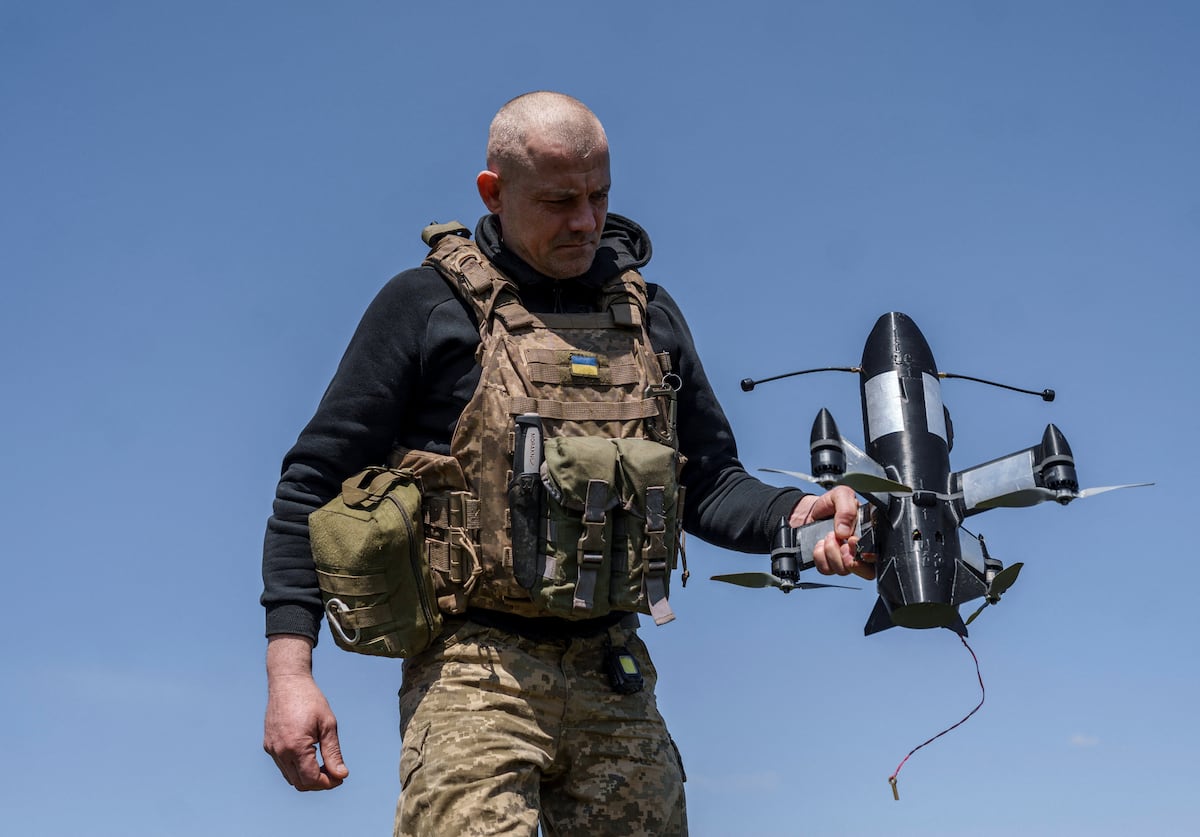
KYIV — President Volodymyr Zelenskiy has leveraged Ukraine’s expertise in drone warfare into a series of successful diplomatic deals during visits to the Middle East and Europe, showcasing how Kyiv is using military prowess to boost its diplomatic clout.
Since Russia’s invasion in 2022, Zelenskiy has sought to strengthen Kyiv’s alliances, both with Western allies and with countries of the “global south,” to restrict Russia’s diplomatic sway.
The Iran war has confirmed how central drones are to modern warfare and handed Zelenskiy a diplomatic trump card at a time when U.S. support for Kyiv appears unreliable, analysts say.
During the war, Ukraine has invented cheap and highly effective ways to counter drone attacks instead of relying only on state-of-the-art defensive missile systems such as the costly U.S. Patriot, used by the U.S. in the Gulf. Kyiv has also developed long-range attack drone capabilities to hit Russian energy infrastructure.
This month alone, Ukraine signed defense and drone deals in Germany, Norway and the Netherlands, following long-term security partnerships with Saudi Arabia, Qatar and the United Arab Emirates in late March.
Zelenskiy has in recent weeks also agreed security cooperation with Turkey and Syria, and signed agreements at the weekend with Azerbaijani President Ilham Aliyev on defense and energy.
“Zelenskiy is really trying hard to show that Ukraine is an asset and not a liability and that it has an answer to the changing nature of war,” said Orysia Lutsevych, head of the Ukraine Forum at Chatham House, a London-based think tank. “Ukraine now needs to organize itself to actually deliver.”
Ukraine’s drone manufacturers say they have significant spare capacity, but the government has approved only a handful of defense export licenses.
Ukraine has begun drone manufacturing overseas, including in Germany and Britain, but that production is earmarked for its own military needs.
“In Ukraine, the choke point is the export control: basically it’s an export ban,” Lutsevych said, adding that Ukraine needed to streamline the rules. “It needs to find a balance between its war needs and exports.”
Zelenskiy, in his evening address on Tuesday, said Ukraine’s defense industry had 50% spare capacity in some areas and would soon begin exporting weapons. Authorities would simplify the bureaucratic procedures for export, he said, while taking steps to ensure Ukrainian technology and weapons do not end up in Russian hands.
Another challenge for Ukraine is that its success has mostly been in developing effective systems — such as coordinated layers of interceptor drones, machine guns and jamming devices for drone defense - rather than cutting-edge technology.
As a shop window for these techniques, Ukraine has deployed about 200 experts to the Gulf to help defend against Iran’s Shahed long-range drones.
Kurt Volker, a former U.S. NATO ambassador and Ukraine envoy during President Donald Trump’s first administration, said Kyiv was rightly cautious about sharing its wartime systems too widely.
“Much of what the Ukrainians have done is develop process and mentality,” Volker said, adding Ukraine was concerned about Russia learning how its systems operate. “What any business would do is protect your IP for as long as possible. That’s what makes it valuable. So of course they’re doing that.”
Ukraine’s low-cost air defenses rely on the training and skill of the operators of its interceptor drones, said Fabian Hoffmann, a senior researcher at the Norwegian Defence University College.
That has been highly effective against propeller drones, such as Russia’s Geran-2, but the gradual introduction of jet-powered models that can fly at 400 km (250 miles) an hour are making it harder for human operators.
“Ukraine has been moving towards autonomously guided interceptor drones but, so far, the operators have done a lot of the heavy lifting,” Hoffmann said, adding that European companies such as Tytan in Germany and Frankenburg in Estonia were developing autonomous systems that might erode Ukraine’s advantage.
Military exports would bring economic benefits to Ukraine, experts say. About 400,000 people already work in Ukraine’s defense industry, according to UCDI, a manufacturers’ association. A better-capitalized defense sector could also reduce reliance on Western financial and military support, and fuel economic growth after an eventual ceasefire.
Zelenskiy hopes drone diplomacy can help secure energy supply deals with Middle Eastern states and markets for Ukraine’s agricultural produce.
He also wants to strengthen Ukraine’s missile defenses. The U.S.-Israel war with Iran has raised concerns in Ukraine that supplies of Patriot systems - used to bring down Russian ballistic missiles – could dry up as Washington prioritizes its own needs.
Ukraine’s $4-billion defense pact with Germany this month included supplies of Patriots and pledges of cooperation to create a European ballistic missile defense. Zelenskiy has said Ukraine needs its own anti-ballistic missile defenses within a year.
Hoffmann said the challenges of building an interceptor capable of downing modern maneuvering ballistic missiles was enormous: the Patriot PAC-3, with a success rate of perhaps 60%, was the fruit of decades of work, he said.
Underlying Ukraine’s push, analysts say, is concern over Washington’s reliability as a partner.
“He (Zelenskiy) understands that America stopped being an ally,” Lutsevych said. “The Ukrainians also understand that they need to walk a fine line by keeping America on side as long as possible.”
基辅——弗拉基米尔·泽连斯基总统在访问中东和欧洲期间,利用乌克兰在无人机战争方面的专业知识,达成了一系列成功的外交协议,展现了基辅如何利用军事实力来提升其外交影响力。
自俄罗斯2022年入侵以来,泽连斯基一直致力于加强基辅与西方盟友以及“全球南方”国家的联盟,以限制俄罗斯的外交影响力。
分析人士称,伊朗战争证实了无人机在现代战争中的核心地位,并在美国对基辅的支持似乎不可靠之际,给了泽连斯基一张外交王牌。
战争期间,乌克兰发明了廉价高效的无人机反制手段,而非仅仅依赖美国在海湾战争中使用的昂贵“爱国者”导弹系统等尖端防御导弹系统。基辅还发展了远程攻击无人机能力,用于打击俄罗斯的能源基础设施。
仅本月,乌克兰就与德国、挪威和荷兰签署了国防和无人机协议,此前在 3 月下旬,乌克兰还与沙特阿拉伯、卡塔尔和阿拉伯联合酋长国建立了长期安全伙伴关系。
泽连斯基最近几周还与土耳其和叙利亚达成了安全合作协议,并在周末与阿塞拜疆总统伊利哈姆·阿利耶夫签署了国防和能源方面的协议。
“泽连斯基确实在努力证明乌克兰是一项资产而非负债,并且能够应对不断变化的战争形势,”伦敦智库查塔姆研究所乌克兰论坛负责人奥里西亚·卢采维奇表示,“乌克兰现在需要组织起来,真正做到这一点。”
乌克兰无人机制造商表示他们拥有大量剩余产能,但政府只批准了少数国防出口许可证。
乌克兰已开始在海外(包括德国和英国)生产无人机,但这些产品仅供其自身军事需求使用。
卢采维奇说:“在乌克兰,瓶颈在于出口管制:基本上就是出口禁令。”他还补充说,乌克兰需要简化相关规定。“它需要在战争需求和出口之间找到平衡点。”
泽连斯基在周二晚间的讲话中表示,乌克兰国防工业在某些领域拥有50%的剩余产能,并将很快开始出口武器。他表示,当局将简化出口的繁琐手续,同时采取措施确保乌克兰的技术和武器不会落入俄罗斯手中。
乌克兰面临的另一个挑战是,它的成功主要体现在开发有效的系统上,例如协调多层拦截无人机、机枪和无人机防御干扰装置,而不是尖端技术。
作为展示这些技术的窗口,乌克兰已向海湾地区部署了约 200 名专家,以帮助防御伊朗的“沙赫德”远程无人机。
曾任美国驻北约大使和唐纳德·特朗普总统第一任期内乌克兰特使的库尔特·沃尔克表示,基辅方面对过度分享其战时系统持谨慎态度是正确的。
沃尔克表示:“乌克兰人所做的很多工作都是为了发展流程和思维方式。”他还补充说,乌克兰担心俄罗斯会了解其系统的运作方式。“任何企业都会尽可能长时间地保护自己的知识产权。这才是知识产权的价值所在。所以他们当然会这样做。”
挪威国防大学学院高级研究员法比安·霍夫曼表示,乌克兰低成本的防空系统依赖于其拦截无人机操作员的训练和技能。
这种方法对俄罗斯的 Geran-2 等螺旋桨无人机非常有效,但随着飞行速度可达每小时 400 公里(250 英里)的喷气式无人机的逐步出现,人类操作员的操控难度也随之增加。
霍夫曼表示:“乌克兰一直在向自主制导拦截无人机发展,但到目前为止,操作员已经做了很多艰苦的工作。”他还补充说,德国的泰坦公司和爱沙尼亚的弗兰肯堡公司等欧洲公司正在开发自主系统,这可能会削弱乌克兰的优势。
专家表示,军火出口将为乌克兰带来经济效益。据乌克兰国防工业协会(UCDI)统计,目前约有40万人受雇于乌克兰国防工业。一个资金更雄厚的国防工业部门还有助于减少对西方财政和军事支持的依赖,并在最终停火后促进经济增长。
泽连斯基希望无人机外交能够帮助乌克兰与中东国家达成能源供应协议,并为乌克兰的农产品开拓市场。
他还希望加强乌克兰的导弹防御能力。美以与伊朗的战争引发了乌克兰的担忧,即随着华盛顿优先考虑自身需求,用于拦截俄罗斯弹道导弹的“爱国者”导弹防御系统的供应可能会枯竭。
乌克兰本月与德国签署的价值40亿美元的防务协议包括向德国提供“爱国者”导弹系统,并承诺合作建立欧洲弹道导弹防御系统。泽连斯基曾表示,乌克兰需要在一年内建立自己的弹道导弹防御系统。
霍夫曼表示,制造能够击落现代机动弹道导弹的拦截器面临着巨大的挑战:爱国者PAC-3的成功率可能达到60%,这是几十年努力的成果。
分析人士称,乌克兰此举的背后是对华盛顿作为合作伙伴的可靠性感到担忧。
卢采维奇说:“泽连斯基明白美国已经不再是盟友了。乌克兰人也明白,他们需要小心翼翼地与美国周旋,尽可能长时间地维持美国的友好关系。”