Why F-5s Beat Out F-16s For The Navy’s Latest Commercial Aggressor Contract为什么F-5击败F-16赢得海军最新的商业假想敌合同
We have unique insights into the Navy's requirements for private adversary jets and its big decision that could impact future contract awards.
新闻视频
By Tyler Rogoway and Joseph Trevithick
Updated Dec 1, 2019 7:06 AM EST
The Government Accountability Office recently announced it had rejected a protest from the Airborne Tactical Advantage Company , or ATAC, over a U.S. Navy multi-million dollar contract award for “red air” aggressors that went to its less established competitor Tactical Air Support, Inc. , or TacAir. The supporting documentation offers extremely interesting insights into the requirements the service had asked of prospective private contractors and the capabilities those firms offered. The information is especially enlightening as the U.S. Air Force is likely taking similar factors into account as they consider bids for their own massive adversary support deal .
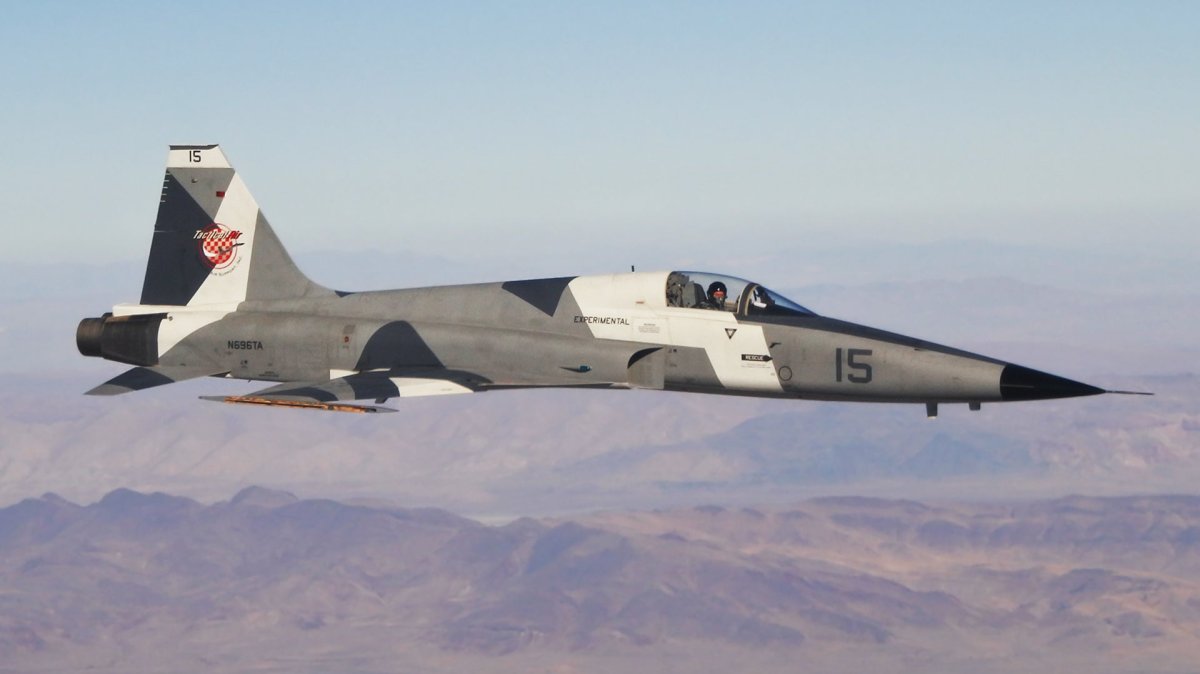
GAO only posted its decision online in November 2018, despite having reached its conclusion on Sept. 28, 2018. The decision has been “subject to a GAO Protective Order” and now publicly available in a redacted form. Under the contract, worth $118.9 million over the next five years, TacAir will support the Naval Aviation Warfighting Development Center (NAWDC) and the Navy Strike Fighter Tactics Instructor program, better known as Topgun , both of which are located at Naval Air Station (NAS) Fallon in Nevada. They will also provide aggressor duties for carrier air wing workups which happen a few times throughout the year. A fleet of at least five modified F-5AT jets will fly a combined total of approximately 1,700 hours annually under the fixed-price deal.
A fuller description of the basic mission set this new force of private aggressors would provide is described as such in the GAO’s documentation:
Pursuant to the PBWS, the awardee was to provide contractor owned, operated, and maintained aircraft for a “wide variety of airborne threat simulation capabilities to train aircraft squadron aircrew and shipboard system operators on how to counter potential enemy advanced airborne threats, tactics, Electronic Warfare (EW), and Electronic Attack (EA) operations.” More specifically, the awardee was to provide “tactically-relevant 4th Generation fighter jets for air-to-air tracking, targeting, and tactical intercept, offensive/defensive counter-air, and air interdiction operations to include associated equipment systems that interface with various platforms and ground force personnel.” Contractor aircraft were to simulate non-western threat aircraft capabilities in an air-to-air environment.
So basically, these aircraft would serve in a similar role as Fallon’s resident fleet adversary support unit, VFC-13 , but would be enhanced with, at a minimum, better radars, radar warning receivers, and electronic warfare capabilities.
“ATAC primarily contends that the aircraft the awardee proposed for performance cannot meet various technical requirements. ATAC also challenges the evaluation of the awardee’s technical risk and price realism, as well as the agency’s best-value determination,” GAO explained in its formal decision . “We deny the protest.”
The final bids from both contenders and their risk/confidence scores. , GAO
It’s undoubtedly a major blow to ATAC, the incumbent, which has been supporting those training activities for more than 15 years and has provided more than 50,000 hours of adversary support in the process. TacAir’s bid was also less than half the price of ATAC’s proposal, pointing to a potential cost issue that may become a major factor in future adversary contracts, just as it has been in other high-profile U.S. military purchases as of late.
One of TacAir’s ex-Jordanian F-5s, which will eventually get upgraded to the F-5AT standard., Frank Crebas/Bluelifeaviation.com
ATAC’s pitch had centered on providing ex-Jordanian F-16AM Viper fighter jets, which would have much higher performance than TacAir’s upgraded ex-Jordanian F-5s . However, they would also have been far more expensive to operate and less reliable.
Altogether, ATAC had argued that TacAir’s proposal did meet the Navy’s basic performance requirements, it failed to adequately account for the service’s stipulations about radars in the aircraft, did not provide enough planes to begin with, and was unrealistic in terms of the quoted final price for the services. In rejecting each one of these claims, the GAO provided very granular details on TacAir’s winning proposal, many of which are interesting in their own right.
A Royal Jordanian Air Force F-16AM taxies past American personnel at Misawa Air Base in Japan during Exercise Eager Lion 2014., USAF
Aircraft performance
ATAC protested the Navy’s contract award to TacAir in part because it contended that its competitor’s F-5s could not adequately or safely meet various performance requirements. This included arguments that the jets did not meet the Navy’s endurance needs and would not be able to provide “24/7” availability for all missions due to the aircraft’s potential limited ability to fly in certain configurations in hot weather.
The Virginia-headquartered incumbent initially asserted that the F-5s would simply not be able to meet the endurance requirement at all. “Upon review of the record, the protester acknowledged that when TacAir’s F-5s were configured with a [redacted] external fuel tank the F-5 would be able to fly the threshold level endurance profile after all,” GAO noted.
Endurance mission profile threshold and objective requirements for the contract. , GAO
ATAC then claimed that the addition of the single drop tank on the aircraft’s stores station would prohibit the jets from safely taking off when the ambient temperature was over 68 degrees. This, in turn, would render the aircraft unavailable for long endurance missions for much of the year at NAS Fallon, where temperatures routinely exceed that.
An upgraded Chilean Air Force F-5E Tigre III carrying a drop tank on its centerline position. TacAir’s aircraft will fly in a similar configuration in support of the US Navy’s training requirements., Chris Lofting via Wikimedia
The F-16AMs would have no such restrictions, according to ATAC. TacAir and the Navy countered by saying that ATAC had misinterpreted the performance parameters in the F-5 operator’s manual, deliberately or accidentally, and that the jets would be able to operate with the external tank even if the temperature reached 115 degrees.
“We afford particular deference to the technical expertise of agency personnel regarding judgments that involve matters of human life and safety,” GAO said. The watchdog also said it could find no actual mention of a 24/7 availability requirement in the Navy’s contracting documentation.
“Aviation operations may be limited based on all types of weather,” TacAir had told GAO itself. “For instance, an aircraft, such as the one proposed by Protester, may be restricted from flying or limited in its ability to meet certain performance requirements during a thunderstorm.”
ATAC’s final complaint about the performance of F-5s centered on the ability of the aircraft to perform various mission sets, including those requiring certain maneuverability parameters, with the external tank fitted. GAO rejected that argument saying that TacAir had proposed multiple aircraft configurations to meet different mission stipulations and that the Navy had not required the winning party to provide a single type of aircraft in a single configuration to meet all of its needs.
A TacAir F-5 destined to become an F-5AT, in a “clean” configuration as it might fly during certain training missions., TacAir
The Navy’s contract required potential contractors to offer aircraft with a sufficiently advanced mechanically scanned array (MSA) radar, as well as provide a path toward potentially adding an active electronically scanned array (AESA) radar into at least some of their aircraft. If the service pursues those optional line items, TacAir will need to have one AESA-equipped jet in its fleet within 18 months and a second within 30 months.
ATAC argued that the F-16AMs it planned to acquire from Jordan would already come with a suitable MSA radar and that there were already AESAs available on the market specifically for the Viper. Throughout GAO’s discussions, the names of all of the specific types of radars are redacted, but the F-16AM already has an AN/APG-66 MSA type. Raytheon’s Advanced Combat Radar (RACR) or Northrop Grumman’s Scalable Agile Beam Radar (SABR) are AESA radars that can easily slot into the F-16. There are also foreign options, like Israel’s EL/M-2052 and possibly a variant of Selex’s promising ES-05 Raven .
As such, ATAC felt TacAir’s proposal, which involved modifying all of its F-5s with some type of new radar, should have been considered “high risk” rather than “low risk” and counted as a strike against their bid. GAO disagreed, saying it found no clear fault in the other contractor’s plans.
TacAir actually put forward three radar options. Based on the information GAO received, the firm will provide the Navy with four aircraft with one type of MSA radar that meets the threshold requirements and a fifth aircraft with a separate, more advanced type. If the Navy opts for the AESA option after that, the small fleet of TacAir aggressors working at NAS Fallon could theoretically end up with three separate radar types of varying capabilities, or at least two types regardless of if the AESA option is executed or not.
Although it is not spelled out in the GAO’s report, it is likely that a data-link system will allow the F-5AT fleet, which is receiving a massive avionics upgrade beyond just new radars, to take advantage of the best available radar in the formation. As such, a single high-end radar-equipped jet out of a formation of four aircraft is a huge force multiplier and would help significantly with portraying more capable enemy threat profiles.
F-5AT’s new avionics suite is cutting-edge and its open architecture design will allow new systems and capabilities to be added in the future., Garmin/TacAir
It is highly unlikely that this means the first four F-5s will retain their very dated and limited AN/APQ-153 or AN/APQ-159 radars originally installed the Tiger II. In addition, TacAir’s website says that its jets have one of or a mix of AN/APG-66s (same radar on earlier block F-16s) and Leonardo Grifo-series pulse-doppler types.
TacAir did cite upgraded Brazilian F-5EM , Singaporean F-5S/T , and Thai F-5T aircraft, as well as the F-20 Tigershark and F-5E Tiger IV, as examples of the ease of installing improved MSA radars into the aircraft. The F-5EM and F-5S both have Grifo-F radars, while the F-5T has an Elta EL/M-2032 , another popular compact pulse-doppler type. There is no evidence that TacAir’s F-5AT designation has any relation to the Thai F-5T configuration.
A Brazilian Air Force F-5EM., Brazilian Air Force
The F-20, an advanced F-5 derivative Northrop unsuccessfully pitched to the U.S. Air Force, U.S. Navy and other customers in the 1980s, featured General Electric’s AN/APG-67 . This radar is still found in other light fighters, like Taiwan’s AIDC F-CK-1 Ching-kuo and Korean Aerospace Industries’ FA-50 . It is possible that TacAir could end up equipping its initial F-5ATs with this radar set, but more capable and more plentiful systems are now available.
GAO said TacAir also provided a detailed schedule outlining its plans to install an AESA radar into another aircraft if required. Though we don’t know what type of radar the company has in mind, and as we noted earlier there are multiple options, Northrop Grumman’s SABR would be particularly attractive considering the company that makes it is the F-5 OEM and is already doing the rehabilitation on the company’s airframes at their facility St. Augustine, Florida . It is also a cutting-edge system that would provide many years of relevance and big capabilities to the F-5AT fleet.
Although not entirely conclusive, the GAO’s posting also seems to point to Northrop Grumman’s SABR as the AESA option in the following passage:
With respect to TacAir’s solution for AESA capability, the [DELETED] system, the agency points to TacAir’s detailed explanation of how it intended to exceed the RFP’s capability standup requirements and integrate the radar system into its F-5s within 10 months. The agency highlights that TacAir proposed to use the same radar bulkhead modifications that it already planned for its baseline aircraft. Moreover, the Navy specifically notes that the [DELETED] radar would “fit within currently defined power and cooling requirements and support the existing pilot-vehicle interface.” The agency also points out that [DELETED] is the manufacturer of both the [DELETED] and the F-5, and the awardee proposed that [DELETED] would be TacAir’s “partner for aircraft re-assembly, modification, and depot level maintenance.” In fact, according to TacAir, [DELETED] had previously demonstrated system performance with a comparable radar in the F-5E.
The dimensional constraints of a modified F-5 nose more in line with the configuration of the one on the F-20 is also stated as evidence that packing a more powerful radar into the F-5’s general design is both possible and has actually been implemented before by the OEM itself.
TacAir’s radar modification proposal was more complex than ATACs, but the Navy agreed with the company’s assertion that it followed well-established procedures that have already been used to upgrade 127 F-5s around the world. As such, there was no concern that the upgrades wouldn’t be complete within the required schedule.
An F-20 Tigershark., USAF
Another of ATAC’s contentions was that TacAir would not be able to provide the necessary capacity the Navy had demanded with only five aircraft on the flight line at Fallon. ATAC’s proposal was to have nine F-16AMs on site from the beginning. GAO rejected the argument that the service had “improperly relaxed the requirements by allowing TacAir to ‘get away with only four aircraft,’” stating that the language outlining the requirement in the original contracting documentation was clearcut.
However, TacAir had stressed that its five jets would only be an “initial operational capability,” and that it would have 10 aircraft available in total, both at Fallon and in reserve elsewhere, within a year. This would include two AESA-equipped jets if the Navy decided to pursue that option.
The Navy told the GAO it was fully aware of the nature of TacAir’s proposal and, as a result, the watchdog deferred to the service’s belief that this would meet its requirements. Having five aircraft on site, with four operational and one in reserve, does meet the bare minimum requirements for the contract, but does raise questions about whether it allows for any surge in training missions, especially in the first year.
Though TacAir says that it only expects to fly around 1,700 hours annually, the Navy told GAO that the firm was aware that this number could actually be as high as 2,300 hours per annum. TacAir would need all 10 planned aircraft to meet that demand and has no plans for that added capacity to be available in the first 12 months.
TacAir does have the added strength of being located in Reno, Nevada, approximately 60 miles from Fallon, which could allow it to more readily surge aircraft to the Naval Air Station as necessary. It also allows TacAir to more readily swap out aircraft for necessary heavy maintenance and avoid gaps in service. Also, as we noted earlier, a sizable contingent on contractor-maintained F-5s are already located at Fallon. So there may be substantial synergistic impacts of adding more of the same type to the flight line.
VFC-13 F-5Ns sitting on the flight line at Fallon., Jerry Gunner/Wikicommons
Aircraft fatigue life was also a major factor in the contract tender. With older aircraft, the question of could either company provide enough airframe life with the aircraft allotted to complete the contract was clearly relevant. TacAir, which already owns its F-5s unlike ATAC with its proposed F-16AMs, provided extensive details about each aircraft in their existing stable that would be used to support the contract and it was made clear that they would have no trouble achieving the tender’s maximum flight hour requirements.
The issue of only having five aircraft, at least initially, to fly four aircraft missions potentially twice a day (four-turn-four) was also raised with TacAir’s proposal. Under such a scheme the company would have to deliver roughly an 80% mission capable rate. The reality is that F-5s currently flying for the Navy achieve that and more as the type is fairly simple to maintain and operate, especially compared to complex 4th generation fighters. So this argument was also batted down.
“Ultimately, while ATAC is unsettled by the prospect of only one spare aircraft on the flight deck – instead of the two spares it proposed to utilize – the Navy did not share ATAC’s concern,” GAO concluded. “We will not sustain a protest where the agency’s evaluation is reasonable, and the protester’s challenges amount to disagreement with the agency’s considered technical judgments regarding the specific elements of an offeror’s proposal.”
With all of these other complaints in mind, ATAC’s final argument was that TacAir’s bid, whether or not it met the Navy’s requirements, had an unrealistic total price. “To support its arguments, ATAC performed its own detailed assessment of TacAir’s proposed prices and concluded that the awardee faced ‘extremely significant’ losses as a result of pricing the contract too low,” GAO noted.
The Navy actually came to this conclusion itself and asked TacAir to reassess the total cost of its bid, which it did. This implies that the firm original offer was even lower than the final price point of $118.9 million. This is substantiated by earlier reports that the contract was worth less than $106 million .
VFC-13 is the resident fleet adversary support squadron at Fallon and it also flies the F-5N/F. , USN
The Navy had also issued the contract as a firm, fixed-price deal, which the service, as well as other branches of the U.S. military, have been increasingly using to help save money and limit risk. As such, there was no specific requirement to analyze TacAir’s cost estimate, since the company would have to accept any cost growth.
“Unrealistically low prices or inconsistencies between the technical and cost proposals may be assessed as proposal risk and could be considered a weakness under the technical factor,” was something the Navy had included in its original contracting documentation. However, as noted, it only accepted TacAir’s proposal after revision.
The firm had also employed a novel pricing strategy to only charge the Navy depreciation costs for the minimum four operational aircraft. It would effectively eat those costs for the six other aircraft it could end up committing to the red air mission at Fallon over time.
It is reasonable to question whether this is a sound business strategy in the long-term and it does carry some inherent risk about whether the company will be able to remain solvent over the course of its contract with the Navy. At the same time, for TacAir, the prospect of any losses was clearly acceptable in order to take over an expanded version of ATAC’s long-held role at Fallon, which could put it in a good position for future contracts if it performs at or above expectations.
ATAC’s current fleet includes L-39s, Mk58 Hunters, and F-21 Kfirs, the latter of which has had a near constant presence at Fallon for many years. , ATAC
This could be a very relevant issue in the coming years as the U.S. military as a whole continues to expand its use of private contractors to provide “red air” adversaries for training and exercises. Doing so helps reduce the strain on U.S. military personnel and assets, freeing them up for higher priority missions, and reducing costly wear and tear on advanced aircraft while also saving money. It actually enhances training in some ways as well and brings a different perspective and unique gear to the fight.
The U.S. Air Force, in particular, wants to begin awarding contracts in 2019 for aggressor support at a dozen locations or more. Those deals could be worth up to $7.5 billion in total between 2019 and 2029.
TacAir and ATAC, along with other competitors, such as Draken International , are competing for those contracts. We could easily see one or more of these firms use novel pricing schemes to try and undercut each other.
We have already seen similar strategies emerge in major aircraft production deals recently. Boeing secured contracts to build the Air Force’s T-X jet trainers and MH-139 utility helicopters , as well as the Navy’s MQ-25 drone tankers , by offering significantly lower bids than its competitors. Those awards all went unchallenged.
Footnotes in the GAO’s report also give us a glimpse into the other criteria that were examined and scored, although exactly how large an impact these criteria had on the final decision remains unclear. The report states:
ATAC’s F-16s met the objective level performance requirements in the following areas: speed, ceiling, turn, endurance, mission recording, identify friend or foe, communications, data links, and electronic warfare. TacAir’s F-5s met the objective level performance requirements in the following areas: ceiling, mission recording, identify friend or foe, communications, data links, infrared captive air training missiles, and electronic warfare. TacAir also was assessed a strength for its radar warning receiver capability.
ATAC’s F-16s met the objective level performance requirements in the following areas: speed, ceiling, turn, endurance, mission recording, identify friend or foe, communications, data links, and electronic warfare.
TacAir’s F-5s met the objective level performance requirements in the following areas: ceiling, mission recording, identify friend or foe, communications, data links, infrared captive air training missiles, and electronic warfare. TacAir also was assessed a strength for its radar warning receiver capability.
In the end, it was decided that the advantages the F-16 brought to the table just didn’t outweigh the cost difference for this specific mission set. With the GAO summarizing the decision as such:
In assigning the proposals outstanding technical ratings, NAVAIR evaluators identified numerous aircraft performance categories where the offerors’ proposed aircraft met or exceeded the objective level performance requirements, as well as other areas where the proposals reduced risk. Specifically, for ATAC’s proposed F-16s, the evaluators assigned strengths for meeting nine objective level performance metrics, and the evaluators identified six proposal features that reduced risk. TacAir’s modified F-5s met seven objective level performance metrics and included one feature that would enhance the training mission, and the proposal contained two aspects that reduced risk. Price evaluators also documented the offerors’ notably different approaches to pricing the fixed-price contract. The evaluators observed that the “large variance” in proposed prices was “largely contained within . . . the price of acquiring, operating, and maintaining the proposed aircraft in baseline configuration.” Specifically, ATAC, which proposed the second highest price of the offerors, included in its proposed price the costs of purchasing all nine of its F-16s and importing the aircraft to the [United States]. TacAir, which already owned its F-5s, included in its lowest-priced solution only the depreciation costs for the RFP-required minimum four aircraft, among other price-saving measures. The evaluators also highlighted that F-5s “typically have lower acquisition and maintenance costs.” The SSEB briefed a source selection advisory council (SSAC) on its evaluation findings… and the SSAC prepared a report recommending that TacAir be awarded the contract. The source selection authority (SSA) thereafter performed a comparative assessment of proposals. In his tradeoff, the SSA plainly acknowledged that the F-16 aircraft had a“performance advantage” over the F-5. The SSA also assessed ATAC’s technical risk as “slightly lower” than the other offerors because the firm had “only a few insignificant modifications to perform on their aircraft.” In addition, ATAC’s past performance was deemed “more advantageous” than TacAir’s “non-relevant” past performance. With respect to price, the SSA documented TacAir’s “pricing strategy” and noted that the firm’s strategy was “the primary cause of the significant positive price delta with the other offerors.” Ultimately, the SSA concurred with the SSAC that TacAir’s proposal represented the best value to the agency. In reaching this conclusion, the SSA noted that while ATAC had an advantage over TacAir under one of the nine technical elements (aircraft performance requirements), all other technical elements were considered “essentially equal for all offerors.” He concluded that TacAir’s “very significant positive price delta . . . far outweigh[ed] the sum of the value of the relative performance benefits of the other offerors and the evaluated past performance advantage of two of the three other offerors.”
In assigning the proposals outstanding technical ratings, NAVAIR evaluators identified numerous aircraft performance categories where the offerors’ proposed aircraft met or exceeded the objective level performance requirements, as well as other areas where the proposals reduced risk. Specifically, for ATAC’s proposed F-16s, the evaluators assigned strengths for meeting nine objective level performance metrics, and the evaluators identified six proposal features that reduced risk. TacAir’s modified F-5s met seven objective level performance metrics and included one feature that would enhance the training mission, and the proposal contained two aspects that reduced risk. Price evaluators also documented the offerors’ notably different approaches to pricing the fixed-price contract. The evaluators observed that the “large variance” in proposed prices was “largely contained within . . . the price of acquiring, operating, and maintaining the proposed aircraft in baseline configuration.”
Specifically, ATAC, which proposed the second highest price of the offerors, included in its proposed price the costs of purchasing all nine of its F-16s and importing the aircraft to the [United States]. TacAir, which already owned its F-5s, included in its lowest-priced solution only the depreciation costs for the RFP-required minimum four aircraft, among other price-saving measures. The evaluators also highlighted that F-5s “typically have lower acquisition and maintenance costs.” The SSEB briefed a source selection advisory council (SSAC) on its evaluation findings… and the SSAC prepared a report recommending that TacAir be awarded the contract.
The source selection authority (SSA) thereafter performed a comparative assessment of proposals. In his tradeoff, the SSA plainly acknowledged that the F-16 aircraft had a“performance advantage” over the F-5. The SSA also assessed ATAC’s technical risk as “slightly lower” than the other offerors because the firm had “only a few insignificant modifications to perform on their aircraft.” In addition, ATAC’s past performance was deemed “more advantageous” than TacAir’s “non-relevant” past performance.
With respect to price, the SSA documented TacAir’s “pricing strategy” and noted that the firm’s strategy was “the primary cause of the significant positive price delta with the other offerors.” Ultimately, the SSA concurred with the SSAC that TacAir’s proposal represented the best value to the agency. In reaching this conclusion, the SSA noted that while ATAC had an advantage over TacAir under one of the nine technical elements (aircraft performance requirements), all other technical elements were considered “essentially equal for all offerors.” He concluded that TacAir’s “very significant positive price delta . . . far outweigh[ed] the sum of the value of the relative performance benefits of the other offerors and the evaluated past performance advantage of two of the three other offerors.”
Taken 2009, this photo of a TacAir L-29 ‘Viper’ trainer at Stead Field in Reno is a good example of TacAir’s less visible but very interesting past. The company has not pioneered the private aggressor marketplace to the scale that ATAC has, but they have been very active in consulting and testing duties for the Pentagon and others. They even seemed to have had a hand in more shadowy affairs, like the purchase and subsequent disappearance of a pair of Su-27s imported from Ukraine and upgraded to like-new condition by Pride Aircraft a decade ago . Many believe those aircraft ended up in the clandestine flight test and foreign materiel exploitation community and are now flown by Red Hat pilots out of Area 51., Tyler Rogoway
This decision is really a larger deal than it appears to be at first glance. The Navy went for the cheapest possible option to provide something akin to a 4th generation threat capability and sacrificed performance by way of allowing an upgraded third-generation fighter of a known commodity to take on the role. In other words, the bargain deal won here, and as we mentioned earlier, that is a glaring trend as of late when it comes to Pentagon procurement.
With a multitude of commercial adversary support contracts on the horizon, it will be interesting to see if similar strategies prevail and how much excessive low-bidding will become a tactic to buy market share and establish certain relationships with various customer commands.
The Navy has operated a small contingent of F-16A/Bs at Fallon for many years and before they arrived the F-16N ruled the Navy’s adversary realm for a short period of time. You can read all about both aircraft and how they came about here . , NAVAIR
The reality is that the F-5 is nothing near to an F-16 when it comes to many aspects of air combat capability. But for beyond visual range applications, aside from a larger radar aperture, an F-5 equipped with a modern radar offers one hell of a bang for the buck without losing all that much in terms of what the enemy looks like to the fleet aviator training against it.
The F-5’s small size, both in terms of radar cross section and especially its visual signature, also gives it something of an advantage over the F-16 for this specific mission set. But there is no doubt, the F-16 is a far superior platform that possesses a whole other level of kinematic performance over the F-5, especially in the within visual range fight. That being said, those facts just didn’t provide enough of an edge to make it worth paying over double the price for the same basic services.
One has to wonder if ATAC would have been better off putting forward the Dassault Mirage F-1, 63 of which the company has acquired from France to expand and upgrade its aggressor fleet, for this contract instead of the more advanced F-16. The F-1s would have cost less to operate and acquire, would have provided high reliability and decent performance, and the jet can still pack a decent radar. Clearly, ATAC made a highly strategic decision by going with high-end F-16s it didn’t even own for this tender, but in retrospect, it appears to have been the wrong one.
ATAC is rapidly making progress in readying our newest aircraft, facilities, and fighter pilots to help train our U.S. military customers. We recently completed the reassembly of our first two French Mirage F1 aircraft at our ATAC-ACE facility in Fort Worth, Texas! pic.twitter.com/TDIFVjQb9g — ATAC (Airborne Tactical Advantage Company) (@ATACTextron) October 4, 2018
ATAC is rapidly making progress in readying our newest aircraft, facilities, and fighter pilots to help train our U.S. military customers. We recently completed the reassembly of our first two French Mirage F1 aircraft at our ATAC-ACE facility in Fort Worth, Texas! pic.twitter.com/TDIFVjQb9g
You can be sure that the quickly-expanding commercial adversary air-support industry will use this decision and the results of the protest that came after it to inform their future bids and their choices in regards to the aircraft fleets they are looking to procure.
If the U.S. defense budget contracts after its recent, but possibly short-lived expansion, America’s air arms will be increasingly forced to solve capacity and cost issues by outsourcing. And tighter budgets will likely result in similar prioritization of savings over excess capabilities when it comes to future adversary air decisions.
Contact the author: Tyler@thedrive.com
Comments couldn’t be loaded. Please refresh the page.
作者:泰勒·罗戈韦和约瑟夫·特雷维西克
更新于美国东部时间2019年12月1日上午7:06
美国政府问责局(GAO)近日宣布,驳回了空中战术优势公司(ATAC)就美国海军授予其规模较小的竞争对手战术空中支援公司(TacAir)一份价值数百万美元的“红方”假想敌作战合同提出的抗议。这份合同最终授予了ATAC的竞争对手。相关文件提供了极具参考价值的信息,揭示了海军对潜在私营承包商的要求以及各公司所提供的能力。鉴于美国空军在考虑其庞大的假想敌支援合同的投标时,很可能也在考虑类似的因素,因此这些信息尤其具有启发意义。
尽管美国政府问责局(GAO)早在2018年9月28日就已得出结论,但直到2018年11月才在网上公布了其决定。该决定此前一直“受GAO保护令约束”,目前已以删节版的形式公开。根据这份价值1.189亿美元、为期五年的合同,TacAir公司将为海军航空作战发展中心(NAWDC)和海军打击战斗机战术教官项目(俗称“Topgun”)提供支持,这两个机构均位于内华达州法伦海军航空站(NAS Fallon)。TacAir还将为航母舰载机联队的年度训练提供假想敌任务。根据这份固定价格合同,至少五架改装后的F-5AT战斗机每年将累计飞行约1700小时。
美国政府问责局(GAO)的文件对这支新型私人侵略者部队的基本任务进行了更全面的描述:
根据合同条款,中标方需提供由承包商拥有、运营和维护的飞机,用于“各种空中威胁模拟,以训练飞机中队机组人员和舰载系统操作员如何应对潜在的敌方先进空中威胁、战术、电子战(EW)和电子攻击(EA)行动”。更具体地说,中标方需提供“具有战术意义的第四代战斗机,用于空对空跟踪、目标定位和战术拦截、进攻/防御性反空袭和空中封锁行动,包括与各种平台和地面部队人员对接的相关设备系统”。承包商的飞机需在空对空环境中模拟非西方威胁飞机的能力。
因此,这些飞机基本上将发挥与法伦常驻舰队假想敌支援部队 VFC-13 类似的作用,但至少会配备更好的雷达、雷达告警接收器和电子战能力。
“ATAC的主要论点是,中标方提交的用于执行任务的飞机无法满足多项技术要求。ATAC还对中标方的技术风险和价格合理性评估,以及该机构的最佳价值认定提出质疑,”美国政府问责局(GAO)在其正式决定中解释道。“我们驳回抗议。”
两家竞标者的最终报价及其风险/置信度评分。,美国政府问责局
毫无疑问,这对现任供应商ATAC来说是一次重大打击。ATAC已为这些训练活动提供支持超过15年,并在此过程中提供了超过5万小时的假想敌支援。此外,TacAir的报价还不到ATAC报价的一半,这表明成本问题可能成为未来假想敌合同中的一个重要因素,正如近期其他一些备受瞩目的美国军方采购项目所反映的那样。
这是TacAir公司一架前约旦空军的F-5战斗机,最终将升级到F-5AT标准。(图片来源:Frank Crebas/Bluelifeaviation.com)
ATAC的方案主要集中在提供约旦退役的F-16AM“蝰蛇”战斗机上,这种战斗机的性能远高于TacAir升级后的约旦退役F-5战斗机。然而,它们的运营成本也更高,可靠性更差。
总而言之,ATAC辩称,TacAir的方案虽然满足了海军的基本性能要求,但未能充分考虑海军对飞机雷达的要求,提供的飞机数量不足,而且最终报价也不切实际。美国政府问责局(GAO)驳回了这些指控,并详细分析了TacAir的中标方案,其中许多细节本身就很有意思。
在2014年“渴望雄狮”联合军演期间,一架约旦皇家空军的F-16AM战斗机在日本三泽空军基地滑行经过美国人员。(美国空军)
飞机性能
ATAC对海军将合同授予TacAir公司提出抗议,部分原因是该公司认为其竞争对手的F-5战机无法充分或安全地满足各项性能要求。这其中包括这些战机无法满足海军的续航需求,并且由于其在高温天气下某些配置的飞行能力可能受限,因此无法为所有任务提供“全天候”可用性。
这家总部位于弗吉尼亚州的现任公司最初声称,F-5战机根本无法满足续航要求。“经审查记录,抗议方承认,当TacAir公司的F-5战机配置了[已编辑]外部油箱后,F-5战机最终能够达到阈值水平的续航要求,”美国政府问责局(GAO)指出。
合同规定的耐力任务剖面阈值和目标要求。,美国政府问责局 (GAO)
ATAC随后声称,在飞机挂架上加装单个副油箱会导致飞机在环境温度超过68华氏度(约20摄氏度)时无法安全起飞。这反过来又会导致飞机在法伦海军航空站一年中的大部分时间里无法执行长航时任务,因为那里的气温经常超过这个温度。
一架升级后的智利空军F-5E“虎III”战斗机,机身中线位置挂载了副油箱。TacAir公司的飞机将采用类似的配置,以满足美国海军的训练需求。(图片来自Wikimedia,Chris Lofting摄)
据ATAC称,F-16AM战机不存在此类限制。但TacAir和海军反驳称,ATAC有意或无意地误解了F-5操作手册中的性能参数,并表示即使温度达到115华氏度(约46摄氏度),这些战机也能使用外挂油箱正常运行。
“对于涉及人身安全的问题,我们尤其尊重机构人员的技术专长,”美国政府问责局(GAO)表示。该监督机构还表示,在海军的合同文件中,没有找到任何关于全天候待命要求的明确规定。
“航空作业可能会因各种天气状况而受到限制,”TacAir曾向美国政府问责局(GAO)表示。“例如,像抗议者提议的那种飞机,在雷暴天气下可能会被限制飞行,或者其性能可能无法满足某些要求。”
ATAC对F-5性能的最终投诉主要集中在飞机在加装副油箱的情况下执行各种任务的能力上,包括那些需要特定机动性能的任务。GAO驳回了这一论点,称TacAir提出了多种飞机配置方案以满足不同的任务要求,而且海军并未要求中标方提供单一型号、单一配置的飞机来满足其所有需求。
一架即将改装成F-5AT的TacAir F-5,采用“干净”的配置,就像它在某些训练任务中可能飞行的那样。
海军的合同要求潜在承包商提供的飞机必须配备足够先进的机械扫描阵列(MSA)雷达,并且必须提供未来在其至少部分飞机上加装有源电子扫描阵列(AESA)雷达的途径。如果海军选择这些可选项目,TacAir公司需要在18个月内拥有一架配备AESA雷达的喷气式飞机,并在30个月内拥有第二架。
ATAC辩称,其计划从约旦采购的F-16AM战机将配备合适的MSA雷达,而且市场上已有专为F-16“蝰蛇”战机设计的AESA雷达。在GAO的讨论中,所有雷达的具体型号名称均被隐去,但F-16AM战机已配备AN/APG-66型MSA雷达。雷神公司的先进作战雷达(RACR)或诺斯罗普·格鲁曼公司的可扩展敏捷波束雷达(SABR)都是可以轻松安装到F-16上的AESA雷达。此外,还有一些国外的选择,例如以色列的EL/M-2052雷达,以及塞莱克斯公司颇具前景的ES-05“渡鸦”雷达的改进型。
因此,ATAC认为TacAir的方案(即为其所有F-5战机加装某种新型雷达)应被视为“高风险”而非“低风险”,并应作为其投标的一个不利因素。但GAO对此持不同意见,称其并未发现另一家承包商的方案存在明显缺陷。
TacAir公司实际上提出了三种雷达方案。根据美国政府问责局(GAO)获得的信息,该公司将向海军提供四架配备符合最低要求的MSA雷达的飞机,以及一架配备另一种更先进雷达的飞机。如果海军之后选择AESA雷达方案,那么在法伦海军航空站执行任务的TacAir小型假想敌机队理论上最终可能会配备三种性能各异的雷达,或者至少配备两种雷达,无论最终是否采用AESA雷达方案。
尽管美国政府问责局(GAO)的报告中并未明确指出,但数据链系统很可能使F-5AT机队(该机队正在进行大规模的航电升级,而不仅仅是更换新的雷达)能够充分利用编队中最先进的雷达。因此,四架飞机编队中只要有一架配备高端雷达的战机,就能极大地提升作战效能,并显著增强敌方威胁的识别能力。
F-5AT的新型航电套件堪称尖端科技,其开放式架构设计将允许未来添加新的系统和功能。(Garmin/TacAir)
这意味着首批四架F-5战机不太可能继续使用最初安装在“虎II”战斗机上的老旧且性能有限的AN/APQ-153或AN/APQ-159雷达。此外,TacAir公司的网站显示,其战机配备的是AN/APG-66(早期F-16战机也使用同款雷达)和莱昂纳多Grifo系列脉冲多普勒雷达中的一种或两种混用型号。
TacAir公司列举了升级后的巴西F-5EM、新加坡F-5S/T和泰国F-5T战机,以及F-20“虎鲨”和F-5E“虎IV”战机,作为在飞机上安装改进型MSA雷达的便捷性例证。F-5EM和F-5S均配备Grifo-F雷达,而F-5T则配备Elta EL/M-2032雷达,这是另一种常用的紧凑型脉冲多普勒雷达。目前没有证据表明TacAir的F-5AT型号与泰国F-5T的配置有任何关联。
一架巴西空军的F-5EM战斗机。
F-20是诺斯罗普公司在20世纪80年代向美国空军、海军和其他客户推销的F-5的先进衍生机型,但最终未能成功。该机配备了通用电气公司的AN/APG-67雷达。这种雷达至今仍应用于其他轻型战斗机,例如台湾的AIDC F-CK-1“经国”战斗机和韩国航空航天工业公司的FA-50战斗机。TacAir公司有可能在其首批F-5AT战斗机上配备这种雷达,但目前已有性能更强大、数量更多的雷达系统可供选择。
美国政府问责局(GAO)表示,TacAir公司还提供了一份详细的计划表,概述了其在必要时为另一架飞机安装AESA雷达的计划。虽然我们不清楚该公司计划采用哪种雷达,而且正如我们之前提到的,有多种选择,但考虑到诺斯罗普·格鲁曼公司是F-5战斗机的原始设备制造商(OEM),并且已经在位于佛罗里达州圣奥古斯丁的工厂对F-5的机身进行翻新,因此诺斯罗普·格鲁曼公司的SABR雷达将尤其具有吸引力。此外,SABR雷达也是一款尖端系统,能够为F-5AT机队提供多年的实用性和强大的性能。
虽然并非完全确凿,但美国政府问责局 (GAO) 的帖子似乎也指出,诺斯罗普·格鲁曼公司的 SABR 是 AESA 的选择,具体内容如下:
关于TacAir公司提出的AESA雷达解决方案(即[已删除]系统),该机构指出,TacAir公司详细解释了其计划如何在10个月内超越招标书(RFP)的能力搭建要求,并将该雷达系统集成到其F-5战斗机上。该机构强调,TacAir公司提议采用与其已计划用于基础机型的雷达隔板相同的改装方案。此外,海军特别指出,[已删除]雷达“符合当前规定的功率和冷却要求,并支持现有的飞行员-飞机接口”。该机构还指出,[已删除]是[已删除]雷达和F-5战斗机的制造商,并且中标方提议[已删除]将成为TacAir公司“飞机重新组装、改装和基地级维护的合作伙伴”。事实上,据TacAir公司称,[已删除]此前已在F-5E战斗机上验证了类似雷达的系统性能。
修改后的 F-5 机头尺寸限制使其更符合 F-20 机头的配置,这也证明了将更强大的雷达集成到 F-5 的总体设计中是可能的,而且 OEM 本身以前也确实这样做过。
TacAir公司的雷达改装方案比ATAC公司的方案更为复杂,但海军认同该公司的说法,即其遵循了成熟的流程,这些流程此前已用于全球127架F-5战斗机的升级。因此,海军并不担心升级无法按时完成。
美国空军的F-20“虎鲨”战斗机。
ATAC的另一项论点是,如果法伦空军基地的飞行线上只有五架飞机,TacAir将无法满足海军所需的运力。ATAC的方案是从一开始就在基地部署九架F-16AM战斗机。美国政府问责局(GAO)驳回了ATAC关于海军“不当放宽要求,允许TacAir‘仅需四架飞机’”的说法,并指出原始合同文件中对相关要求的表述非常明确。
然而,TacAir强调,其提供的五架战机仅代表“初始作战能力”,一年内,该公司将在法伦空军基地及其他地区储备共计拥有10架可用战机。如果海军决定采用AESA雷达,这其中还将包括两架配备AESA雷达的战机。
海军向美国政府问责局 (GAO) 表示,他们完全了解 TacAir 的方案性质,因此,该监管机构采纳了海军的意见,认为该方案能够满足其要求。虽然在基地部署五架飞机(四架可运行,一架备用)确实满足了合同的最低要求,但这也引发了人们的疑问:这样的配置是否足以应对训练任务的激增,尤其是在第一年。
尽管TacAir公司声称预计每年飞行时间仅为1700小时左右,但海军方面告诉美国政府问责局(GAO),该公司意识到实际飞行时间可能高达每年2300小时。TacAir公司需要全部10架计划中的飞机才能满足这一需求,并且没有计划在最初12个月内提供额外的运力。
TacAir 的优势在于其位于内华达州里诺市,距离法伦海军航空站约 60 英里,这使得它能够根据需要更迅速地将飞机调往该航空站。此外,这也使得 TacAir 能够更便捷地更换飞机进行必要的深度维护,避免服务中断。正如我们之前提到的,法伦海军航空站已经部署了相当数量的由承包商维护的 F-5 战斗机。因此,在飞行线上增加更多同型号飞机可能会产生显著的协同效应。
VFC-13中队的F-5N战斗机停放在法伦机场的飞行跑道上。(图片来源:Jerry Gunner/Wikicommons)
飞机疲劳寿命也是此次合同招标中的一个重要考量因素。对于老旧飞机而言,两家公司能否保证所分配的飞机拥有足够的机身寿命来完成合同显然是一个关键问题。与ATAC计划采购F-16AM不同,TacAir已经拥有自己的F-5战机,因此TacAir提供了其现有机队中每架将用于履行合同的飞机的详细信息,并明确表示他们完全能够满足招标中规定的最大飞行小时数要求。
TacAir的方案中也提出了一个问题,即初期只有五架飞机,每天可能执行两次四机轮换任务(四机轮换四机)。按照这样的方案,该公司需要达到大约80%的任务出勤率。但实际上,目前海军使用的F-5战斗机已经能够达到甚至超过这个水平,因为该机型维护和操作都相对简单,尤其与复杂的第四代战斗机相比。因此,这一论点也被驳回了。
“最终,尽管ATAC对飞行甲板上只有一架备用飞机(而不是其提议的两架)的前景感到不安,但海军并未认同ATAC的担忧,”美国政府问责局(GAO)总结道。“如果海军机构的评估合理,且抗议者的质疑仅仅是对海军机构就投标方方案的具体要素所作出的技术判断存在异议,我们将不会支持该抗议。”
考虑到上述所有投诉,ATAC 的最终论点是,无论 TacAir 的投标是否符合海军的要求,其总价都过高。“为了支持其论点,ATAC 对 TacAir 的报价进行了详细评估,并得出结论:由于合同定价过低,中标方将面临‘极其重大’的损失,”美国政府问责局 (GAO) 指出。
海军实际上自行得出了这一结论,并要求TacAir重新评估其投标的总成本,TacAir也照做了。这意味着最初的正式报价甚至低于最终的1.189亿美元。此前的报道也证实了这一点,该合同的价值低于1.06亿美元。
VFC-13是驻扎在法伦空军基地的舰队假想敌支援中队,也装备F-5N/F战斗机。
海军此次签订的合同是固定价格合同,海军以及其他美军部门越来越多地采用这种合同形式来节省开支和降低风险。因此,由于TacAir公司必须承担任何成本增长,所以没有具体要求对其成本估算进行分析。
“不切实际的低价或技术方案与成本方案之间的不一致可能被评估为方案风险,并可能被视为技术因素方面的缺陷”,这是海军在其最初的合同文件中提出的条款。然而,如前所述,海军仅在TacAir修改方案后才接受了该方案。
该公司还采用了一种新颖的定价策略,仅向海军收取最低四架作战飞机的折旧成本。至于未来可能投入法伦空军基地执行模拟空战任务的另外六架飞机,则由该公司自行承担相应的折旧成本。
质疑这是否是一项长远来看合理的商业策略是合理的,而且该策略也存在一定的固有风险,即公司能否在与海军的合同期内保持偿付能力。与此同时,对于TacAir而言,为了接管ATAC在法伦空军基地长期扮演的角色,任何损失的可能性显然都是可以接受的。如果TacAir的表现达到或超过预期,这将使其在未来的合同谈判中占据有利地位。
ATAC目前的机队包括L-39教练机、Mk58猎人战斗机和F-21幼狮战斗机,其中F-21幼狮战斗机多年来几乎一直驻扎在法伦空军基地。
未来几年,随着美军整体上不断扩大对私营承包商的使用,利用其提供“红方”假想敌进行训练和演习,这可能成为一个非常重要的问题。这样做有助于减轻美军人员和装备的压力,使他们能够腾出手来执行更重要的任务,同时减少先进飞机的损耗,节省资金。实际上,它在某些方面也提升了训练效果,并为战斗带来了不同的视角和独特的装备。
美国空军尤其希望从2019年开始在十几个或更多地点授予假想敌支援合同。这些合同在2019年至2029年间的总价值可能高达75亿美元。
TacAir和ATAC以及其他竞争对手,例如Draken International,都在竞标这些合同。我们很容易看到其中一家或多家公司采用新颖的定价策略来相互压低价格。
我们最近已经在一些大型飞机生产交易中看到了类似的策略。波音公司通过大幅降低报价,赢得了空军TX喷气式教练机、MH-139通用直升机以及海军MQ-25无人加油机的建造合同。而且,这些合同都没有受到任何质疑。
美国政府问责局(GAO)报告中的脚注也让我们得以一窥其他被审查和评分的标准,尽管这些标准对最终决定究竟产生了多大的影响仍不清楚。报告指出:
ATAC的F-16战机在以下方面达到了目标级性能要求:速度、升限、转弯、续航能力、任务记录、敌我识别、通信、数据链和电子战。TacAir的F-5战机在以下方面达到了目标级性能要求:升限、任务记录、敌我识别、通信、数据链、红外制导训练导弹和电子战。TacAir的雷达告警接收能力也被评为优势之一。
ATAC 的 F-16 在以下方面达到了目标级别的性能要求:速度、升限、转弯、续航时间、任务记录、识别敌我、通信、数据链和电子战。
TacAir的F-5战机在以下方面达到了目标级别的性能要求:升限、任务记录、敌我识别、通信、数据链、红外制导训练导弹和电子战。TacAir的雷达告警接收能力也被评估为一项优势。
最终,各方认为,对于这项特定任务而言,F-16 的优势不足以弥补其成本差异。美国政府问责局 (GAO) 对该决定总结如下:
在对各方案进行技术评级时,NAVAIR评估人员发现,投标方的方案在许多飞机性能类别中均达到或超过了目标性能要求,此外,方案还降低了其他风险。具体而言,对于ATAC提出的F-16方案,评估人员认为其在满足九项目标性能指标方面表现出色,并指出了六项降低风险的方案特点。TacAir的改进型F-5方案满足七项目标性能指标,并包含一项有助于提升训练任务的功能,且该方案包含两项降低风险的措施。价格评估人员还记录了各投标方在固定价格合同定价方面存在的显著差异。评估人员指出,报价的“巨大差异”主要体现在“……购置、运营和维护基线配置飞机的成本”上。具体而言,报价排名第二的ATAC在其报价中包含了购买全部九架F-16飞机以及将飞机进口到美国的成本。 TacAir公司已拥有F-5战机,其最低报价方案中仅包含招标要求的至少四架战机的折旧成本,以及其他一些节约成本的措施。评估人员还强调,F-5战机“通常拥有更低的购置和维护成本”。采购战略评估委员会(SSEB)向采购选择咨询委员会(SSAC)汇报了评估结果……SSAC随后撰写了一份报告,建议将合同授予TacAir公司。之后,采购选择机构(SSA)对各投标方案进行了比较评估。在权衡评估中,SSA明确承认F-16战机在性能上优于F-5战机。SSA还评估认为,ATAC公司的技术风险“略低于”其他投标方,因为该公司“只需对其战机进行少量微不足道的改装”。此外,ATAC公司以往的业绩被认为比TacAir公司“无关紧要”的以往业绩“更有优势”。关于价格方面,SSA记录了TacAir的“定价策略”,并指出该公司的策略是“与其他投标方相比价格差异显著的主要原因”。最终,SSA同意SSAC的意见,认为TacAir的方案对机构而言最具价值。在得出这一结论时,SSA指出,虽然ATAC在九项技术要素中的一项(飞机性能要求)上优于TacAir,但所有其他技术要素对所有投标方而言都“基本相同”。他总结道,TacAir“非常显著的价格差异……远远超过了其他投标方相对性能优势的价值之和,以及另外三家投标方中两家过去性能优势的评估值之和”。
在对各方案进行技术评级时,NAVAIR评估人员发现,投标方的方案在许多飞机性能类别中均达到或超过了目标性能要求,同时方案在其他方面也降低了风险。具体而言,对于ATAC提出的F-16方案,评估人员认为其在满足九项目标性能指标方面具有优势,并指出了六项降低风险的方案特点。TacAir的改进型F-5方案满足了七项目标性能指标,并包含一项有助于提升训练任务的功能,且该方案包含两项降低风险的措施。价格评估人员还记录了各投标方在固定价格合同定价方面存在的显著差异。评估人员指出,方案价格的“巨大差异”主要体现在“……购置、运营和维护基线配置下拟议飞机的成本”上。
具体而言,报价排名第二的ATAC公司在其报价中包含了购买全部九架F-16战斗机以及将这些飞机进口到美国的费用。而已经拥有F-5战斗机的TacAir公司在其报价最低的方案中,仅包含了招标要求的至少四架飞机的折旧成本,以及其他一些节约成本的措施。评估人员还强调,F-5战斗机“通常拥有更低的购置和维护成本”。采购战略评估委员会(SSEB)向采购选择咨询委员会(SSAC)汇报了评估结果……SSAC随后撰写了一份报告,建议将合同授予TacAir公司。
随后,采购决策机构(SSA)对各投标方案进行了比较评估。在权衡评估中,SSA明确承认F-16战机在性能上优于F-5战机。SSA还评估认为ATAC的技术风险“略低于”其他投标方,因为该公司“只需对其战机进行少量微不足道的改装”。此外,SSA认为ATAC的过往业绩比TacAir的“无关”过往业绩“更有优势”。
关于价格方面,SSA记录了TacAir的“定价策略”,并指出该公司的策略是“与其他投标方相比价格差异显著的主要原因”。最终,SSA同意SSAC的意见,认为TacAir的方案对机构而言最具价值。在得出这一结论时,SSA指出,虽然ATAC在九项技术要素中的一项(飞机性能要求)上优于TacAir,但所有其他技术要素对所有投标方而言都“基本相同”。他总结道,TacAir“非常显著的价格差异……远远超过了其他投标方相对性能优势的价值之和,以及另外三家投标方中两家过去性能优势的评估值之和”。
这张摄于2009年的照片,展示了一架停在里诺斯蒂德机场的TacAir L-29“蝰蛇”教练机,很好地展现了TacAir鲜为人知却又引人入胜的过往。该公司虽然不像ATAC那样在私人假想敌市场占据主导地位,但他们一直积极为五角大楼和其他机构提供咨询和测试服务。他们甚至似乎还参与了一些更为隐秘的事务,例如十年前从乌克兰进口并由Pride Aircraft公司升级至近乎全新状态的两架苏-27战斗机,之后便下落不明。许多人认为,这些飞机最终落入了秘密飞行测试和外国物资利用组织手中,现在由红帽飞行员在51区驾驶。——泰勒·罗戈威
这项决定实际上比乍看之下影响更大。海军为了获得类似第四代战机的威胁能力,选择了成本最低的方案,牺牲了性能,让一款成熟的第三代战机进行升级后承担这项任务。换句话说,这次是“便宜货”胜出。正如我们之前提到的,这在五角大楼近期的采购中是一个显而易见的趋势。
随着大量商业对抗支持合同即将签订,看看类似的策略是否会盛行,以及过度低价竞标会在多大程度上成为购买市场份额和与各客户部门建立某种关系的策略,将会很有趣。
海军在法伦空军基地部署了一小批F-16A/B战斗机多年,在此之前,F-16N曾短暂主宰海军的假想敌作战领域。您可以在这里阅读关于这两款飞机及其发展历程的全部信息。(美国海军航空系统司令部)
事实上,F-5在空战能力的许多方面都远不及F-16。但在超视距作战中,除了更大的雷达孔径外,配备现代雷达的F-5性价比极高,而且在敌机外观方面,对于进行训练的舰队飞行员来说,损失并不大。
F-5 的尺寸较小,无论是雷达反射截面还是视觉特征,都使其在执行特定任务时比 F-16 更具优势。但毫无疑问,F-16 是一款远胜 F-5 的平台,其运动性能远超 F-5,尤其是在视距内空战方面。即便如此,这些优势也不足以让 F-16 为相同的基本服务支付超过两倍的价格。
人们不禁要问,ATAC公司如果用达索幻影F-1战斗机(该公司已从法国购入63架,用于扩充和升级其假想敌机队)而非更先进的F-16战斗机来竞标这份合同,是否会更好?F-1战斗机的运营和购置成本更低,可靠性高,性能也不错,而且该机仍可搭载性能良好的雷达。显然,ATAC公司在此次招标中选择了自己甚至没有的高端F-16战斗机,这是一个极具战略意义的决定,但现在看来,这似乎是一个错误的决定。
ATAC正在迅速推进最新飞机、设施和战斗机飞行员的准备工作,以帮助我们训练美国军方客户。我们最近在位于德克萨斯州沃斯堡的ATAC-ACE工厂完成了首批两架法国幻影F1战斗机的重新组装! pic.twitter.com/TDIFVjQb9g — ATAC (Airborne Tactical Advantage Company) (@ATACTextron) October 4, 2018
ATAC正在迅速推进最新飞机、设施和战斗机飞行员的准备工作,以帮助我们训练美国军方客户。我们最近在位于德克萨斯州沃斯堡的ATAC-ACE工厂完成了首批两架法国幻影F1战斗机的重新组装! pic.twitter.com/TDIFVjQb9g
可以肯定的是,快速扩张的商业敌方空中支援行业将利用这一决定以及随后发生的抗议活动的结果,来指导他们未来的投标以及他们希望采购的飞机机队的选择。
如果美国国防预算在近期可能短暂的增长之后出现萎缩,美国空军将被迫越来越多地通过外包来解决能力和成本问题。而预算紧缩很可能导致在未来应对敌方空中威胁的决策中,优先考虑节约成本而非过剩能力。
联系作者:Tyler@thedrive.com
评论加载失败,请刷新页面。