Ministerial pay to rise by up to 9 per cent in first adjustment since 2011部长级官员薪酬将自2011年以来首次调整,涨幅最高可达9%。
Prime Minister Lawrence Wong said he decided to act now given that ministerial salaries have fallen far behind both private sector and civil service salaries in the last 15 years. Read more at straitstimes.com.
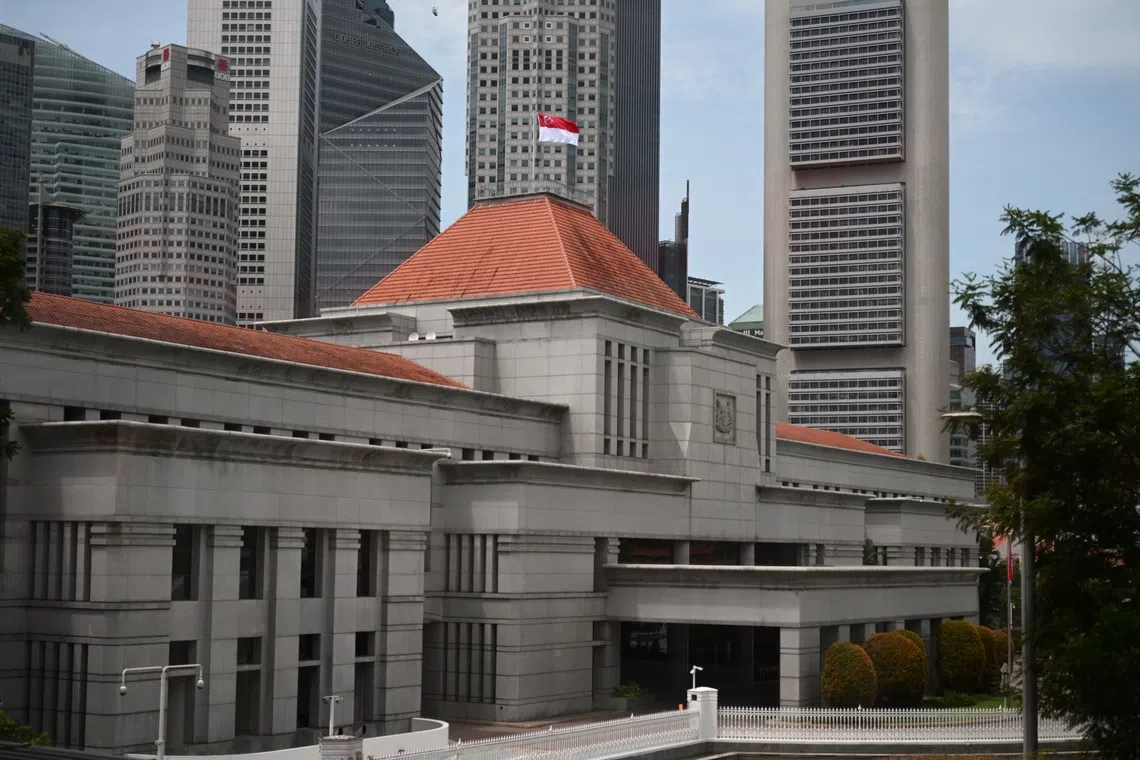
Salaries for political officeholders were last updated in 2012, with the changes backdated to 2011 when the new term of government started.
ST PHOTO: KUA CHEE SIONG
Published Sep 08, 2026, 01:49 PM
Updated Sep 08, 2026, 01:51 PM
SINGAPORE - Political officeholders will get a one-off pay increase of up to 9 per cent, as the Government accepts the recommendations of a committee convened in December 2025 to review political salaries.
This means an MR4 grade entry-level minister getting the full adjustment will see his annual pay rise from $1.1 million to $1.2 million when the revised framework takes effect from October 15.
Speaking in Parliament on Sept 8, Prime Minister Lawrence Wong said the Government has accepted the committee’s recommendation to update the MR4 benchmark from $1.1 million to $1.8 million.
The salary range for ministers will also be widened. Beyond the one-off increase, Wong said ministers’ salaries will continue to be adjusted based on performance, and that he expects most MR4 ministers to earn about $1.35 million - the lower end of the new salary range - by the end of this term of government.
The prime minister said he decided to act now given that ministerial salaries have fallen far behind both private sector and civil service salaries in the last 15 years.
While the gap is most obvious when compared with the private sector, even in the public service there are some senior permanent secretaries who earn more than ministers, he said.
Emphasising that good government did not come naturally to Singapore but was built deliberately over many years, Wong said his responsibility is to sustain the capacity for the city-state to have leadership that can plan ahead, take difficult decisions, and to deliver.
“It’s not simply about what we pay ministers today,” he said. “It’s about whether future prime ministers will continue to have a realistic chance of persuading capable Singaporeans – from the public service, the private sector and other walks of life – to step forward and build a first-rate team for Singapore.”
Since then, successive governments had decided to hold back on further changes due to reasons such as global instability, even though the salary framework remained relevant.
In 2017, a review committee recommended an upward adjustment, but the Government decided not to make any changes due to economic uncertainties.
The next review was scheduled for 2023, but was deferred.
“We cannot affirm a framework in principle but disregard it indefinitely in practice,” said Wong. “Otherwise, over time, the framework loses its meaning. Restraint cannot become neglect.”
While candidates looking to enter political service will still be expected to make a meaningful sacrifice, Wong said the revised salary structure will give him more room to differentiate pay according to performance, and crucially to bring in people with substantial experience from outside the Government.
This includes those already earning significantly more in the private sector, he added.
Under the framework, ministerial salaries are benchmarked to the median income of the top 1,000 earners who are Singaporean citizens, with a 40 per cent discount to reflect the ethos of political service.
The top 1,000 earners include people in senior management positions such as chief executives, chief operating officers and chief financial officers; people working in the financial services such as bankers, traders and asset managers; and professionals such as lawyers, doctors and accountants.
The median top 1,000 Singaporean earner now takes home slightly over $3 million a year, noted Coordinating Minister for Public Services Chan Chun Sing. The 40 per cent discount brings the updated MR4 reference annual salary to $1.8 million.
Wong said that the Government’s starting point is that good government depends on good leadership, and that institutions are only as effective as the people who lead them.
“Systems and processes matter. But they do not run themselves,” he said. “Especially at the top, the quality of leadership makes a decisive difference.”
Companies understand this very well, which is why boards spend so much time on succession planning, he noted.
Wong said he learnt this for himself when he was chief executive of the Energy Market Authority (EMA), and the authority was tasked with building the city-state’s liquefied natural gas (LNG) terminal.
As no one in EMA had the experience to do this, he had to search widely. A candidate was eventually found, but Wong said he had to offer a competitive package - far more than what he was earning as head of EMA - to bring him onboard.
“He proved his worth. He built up the LNG team from scratch, and delivered the LNG terminal safely – on time and within budget,” said Wong.
He noted that there are some who say ministers are different, given that the city-state already has a first-rate civil service.
But a strong civil service is no substitute for effective political leadership, said Wong. This is as ministers have to set the direction for their ministries, decide the priorities, and make the strategic calls.
“If those calls are wrong, even the best civil servants will struggle to deliver good outcomes,” he said. “They may execute efficiently – but they will be executing in the wrong direction.”
There are also decisions that civil servants cannot and should not make, he added.
This includes how the costs of stronger social safety nets are shared among individuals, the community and the Government, as well as how much to tax today and how much to leave for future generations.
“These are not just technical questions. They involve choices about priorities, interests and values,” he said.
Citing the reset of family policies that he announced at the National Day Rally, Wong said that civil servants could review each scheme and propose improvements.
But it was political officeholders in the Marriage and Parenthood Reset Workgroup who looked at the parenthood journey as a whole and helped shape the overall package, which included decisions on where support would make the greatest difference and how the costs could be shared.
Hence, a minister needs to have the character and commitment to serve, but also competence - the judgment, ability and leadership to do the job well, said Wong.
“This is where remuneration becomes relevant,” he said. “It does not determine who is capable, but it does affect whether enough capable people are prepared to step forward and take on the responsibility.”
While the challenge of assembling the best possible team to lead the country is not one that is unique to the city-state, Wong said Singapore has been an exception in putting together strong and stable governments.
“We have sustained these standards for so long that they can start to feel normal to Singaporeans,” he said. “But they are not normal elsewhere – and they are not guaranteed here either.”
This record of good government has been achieved through deliberate choices made over decades about how Singapore’s political system should work, and one of these choices was to deal with political remuneration openly.
“We recognise that highly able people have alternatives outside politics. So we pay political officeholders salaries that are competitive, but with a substantial discount to reflect political service,” he said.
In return, Singaporeans rightly expect much from their political leaders, including high standards of integrity, competence, and ultimately accountability to voters at the ballot box.
That same broad consideration applies to MPs, who carry substantial responsibilities in Parliament and in their constituencies, he added.
Wong said good leadership will be even more crucial as Singapore navigates a more uncertain and troubled world.
“So let us make the right decision – to keep the path open for capable and public-spirited Singaporeans to step forward, lead and serve,” he said.
Singapore Parliament
Singapore politicians
政治官员的薪资上次更新是在 2012 年,调整追溯至 2011 年新一届政府任期开始之时。
《海峡时报》摄影:郭志雄
发布于 2026 年 9 月 8 日下午 1:49
更新于2026年9月8日下午1:51
新加坡——政府接受了2025年12月成立的政治官员薪酬审查委员会的建议,政治官员将获得一次性加薪,涨幅最高可达9%。
这意味着,从 10 月 15 日起,修订后的框架生效后,MR4 级入门级部长的年薪将从 110 万美元增加到 120 万美元。
9月8日,总理黄循财在国会表示,政府已接受委员会的建议,将MR4基准值从110万新元提高到180万新元。
部长薪酬范围也将扩大。黄循财表示,除了此次一次性加薪外,部长薪酬将继续根据绩效进行调整,他预计到本届政府任期结束时,大多数第四轮改革部长的年收入约为135万新元——这是新薪酬范围的下限。
首相表示,鉴于过去 15 年里部长级官员的薪水远远落后于私营部门和公务员的薪水,他决定现在采取行动。
他说,虽然与私营部门相比,这种差距最为明显,但即使在公共部门,也有一些高级常任秘书的收入比部长还高。
黄循财强调,新加坡的良好治理并非与生俱来,而是经过多年精心打造的。他表示,他的职责是保持新加坡这座城市国家拥有能够提前规划、做出艰难决定并兑现承诺的领导能力。
他说:“这不仅仅关乎我们今天给部长们支付多少薪水,而是关乎未来的总理们是否还能继续有机会说服有能力的的新加坡人——来自公共服务部门、私营部门和其他各行各业——挺身而出,为新加坡打造一支一流的团队。”
此后,由于全球局势不稳定等原因,历届政府都决定暂缓进一步改革,尽管薪酬体系仍然适用。
2017年,审查委员会建议上调,但由于经济形势不明朗,政府决定不作任何调整。
下一次审查原定于 2023 年进行,但被推迟了。
黄说:“我们不能在原则上肯定一个框架,却在实践中无限期地忽视它。否则,随着时间的推移,这个框架就会失去意义。克制不能变成漠视。”
黄循财表示,虽然希望进入政界的候选人仍需做出实质性的牺牲,但修订后的薪酬结构将使他有更大的空间根据绩效实行差异化薪酬,更重要的是,能够从政府以外引进具有丰富经验的人才。
他还补充说,这其中也包括那些在私营部门收入已经高得多的人。
根据该框架,部长薪酬以新加坡公民收入最高的 1000 人的收入中位数为基准,并打 40% 的折扣,以体现政治服务的精神。
收入最高的 1000 人包括首席执行官、首席运营官和首席财务官等高级管理人员;银行家、交易员和资产经理等金融服务从业人员;以及律师、医生和会计师等专业人士。
新加坡公共服务统筹部长陈振声指出,目前新加坡收入最高的1000名人群的年收入中位数略高于300万新元。40%的折扣使更新后的MR4参考年薪降至180万新元。
黄之锋表示,政府的出发点是,良好的政府取决于良好的领导,而机构的有效性取决于领导机构的人。
“制度和流程固然重要,但它们不会自行运转,”他说。“尤其是在高层,领导力的素质起着决定性的作用。”
他指出,各公司都非常清楚这一点,所以董事会才会花费大量时间进行继任计划。
黄先生表示,他在担任能源市场管理局(EMA)首席执行官期间亲身经历了这一点,当时该机构的任务是建设新加坡的液化天然气(LNG)接收站。
由于EMA内部无人具备相关经验,他不得不广泛寻找合适人选。最终找到了一位候选人,但黄先生表示,为了聘请他,他必须提供一份极具竞争力的薪酬待遇——远高于他担任EMA主管时的收入。
“他证明了自己的价值。他从零开始组建了液化天然气团队,并安全、按时、在预算内交付了液化天然气接收站,”黄先生说。
他指出,有人认为部长们的情况有所不同,因为这个城邦国家已经拥有了一流的公务员队伍。
黄循财指出,强大的公务员队伍并不能取代有效的政治领导。这是因为部长们必须为各自部门指明方向,决定优先事项,并做出战略决策。
他说:“如果这些决策是错误的,即使是最优秀的公务员也很难取得好的结果。他们或许能高效地执行任务,但方向却错了。”
他还补充说,有些决定是公务员不能也不应该做的。
这包括如何分担加强社会保障体系的成本(例如,如何分担个人、社区和政府之间的成本),以及今天应该征收多少税,留给子孙后代多少税。
“这些不仅仅是技术问题,它们还涉及到优先事项、利益和价值观的选择,”他说。
黄循财援引他在国庆群众大会上宣布的家庭政策调整方案表示,公务员可以审查每一项计划并提出改进建议。
但正是婚姻和育儿重置工作组中的政治官员们,从整体上审视了为人父母的历程,并帮助制定了整体方案,其中包括决定在哪些方面提供支持能发挥最大作用以及如何分担成本。
因此,黄说,一位部长不仅需要有为人民服务的品格和奉献精神,还需要有能力——判断力、才干和领导能力,才能把工作做好。
“这就是薪酬发挥作用的地方,”他说。“薪酬并不能决定谁有能力,但它确实会影响是否有足够多有能力的人愿意挺身而出承担责任。”
黄先生表示,虽然组建一支最优秀的团队来领导国家并非新加坡独有的挑战,但新加坡在组建强大而稳定的政府方面却是一个例外。
他说:“我们长期以来一直坚持这些标准,以至于新加坡人开始觉得这些标准很正常。但这些标准在其他地方并不正常——而且即使在新加坡,这些标准也无法得到保证。”
新加坡之所以能取得如此良好的治理记录,是数十年来对新加坡政治制度运作方式做出深思熟虑的选择,其中一项选择就是公开处理政治报酬问题。
他说:“我们认识到,能力出众的人在政界之外还有其他选择。因此,我们向政治官员支付具有竞争力的薪酬,但会给予相当大的折扣,以体现他们的政治服务。”
作为回报,新加坡人理所当然地对他们的政治领导人抱有很高的期望,包括高标准的诚信、能力,以及最终在投票箱中对选民负责。
他还补充说,同样的广泛考量也适用于议员,他们在议会和选区都承担着重大的责任。
黄先生表示,随着新加坡在更加不确定和动荡的世界中前行,良好的领导力将变得更加重要。
“所以,让我们做出正确的决定——为有能力、有公德心的新加坡人开辟道路,让他们能够挺身而出,领导和服务,”他说。
新加坡国会
新加坡政治家