Singapore keen to work with Commonwealth countries on climate action: DPM Gan新加坡副总理颜金勇表示,新加坡愿与英联邦国家在气候行动方面开展合作。
Members of the 56-member grouping need not agree on everything to pursue closer cooperation, he added. Read more at straitstimes.com.
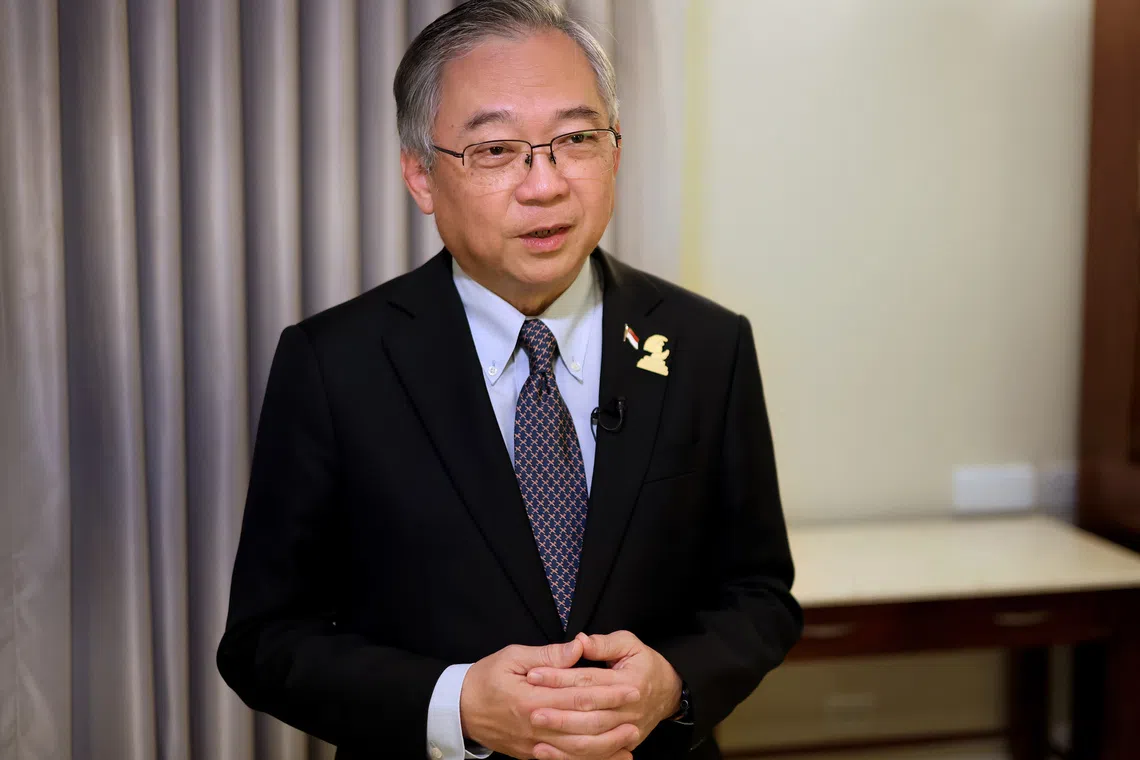
Deputy Prime Minister Gan Kim Yong speaks in an interview at the end of the Commonwealth Heads of Government Meeting in Antigua and Barbuda on Nov 5, 2026.
Published Nov 05, 2026, 01:45 PM
Updated Nov 05, 2026, 01:45 PM
SINGAPORE — Climate change was among the key issues discussed at a meeting of Commonwealth leaders, with Singapore keen to work with other member countries bilaterally or in smaller groups to tackle shared challenges, Deputy Prime Minister Gan Kim Yong said on Nov 5.
While the 56-member grouping faces difficulties reaching consensus because of its members’ differing national interests, countries need not agree on everything to pursue closer cooperation, he added.
Giving his remarks to media at the end of the Commonwealth Heads of Government Meeting in Antigua and Barbuda, Gan said climate change was a particular concern for many Caribbean and African countries, which were experiencing its increasingly severe effects.
The biennial summit brings together leaders of the Commonwealth’s 56 member states, including many small island nations that are especially vulnerable to rising sea levels and extreme weather.
The meeting, held from Nov 1 to 4, also covered economic growth, trade and the rising cost of living.
Gan acknowledged that the grouping’s members had different backgrounds, circumstances and national interests, making it difficult to reach consensus on every issue.
“But I think we have come to recognise that we do not have to agree on everything to allow some of the countries to move forward. I think we are also looking at collaboration in small groups or even bilaterally among Commonwealth countries.”
He cited Singapore’s carbon credit cooperation with Kenya, Ghana and Sri Lanka as an example of how countries could pursue shared interests.
Under Article 6 of the Paris Agreement, countries can cooperate on projects that reduce or remove greenhouse gas emissions, with the resulting carbon credits transferred between countries to help meet their climate targets.
Singapore had signed an implementation agreement with Ghana in May 2024, while Kenya and Sri Lanka have signed memorandums of understanding with Singapore to pursue similar arrangements.
Gan said such investments would allow Singapore to generate carbon credits while creating jobs and economic opportunities in the host countries.
Beyond climate change, Commonwealth countries also discussed ways to spur economic growth and find new sources of growth, amid concerns over the rising cost of living.
Gan said that while some cost pressures stemmed from external factors such as energy prices, others arose from friction in the trading system. Members therefore explored ways to facilitate trade and reduce trading costs, which could in turn help ease living costs for their populations.
Countries also discussed the opportunities and challenges posed by digitalisation and artificial intelligence, including how they could share experiences and build capabilities to help their people and businesses adapt to technological change, he noted.
Such cooperation could help businesses harness AI to remain competitive, rather than be overwhelmed by its impact, Gan said.
On the Commonwealth’s continued relevance, Gan said the grouping provides a small and open country like Singapore with a platform to engage countries across Africa, the Caribbean and the Asia-Pacific, where each country plays “a very important role in the global economy”.
Such engagement allows Singapore to better understand the concerns and challenges faced by other members, and identify opportunities for mutually beneficial cooperation, he added.
Asked how Singapore could contribute to the Commonwealth, Gan pointed to the Singapore Cooperation Programme, under which some 30,000 Commonwealth officials have received training since its inception.
While Singapore’s resources are limited, the country does what it can because “it is important for us to work together as a collective institution, help one another to progress”, said Gan.
“I think if you are able to help Commonwealth countries progress, you will benefit everyone, including Singapore,” he added.
Commonwealth countries
2026年11月5日,副总理甘金勇在安提瓜和巴布达举行的英联邦政府首脑会议结束后接受采访。
发布于 2026 年 11 月 5 日下午 1:45
更新于2026年11月5日下午1:45
新加坡——新加坡副总理颜金勇11月5日表示,气候变化是英联邦领导人会议上讨论的关键议题之一,新加坡渴望与其他成员国开展双边或小组合作,共同应对挑战。
他补充说,虽然由于成员国的国家利益不同,这个由56个成员国组成的集团在达成共识方面面临困难,但各国不必在所有事情上都达成一致才能寻求更紧密的合作。
甘在安提瓜和巴布达举行的英联邦政府首脑会议结束后向媒体发表讲话时表示,气候变化是许多加勒比和非洲国家特别关注的问题,这些国家正在经历气候变化日益严重的后果。
每两年一次的峰会将英联邦 56 个成员国的领导人聚集在一起,其中包括许多特别容易受到海平面上升和极端天气影响的小岛国。
此次会议于11月1日至4日举行,还讨论了经济增长、贸易和不断上涨的生活成本等问题。
甘先生承认,该组织成员的背景、境遇和国家利益各不相同,因此很难在每个问题上达成共识。
“但我认为我们已经逐渐认识到,我们不必在所有事情上都达成一致,才能让一些国家向前发展。我认为我们也在考虑在英联邦国家之间开展小组合作,甚至开展双边合作。”
他以新加坡与肯尼亚、加纳和斯里兰卡的碳信用合作为例,说明各国如何追求共同利益。
根据《巴黎协定》第六条,各国可以合作开展减少或消除温室气体排放的项目,由此产生的碳信用额可以在各国之间转移,以帮助实现其气候目标。
新加坡已于 2024 年 5 月与加纳签署了实施协议,而肯尼亚和斯里兰卡也已与新加坡签署了谅解备忘录,以寻求类似的安排。
颜金勇表示,此类投资将使新加坡获得碳信用额,同时为东道国创造就业和经济机会。
除了气候变化之外,英联邦国家还讨论了如何刺激经济增长和寻找新的增长点,以应对不断上涨的生活成本。
甘先生表示,部分成本压力源于能源价格等外部因素,而另一些则源于贸易体系的摩擦。因此,成员国探讨了如何促进贸易、降低贸易成本,从而有助于减轻民众的生活成本。
他还指出,各国还讨论了数字化和人工智能带来的机遇和挑战,包括如何分享经验和建立能力,以帮助本国人民和企业适应技术变革。
甘表示,这种合作可以帮助企业利用人工智能保持竞争力,而不是被其影响所压倒。
关于英联邦的持续重要性,甘表示,该组织为像新加坡这样的小国和开放国家提供了一个平台,使其能够与非洲、加勒比海和亚太地区的国家进行交流,而这些国家都在“全球经济中扮演着非常重要的角色”。
他补充说,这样的交流能让新加坡更好地了解其他成员面临的关切和挑战,并发现互利合作的机会。
当被问及新加坡可以为英联邦做出哪些贡献时,颜金勇指出新加坡合作计划,该计划自启动以来已培训了约 3 万名英联邦官员。
颜金勇表示,尽管新加坡的资源有限,但该国会尽其所能,因为“作为一个集体机构,我们团结协作、互相帮助才能进步,这非常重要”。
“我认为,如果你能够帮助英联邦国家取得进步,那么包括新加坡在内的所有人都会受益,”他补充道。
英联邦国家