Congress seeks to limit US Navy vessels built in foreign shipyards国会寻求限制美国海军在外国造船厂建造的舰艇数量。
The Senate Armed Services Committee seeks to strip the waiver authority granted to the president to approve offshore ship construction.
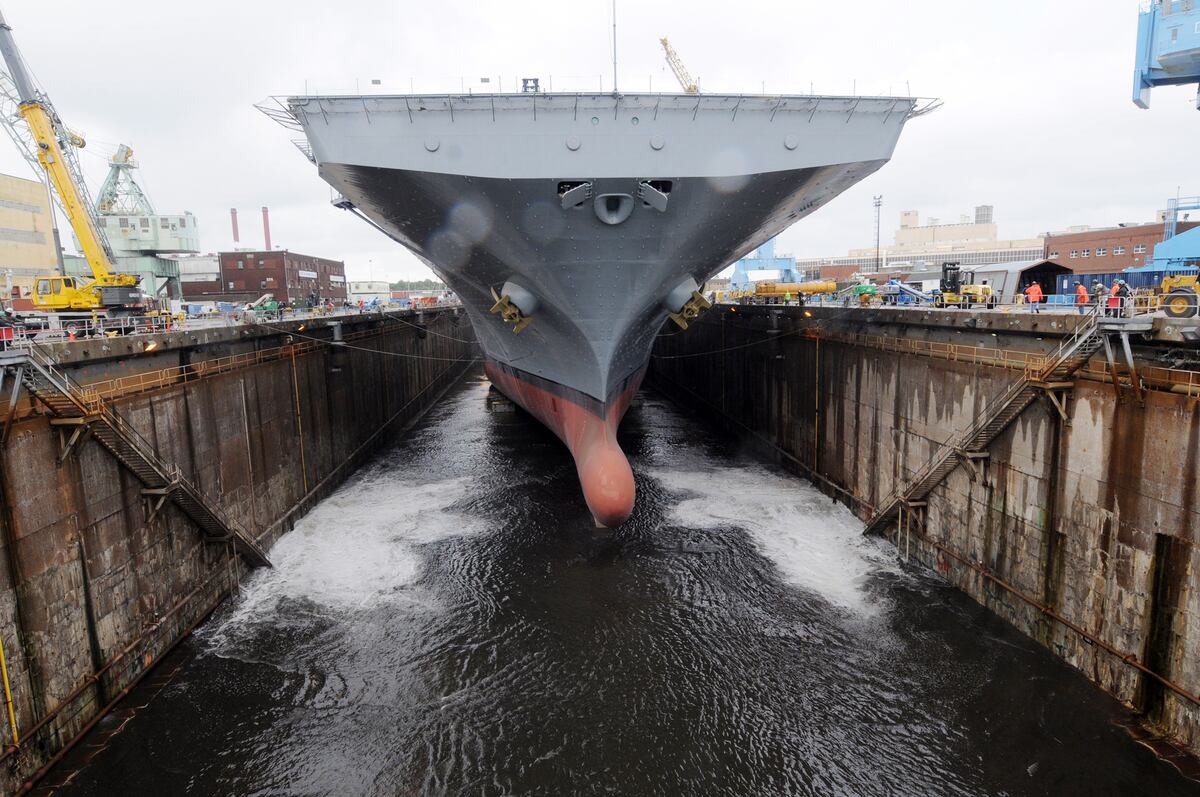
The Trump administration’s recent push to buy foreign-built warships is being waylaid by congressional defense committees who are seeking to limit the executive office’s ability to tap overseas construction yards to build out America’s naval fleet.
First reported on by the U.S. Naval Institute, the Senate Armed Services Committee’s markup of the Fiscal Year 2027 defense policy bill seeks to strip the presidential waiver authority granted to the commander-in-chief in Title 10 section 8679 , which would allow the president to approve offshore ship construction under a vague description of “national security interest.”
Under the language of the markup, the defense secretary may arrange to “construct not more than two vessels for each class of covered vessels in a[n] [allied] foreign shipyard.”
“Covered vessels” listed within the bill’s language include only bulk fuel vessels and roll-on/roll-off ships.
Stipulations for such ships include the defense secretary determining — with evidence — that such a construction “is in the national security interests of the United States.”
Within 30 days of a construction deal with an Allied nation, the Pentagon must submit a report that aligns with the congressional stipulations, as well as the identification of the vessels to be built and “a description of the enforceable provisions that will govern the protection of classified information and controlled unclassified information” during the foreign construction process.
Additional requirements include “all critical mission systems, command and control equipment, and secure communications systems are installed in the United States or a secure allied facility; the vessels are projected to be constructed and delivered faster than if the vessels were constructed at a shipyard in the United States, or construction at a foreign shipyard otherwise provides a material benefit to readiness or force posture.”
The limitations put forth in the draft version of the National Defense Authorization Act were rolled out after the Trump administration revealed its designs to tap foreign shipyards to design and build U.S. Navy combatant ships.
Touting it as the “Finland model,” the expansion of auxiliary naval ships built from allied shipbuilders mirrors the push to expand the Coast Guard’s icebreaker fleet, solidified in the 2024 ICE Pact — a trilateral agreement between the United States, Canada and Finland to combine collective knowledge, resources and expertise to produce Arctic and polar icebreakers, according to the Department of Homeland Security.
“Those can follow the ICE Pact model where they’ll build up to two overseas, which would be concurrent with foreign direct investment into U.S. yards for subsequent ships to be brought, including their supply chain, and other guardrails,” a Senate Majority official told the U.S. Naval Institute last Thursday.
Overall, the service aims to increase its number of ships dramatically, according to President Donald Trump’s proposed $1.5 trillion fiscal 2027 defense budget.
There are currently over 290 battle force ships, though the number, according to Navy requirements by law, is 355, the document stated. The service intends to have 395 vessels in fiscal 2027 and 450 vessels by the end of fiscal 2031.
Currently, only 10% of shipbuilding is taking place at distributed sites. The service wants to increase that number to 50% to increase flexibility, reduce reliance on legacy shipyards and accelerate delivery.
Military Times reporter Riley Ceder contributed to this report.
Claire Barrett is an editor and military history correspondent for Military Times. She is also a World War II researcher with an unparalleled affinity for Sir Winston Churchill and Michigan football.
特朗普政府近期大力推动购买外国制造的军舰,但这一举措却遭到国会国防委员会的阻挠,这些委员会试图限制行政部门利用海外造船厂扩建美国海军舰队的能力。
据美国海军学会首次报道,参议院军事委员会对 2027 财年国防政策法案的修订旨在取消第 10 篇第 8679 条授予三军统帅的总统豁免权,该豁免权允许总统以“国家安全利益”这一模糊的描述批准海上船舶建造。
根据该草案的措辞,国防部长可以安排“在[盟国]外国造船厂为每类受管制舰艇建造不超过两艘舰艇”。
法案措辞中列出的“受监管船舶”仅包括散装燃料船和滚装船。
此类舰艇的建造条件包括国防部长根据证据认定,这种建造方式“符合美国的国家安全利益”。
在与盟国达成建造协议后的 30 天内,五角大楼必须提交一份符合国会规定的报告,其中应列明要建造的舰艇,并“描述在外国建造过程中保护机密信息和受控非机密信息的可执行条款”。
其他要求包括“所有关键任务系统、指挥控制设备和安全通信系统均安装在美国或盟国的安全设施中;预计这些舰艇的建造和交付速度将比在美国造船厂建造更快,或者在外国造船厂建造能够为战备或部队态势带来实质性好处。”
在特朗普政府公布其计划利用外国造船厂设计和建造美国海军作战舰艇之后,《国防授权法案》草案中提出的限制措施随即出台。
据美国国土安全部称,扩建由盟国造船厂建造的辅助海军舰艇,并将其称为“芬兰模式”,这与扩大海岸警卫队破冰船队的举措相呼应,并在 2024 年的《ICE 条约》中得到巩固——这是美国、加拿大和芬兰之间的一项三边协议,旨在结合集体知识、资源和专业技术来建造北极和极地破冰船。
“这些项目可以遵循ICE协议模式,在海外建造最多两艘船,同时外国直接投资美国船厂建造后续船舶,包括其供应链和其他保障措施,”一位参议院多数党官员上周四告诉美国海军学会。
根据唐纳德·特朗普总统提出的 2027 财年 1.5 万亿美元的国防预算,该军种的目标是大幅增加舰艇数量。
文件指出,目前海军拥有超过290艘作战舰艇,但根据海军法律规定,舰艇数量应为355艘。海军计划在2027财年将舰艇数量增至395艘,并在2031财年末达到450艘。
目前,仅有10%的造船工作在分散的地点进行。该服务希望将这一比例提高到50%,以提高灵活性,减少对传统造船厂的依赖,并加快交付速度。
《军事时报》记者莱利·塞德对本报道亦有贡献。
克莱尔·巴雷特是《军事时报》的编辑和军事历史记者。她也是一位二战研究员,对温斯顿·丘吉尔爵士和密歇根大学橄榄球队有着无与伦比的热爱。