Brazil sets up fund for Army’s armored vehicle, missile capabilities巴西设立基金,用于提升陆军的装甲车和导弹能力
The focus on armored vehicles will see various types manufactured by the Iveco, which opened a local factory 10 years ago.
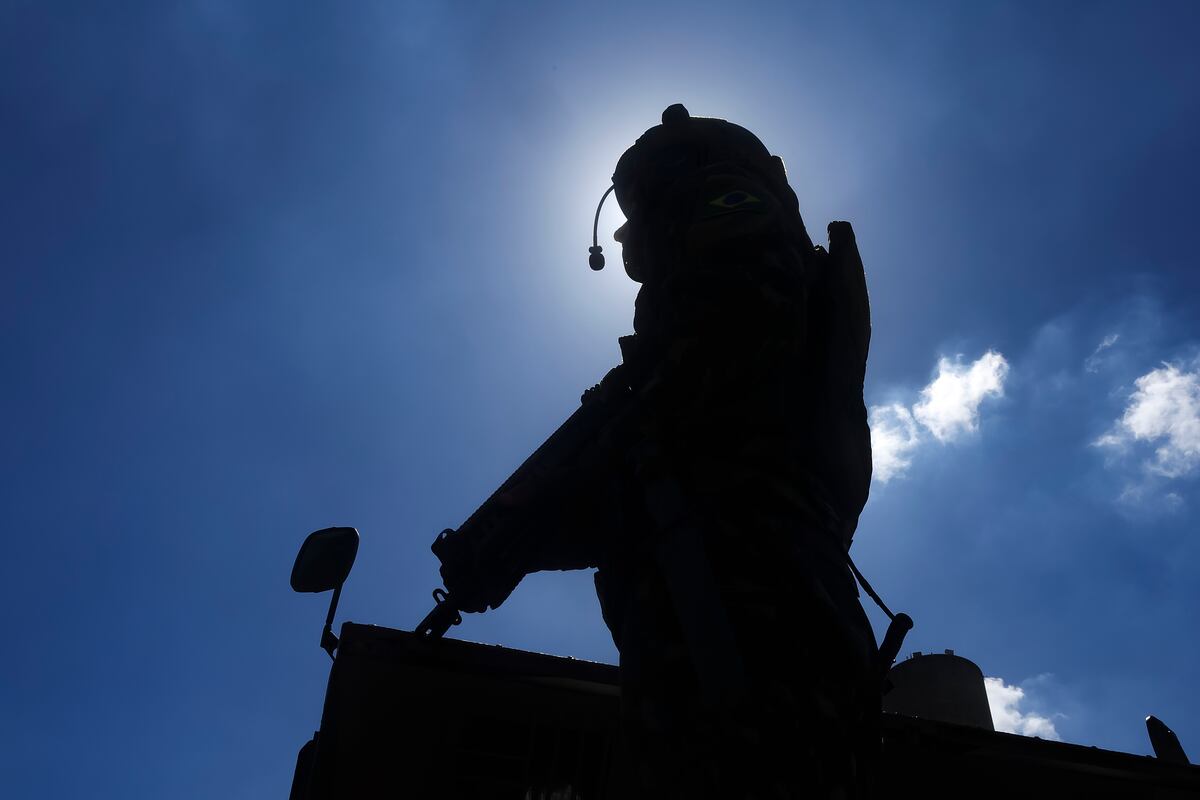
SAO PAULO — The Brazilian government has launched a fund dedicated to Army capabilities, including the acquisition and development of armored vehicles from Italian manufacturer Iveco Defence, the Astros missile system from Avibras and more.
The plan is part of the Growth Acceleration Program, or PAC, announced by the government in August. The effort is set to spend about 53 billion reals (U.S. $11 billion) on defense. Some of that money will go toward an armored forces strategic program, the Army told Defense News.
“This program has a profound impact not only on the modernization of military capabilities but also on the development of critical technologies,” the Army said in a Sept. 20 statement.
The focus on armored vehicles will see various types manufactured by the Iveco, which opened a local factory 10 years ago as part of its work with the Army, the service explained. Types include six-wheel drive Guarani armored vehicles, four-wheel drive multitask Guaicuru armored vehicles, eight-wheel drive Centauro combat vehicles, six-wheel drive Cascavel medium reconnaissance vehicles, and modernized Leopard 1 tanks made by Krauss-Maffei Wegmann.
The tank modernization effort was previously postponed “due to high demand for armored vehicle parts in the international market,” the military reported Sept. 17.
The Astros missile system is part of an overall effort to “contribute to the organization of missile and rocket artillery,” enabling long-range and high-precision strategic fire support, the Army said.
Earlier this year, Avibras unveiled new variants of the weapon: the Astros II MK6 and the Astros III. The former has a maximum range of 300 kilometers (186 miles). The latter, which has greater firepower, is designed to operate from an eight-wheel drive vehicle and can launch ballistic rockets, guided rockets, ballistic missiles and tactical cruise missiles, according to the company .
Another part of the investments is directed toward the Army’s aircraft and drones. The military reported aircraft acquisition efforts include “maneuver helicopters” used to transport troops and equipment. According to the armed forces, these helicopters would weigh more than 7.5 tons and could contribute to civilian missions, such as national emergencies.
According to the government, the PAC investment effort is funding the modernization of six HM-1A Pantera helicopters, manufactured by Brazilian firm Helibras, a subsidiary of the French company Airbus Helicopters. The company this year delivered the first modernized unit.
The plan also includes “the acquisition of ten general-purpose helicopters,” the military announced, without providing further details. However, the force has an aviation battalion composed of Helibras-made Caracal helicopters, which are known as HM-4 Jaguars within the Army. They were made under Brazil’s H-XBR project , which involves all three armed forces and continues to provide aircraft for the military.
Another part of the project involves the purchase of nine drones. According to the Army, which did not identify the manufacturers involved, these unmanned aircraft will belong to categories 0 through 2 , which vary in terms of operating altitude and range. Category 0 corresponds to drones weighing up to 2 kilograms (4 pounds). Category 1 ranges from 2 kilograms to 150 kilograms, and the third category ranges from 150 kilograms to 600 kilograms.
Pedro Pligher is a Latin America correspondent for Defense News. He has reported on politics, economics and the Brazilian small arms industry.
圣保罗——巴西政府启动了一项专门用于提升陆军能力的基金,其中包括从意大利制造商依维柯防务公司采购和开发装甲车辆,从阿维布拉斯公司采购Astros导弹系统等等。
该计划是政府8月份宣布的“增长加速计划”(PAC)的一部分。该计划预计将在国防方面投入约530亿雷亚尔(约合110亿美元)。陆军告诉《防务新闻》,其中一部分资金将用于装甲部队战略计划。
“该计划不仅对军事能力的现代化产生深远影响,而且对关键技术的发展也产生深远影响,”陆军在9月20日的一份声明中表示。
军方解释说,此次重点采购的装甲车辆将由依维柯公司生产,该公司十年前为配合陆军的合作,在当地开设了一家工厂。这些车辆包括六轮驱动的瓜拉尼装甲车、四轮驱动的多用途瓜伊库鲁装甲车、八轮驱动的半人马座战斗车辆、六轮驱动的卡斯卡韦尔中型侦察车,以及克劳斯-玛菲·韦格曼公司生产的现代化豹1坦克。
军方9月17日报告称,坦克现代化工作此前因“国际市场对装甲车辆零部件的高需求”而被推迟。
陆军表示,“太空人”导弹系统是“为导弹和火箭炮兵的组织做出贡献”的整体努力的一部分,能够提供远程、高精度的战略火力支援。
今年早些时候,Avibras公司推出了该武器的新型改进型:Astros II MK6和Astros III。前者最大射程为300公里(186英里)。后者火力更强,设计用于八轮驱动车辆,据该公司称,它可以发射弹道火箭、制导火箭、弹道导弹和战术巡航导弹。
另一部分投资则用于陆军的飞机和无人机。军方报告称,飞机采购计划包括用于运送部队和装备的“机动直升机”。据军方称,这些直升机的重量将超过7.5吨,并可用于民用任务,例如应对国家紧急情况。
据政府称,PAC投资计划正在资助六架HM-1A Pantera直升机的现代化改造,这些直升机由巴西Helibras公司制造,该公司是法国空中客车直升机公司的子公司。该公司今年交付了首架现代化改造后的直升机。
军方宣布,该计划还包括“采购十架通用直升机”,但未提供更多细节。不过,该部队目前拥有一支航空营,装备的是巴西直升机公司(Helibras)生产的“狞猫”(Caracal)直升机,陆军内部称之为HM-4“美洲虎”(Jaguar)。这些直升机是根据巴西H-XBR项目制造的,该项目涵盖巴西三军,并持续为军方提供飞机。
该项目的另一部分涉及采购九架无人机。据陆军方面称(陆军并未透露具体制造商),这些无人机将分为0至2类,不同类别的无人机在飞行高度和航程方面有所差异。0类无人机的重量不超过2公斤(4磅)。1类无人机的重量范围为2公斤至150公斤,而3类无人机的重量范围为150公斤至600公斤。
佩德罗·普利格尔是《防务新闻》的拉丁美洲通讯员。他曾报道过政治、经济和巴西小型武器工业。